
When you're digging deep into the earth, you're not just moving dirt—you're fighting gravity and soil pressure. That's where trenching and shoring come in. They aren't just industry buzzwords; they're the essential safety practices that prevent the ground from collapsing on workers.
Think of it this way: shoring is the temporary support system—the timber, steel, or aluminium bracing—that holds the trench walls back. Trenching is the act of digging that narrow excavation in the first place. On any worksite, from a suburban backyard on the Central Coast to a major Sydney civil project, getting these two things right is non-negotiable for keeping everyone safe.
What Is Trenching and Shoring
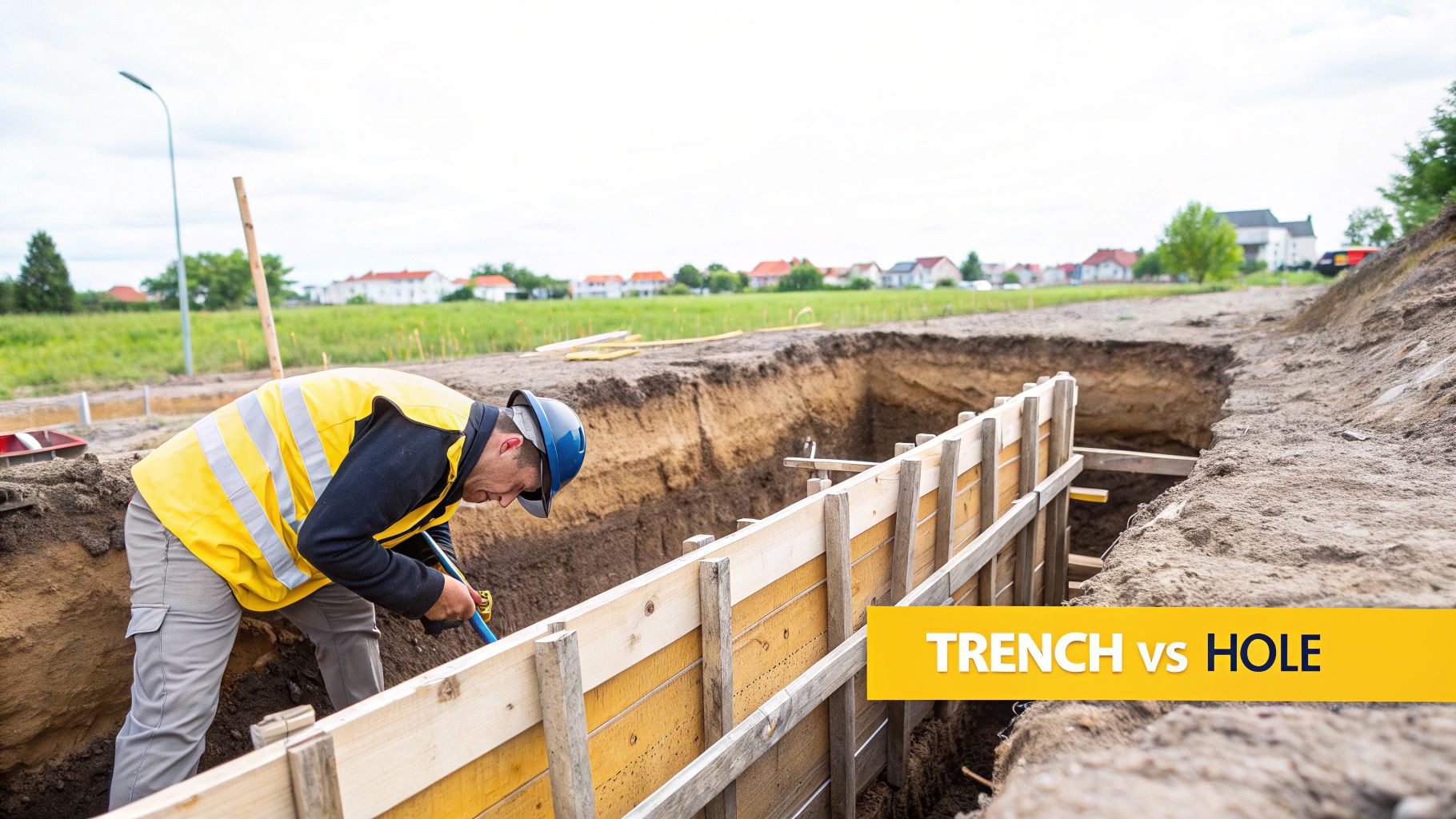
Before a single bucket of soil is moved, you have to understand the critical difference between digging a simple hole and creating a safe, compliant trench. According to SafeWork NSW, a trench is an excavation that's deeper than it is wide. This isn't just semantics; this specific geometry creates immense inward pressure on the walls, making them dangerously prone to sudden failure.
An unsupported trench is a bit like digging a hole in the sand at Umina Beach—the walls are fragile and can give way without any warning. Shoring is the engineered solution we install to stop that from happening. It’s a core part of our commitment to site safety and ensuring the job is done properly, whether we're digging deep service trenches or preparing stable ground for footings excavation.
To help clear things up, here’s a quick rundown of the key terms you’ll hear on site.
Trenching Safety Terms at a Glance
This table breaks down the common terms used to keep excavations safe on NSW worksites.
| Term | What It Means | When It Is Used |
|---|---|---|
| Shoring | Installing a physical support system (like timber or steel) to prevent trench walls from collapsing. | Used when vertical or near-vertical walls are needed, especially in tight spaces or unstable soil. |
| Benching | Cutting the trench walls into a series of steps or "benches" to reduce the height of each vertical face. | An alternative to shoring, but it requires more space and is only suitable for stable soil types. |
| Battering | Sloping the trench walls back at a safe, stable angle, creating a V-shape instead of vertical sides. | Requires a lot of clear space at the surface and is only practical in certain soil conditions. |
| Shielding | Placing a protective structure, like a trench box, inside the excavation to protect workers from a collapse. | Unlike shoring, a shield doesn't support the trench walls; it's purely for worker protection inside the trench. |
Each method has its place, but the site conditions, soil type, and available space will always dictate the safest approach.
Alternatives to Shoring
While shoring is a go-to solution, it's not the only way to manage trench safety. However, the alternatives aren't always a practical fit for every job.
- Battering: This involves grading the trench walls back to a safe angle, essentially creating a V-shaped excavation. The right angle depends entirely on the soil type, but the trade-off is that it requires a huge amount of extra space at ground level.
- Benching: This technique cuts a series of steps or "benches" into the sides of the excavation. Just like battering, it’s only suitable for certain cohesive soils and takes up far more room than a vertically shored trench.
The reality is, on the tight residential blocks common across Sydney's suburbs or the sandy coastal soils around the Central Coast, there's rarely enough room for battering or benching. When your dig is right up against property lines, existing buildings, or underground services, shoring becomes the only viable choice to guarantee safety and protect the surrounding assets. For a broader look at managing worksite hazards, an essential construction site safety checklist offers a great framework that complements these trench-specific practices.
The Unseen Dangers of Unprotected Trenches
It’s easy to look at a trench and just see a long hole in the ground. To the untrained eye, it doesn't seem like much, but a raw, unprotected excavation is one of the most unpredictable hazards on any construction site. Getting the shoring right isn’t just about ticking a box for the council certifier; it’s about preventing a sudden, catastrophic event that can change lives in an instant.
The physics are simple but absolutely brutal. A single cubic metre of soil can weigh over 1.5 tonnes – that’s about the same as a small car. When a trench wall fails, it doesn't slowly crumble. It happens in a flash, giving anyone inside virtually zero time to react. This is precisely why SafeWork NSW regulations are so uncompromising, especially for any dig deeper than 1.5 metres. The weight and pressure are just too immense to leave to chance.
More Than Just a Cave-In
A trench collapse is never a simple, isolated incident. It sets off a chain reaction of problems that can completely derail a project, with consequences rippling outwards to workers, neighbouring properties, and your budget.
Picture this scenario: you’re running a project to install a new sewer line for a duplex in Hamilton, Newcastle. The trench is open, but the shoring is a bit light-on for the local clay soil, which has been softened by a week of rain. Without warning, a whole section of the wall shears off.
The immediate fallout is devastating:
- Worker Safety: Anyone in that trench is at risk of being buried, leading to crushing injuries, asphyxiation, or worse.
- Property Damage: The collapse could easily undermine the neighbour’s house foundations, crack their driveway, or sever underground services like water mains or NBN cables. Our team always uses precise methods like non-destructive digging to map these services beforehand, but a collapse can still cause massive damage.
- Project Delays: The site is immediately shut down. SafeWork NSW will issue a stop-work order, and nothing moves forward until a full investigation is done and the site is declared safe. This can add weeks, if not months, to your timeline.
The Financial and Legal Fallout
Beyond the immediate chaos on site, the financial and legal penalties are severe. Builders, developers, and even property owners can be hit with substantial fines for non-compliance, not to mention the crushing legal liability if someone gets hurt.
Australian statistics paint a sobering picture of these entirely avoidable incidents. From mid-2012 to mid-2018, there were 359 accepted workers' compensation claims related to excavation work. Disturbingly, nearly half of these involved serious injuries that kept workers off the job for long periods. In one real-world case, a company was fined $30,000 after a worker suffered a fractured pelvis in a poorly shored trench.
A trench is a high-risk environment from the moment it’s dug. Many trenches can also be classified as confined spaces, adding another layer of risk from poor air quality or hazardous atmospheres. This is why a comprehensive understanding of safety protocols is vital.
It’s critical to understand these overlapping dangers to maintain a safe worksite. For anyone wanting to go deeper on these specific hazards, this confined space and working at heights safety guide is an excellent resource. At Booms Up Civil, we don't just see shoring as a line item. We see it as our fundamental responsibility to protect our team, your property, and your project from these hidden dangers.
Choosing the Right Shoring System for Your Project
Not all shoring solutions are created equal. Just like you wouldn't use a sledgehammer to hang a picture frame, the right shoring system depends entirely on your project's scale, the specific soil conditions, and how much access we have on site. Selecting the correct method is a critical part of our planning process at Booms Up Civil, making sure we provide maximum safety and efficiency for every trench we dig across NSW.
This is a practical guide to the most common shoring systems we use every day. We'll break each one down in simple terms, focusing on how they work and, more importantly, where they shine—from a residential job on the Central Coast to a complex civil project in Sydney.
For any excavation, the first question is always about safety. This simple flowchart shows the fundamental decision-making process we follow on every site.
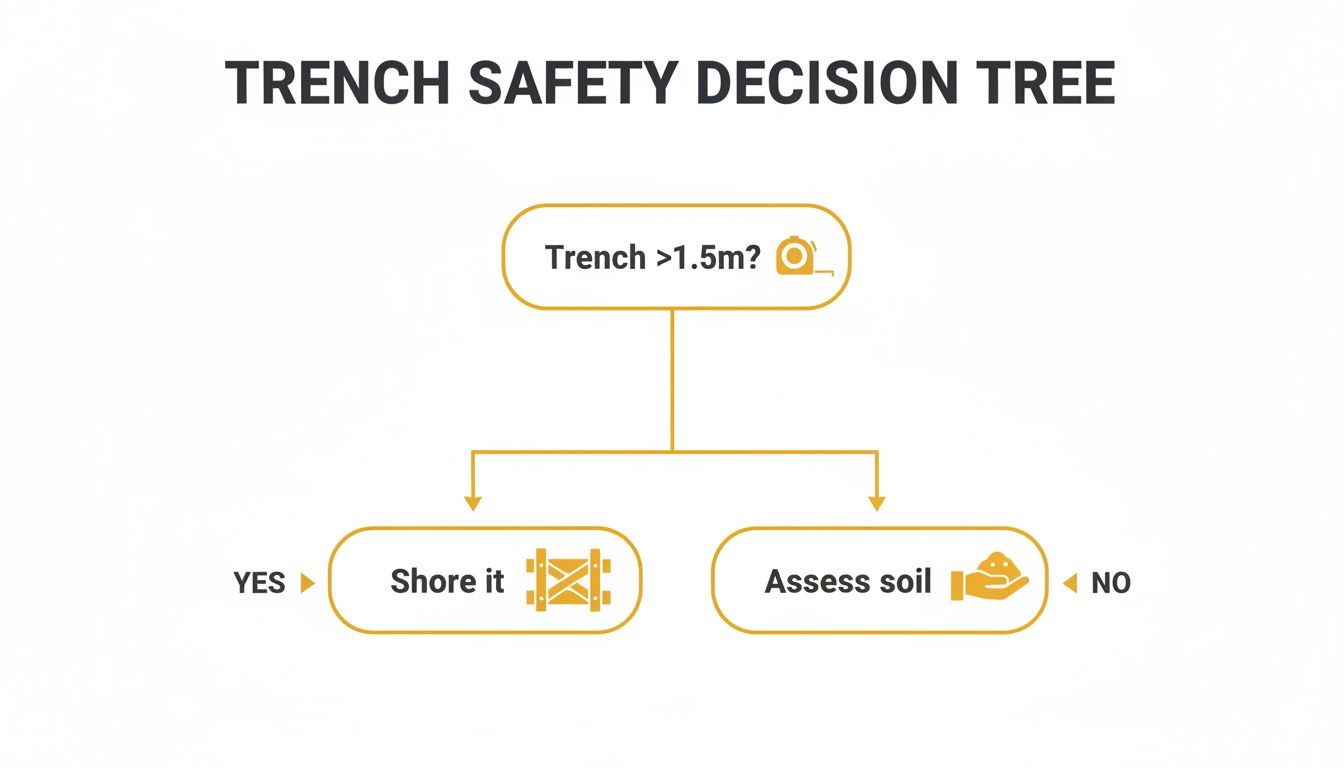
As the flowchart shows, once a trench passes the 1.5-metre depth threshold set by SafeWork NSW, putting a protective system like shoring in place becomes non-negotiable. This is where the choice of equipment really starts to matter.
Timber Shoring
Timber shoring is the original, classic method of trench support. It’s a tried-and-true system that involves installing vertical timber uprights against the trench walls and bracing them with horizontal timber walers or adjustable steel struts. It’s incredibly versatile and cost-effective, easily adapted to different trench shapes and sizes right there on site.
This method is best for shallower excavations, usually less than three metres deep, or for short-term projects where the ground is reasonably stable. For instance, if we're digging a trench for a new retaining wall footing on a block in Kariong with firm clay soil, timber shoring provides reliable protection without needing heavy machinery to install it.
Hydraulic Shoring
Hydraulic shoring is the modern, super-efficient alternative. It uses hydraulic cylinders to press aluminium or steel rails firmly against the trench walls. These systems are pre-engineered and lightweight, allowing for quick installation and removal from above ground, which drastically cuts down the time workers need to spend in an unprotected trench.
Why It Matters: The speed of hydraulic shoring is its biggest win. We can secure a trench in minutes, not hours, which is absolutely crucial when dealing with unstable ground or when a sudden downpour is on the forecast.
Imagine a deep, narrow service trench being dug right next to a heritage-listed building in inner-city Sydney. Here, speed and minimal ground disturbance are everything. Hydraulic shoring lets us apply immediate, positive pressure to the trench walls, preventing even the slightest ground movement that could compromise the building's foundations.
Aluminium Shoring and Shields
For sites where access is a major headache, lightweight aluminium shoring systems are the perfect answer. These modular systems can be assembled by hand and are easily transported, making them ideal for backyard projects or excavations in hard-to-reach areas. Our expertise in tight access excavations often has us using these systems to work safely in those tight squeezes between buildings or in established gardens.
Aluminium shields, often called 'manhole boxes', are small, four-sided structures that create a safe work bubble for tasks like connecting to existing pipes. They are light enough to be installed with a mini excavator but strong enough to give full protection.
Trench Boxes
When the number one priority is protecting workers inside a trench rather than preventing the trench from collapsing altogether, a trench box (or trench shield) is the go-to solution. These are large, heavy-duty steel structures that are lowered into the excavation. Workers can then safely lay pipes or install services within the protected shell of the box.
It's important to know that a trench box doesn't actively support the trench walls. Instead, it’s built to withstand the immense force of a collapse, creating a survivable space for the crew inside if the worst happens.
Let's say we’re installing a new stormwater connection for a residential development in Gosford, which involves a long, deep trench. A trench box is perfect. We can place the box, lay a section of pipe, then slide the box along the trench as we backfill behind it. This method provides tough, reliable protection for linear jobs like pipe laying, ensuring our team is safe every step of the way.
How Local Soil Conditions Impact Your Shoring Needs
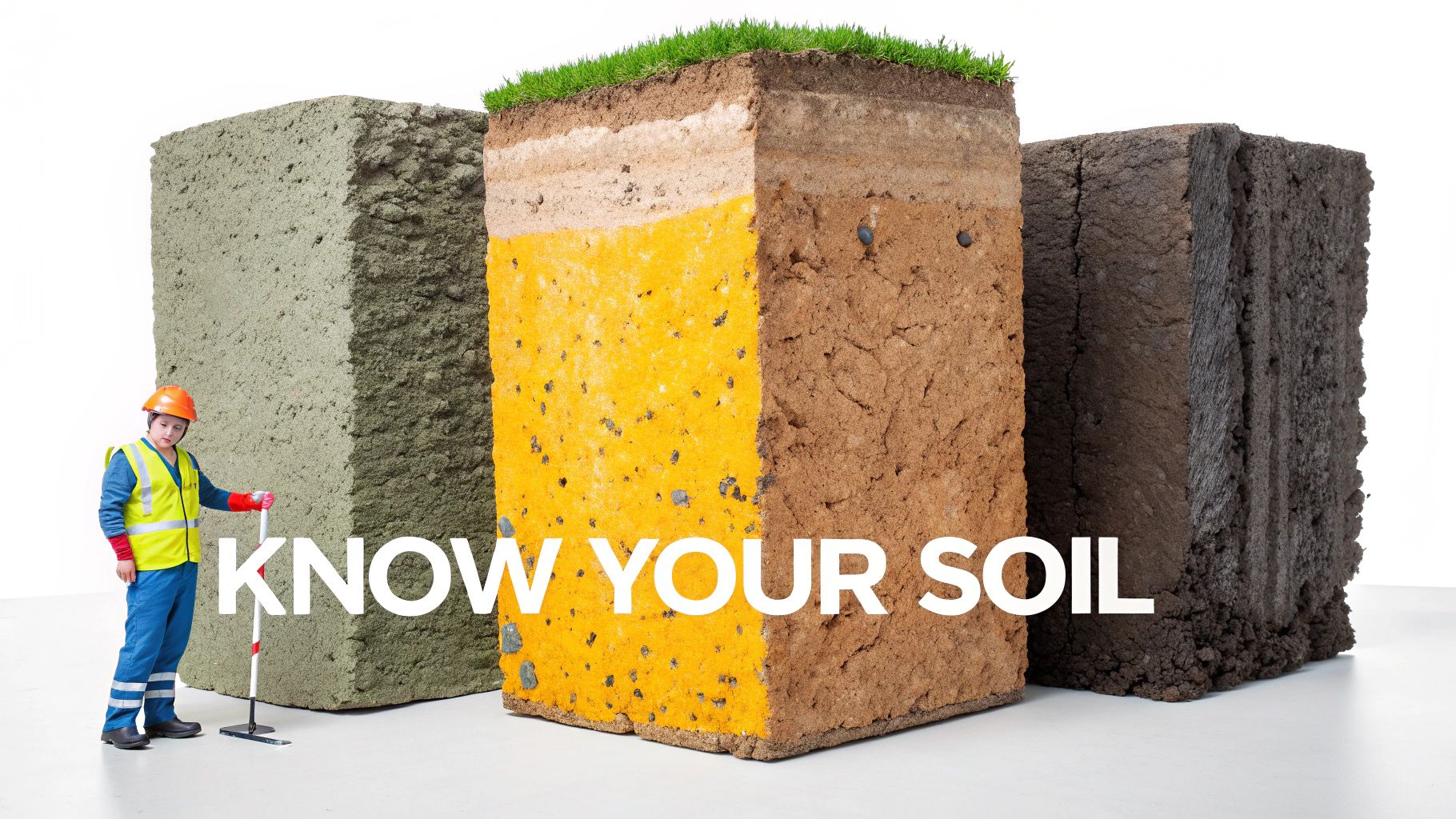
The ground beneath your feet dictates almost every single decision we make in excavation and shoring. A ‘one-size-fits-all’ approach isn’t just inefficient; it’s incredibly dangerous. The geology across NSW is massively diverse, from the sandy coastlines to the clay basins and solid bedrock. This means the shoring system that’s perfect for a trench in one suburb could be completely inadequate just 20 kilometres down the road.
Before a single bucket of dirt is moved, we have to know exactly what we're digging into. SafeWork NSW classifies soils into three basic types based on their stability. This classification isn't just paperwork—it’s the absolute foundation of a safe excavation plan.
Understanding Soil Types A, B, and C
The easiest way to think about soil types is like a stability rating. Type A is the most stable and reliable ground, while Type C is the most unstable and unpredictable.
-
Type A Soil: This is your best-case scenario. It’s hard, cohesive material like clay, silty clay, and hardpan that holds together well. A perfect local example is the Hawkesbury Sandstone found across Sydney's North Shore. Ground like this often allows for near-vertical cuts that maintain their shape.
-
Type B Soil: This is moderately stable ground. Think materials like silt, sandy loam, and medium clays. Much of the inland Hunter Valley is made up of soils that fall into this category. They can seem solid when dry but will degrade alarmingly fast once disturbed or saturated with water.
-
Type C Soil: This is the most hazardous soil to work with. It's granular with almost no cohesion, meaning it simply won't hold its shape. We're talking about gravel, sand, and loamy sand. If you’ve ever tried to dig a deep hole at the beach, you’ve experienced Type C soil firsthand.
How Regional Soils Affect Your Project
Let's ground this in the real world. The soil type directly impacts the speed of the job, the final cost, and the specific shoring method we need to use.
Picture a deep plumbing trench on the Central Coast, maybe in a coastal suburb like Terrigal. The ground here is almost entirely Type C sandy soil. The second we start digging, the loose, sandy walls begin to crumble inwards. For this kind of job, shoring has to be installed immediately, often as the excavation progresses. A trench box or hydraulic shoring is essential from the very first scoop to prevent a constant, dangerous cave-in.
Now, contrast that with a project out in the Hunter Valley, where we frequently run into Type B reactive clays. This soil is deceptive. When it's dry, it can look stable enough to stand vertically. But add a bit of water from a recent downpour, and its properties change completely. The clay becomes slick and incredibly heavy, exerting immense pressure on the trench walls. This is precisely why a professional assessment is vital; we can't just judge the soil by how it looks on a sunny day.
Why It Matters: A competent person must assess the soil before any work starts. Misclassifying reactive clay as stable or underestimating the instability of sand are common, rookie mistakes that can lead to catastrophic trench failure.
Finally, think about a job on Sydney’s North Shore, digging into solid Type A sandstone. While it's far more stable, it brings its own set of challenges. The sheer hardness of the rock means we need specialised rock saws and hydraulic hammers, which naturally affects the project's timeline and budget. And while the walls are less likely to collapse like sand, shoring is still required to protect workers from fractures and falling rock fragments. This work also generates a huge amount of spoil, and knowing how to properly manage rock and dirt recycling is key to keeping the site clean, safe, and efficient.
Navigating SafeWork NSW Compliance and Standards
Staying on the right side of safety regulations isn’t about ticking boxes in a complicated rulebook. It's about following a clear, commonsense framework that’s been designed from the ground up to keep everyone safe on site.
For any project involving trenching and shoring here in NSW, the SafeWork NSW Code of Practice for Excavation Work is our bible. It lays out the non-negotiable standards we must follow to protect our team, your property, and the public from harm.
Think of the Code of Practice as the absolute minimum standard for safety. Our job isn't just to meet those rules, but to go above and beyond by building a safety-first culture that responds to the unique risks of every single job. This is why our approach to site preparation and excavation always starts with a rock-solid safety and compliance check long before a single bucket of dirt is moved.
When an Engineer's Design Is Mandatory
For most straightforward trenching jobs, we can use pre-engineered shoring systems straight off the shelf, following the manufacturer's guidelines to the letter. But the game changes completely when the risks start to climb.
In several key situations, a qualified geotechnical engineer must step in to provide a site-specific shoring design. This isn't optional; it's a legal requirement.
This is mandatory if the trench is:
- Deeper than 6 metres.
- Dug next to or below the footing of an existing building.
- Located where there's significant ground vibration from traffic or heavy machinery.
- In complex ground conditions or near other excavations.
A classic example would be digging a deep basement right next to a neighbouring property in a dense Sydney suburb. That scenario would absolutely require an engineer's sign-off. This ensures the shoring system is designed to handle the exact soil pressures and building loads present, leaving absolutely nothing to chance.
Daily Inspections and Site Management
A shoring system is never a ‘set and forget’ solution. The ground can shift, weather can change, and site conditions can evolve. The Code of Practice is crystal clear on this: a competent person must inspect the trench and its protective systems every single day before work starts.
Inspections are also required after any event that could affect stability, like a heavy downpour or vibrations from nearby piling work.
Another non-negotiable rule involves managing the excavated soil, also known as spoil. It has to be placed at least one metre back from the trench edge. This simple step prevents the added weight from causing a localised collapse and stops loose material from tumbling back into the trench, creating a serious hazard for workers below.
Why It Matters: Strict compliance isn't just about avoiding fines; it’s about preventing catastrophic failures. Shoring has revolutionised safety on Australian construction sites, but incidents still happen when corners are cut. Between 2012 and 2019, there were 254 excavation incidents and 623 notices issued in NSW alone. It's a stark reminder of why these rules exist. To see what can go wrong, you can read about a 2019 incident where workers were injured.
Understanding the Cost of Trenching and Shoring
While safety on a worksite is priceless, there's no way around it: proper trenching and shoring is a significant and necessary project cost. The key to avoiding nasty surprises down the track is budgeting for it realistically from the get-go. The final price tag isn't just one number; it's a combination of several critical factors we have to assess for every single job.
Things like the trench dimensions (both how deep and how long), the ground conditions we're digging into, the specific type of shoring system required, how easily we can get machinery to the site, and how long the gear will be needed all play a part in the final cost.
Key Cost Factors Explained
To give you a clearer picture, let's look at two very different scenarios. A short, shallow trench for a retaining wall footing in the stable clay soils you find around Kariong is a relatively straightforward job. It might only need some basic timber shoring for a day or two, so it's naturally going to cost far less to secure.
Now, imagine a completely different project: installing a new sewer main deep underground in the loose, unstable sandy soil of Copacabana. This situation screams risk. It demands a much more robust, engineered solution like a heavy-duty trench box or a full hydraulic shoring system, likely hired for an extended period. The complexity is higher, the risk is greater, and the cost will absolutely reflect that.
Why It Matters: Trying to cut corners with an inadequate shoring system is a false economy. It doesn't save you money in the long run. Instead, it exposes your project to catastrophic risks, including worker injury, property damage, and project-stopping fines from SafeWork NSW that will make the initial cost of doing the job right look like pocket change.
Accessing Professional Equipment
Thankfully, you don't need to go out and buy this highly specialised equipment. The Australian shoring equipment rental market is thriving, making professional, compliant systems incredibly accessible for projects of all sizes, from a small residential build to major civil works. This means we can always get the right gear for the job without a massive capital outlay.
This rental model is a huge win for everyone. The Australian trench shoring equipment rental market is driven by infrastructure demands and a sharp focus on safety regulations. This growth reflects an increasing demand fuelled by ongoing urbanisation and government projects, which makes it financially viable for companies to offer modern systems that dramatically reduce accident risks and prevent expensive project delays.
What this all means is that getting the correct, professionally maintained equipment for your Central Coast or Sydney project is more straightforward and affordable than ever before.
Your Trenching and Shoring Questions, Answered
When you're dealing with digging, there are always questions. We get them all the time from clients across the Central Coast, Newcastle, and Sydney. Getting your head around the essentials of trenching and shoring is the best way to plan your project with confidence, so our team has put together some clear, practical answers to the questions we hear most often.
At What Depth Does a Trench Legally Require Shoring in NSW?
The black-and-white answer from SafeWork NSW is that any trench 1.5 metres or deeper legally requires a protective system like shoring. But in the real world, that's just a starting point.
The true answer always comes down to the conditions on your specific site. If we're digging in loose, sandy soil, right next to a busy road with constant vibrations, or if there’s groundwater seeping in, we'll absolutely be installing shoring in much shallower trenches. A professional site assessment is non-negotiable; it's the only way to guarantee a safe and compliant job.
Can I Just Slope the Trench Sides Instead of Using Shoring?
Yes, you can. This technique is called ‘battering’ or ‘benching’, and it's a perfectly valid safety method. The catch? It requires an enormous amount of space.
To safely batter a deep trench, you might need the top of the excavation to be three times as wide as it is deep. On the tight residential blocks you find all over Sydney and the Central Coast, where you're pushed up against boundaries, driveways, and the neighbour's house, it's almost always completely impractical. In these common scenarios, shoring isn't just the best option—it's the only feasible and safe one.
Who Is Responsible for Designing the Shoring System?
This depends entirely on how complex the job is. For most straightforward excavations, an experienced and competent contractor like us can use pre-engineered shoring solutions. These are systems like hydraulic shores or trench boxes that come with manufacturer's specifications, which we follow to the letter.
However, the game changes for deeper or more complex projects. If we’re excavating near existing structures, dealing with poor soil, digging deeper than 6 metres, or working around significant vibrations, the rules mandate a site-specific, certified design from a qualified geotechnical engineer. We manage this entire process for you, bringing in the right engineering experts when needed to ensure everything is above board and completely safe.
How Long Can Shoring Be Left in a Trench?
It's crucial to remember that shoring is always a temporary support system. It's designed to stay in place only for as long as it takes to get the work done inside the trench—it is not a permanent fixture.
Every single day, before any work starts, a competent person must inspect the entire shoring system. It also needs to be checked after any event that could impact its stability, like a heavy downpour or nearby earthworks. The process is methodical: we install the shoring, your team completes the pipe laying or other work, and then we carefully backfill the trench while progressively and safely removing the supports.
Ready to get your project started on solid ground? The team at Booms Up Civil Group has over 15 years of experience delivering safe, compliant, and efficient trenching and shoring solutions across the Central Coast, Newcastle, and Sydney. Contact us today for a no-obligation chat about your project needs.