
Picture this: you need to dig a trench for a new service line on your Central Coast property, but you have that sinking feeling that crucial water pipes and NBN cables are lurking just below the surface. A wrong move with an excavator bucket could mean a costly, dangerous disaster. This is exactly where non-destructive digging (NDD) comes in—it’s the modern, safe way to see what's underground without the guesswork.
Think of it as keyhole surgery for the ground. Instead of digging blindly with a heavy-handed machine, we use a precise combination of high-pressure water (hydro excavation) or air (vacuum excavation) and a powerful vacuum to carefully uncover what lies beneath. It's the only way to be 100% sure you won't hit something expensive and dangerous.
What is Non Destructive Digging and Why Does It Matter?
When you’re breaking ground on any project, the biggest risk is always the unknown. Hitting a hidden utility isn't just an inconvenience; it can bring your entire project to a screeching halt, trigger massive repair bills, and pose a serious safety risk to your team and the public. This is why non-destructive digging has become a non-negotiable part of modern excavation.
NDD, also known as vacuum excavation or hydro excavation, is all about precision. Rather than relying on brute force that can rip through assets, it uses pressurised water to gently liquefy the soil around buried utilities. A high-powered vacuum truck then sucks up the resulting slurry, leaving pipes, conduits, and cables completely exposed but totally unharmed.
This method is crucial for a few key reasons:
- Safety First: It drastically cuts the risk of striking live gas lines, electrical conduits, or critical communication cables. For us, keeping workers and the public safe is always priority number one.
- Cost Avoidance: The bill for repairing just one damaged fibre optic cable or a major water main can easily run into the thousands. That’s before you even factor in project delays and potential fines from your local council, like Central Coast Council or Newcastle Council.
- Compliance: Using NDD aligns with Australian Standard AS 5488 (Classification of Subsurface Utility Information). It’s also the preferred—and often mandated—method for working near utilities by authorities like SafeWork NSW.
Imagine you're developing a site in Sydney where underground infrastructure is incredibly dense. Hitting something isn't a possibility, it's a probability without the right approach. Non-destructive digging is the professional standard that asset owners and councils now expect. For a deeper dive into the entire process, check out our expert guide to site preparation and excavation.
Exploring the Two Core Methods of Non Destructive Digging
When we talk about non-destructive digging, we’re really talking about two primary techniques. Both are incredibly precise and designed to work around sensitive underground assets without leaving a scratch. The choice between them usually comes down to the conditions on your site—from soil type to environmental factors.
Let's break down how these two methods work.
Hydro Excavation: The Power of Pressurised Water
Hydro excavation is the most common form of NDD, and for good reason. It’s seriously effective in a huge range of soil types, especially the tougher, more compact ground we often come up against in the Hunter Valley or parts of Sydney.
The process is straightforward but demands skill. Our operators use a specialised, high-pressure water wand to carefully slice into the soil. The jet of water is strong enough to break apart dense clay, but it's calibrated to be gentle enough not to damage buried pipes. As the water turns the soil into a slurry, a powerful vacuum hose on the same truck sucks it all up into a debris tank.
This 'wet' method is perfect for accurately exposing utilities, a process known as potholing. It leaves a clean, well-defined hole, letting you visually confirm the exact location of any underground assets before any heavy machinery gets near them.
Vacuum Excavation: The Dry Suction Approach
While hydro excavation is the go-to in many situations, sometimes adding water to the ground isn’t a good idea. This is where vacuum excavation, or ‘dry suction’, really shines. Instead of water, this method uses a powerful jet of compressed air to loosen the soil.
Just like the wet method, a large vacuum hose then removes the displaced, dry material. This technique is particularly useful in the sandy coastal soils you find from Gosford to Newcastle. It’s also the preferred choice for environmentally sensitive areas or when working around electrical assets where introducing water creates an unnecessary risk.
Because it doesn’t use water, the leftover spoil is dry and can often be reused on-site as backfill, which can be a real cost-saver and is better for the environment.
This diagram helps visualise how non-destructive digging delivers on safety, compliance, and cost-savings for your project.
As you can see, these core benefits are all connected, with safety at the heart of preventing costly damage and ensuring you tick all the compliance boxes.
Hydro vs. Vacuum Excavation: Which is Right for You?
So, which method is the right fit for your project? While our team will always assess your site and recommend the best approach, the decision usually boils down to a few key factors.
For example, if you're dealing with hard, compacted clay around Wyong, hydro excavation is the clear winner. Its power makes quick work of tough ground. However, if your project is on the sandy soils near the coast or in an area where water runoff is a concern, vacuum excavation is the smarter choice. It's cleaner, minimises environmental impact, and the dry spoil can often be reused. Ultimately, we match the technology to your specific site needs.
When You Absolutely Need Non Destructive Digging
While NDD is a superior technique in many situations, there are times when it isn't just a good idea—it’s the only responsible choice. These are the moments where guesswork is off the table and you need absolute certainty to move forward safely.
Consider this scenario: you're planning a new pool in a dense Sydney suburb. Your Dial Before You Dig Australia (BYDA) plans show a critical gas main running somewhere near the proposed excavation area. One wrong move with an excavator could be catastrophic. This is a textbook case for non-destructive digging.
Uncovering Hidden Dangers with Potholing
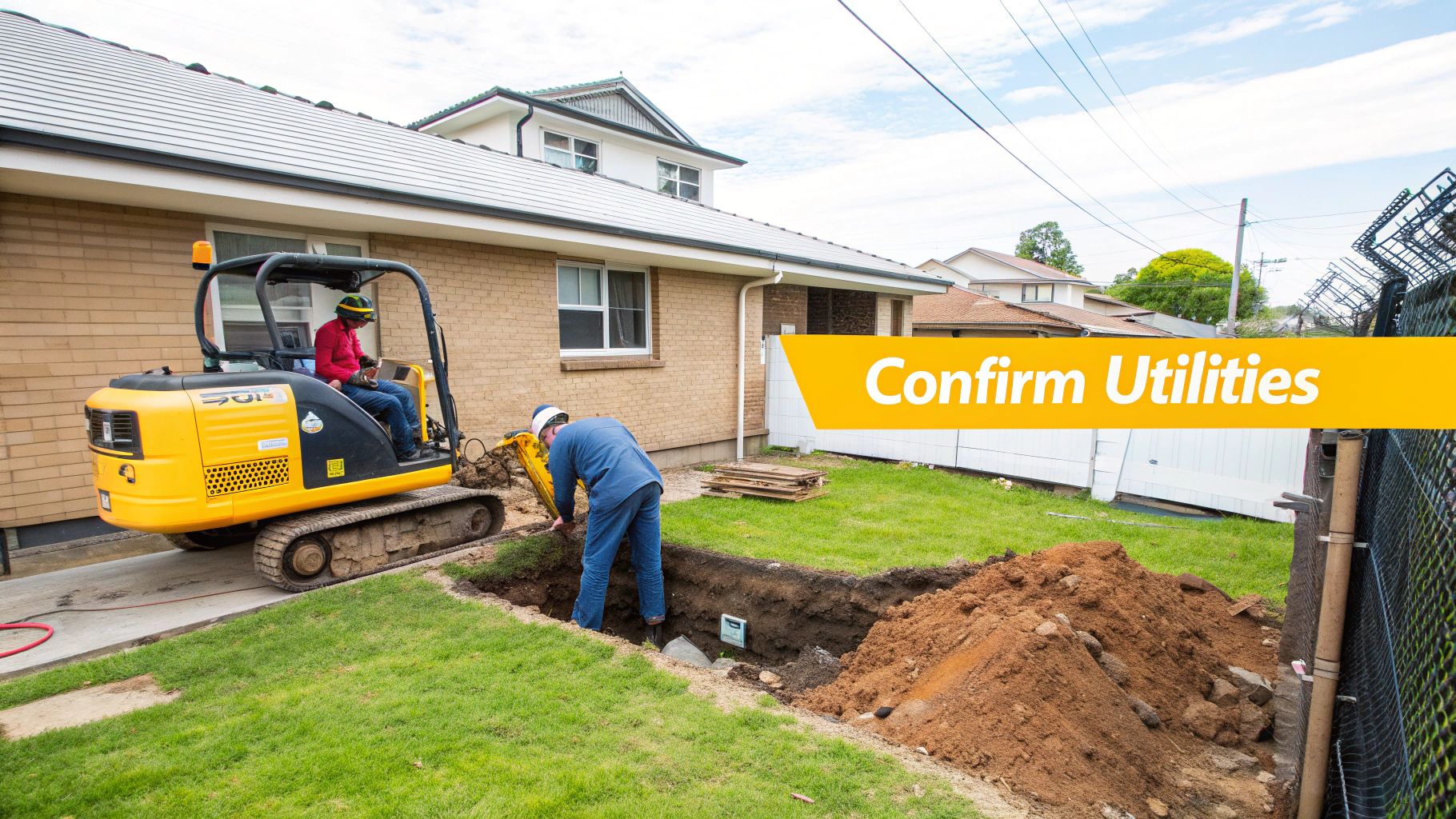
The process of using NDD to precisely locate these underground assets is known as potholing. It’s pretty straightforward: we excavate small, strategic holes to physically expose a utility, confirming its exact depth and alignment. This simple step removes all doubt, turning a question mark on a map into a tangible, visible asset you can safely work around.
Potholing is essential whenever you're digging for any structure that requires deep foundations. When you're dealing with the complex process of footings excavation, knowing exactly what lies beneath is critical. Potholing provides the ground-truth data needed to finalise engineering plans with confidence.
Here are a few common scenarios where potholing isn't just best practice, but a project-saving necessity:
- Working Near Critical Utilities: Any time your work is close to assets marked as high-pressure gas, major water mains, or high-voltage electricity, NDD is mandatory. The potential consequences of a strike are simply too severe.
- Verifying Utility Depths: BYDA plans are a guide, not a guarantee. The actual depth of a pipe can vary due to past earthworks. Potholing provides the precise location needed for safe excavation.
- Dense Urban Environments: In places like Newcastle's CBD or inner-Sydney suburbs, the underground is a spaghetti junction of utilities. NDD is often the only way to navigate this complex web without causing widespread disruption.
Potholing isn't about digging more; it's about digging smarter. It's the crucial investigative step that provides the certainty needed to proceed with bulk excavation confidently and safely.
Practical Applications Beyond Utility Location
While exposing utilities is its primary job, the precision of NDD makes it incredibly versatile for other sensitive tasks. The ability to surgically remove soil without impact opens up solutions for many complex problems.
For example, an arborist might need to investigate the root system of a significant tree without causing damage. Councils also rely on it for all sorts of maintenance tasks that would otherwise be highly disruptive.
Let's look at some real-world examples you might run into:
- Trenching in Tight Spaces: If you're running new plumbing on a tight-access block in Terrigal where an excavator simply can't fit, a vacuum truck can do the job with minimal disturbance.
- NBN and Telecommunications Upgrades: When contractors need to install new fibre optic cables, they use NDD to safely expose the existing network without risking an outage.
- Environmental Remediation: On sites requiring the removal of contaminated soil, vacuum excavation provides a controlled way to extract material without spreading pollutants.
- Cleaning Pits and Culverts: Councils on the Central Coast regularly use our services to clean out stormwater pits and culverts—a messy and difficult job to do with mechanical equipment.
In each of these situations, traditional digging methods would be too risky or destructive. Non-destructive digging provides a precise, safe, and often faster alternative.
The True Cost of an Excavation Mistake
When you’re looking at quotes, the hourly rate for non-destructive digging can seem higher than a traditional excavator. But focusing only on the hourly rate is missing the bigger picture. You have to think about the massive cost of getting it wrong.
Let's say your new build project in a quiet Newcastle suburb is ticking along nicely. The excavator operator starts digging a trench for the sewer connection. Then, you hear a sickening crack, and water erupts, flooding the site. The bucket just sliced through a high-pressure water main that was a metre off its marked location.
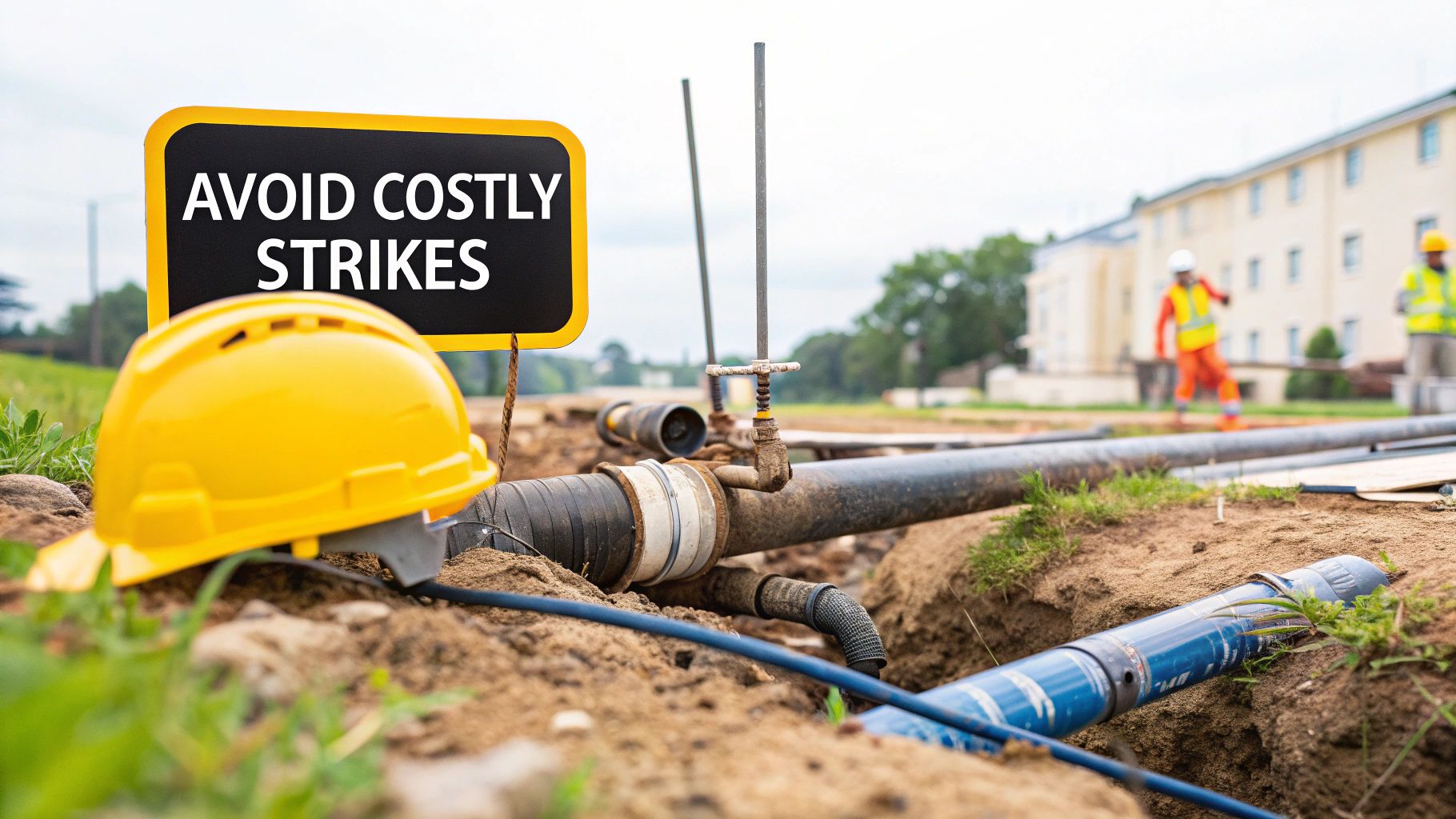
In an instant, your project grinds to a halt. The price of that single mistake isn’t just about digging anymore; it's a cascade of financial pain that can cripple your budget and timeline.
The Ripple Effect of a Utility Strike
A utility strike is never a single cost. It’s a chain reaction of expenses that spirals out of control. Suddenly, you’re on the hook for a whole new world of problems.
First, you’ll get the bill for emergency repairs from the asset owner, which can easily be thousands of dollars. Hit something major like a Telstra fibre optic cable, and that figure can climb into the tens of thousands. Next, the project delays kick in. Your site is now on hold, meaning other trades are stood down, but you may still have to cover their downtime.
Fines, Penalties, and Serious Safety Risks
Beyond the immediate costs, a utility strike drags you into a compliance nightmare. SafeWork NSW takes a very dim view of these incidents, as they pose a massive risk. An investigation can lead to eye-watering fines and stop-work orders.
The asset owner (think Sydney Water or Ausgrid) will also hit you with their own penalty notices. The paperwork and administrative headache alone can chew up weeks of your time. This is especially true on complex sites where figuring out the rules for shoring in excavation is already a priority; a utility strike complicates things tenfold.
Paying a bit more upfront for non-destructive digging is not an expense—it’s an insurance policy. It's a calculated investment that eliminates the risk of a $10,000 repair bill and weeks of downtime.
The NDD Alternative: A Smarter Investment
Now, let's replay that scene with a non-destructive digging approach. Before the excavator starts, our vacuum truck pothole the area to safely expose the exact location and depth of that water main. There’s zero guesswork.
Your excavator operator now knows precisely where the danger is and can dig with complete confidence. The slightly higher upfront cost for NDD has just saved you from a five-figure disaster, kept your project on track, and ensured your site is safe. When you frame it that way, the choice becomes crystal clear.
Our Commitment to Safety and Compliance
When it comes to digging, choosing the right crew isn’t just about hiring a truck. It’s about trusting a team with the safety of your site, your people, and the public. At Booms Up Civil, our approach to safety isn't a box-ticking exercise; it's the bedrock of every job we do.
We don’t just show up and start digging. Before any soil is disturbed, we run through a rock-solid process built on industry standards. This means we break ground with total confidence, knowing every risk has been managed.
Sticking to Australian Standards
For anyone in our line of work, the key benchmark is Australian Standard AS 5488. This standard sets out exactly how underground utilities are classified and located. For us, following it isn’t optional—it’s mandatory. It gives us a clear framework to identify and protect those hidden assets.
Our operators are skilled in reading utility plans and spotting the tell-tale signs of different underground assets. This hands-on expertise is what you need when you're digging millimetres away from critical infrastructure.
Our Proven Safety Process
Our commitment goes beyond just the standards. We follow every SafeWork NSW regulation and kick off every project with the mandatory Dial Before You Dig Australia (BYDA) search. It’s a non-negotiable first step.
From there, our process is simple but effective:
- A Thorough Site Walk-Through: We conduct a detailed evaluation on-site, identifying any potential hazards and access issues before they become problems.
- Eyes on the Asset: We use NDD to pothole and visually confirm the exact location and depth of utilities marked on the BYDA plans. Seeing is believing.
- Clear Communication: We keep an open line of communication with you and any other contractors on site. Everyone needs to be on the same page.
This methodical approach ensures we get it right the first time, preventing the kind of dangerous and expensive mistakes that can derail a project.
Why Our Commitment to Safety Matters to You
Look, our strict focus on doing things by the book directly protects your project. By making safety our top priority, we shield your budget from unexpected repair costs, your timeline from crippling delays, and your site from the massive risks of a utility strike.
When you bring us on board, you’re not just hiring a service. You're partnering with a team that understands the immense responsibility that comes with excavation. It's about having the right expertise to turn a high-risk job into a controlled, safe, and efficient process.
Choosing the Right NDD Contractor for Your Project
Hiring a company for non-destructive digging isn't just about booking a truck. It's about trusting a team to protect your project, your assets, and your timeline. Get it right, and the process is seamless; get it wrong, and you're looking at costly mistakes.
Making the right call boils down to asking the right questions from the get-go. This isn’t about being difficult—it’s about doing your due diligence to make sure the job is done to the highest professional standard.
Key Questions to Ask Any NDD Provider
Before you sign a contract, you should ask any potential contractor:
- Are your operators fully ticketed, trained, and insured? This is the absolute baseline. You need confidence that the people on your site are qualified and you’re properly covered.
- How does your team comply with AS 5488? A true professional will be able to walk you through their process for meeting Australian Standards, from the initial Dial Before You Dig searches to on-site verification.
- What are your pre-start safety checks? You want to hear them talk about site-specific risk assessments, daily pre-start meetings, and having a clear plan for managing excavated material.
A contractor worth their salt also invests in top-quality, maintained machinery. While it's not your job to manage their books, understanding the various financing solutions for construction equipment gives you an appreciation for what it takes for a professional outfit to run a modern, safe fleet.
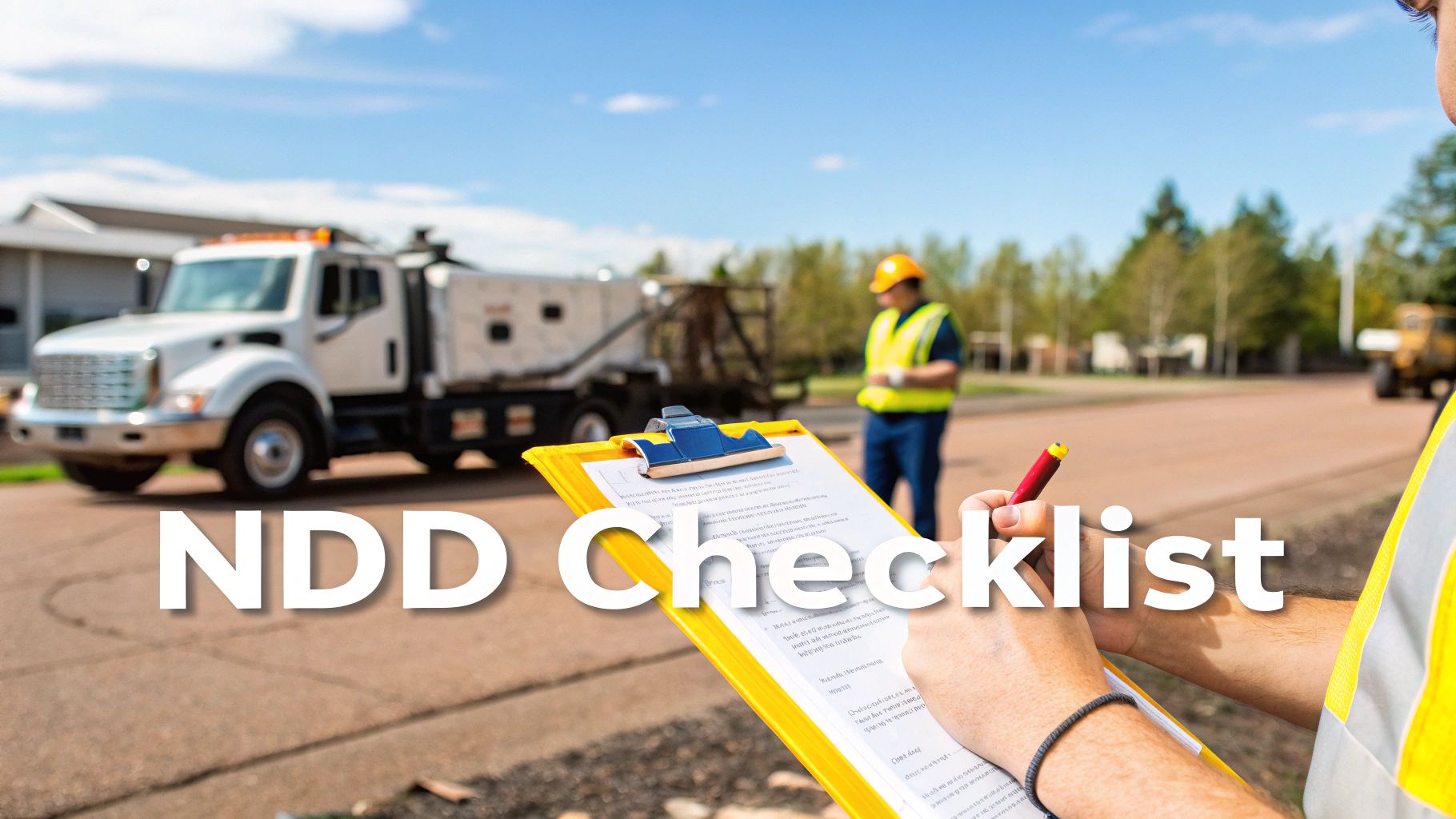
A contractor’s commitment to safety and compliance is a direct reflection of their professionalism. A team that prioritises these details is a team you can trust.
The Value of Local Expertise
Beyond the paperwork, there's no substitute for local knowledge. With over 15 years of experience working across the Central Coast, Sydney, Newcastle, and the Hunter Valley, we've seen it all. We know the sandy coastal soils around Terrigal demand a different technique than the unforgiving sandstone bedrock you’ll find in Sydney.
This kind of local expertise, especially when it comes to navigating tight access excavations, saves you time, money, and unexpected headaches. Ultimately, choosing the right partner comes down to trust, proven expertise, and a commitment to safety.
If you’re getting a project off the ground and want it done right from the start, give us a call. We're always happy to have an obligation-free chat about your needs.
Frequently Asked Questions About Non-Destructive Digging
We get asked a lot of questions about NDD, so we’ve pulled together the most common ones here to give you practical answers.
Is Non-Destructive Digging Really Safe for All Utilities?
Yes, when performed by trained professionals, it’s the safest method available. The pressurised water or air is calibrated to break up soil without harming the tough surfaces of pipes, conduits, or cables. Unlike the blunt force of an excavator bucket, there's zero risk of impact damage, which is why it's the required method for working near delicate assets like fibre optic cables.
How Much Mess Does It Make?
This is a great question, especially for jobs in residential areas. With hydro excavation, the wet slurry is contained and vacuumed straight into the truck's debris tank. This means no big piles of dirt left on your lawn or driveway. The work area stays surprisingly clean, which cuts down on site disruption and clean-up costs.
Can It Be Used in Bad Weather?
Absolutely. One of the big advantages of NDD is that our vacuum trucks can operate effectively in most weather, including heavy rain. Wet ground can sometimes make hydro excavation even more efficient. This reliability means your project is far less likely to be held up by weather delays, which is a common headache for any earthmoving project.
How Deep Can You Dig?
The depth we can reach depends on the specific truck and the ground conditions. That said, our modern fleet can typically excavate to depths of several metres. For most jobs, like exposing utilities for a new house connection or digging a plumbing trench, our equipment has more than enough reach. We’ll always assess your project's specific depth requirements before we start.
At Booms Up Civil Group, our commitment is to get the job done right the first time, with safety and precision at the heart of everything we do. For an obligation-free chat about what your project needs, get in touch with our expert team today.