Shoring in excavation is the critical, temporary support system we put in place to stop trench walls or the face of a dig from collapsing. Think of it as a temporary skeleton for the earth; shoring holds back thousands of kilograms of soil, keeping workers inside the excavation safe and preventing the ground from shifting under nearby structures like your home or a neighbouring property. It’s a non-negotiable part of our work, especially on the Central Coast, in Sydney, or across the Hunter Valley where soil conditions can be dangerously unpredictable.
What Is Shoring in Excavation?
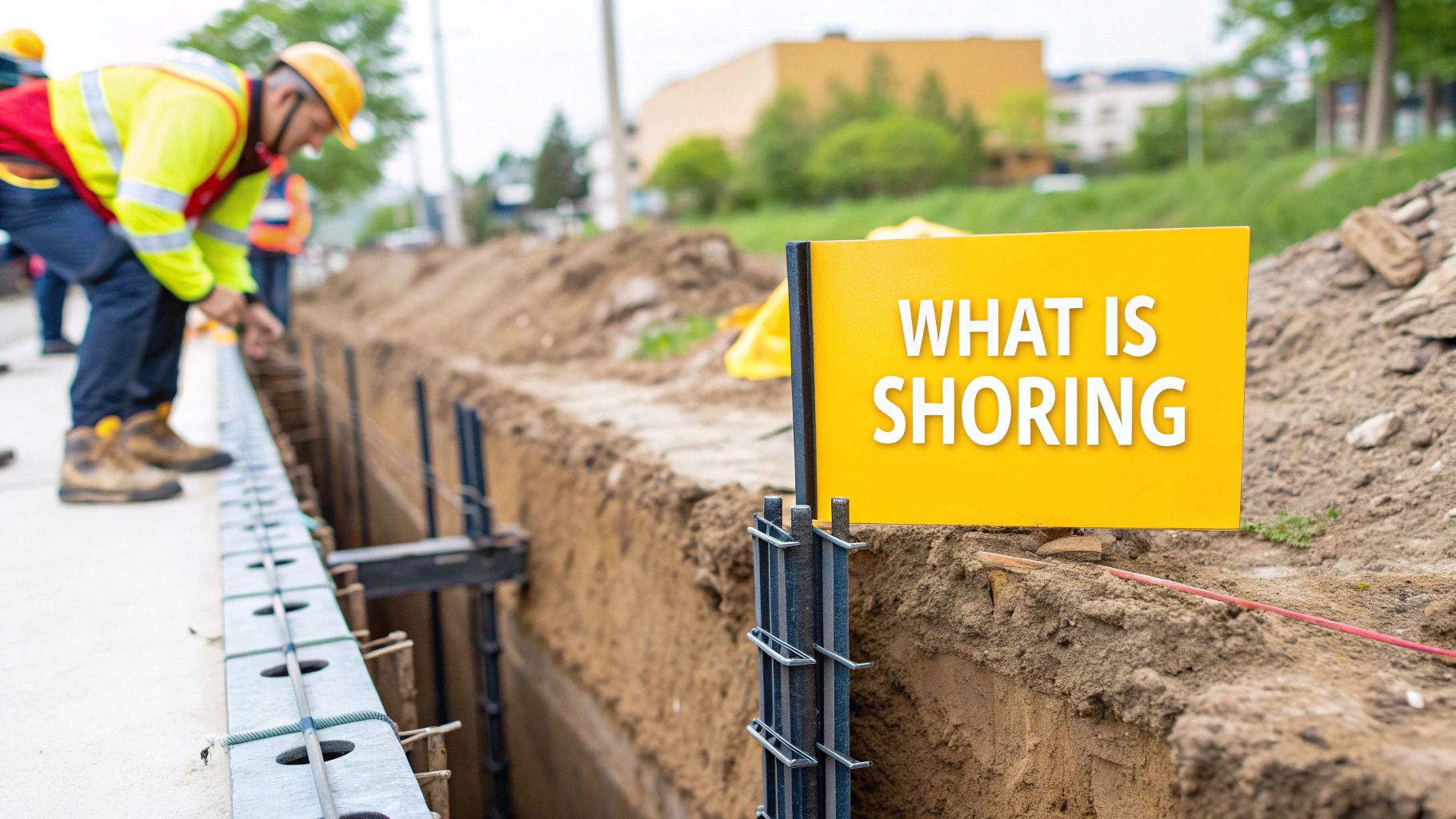
When you look into a deep trench on a construction site, you're seeing vertical walls of earth fighting against immense, invisible pressure. Shoring is the engineered solution we use to win that fight. It’s not just a good idea; it’s an essential safety measure we take seriously on every job.
The purpose is really twofold. First and foremost, it’s about protecting the lives of our labour force. Secondly, it’s about safeguarding everything around the excavation—your neighbour’s property, underground utilities, and public infrastructure.
Imagine you're building a new home on a steep Terrigal block with a deep foundation cut. Without proper shoring, the sandy coastal soil could give way, cracking your neighbour's driveway or, worse, damaging their home's foundation. This is exactly why it’s a crucial step in our professional site preparation for every single project we undertake.
Why It’s Legally Required
It’s easy to underestimate the danger, but the reality is sobering. A single cubic metre of packed earth can weigh around 1.7 tonnes. This means even a small trench collapse can be instantly fatal for anyone working below.
This is precisely why shoring isn't just best practice; it's a legal and moral necessity. Under SafeWork NSW regulations, any trench deeper than 1.5 metres requires some form of ground support. It’s a rule we follow without exception.
More Than Just a Safety Barrier
Beyond its life-saving role, a well-designed shoring system brings several practical benefits that keep your project moving forward efficiently. It creates a stable work area, allowing trades to lay pipes or pour foundations without worrying about the walls closing in.
Proper shoring also prevents costly delays. A collapse doesn't just pose a safety hazard; it can halt a project for weeks, triggering extensive remediation work and cost blowouts. Using the correct shoring method is a fundamental part of meeting our obligations under Australian Standards (AS) and workplace health and safety (WHS) regulations. Ultimately, seeing a robust shoring system on your site is a clear sign that we take safety and professionalism seriously.
Common Shoring Types We Use on Site
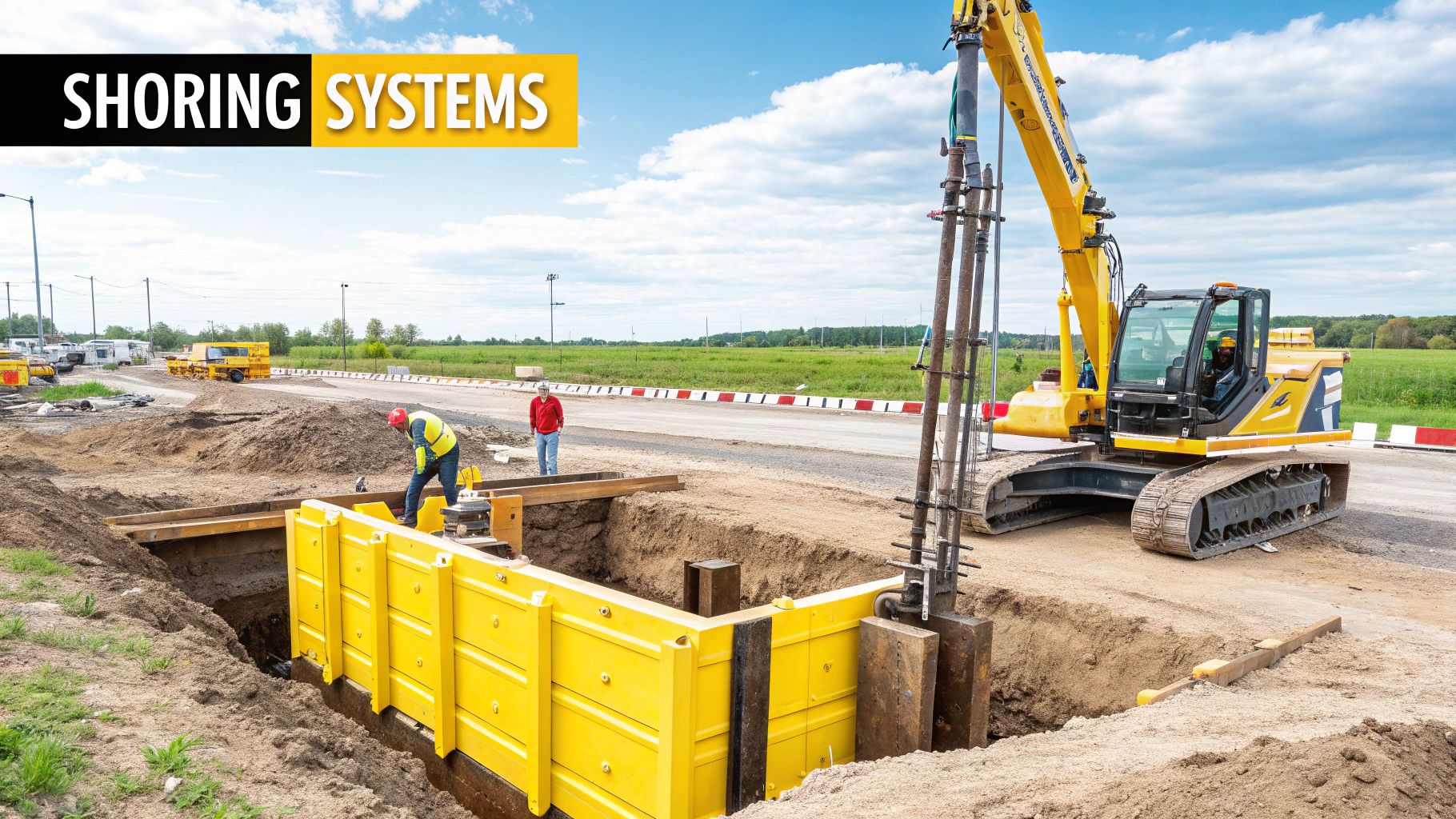
When you see shoring on an excavation site, the type used isn’t a random choice—it’s a specific solution picked for the unique challenges of that exact spot. Different ground conditions, depths, and nearby structures all demand different approaches.
Here, we'll walk you through the common shoring systems you might see us using on a project, from a suburban block on the Central Coast to a complex commercial build in Sydney. Each method is chosen to provide maximum stability while letting our team work efficiently within the protected space.
Trench Boxes (Trench Shields)
One of the most common sights on utility or drainage projects is the trench box, also known as a trench shield. Think of it as a pre-made, heavy-duty steel cage that we lower directly into the trench with an excavator as we dig. It acts as a protective shield, creating a safe zone for workers inside.
For example, if we're laying new stormwater pipes along a street in Wyong, a trench box is ideal. It’s relatively quick to install and move along the trench line, providing robust protection without a complex setup.
Hydraulic Shores
For narrower trenches, hydraulic shoring is an incredibly effective and versatile solution. This system uses hydraulic pistons to press aluminium or steel rails firmly against the trench walls. Imagine a car jack turned on its side, pushing outwards to hold everything in place.
This method is lightweight and easy to install, making it excellent for repair jobs or digs in confined spaces. Let's say we're working on a plumbing connection in a tight backyard in Gosford; hydraulic shores allow us to secure the trench quickly and safely, which is especially useful for any projects involving tight access excavations.
Soldier Piles and Lagging
For deeper, larger excavations like basements or underground carparks, you’ll often see a soldier pile and lagging system. This method involves driving or drilling vertical steel beams (the "soldier piles") into the ground at regular intervals before the bulk excavation even begins.
As we dig down, we install timber planks or precast concrete panels (the "lagging") horizontally between the piles. This creates a strong, continuous retaining wall that is built from the top down. For a new apartment building in Hornsby with a two-level basement, soldier piles are the go-to solution for this scale of work.
Sheet Piling
When dealing with waterlogged ground or loose, sandy soils like those near the Central Coast's lakes, sheet piling is often the best defence. This system uses long, interlocking sheets of steel that are vibrated or driven into the ground to form a continuous, water-resistant barrier. The interlocking joints create a seal that helps keep groundwater out of the excavation pit.
Consider this scenario: excavating for a deep foundation on a waterfront block in Woy Woy would almost certainly require sheet piling to manage the sandy coastal soils and stop water from flooding the site and destabilising the excavation. Getting water away from the dig is everything, which is where understanding retaining wall drainage systems becomes crucial.
When is Shoring Needed on Your Project?
Knowing when you need shoring isn't guesswork; it's a critical safety decision based on a professional risk assessment. While there are some hard and fast rules, the final call is always a blend of legal benchmarks and the real conditions we see on the ground.
The most straightforward trigger? Depth. According to SafeWork NSW, any trench or excavation deeper than 1.5 metres is automatically classified as high-risk work. This means some form of ground support is non-negotiable. It’s the first and most important rule we follow, no exceptions.
But relying on a tape measure alone is a rookie mistake. An experienced contractor knows that some of the most dangerous situations pop up in excavations far shallower than that 1.5-metre benchmark. Several other critical factors can make shoring an absolute necessity, even in what looks like a shallow dig.
Looking Beyond Just the Depth
We meticulously check these details before a single bucket of dirt is moved:
- Unstable Soil: The loose, sandy soils in coastal suburbs like Umina Beach can give way with little warning. Reactive clays common across the Hunter Valley can shrink and swell, creating dangerously unstable trench walls. Sydney’s sandstone bedrock, while more stable, still requires careful assessment.
- Nearby Buildings or Roads: If we’re digging right next to your house, a neighbour’s property, or a public road, shoring is essential to stop ground movement from causing structural damage.
- Vibrations: The constant vibration from our machinery or passing traffic on a busy road can be enough to trigger a collapse, making shoring crucial for stability.
- Groundwater: As soon as an excavation hits the water table, the soil becomes saturated and loses its strength. This is a common challenge on Central Coast sites, where shoring becomes vital for controlling the excavation walls.
A shallow trench in unstable, wet sand right next to a driveway is far more dangerous than a deeper cut into solid, dry sandstone. That's why you need a contractor who looks at the whole picture.

Who’s Responsible for Shoring Safety?
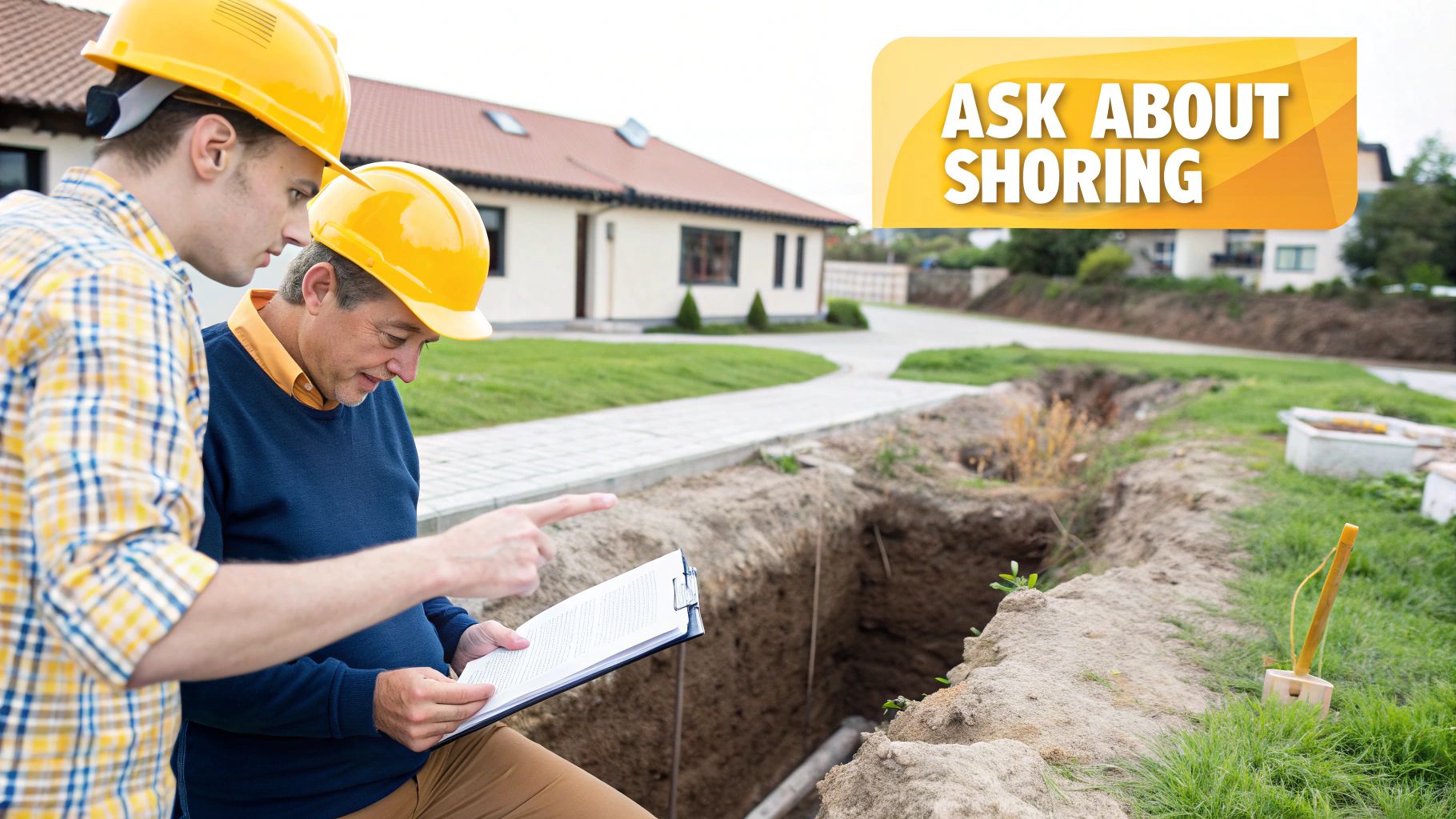
When it comes to digging, the buck stops with the contractor. It’s our legal duty of care to ensure the safety of our workers and the protection of your property. We are required to create and follow a strict Safe Work Method Statement (SWMS) that identifies every hazard and details the control measures—including the exact type of shoring to be used.
Ignoring these duties leads to massive penalties from SafeWork NSW, project shutdowns, and, worst of all, preventable accidents. This is why a site-specific safety plan, complete with detailed shoring designs, is a non-negotiable part of our process before we even start the excavator.
Protecting People and Property
Our first duty is to protect human life. An unsupported trench wall can fail in a split second, turning a regular workday into a catastrophic event. It's a gamble we simply will not take.
Our second duty is to protect the surrounding environment and infrastructure. Proper shoring is what stops the earth from shifting, which can do incredible damage to your own property and your neighbours'. Without it, you risk undermining foundations, cracking driveways, or severing underground utilities. A properly installed shoring system isn't an expense; it's an investment in certainty and one of the most effective strategies to reduce construction costs by preventing accidents and rework.
What Homeowners Should See on Site
As a client, seeing a robust shoring system being installed is a clear sign that your contractor takes safety and professionalism seriously. You should expect to see a clean, organised site where safety measures are clearly a priority. If your project involves both knocking down an old structure and digging for a new one, it’s vital to understand how these two phases connect. You can learn more in our guide on combining demolition and excavation.
When you're choosing between excavation companies near you, ask them directly about their shoring plan. A vague answer is a major red flag. They should be able to explain their process for identifying hazards and the specific control measures they'll use. Also, confirm they hold the correct licences and insurances, including public liability and professional liability insurance for contractors.
Questions We Hear All the Time About Shoring
Shoring is one of those critical parts of a job that’s often out of sight, but it should never be out of mind. It's the unseen hero that keeps everyone safe. We get a lot of questions from clients and homeowners trying to get their heads around it, so here are some straight answers to the most common ones we hear on site.
Who Is Legally Responsible for Shoring Safety?
The buck stops with the Person Conducting a Business or Undertaking (PCBU)—which, in almost every case, is your excavation contractor. It's our legal duty to carry out a comprehensive risk assessment, create a detailed Safe Work Method Statement (SWMS), and make absolutely certain all shoring is properly designed, installed, and inspected on the regular, all according to SafeWork NSW regulations.
As the homeowner or client, your main responsibility is doing your homework. You need to hire a licensed, insured, and competent professional who lives and breathes these safety standards, not someone who cuts corners.
Does My Residential Project Need an Engineered Design?
Honestly, it depends entirely on your site. For a straightforward, shallow trench under 1.5 metres deep in solid, dry ground, a pre-engineered system like a trench box might be all you need to stay compliant and safe.
But the moment things get more complicated, an engineer absolutely must be involved. We're talking about any dig deeper than 1.5 metres, excavations right next to an existing building, work on a sloping block, or dealing with tricky ground like the loose sands found on the Central Coast. In those cases, a custom shoring design from a qualified geotechnical or structural engineer isn't just a good idea—it's mandatory under Australian Standards (AS). A good contractor will know exactly when to make that call.
How Much Does Shoring Add to the Cost?
This is the big question, and the answer can range from "not much" to "a significant investment." A simple hydraulic shoring setup for a small plumbing trench is a minor line item. On the other hand, an engineered sheet piling system for a deep basement is a major part of the budget.
Here’s the thing, though: you have to see this as a non-negotiable investment in safety and risk management, not an optional extra. The potential costs of a collapse—project shutdowns, eye-watering fines from SafeWork NSW, and the kind of legal liability you don't even want to think about—are astronomically higher than doing it right from day one.
At Booms Up Civil Group, we don't treat safety as a checkbox; we build it into the DNA of every project. If you're planning an excavation on the Central Coast, in Sydney, or across the Hunter Valley and want a team that puts safety and compliance first, we’re the crew to call.
Contact us today for a free, no-obligation consultation on your project.