
If you're pricing a driveway slab, footing cage or retaining wall on the Central Coast, reo steel can feel simple right up until it delays your pour. You ring a supplier, get a rate, book a truck, and assume the rest will sort itself out. That's usually where owner-builders get caught.
Reinforcement steel suppliers aren't just selling bars and mesh. They affect compliance, delivery timing, site safety, waste, and whether your certifier has the paperwork needed when questions come up later. Around Gosford, Wyong, Terrigal, Kariong and out toward Newcastle or the Hunter, those details matter because transport, access and scheduling can change the whole job.
A lot of generic guides miss the NSW side of it. They don't talk about AS/NZS compliance, local delivery constraints, or what happens when steel turns up wrong on a narrow residential block and your concreter is booked for the next morning. That's the gap this guide is meant to close.
Decoding Steel Grades and Australian Standards
If concrete is the body of the structure, reinforcement is the skeleton. Get the skeleton wrong and the rest of the build is compromised, even if the concrete finish looks neat on the day.
For most owner-builders, the first hurdle is jargon. Bars, mesh, cages, ligatures, deformed bar, Grade 500B. It can sound technical, but the basic point is straightforward. You need reinforcement steel that matches the engineering design and complies with Australian requirements, not just steel that “looks about right”.
What AS NZS 4671 means on a real job
In NSW, AS/NZS 4671 is the key standard for steel reinforcement used in concrete. The common benchmark for civil and residential work is Grade 500B deformed bar, with a minimum yield strength of 500 MPa under the CARES specification guide for steel reinforcement compliance. That same guidance also makes clear that CARES SRC scheme certification or equivalent product conformity approval is critical.
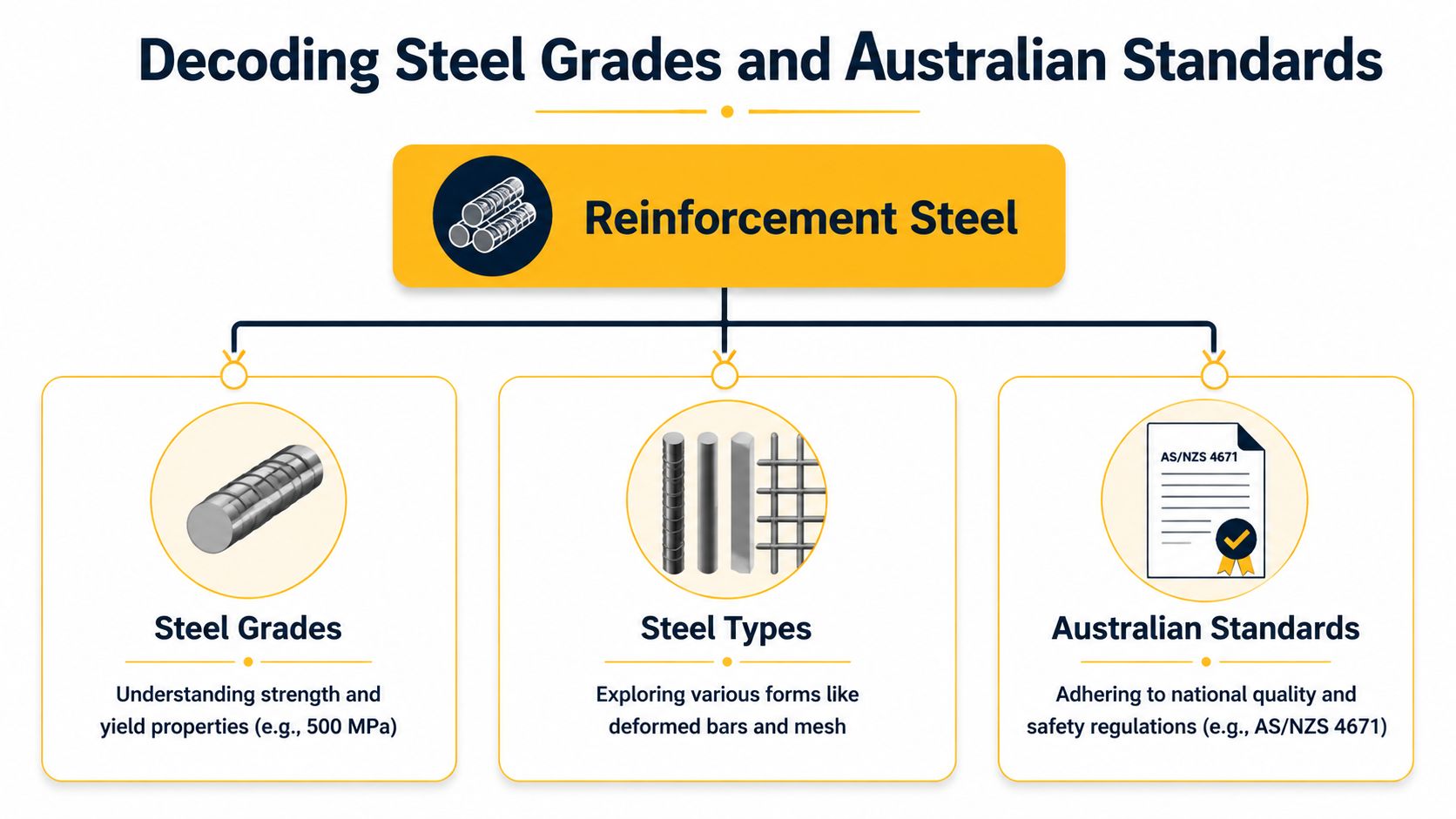
Why does that matter to you? Because your engineer designs for known material properties. If the drawing calls for a certain bar size and grade, swapping it for unknown stock isn't a harmless shortcut. It can affect strength, crack control, and compliance when the certifier or council asks for documentation.
For excavation and base preparation, the same principle applies. Good steel won't save bad ground conditions, which is why proper excavation and foundation planning needs to sit alongside reinforcement decisions.
The terms worth understanding before you order
You don't need to become a steel inspector, but you do need to read an order and a docket with confidence.
- Deformed bar means the bar has ribs on it so it bonds properly with concrete.
- Mesh is welded reinforcement used commonly in slabs, paths and driveways.
- Grade 500B is the common reinforcement grade you'll hear on NSW jobs.
- Mill test certificate is the paperwork that proves what was supplied.
Practical rule: If a supplier can't clearly explain the grade, size and compliance status of what they're selling, keep looking.
A simple driveway in Woy Woy and a structural retaining wall on a sloping Terrigal block won't use reinforcement in the same way. The load path is different, the detailing is different, and exposure conditions may differ too. Coastal locations can also raise durability concerns, so the engineer's schedule matters more than guesswork.
What works and what doesn't
Here's the trade-off in plain terms.
| Approach | What happens |
|---|---|
| Order exactly to engineer's schedule | The steel, inspection process and pour sequence stay aligned |
| Accept “equivalent” steel without proof | You create risk around certification, fitment and structural intent |
| Check paperwork before delivery day | Problems can be fixed before labour is standing around |
| Assume all reo is the same | That's where avoidable delays start |
The safest habit is simple. Match the order to the engineering drawings, confirm the grade in writing, and ask for certification before the truck is booked. That one step avoids a surprising amount of grief.
How to Vet Reinforcement Steel Suppliers
Choosing between reinforcement steel suppliers isn't like comparing bags of cement. You're effectively choosing a project partner. If they miss a delivery, substitute stock, or send incomplete paperwork, the problem lands on your site, not theirs.
That's why the cheapest quote is rarely the full story. A reliable supplier affects your schedule, your safety controls and your final sign-off.
Treat the supplier like part of the build team
A dependable supplier does more than load steel onto a truck. A reliable steel rebar supplier acts as a strategic partner by maintaining quality, meeting standards, delivering on time and providing proper certification, as outlined in this industry guide on supplier reliability and project outcomes.
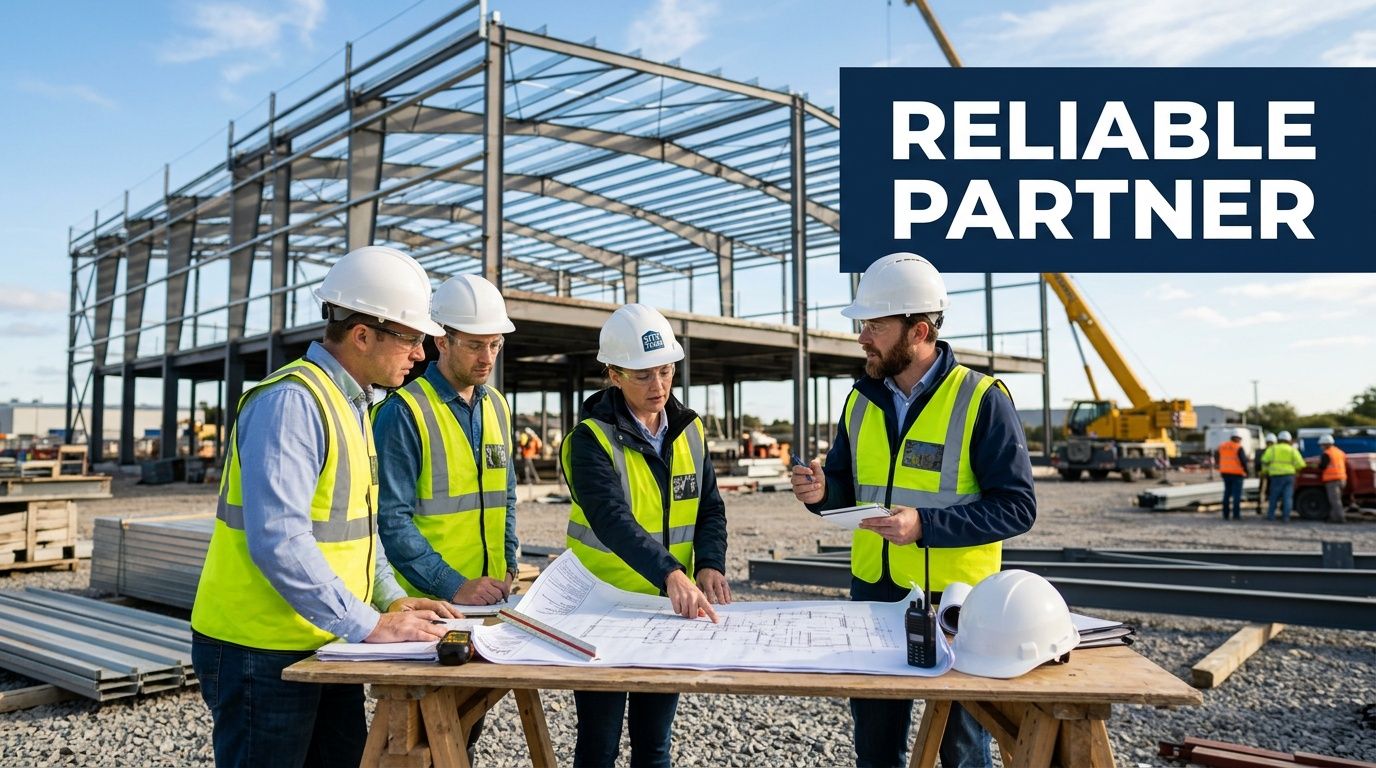
On a residential slab in the Central Coast region, that can mean the difference between a clean pour day and a scramble to fix missing mesh, bent bars or docket mismatches. On commercial work in Sydney or Newcastle, poor supplier coordination can affect several trades at once.
If you're also comparing installation options, practical concreting service considerations for local sites can help you line up your supplier with the crew who'll place the steel and pour the concrete.
Questions that expose problems early
Supplier websites rarely tell you what the experience will be like when things go wrong. A phone call usually tells you more.
Ask direct questions such as:
- Can you provide mill test certificates with each delivery so the supplied bars can be matched to the order?
- What standards certification do you hold for reinforcement supplied into Australian projects?
- Do you process cut and bent bar from drawings or only supply stock lengths and mesh?
- How do you handle shortages or damaged stock if an issue is found on delivery?
- Can you stage deliveries if access is tight or the job is being poured in parts?
The answers matter, but so does how they answer. Good suppliers respond clearly and don't get vague around compliance.
Local reputation still counts. Ask a builder, steel fixer, pump operator or concreter around Gosford, Lisarow, Erina or Newcastle who actually turns up when they say they will.
Imported supply and who manages the risk
Some larger builders and procurement teams look offshore for supply options, especially when they're trying to secure volume or compare manufacturing sources. If you're heading down that path, this guide to sourcing agents is useful background on how procurement intermediaries work and where communication can go wrong.
For owner-builders, though, imported product only works when traceability, certification and logistics are controlled properly. If those controls are weak, any paper saving can disappear in rectification, delays or rejected stock.
The better approach is to vet suppliers the same way you'd vet a subcontractor. Check their paperwork, test their communication, and pay attention to whether they understand NSW compliance, not just steel sales.
Evaluating Services Beyond the Steel Itself
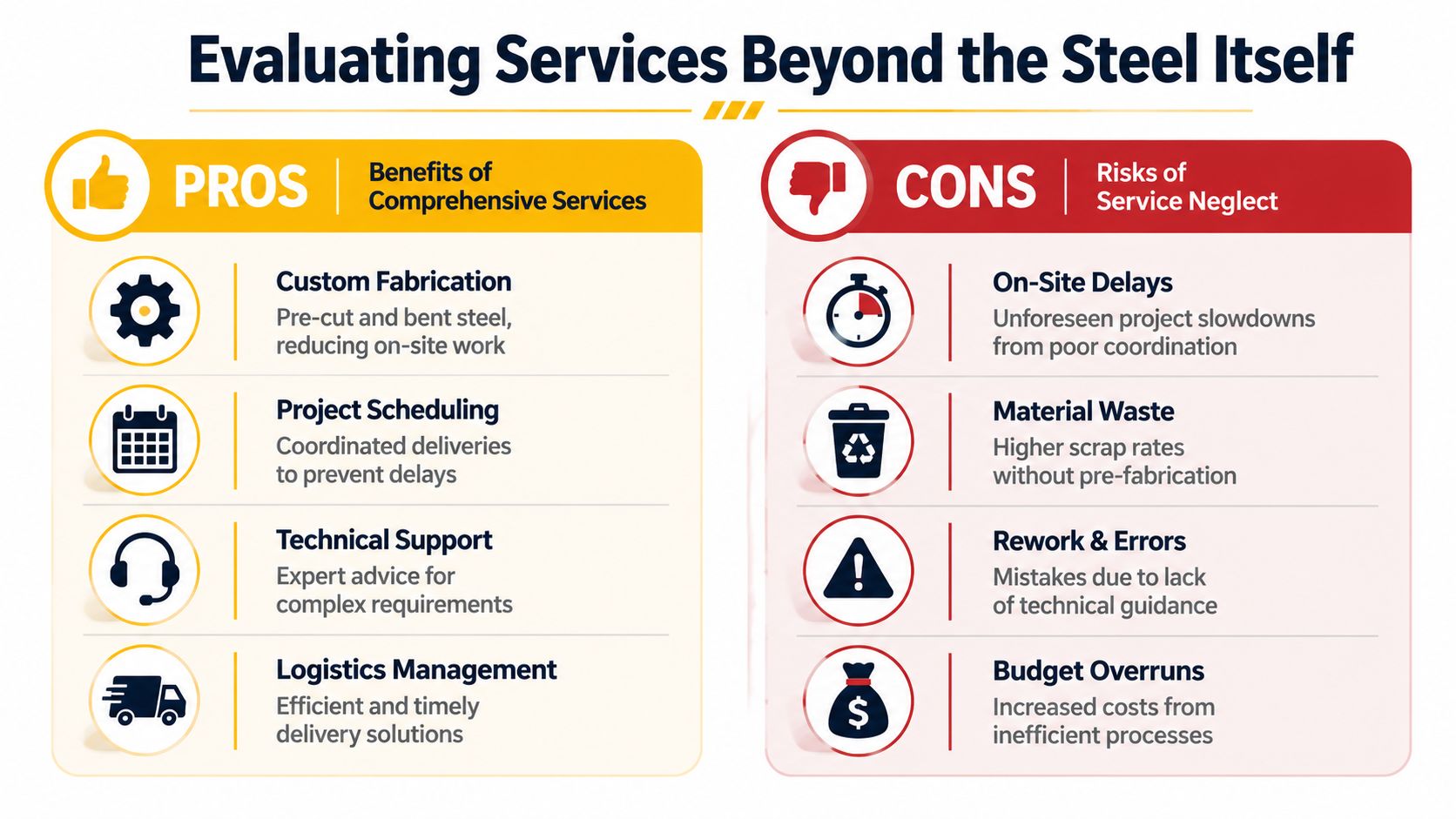
A supplier can sell compliant steel and still make your job harder. That usually happens when they stop at supply only and leave the planning, processing and sequencing to everyone else.
The difference shows up fast on site. One project gets steel that lands in the right form, at the right time, in the right order. Another gets a pile of stock lengths dropped near the gate and a lot of labour wasted sorting it out.
Two jobs with the same steel and very different outcomes
Consider a slab and retaining wall package on a sloping block in Copacabana. The “cheap” supplier offers raw material only. Bars arrive full length, mesh arrives all at once, and nobody has checked whether the truck can unload safely near the work zone. The site crew spends hours cutting, shifting and re-stacking before tying can even begin.
Now consider the same job with a supplier that offers cut and bent processing, staged drops and some technical support over the phone. Footing steel arrives first, wall steel later, and the fabricated pieces match the drawings closely enough that the fixers can place them with minimal adjustment. The rate per tonne may not look as cheap on paper, but the site runs better.
Services that usually pay for themselves
For owner-builders, three supplier services make the biggest difference.
| Service | Why it matters on site |
|---|---|
| Cut and bent steel | Reduces site trimming, handling time and fit-up mistakes |
| Staged delivery | Keeps access clear and matches the pour sequence |
| Technical support | Helps catch ordering errors before the truck is loaded |
A large residential build in the Hunter Valley is a good example. Slab mesh, footing cages and wall reinforcement rarely need to occupy the same patch of ground at the same time. If it all arrives together, storage and handling become a safety issue as much as a logistics issue.
Where basic supply falls short
There's nothing wrong with buying stock lengths if the job is small, simple and well planned. For a straightforward path, garden edging footing or minor non-structural work, basic supply can be perfectly reasonable.
It falls down when the job has tight access, multiple pours, or detailed engineering. That's common on Central Coast sites with steep driveways, sandy coastal ground, or narrow suburban frontage where every delivery has to be managed carefully.
The cheaper supplier often becomes the expensive option once labour, rework, site congestion and missed pour dates are factored in.
The right question isn't “Who sells steel cheapest?” It's “Who helps this job run cleanly?” Those are not always the same supplier.
Comparing Pricing, Lead Times, and Logistics
Most steel quotes look comparable at first glance. Then the invoices and delivery arrangements start unpacking the total cost.
That matters more on the Central Coast than many owner-builders realise. There are fewer specialised local options than in Sydney, so transport and scheduling can distort what looked like a fair deal.

In NSW, the Central Coast has significantly fewer specialised reinforcement steel suppliers than Sydney metro, and that can lead to a 20 to 30 per cent premium on delivery fees from Sydney hubs for regional civil contractors, according to this industry reference on regional supply gaps. For owner-builders in postcodes across the 2250 to 2264 range, that premium often hides inside a quote rather than appearing as a separate warning.
Read the quote like a site supervisor
A good quote should separate the moving parts clearly. If it doesn't, ask for a revised version before you compare suppliers.
Look for these components:
- Material supply for bars, mesh, chairs and accessories
- Processing charges for cut and bent items
- Delivery costs including any access limits or split-drop fees
- Lead time assumptions tied to stock availability and fabrication
- Documentation confirming what certificates come with supply
If one quote bundles everything into a single figure and another breaks it out, the bundled quote can appear tidier while hiding the expensive parts. That's how owner-builders get caught by “cheap” supply and expensive freight.
If you're still working out quantities, a practical concrete volume calculator for slabs and pours can help you line up steel ordering with the actual size of the pour.
Landed cost matters more than the line rate
The best comparison is landed cost. That means the actual cost of compliant, correctly processed steel sitting on your site when you need it.
A Sydney supplier may quote a sharper material rate than a Gosford-based business. But if your block in Terrigal has restricted truck access, or your job in Wyoming needs two smaller deliveries instead of one larger drop, the freight and coordination side can wipe out any paper saving.
For builders managing multiple deliveries, even general logistics thinking helps. This article on software for smarter route coordination is a useful way to think about why scheduling, sequencing and truck movement matter, especially when a site has narrow access or shared residential roads.
Lead times aren't a side issue
Steel lead times should be checked before the concreter is booked, not after. Fabricated items, staged deliveries and regional freight all need room in the programme.
This video gives a useful visual overview of reinforcement supply and handling considerations:
A practical habit is to ask each supplier the same question in the same wording. “If I approve this order today, when can you deliver the full package, and what parts are subject to fabrication timing?” That makes quote comparisons far cleaner.
If your pour date is fixed, don't ask suppliers whether they “should be able to make it”. Ask what they can commit to in writing.
On-Site Handling and Quality Assurance Checks
When the truck arrives, you're at one of the most important control points in the whole job. Once reinforcement is unloaded, tied and buried in concrete, fixing mistakes becomes expensive and messy.
A lot of owner-builders relax too early here. They see steel on site and assume the order is done. It isn't. Delivery is the moment to verify the steel, the paperwork and the unloading plan.
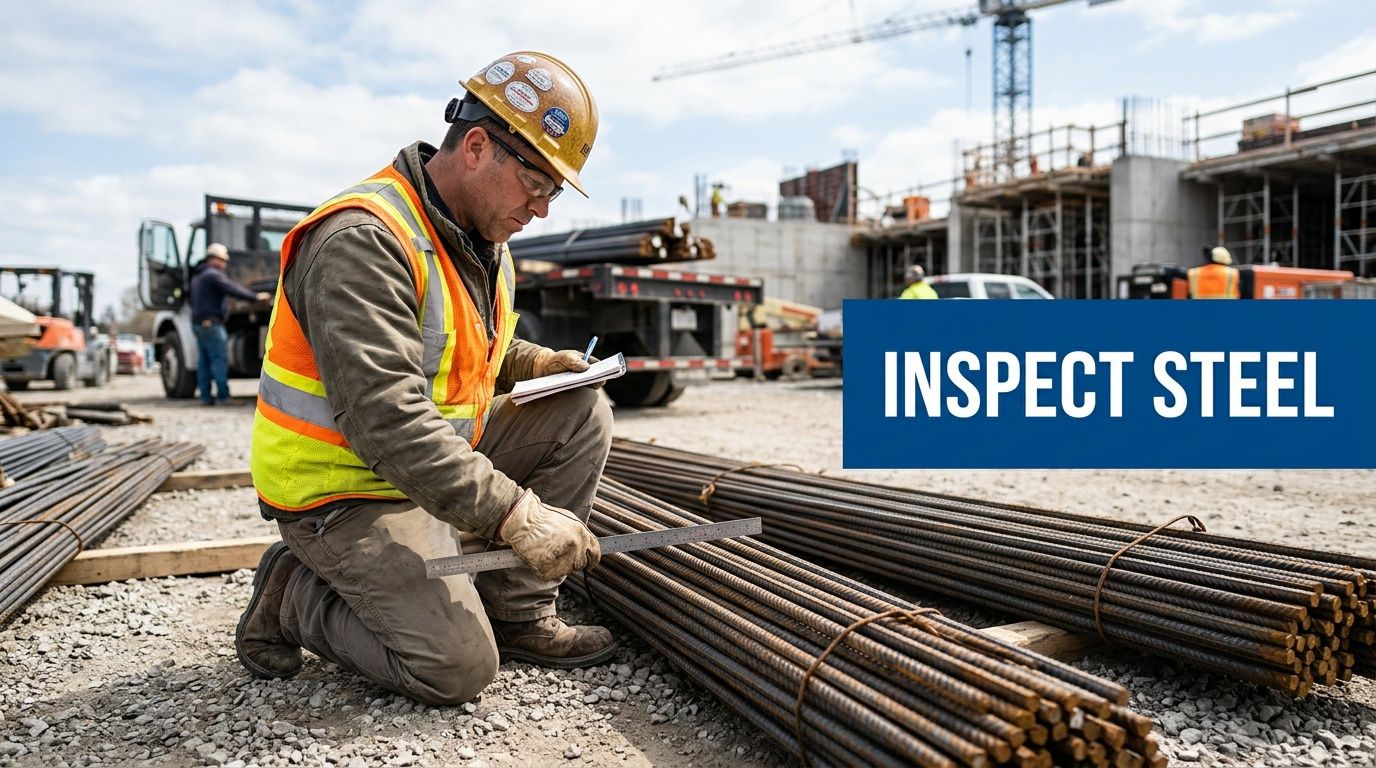
The checklist to run before signing anything
Use a simple sequence every time.
Match the delivery to the order
Check bar sizes, mesh type, quantities and any cut and bent items against the supplier's docket and your engineering schedule.Ask for the paperwork immediately
Mill test certificates and related documentation should match the supplied material, not turn up days later after you've already placed the steel.Inspect for obvious problems
Look for damage, wrong fabrication, contamination, or steel that appears mixed and unidentified.Check unloading conditions
Make sure the truck can unload safely, the ground is stable, and no one is standing where suspended loads or shifting bundles could create a hazard.Store it properly
Keep reinforcement off mud and standing water where possible, with sensible access for the steel fixers and enough separation to avoid mix-ups.
What owner-builders often miss
The biggest site mistake isn't always defective steel. Often it's poor handling.
Consider a narrow block in Bateau Bay after rain. The truck arrives, there's pressure to get unloaded quickly, and bundles are dropped wherever there's space. Later, the crew spends time dragging steel across wet ground, trying to sort mesh from bars, and checking pieces against the drawings by eye. That's slow, unsafe and avoidable.
If you're preparing a slab edge or formwork setup before reinforcement goes in, proper concrete slab shuttering and setout should already be sorted so the steel can be placed cleanly and inspected properly.
Don't sign off just because the truck is on site and everyone wants to keep moving. Slow down for the checks that can't be done later.
Safety matters just as much as compliance
Reinforcement can injure people quickly if it's handled badly. Bars can spring, bundles can roll, and protruding ends create obvious hazards. Safe unloading, sensible stacking and clear laydown areas aren't optional extras. They protect workers, family members on owner-builder sites, and anyone else moving through the area.
If something doesn't match the order or the paperwork is missing, pause the installation. It's easier to hold steel out of the pour than to justify it after the concrete has set.
Finalising Your Order and Ensuring Compliance
By the time you're ready to place the order, most of the hard work should already be done. The remaining step is to make sure the commercial side and the compliance side match each other exactly.
That means the quote, the drawings, the delivery plan and the documentation all need to line up. If one of those parts is vague, the order isn't ready yet.
What to confirm before you approve supply
Use the final review to remove assumptions.
| Item to confirm | What you want in writing |
|---|---|
| Product details | Bar grade, sizes, mesh type, and any fabricated items |
| Delivery terms | Date, time window, access requirements, staged drops if needed |
| Documentation | Mill certificates and any conformity paperwork to be supplied |
| Processing scope | What is cut, bent, tagged or bundled to drawing |
| Variations | How shortages, substitutions or extra freight will be handled |
Owner-builders often wave things through by phone. A quick verbal “yes, that's all included” isn't enough when the truck turns up missing part of the order or carrying a substituted product.
Compliance records are part of the job
Keep every quote, revised order, docket and certificate together in one project file. If your certifier asks questions, or if there's a dispute later, those records become your proof that the structural reinforcement was sourced responsibly.
That's especially important on retaining walls, footings and other structural work where council scrutiny and engineering certification are tighter. If your project includes walls, stepped sites or boundary structures, it's worth understanding the broader NSW retaining wall regulations and approval issues before the steel is ordered and the excavation starts.
Why local orders still move with global demand
Steel pricing in NSW doesn't exist in a bubble. The global steel rebar market was valued at USD 229.51 billion in 2024, and construction accounted for about 42 per cent of demand, according to this global steel rebar market report. That broad demand picture affects local pricing pressure and supply reliability, even on smaller Australian jobs.
For owner-builders, the practical lesson is simple. Don't assume today's price or lead time will hold without confirmation. If you've got engineering complete and your programme is realistic, lock the order in properly.
A good deal isn't just a lower rate. It's compliant steel, the right paperwork, and delivery terms that let the pour happen without drama.
The best reinforcement steel suppliers make life quieter, not busier. They answer technical questions clearly, put commitments in writing, deliver to the agreed sequence, and support the job rather than complicate it. That's what you're really buying.
If you need practical help with site prep, concrete works, retaining walls or coordinating reinforcement on a Central Coast, Newcastle, Hunter Valley or Sydney project, Booms Up Civil Group can help. We focus on getting the groundwork, scheduling and compliance right from the start, so your project moves safely and cleanly. You can get in touch for straightforward advice, a quote, or help planning the civil side before materials are ordered.