
You’re halfway through a renovation, a driveway dig-out, or a bit of garden clearing on the Central Coast, and you hit old grey sheeting in the soil or behind a shed wall. That moment matters. If the material is asbestos, the wrong next step can turn a manageable find into a health risk, a compliance issue, and a very expensive interruption.
Calm, practical judgement is important. Old sheeting around homes in Gosford, Terrigal, Woy Woy, Newcastle and the Hunter often turns up during demolition prep, slab works, fencing, drainage and site cuts. Knowing how to identify asbestos sheeting starts with simple visual checks, but it doesn’t end there. The safest approach is to treat suspect material seriously, avoid disturbing it, and get it properly assessed before work continues.
Found Old Sheeting? What Every NSW Property Owner Should Know
You start pulling apart an old shed, lifting a few broken panels near the back fence, or scraping out fill before a new driveway, and a stack of grey cement sheets turns up where nobody expected it. On older NSW properties, that is a common first point of contact with asbestos.
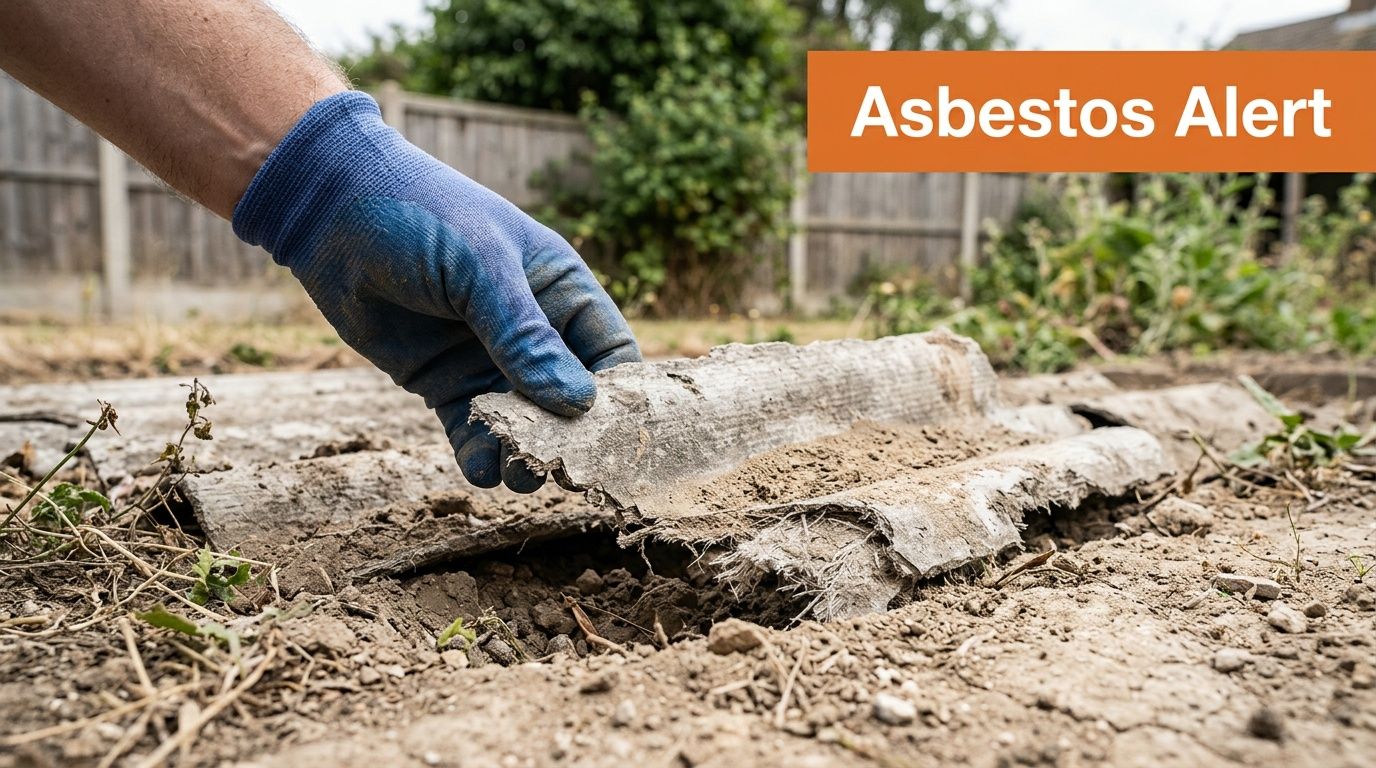
Around the Central Coast, Sydney and Newcastle, old sheeting often appears during renovation prep, drainage work, fence replacement, driveway excavation and knockdown projects. Some of it is asbestos cement. Some of it is later fibre cement. Some owners also confuse standard fibro wall sheeting with LDB, which needs even tighter handling because the fibre content can be much higher. Getting that first identification step right affects every decision that follows on site, from isolating the area to organising testing, removal and waste disposal.
Age is a clue, not proof. Appearance is a clue, not proof either.
The problems usually start when a homeowner or contractor tries to clear the area quickly so the job can stay on schedule. Once suspect sheeting is snapped, sawn, drilled or run over with machinery, the risk changes fast. A simple clean-up can turn into contamination of soil, nearby materials, tools, vehicles and work areas.
On any renovation or building demolition work in NSW, the safe approach is straightforward. Treat unknown cement sheeting as suspect until it has been properly assessed. Keep people away, leave it in place, and avoid any action that creates dust.
Practical rule: If the sheet is old, cement-based, and you cannot confirm what it is, leave it alone and verify it before the job continues.
The First Visual Checks You Can Do Safely
You pull back an old sheet during renovation prep and it looks like ordinary fibro. That is often the point where people make a bad call. A safe visual check is only about spotting warning signs from a distance, without lifting, snapping, drilling, scraping, or cleaning anything.
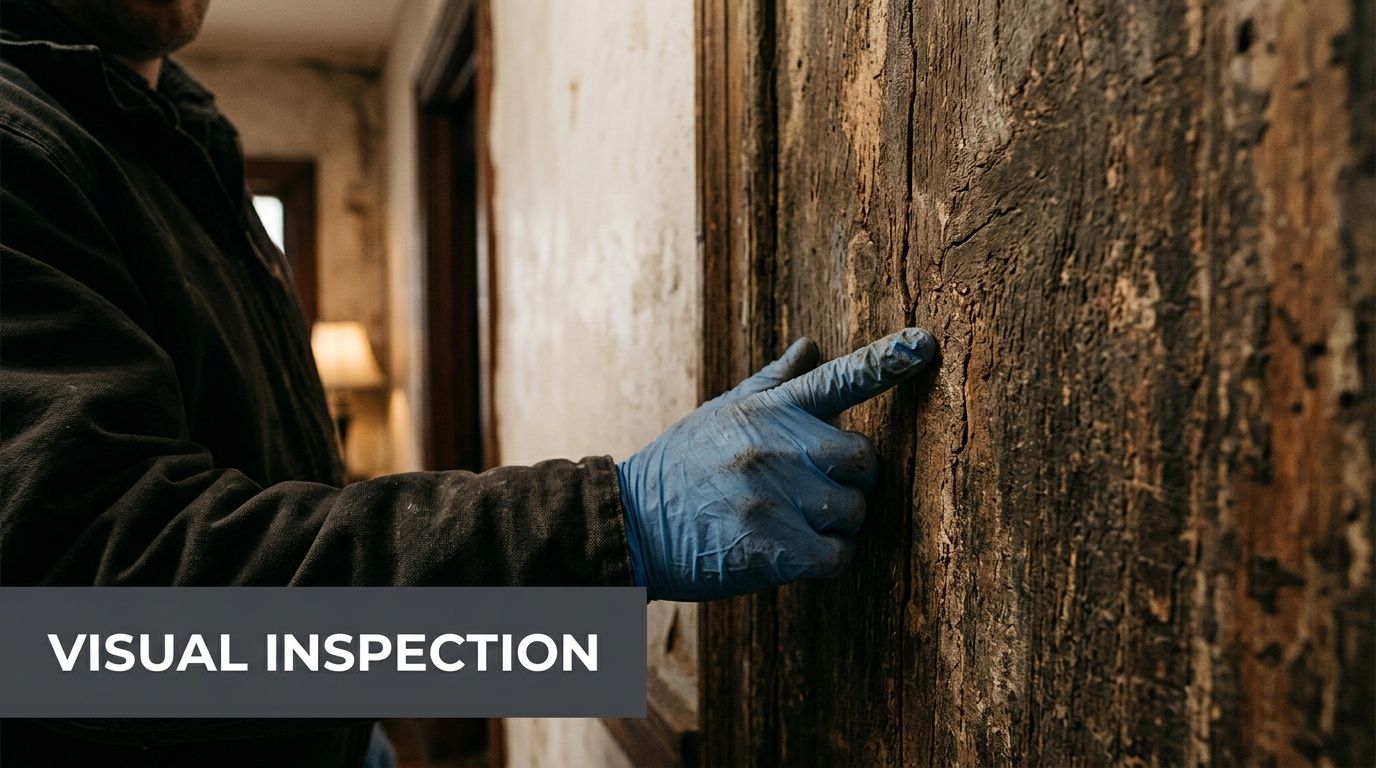
Start with the job history in front of you. On homes and small civil works sites around the Central Coast, Sydney and Newcastle, suspect sheeting often turns up in older garages, sheds, fence lines, bathroom refits, service trenches, and backyard structures that were built long before current materials became standard. If the property or addition dates back decades, treat any cement sheet as suspect until it is identified properly.
Start with age and location
The first clues come from where the material is installed and how it has aged in place. Older cement sheeting commonly appears in:
- Eaves and soffits around the roofline
- External wall cladding on older homes, garages and sheds
- Wet area linings in laundries, bathrooms and older kitchens
- Fences and outbuildings near the rear boundary
- Loose fragments in soil or fill where earlier structures may have been demolished on site
This is particularly important during site prep and excavation. Buried fragments often show up during work such as vegetation removal and site clearing in Sydney, especially on older blocks where demolition waste was left in place years ago.
Look for useful clues, not certainty
From a safe distance, older asbestos cement sheeting often has a dull grey or off-white appearance, with a rougher and less even surface than modern products. Weathered edges may look chipped, crumbly, or worn. Painted sheets are harder to read, so focus on shape, thickness, age, fixing method, and the condition of any broken edge that is already exposed.
Some signs are more helpful than others:
- Surface finish: older sheets often look flatter, duller and less uniform
- Texture: exposed areas can appear grainy or coarse rather than smooth
- Density: cement sheets are often heavier than people expect, so do not lift one to check
- Condition: cracking, brittleness and edge damage increase risk, but they do not confirm the product type
On NSW renovation sites, I see one mistake repeatedly. Homeowners assume asbestos products will stand out straight away. In practice, suspect sheeting usually just looks old, hard, and weathered.
Don’t confuse fibro with low-density asbestos fibreboard
This is a common point of confusion in older NSW homes. Standard asbestos cement sheeting, often called fibro, is denser and harder. Low-density asbestos fibreboard, or LDB, is softer, more friable, and can release fibres more easily when disturbed.
LDB can resemble plasterboard or fibro when painted or still intact. Warning signs include:
- A softer feel under light pressure, without testing it aggressively
- Ragged, furry or feathered broken edges
- A duller sound than dense cement sheeting if a loose piece shifts naturally
- Older product markings such as Asbestolux on the reverse side, where visible without disturbing it
The trade-off is simple. Fibro is often the material people expect to find, but LDB can present the higher immediate risk if someone treats it like ordinary wall lining and starts pulling it out by hand. If a sheet looks unusually soft or damaged, stop there and get it assessed.
Asbestos Sheeting vs Modern Fibre Cement
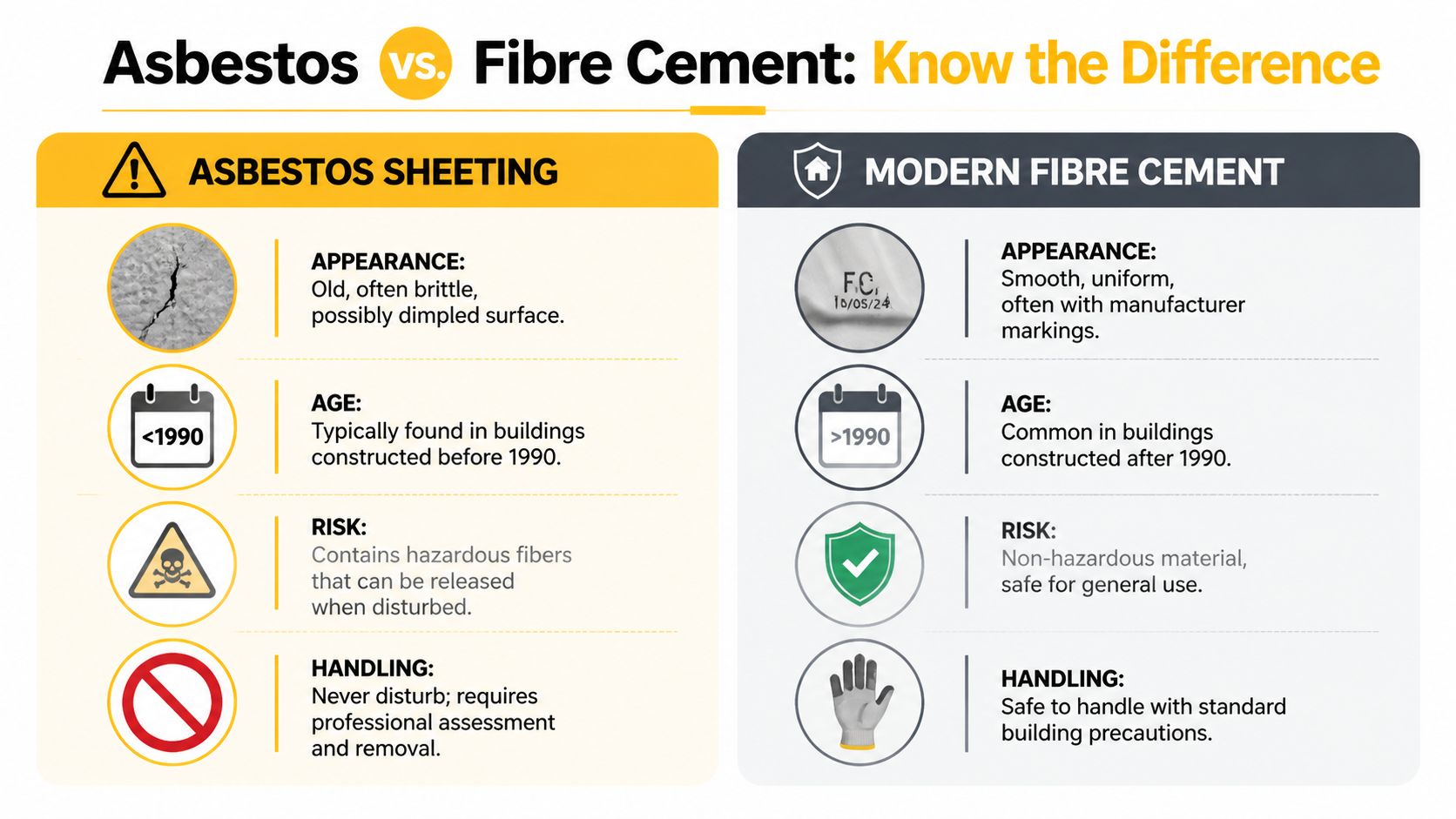
Modern fibre cement can look similar from a distance. That’s why people get caught out. The difference usually becomes clearer when you assess age, finish, markings and how the material behaves over time.
What usually gives it away
Modern fibre cement is generally more uniform. It often has manufacturer branding, production marks, or a clear indication that it’s asbestos-free. Older asbestos sheets often have no such marking, especially on broken or weathered sections found during demolition or excavation.
The other difference is feel and ageing. Newer fibre cement tends to present as smoother and more consistent. Older asbestos cement often looks coarse and becomes noticeably brittle with age.
| Characteristic | Asbestos Cement Sheeting (Pre-1990) | Modern Fibre Cement (Post-1990) |
|---|---|---|
| Typical era | Common in older buildings and renovations before 1990 | Common in later construction |
| Colour | Often grey or off-white | Often cleaner and more uniform in finish |
| Surface texture | Rough, grainy, weathered-looking | Smoother and more even |
| Markings | Often unmarked | Often includes manufacturer markings or asbestos-free identification |
| Weight and feel | Dense, heavy, rigid | More uniform and generally less aged and brittle |
| Condition over time | Often brittle, cracks easily | Usually less fragile in comparable conditions |
What doesn’t work as a test
A quick glance from across the yard isn’t enough. Neither is guessing based on paint colour, moss, or where the sheet was found. Plenty of old non-asbestos materials also look weathered, and plenty of suspect materials have been painted over so heavily that the original finish is hard to read.
The safest habit is simple. Use visual clues to decide whether the material is suspicious, not to declare it safe.
If you have to convince yourself it’s “probably fine”, that’s usually your sign to stop and get it checked.
Suspected Asbestos Found What To Do Immediately
You pull up a sheet near the back fence, or the excavator exposes broken panels beside an old footing. At that point, the renovation stops. The site has changed from a building job to a hazard control job.
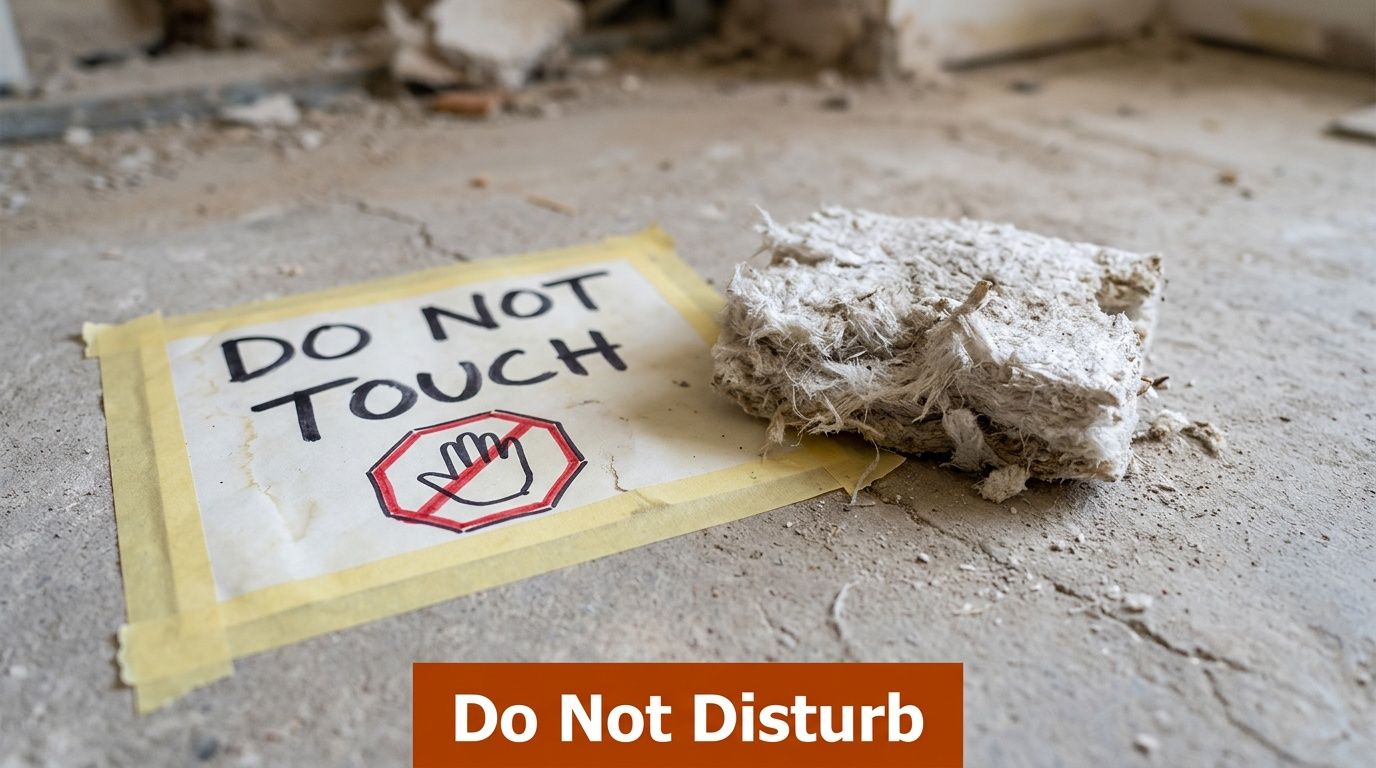
Stop work and isolate the area
If the sheeting is sitting where you planned to dig, demolish, trench, cut for services, or pour a slab, stop immediately. Shut down the tools. Keep family members, neighbours, pets, and other trades away until the material is assessed.
Leave the sheet where it is. Do not snap it for a better look. Do not sweep around it. Do not pressure wash it. Do not use an excavator bucket to drag it aside with spoil. On civil and residential sites across NSW, that is how a contained issue turns into a wider contamination problem.
Condition matters here. If the material is cracked, broken, weathered, or half-buried, the risk goes up because fibres are more likely to be released when it is disturbed. As noted earlier, some older board products are much less stable than standard fibro, which is one reason visual identification has limits.
Don’t try to clean it up yourself
Homeowners often want to be proactive. They wet the area, grab bags and gloves, and try to sort it out before the next trade arrives. That instinct causes trouble, especially if fragments have mixed with soil, leaf litter, insulation, or demolition debris.
The same basic lesson behind why DIY biohazard cleanup is dangerous applies here. A hazard that looks manageable can spread well beyond the visible area once an untrained person starts handling it.
If the find happens during early site works, hold the program and get advice before excavation continues. That is particularly important where the next step involves machinery, spoil removal, or Central Coast demolition and excavation work, because once suspect sheeting is broken into surrounding fill, the cleanup becomes slower and more expensive.
A short visual overview can help you understand the risk without touching the material:
What to do instead
Use a simple response and keep it disciplined:
- Stop all activity in the immediate area
- Leave the material in place and avoid touching nearby debris
- Keep others out with tape, barriers, closed gates, or clear site instructions
- Mark the location so an assessor can find it quickly
- Take a few photos from a safe distance if needed for the initial phone call
- Arrange professional assessment before any work starts again
On a renovation site, a short delay is manageable. Spreading asbestos through the yard, driveway excavation, or demolition pile is not.
Your Legal and Compliance Duties in NSW
You pull a wall sheet off during a Central Coast renovation, and the job changes immediately. From that point, the issue is not just identification. It is whether the next steps on site meet NSW safety and waste rules.
For homeowners, that matters more than many realise. As soon as asbestos is known or reasonably suspected, decisions about demolition, strip-out, excavation, bin hire, waste transport, and trade access all need to be handled with more control. On mixed residential and civil works sites, that often means the asbestos question sits right at the front of site preparation, not halfway through the job after materials have already been disturbed.
The legal starting point
In NSW, asbestos sits within the Work Health and Safety framework. The practical takeaway is simple. If asbestos is present or likely to be present, the risk has to be identified, controlled, and dealt with in line with the law.
That can include using a licensed removalist where the work falls within licensing thresholds, preventing unprotected people from entering the area, and making sure any removal and disposal process is handled properly. Homeowners sometimes assume these rules only matter on commercial projects. They do not. The obligations can affect a home renovation just as quickly, especially once contractors, labourers, or machinery are involved.
The mistake I see most often is treating suspect sheeting as a minor demolition problem. In practice, it becomes a compliance problem fast if broken material ends up in a mixed waste pile, buried fill, or an open skip.
Council and approval issues
Across the Central Coast, Sydney, and Newcastle, state rules are only part of the picture. Council requirements, DA conditions, demolition approvals, and waste handling expectations can also shape what has to happen before work continues.
That is one reason early identification matters so much in NSW residential work. A fibro garage wall, old eaves, or buried sheet fragments can affect the program, the order of works, and the paperwork attached to the job. It can also change who should be on site and when.
Good compliance protects workers, neighbours, and your budget.
If you want a plain-English overview of broader site obligations, contractor responsibilities, and record-keeping, this guide to WHS compliance for NSW industrial firms is a useful reference.
Why timing affects compliance
On renovation and civil prep jobs, trouble often starts with sequencing. The material may have been manageable while intact. Once demolition starts, or an excavator drags broken sheeting through fill, the site becomes harder to control and more expensive to clean up.
That is why identification is not just about recognising old sheeting. It is the first step in a compliant work plan. In NSW, that plan may need to account for assessment, licensed removal, clearance, waste classification, transport, and whether demolition can legally proceed as scheduled. If your project is heading into structural removal or approval stages, read this guide to a demolition licence in NSW.
The safest approach is usually the least dramatic one. Check early, document what is there, and get the right people involved before the job spreads the problem.
How Professional Asbestos Testing and Removal Works
Once a professional gets involved, the process becomes much more controlled. That’s the point. You stop relying on guesswork and start working from evidence.
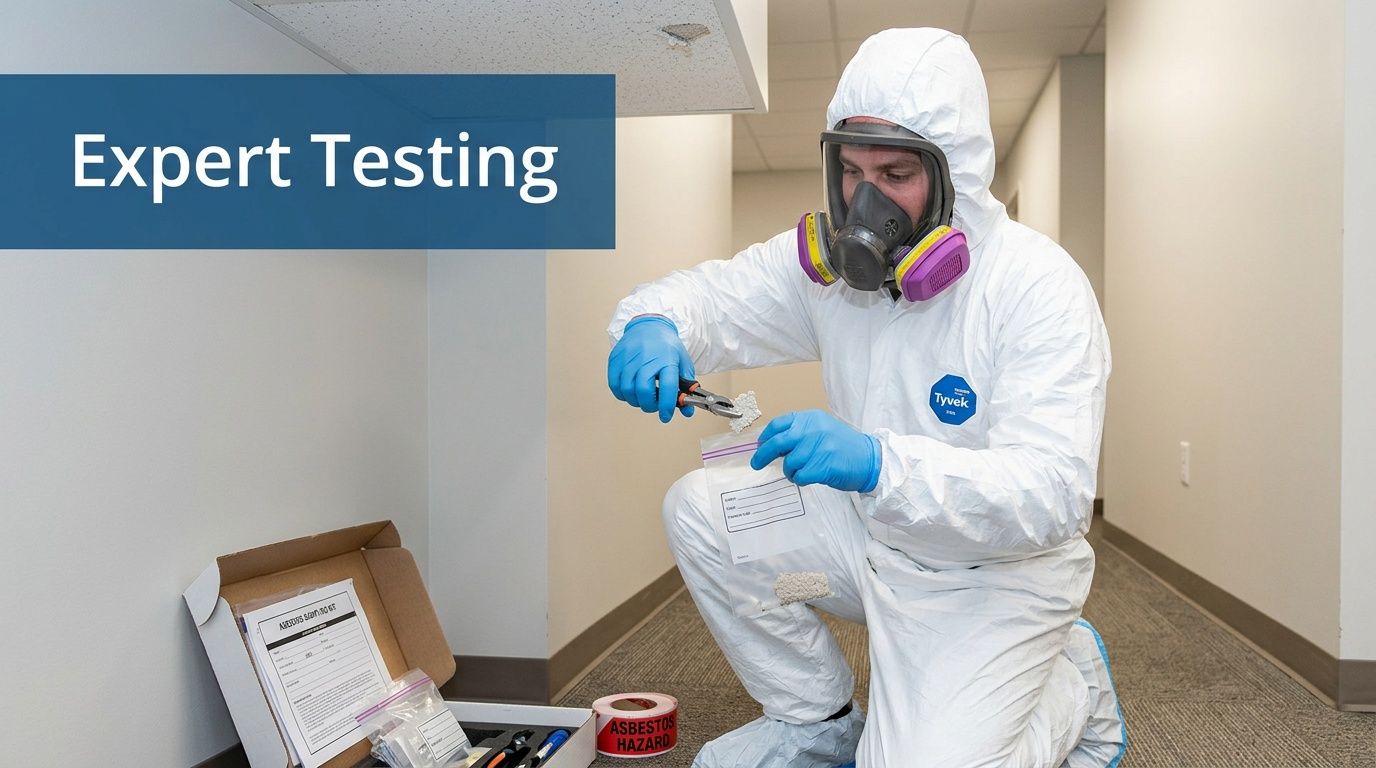
The assessor’s job
A licensed assessor doesn’t just stand there and have a look. They begin with the age and context of the building or site, then inspect the suspect material without creating unnecessary disturbance. If sampling is required, it’s done carefully and safely.
In NSW practice, identification usually starts with visual and historical assessment, followed by laboratory confirmation through NATA-accredited Polarized Light Microscopy, or PLM. That’s the mandated laboratory method, and it can identify asbestos types with 95-99% accuracy in bulk materials (WA Health guidance on asbestos identification methods).
Why lab testing matters
A common point of frustration for homeowners arises: The sheet looks obvious, so why not just assume and remove it? Sometimes that is the practical risk approach. But on many projects, proper identification is needed so the right removal plan, waste handling and clearance process can follow.
PLM works well for bulk materials, but weathered or low-concentration samples can be trickier. In those cases, Transmission Electron Microscopy, or TEM, may be used for confirmation because it’s more sensitive with degraded material (further explanation of asbestos testing methods).
That matters on older Central Coast and Newcastle sites where buried fragments have been exposed by moisture, soil movement or long-term weathering.
What removal usually involves
Once asbestos is confirmed, a licensed removalist sets up a controlled process. That generally includes exclusion zones, safe removal methods, containment, proper transport and lawful disposal. After removal, the site is checked so the next stage of work can proceed safely.
If you’re organising a broader renovation or knockdown, it also helps to understand how building condition, scope and risk interact before work begins. A pre-start inspection process like the one described by Awesim building inspections is a useful example of why thorough assessment upfront usually saves time later.
For homeowners weighing up budgets, asbestos isn’t a side issue. It can change demolition sequencing, waste handling and programme duration. That’s one reason it’s smart to factor hazard checks into your early planning, alongside the broader cost to demolish a house.
The safest projects are rarely the fastest on day one. They’re the ones that avoid the stop-start chaos of surprise hazards halfway through.
Your Safe Path Forward on the Central Coast and Beyond
Finding suspect sheeting doesn’t mean you need to panic. It means you need to slow down and make the next decision properly.
If the material is old, grey, brittle, rough-textured, or soft enough to raise concern about LDB, treat it as suspect. Keep clear of it, keep others away, and arrange professional assessment before you continue with any renovation, excavation, driveway prep or demolition work. That’s the simplest and safest rule.
Across the Central Coast, Sydney, Newcastle and the Hunter, older homes and older fill sites still produce these surprises. Coastal blocks can hide buried fragments near old fences and sheds. Inland sites can expose them during slab prep or drainage works. The location changes, but the response stays the same. If in doubt, assume asbestos until testing proves otherwise.
Getting identification right at the start is what keeps a project safe, compliant and moving forward.
If you’re planning site preparation, demolition, excavation or concreting and you’ve found suspect material, Booms Up Civil Group can help you take the next step safely. We work across the Central Coast, Newcastle, the Hunter and Sydney, and we understand how asbestos concerns can affect access, programme and site prep. If you need practical advice on what to do before civil works begin, contact the team for a straightforward discussion about your site and the safest way forward.