
Thinking about demolishing a building on the Central Coast, in Sydney, or somewhere in the Hunter Valley? It can feel like a huge job, but getting your head around the process is the first step to making it run smoothly. Building demolition is so much more than just swinging a wrecking ball; it's a carefully planned operation that involves council permits, critical safety checks, and a serious commitment to environmental responsibility.
Your Guide to Building Demolition in NSW
Whether you're a homeowner in Newcastle lining up a knock-down rebuild or a developer clearing a commercial site in Gosford, getting it right from day one saves a world of time, money, and stress. This guide will walk you through the whole journey, from the first assessments and approvals right through to the final site clean-up, so you know exactly what’s coming.
The push for new, modern buildings has made demolition a common sight across the country. This is especially true in growing urban hubs where older homes are making way for fresh developments. In fact, over the last decade, Australia has seen a major uptick in demolitions for urban renewal. Statistics from the Australian Bureau of Statistics show that for every one dwelling knocked down, 2.1 new dwellings were approved for the same site. That really highlights the powerful drive to rebuild.
Types of Demolition Projects
Before we get into the "how", let's quickly cover the "what". Demolition isn't a one-size-fits-all service. The approach we take depends entirely on your project's goals.
- Residential Demolition: This is the most common type we handle. It involves the complete removal of a house, garage, and other structures to create a blank canvas for a new build.
- Commercial Demolition: This involves clearing larger structures like old warehouses, shops, or office blocks. These projects often have more complex safety and environmental considerations due to their scale and location.
- Selective Demolition: Sometimes you don't need the whole building gone. Selective, or partial, demolition is a more surgical approach. For example, you might want to remove a poorly built extension from an older home in Maitland or gut the interior of a shop for a new fit-out while leaving the main structure intact.
At Booms Up Civil, we specialise in managing these moving parts. With our deep experience across the Central Coast and Hunter Valley, we make sure your site is prepped safely and efficiently for whatever comes next, handling everything from the paperwork to the final site clearance.
Navigating Permits and Asbestos Compliance

Before the first wall comes down or a single brick is touched, the most important work happens on paper. Sorting out the legal side of things isn't just a box to tick; it's the foundation of a successful demolition project here in NSW.
This means getting the right permits from your local council, whether you're working with Central Coast Council, the City of Sydney, or Newcastle Council. It’s a legal necessity. The process involves submitting detailed demolition plans, a rock-solid site safety plan, and a clear strategy for waste management. It's your opportunity to prove the project will be handled safely and professionally, with minimal disruption to your neighbours and the environment. Trying to sidestep this can bring hefty fines and stop-work orders that will derail your project in a heartbeat.
The Asbestos Inspection: A Non-Negotiable Step
One of the biggest hurdles in this pre-demolition phase is the hazardous materials survey, with a laser focus on asbestos. Here’s the reality: if your building went up before the early 1990s, it’s almost certain to contain asbestos in some form. SafeWork NSW has incredibly strict—and for good reason—regulations around identifying and removing it.
Asbestos-containing materials (ACMs) are generally stable when left alone, but demolition turns them into a serious health hazard by releasing microscopic fibres into the air. That’s why a professional asbestos inspection and a clearance certificate are mandatory before any demolition work can begin. An expert will take samples from common hiding spots like old roofing, wall sheeting, pipe insulation, and vinyl flooring to confirm if it’s there and what type it is.
This is one area where you absolutely cannot cut corners. The health risks are severe, and the penalties for getting it wrong are even worse. You can find more details in our guide on what to know before preparing your building for demolition.
Key Pre-Demolition Steps
Getting everything in order can feel like a lot to juggle. You've got council development applications, SafeWork NSW notifications, and specific site safety protocols to manage.
Beyond permits and asbestos, you also need a plan for disconnecting utilities like electricity, gas, and water. Proper site fencing and safety warning signage must be in place to protect the public. It's also a good time to think about salvaging items like doors, windows, or floorboards that could be reused or sold. When you partner with an experienced contractor like us, we manage this entire process for you, ensuring your project is fully compliant from day one.
Choosing the Right Demolition Method
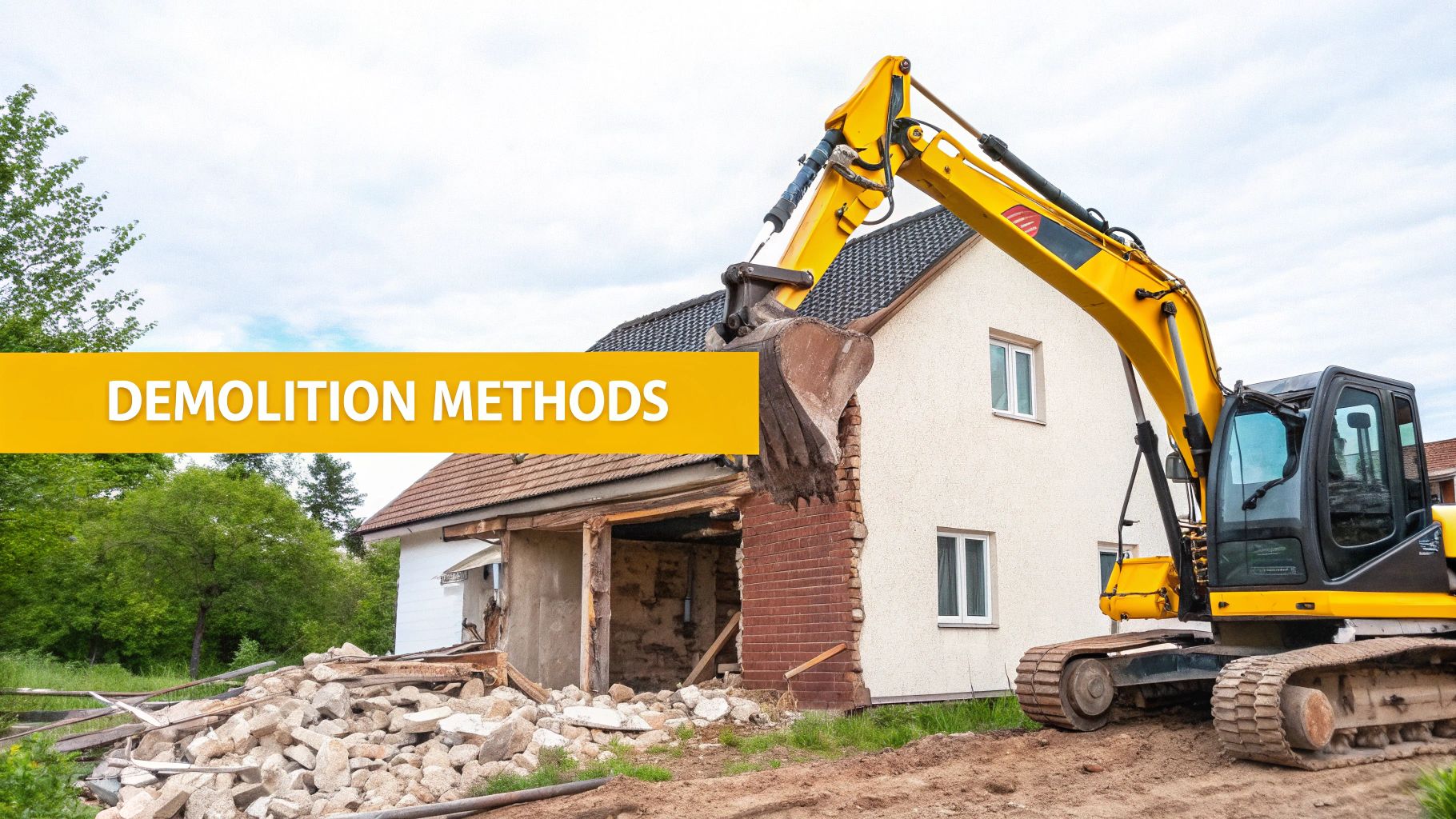
Not all demolition jobs are created equal. The right way to bring down a building depends entirely on its size, where it is, what it’s made of, and what the plans are for the site afterwards. There's simply no "one-size-fits-all" button to press; getting it right demands a professional assessment to ensure a safe, efficient, and cost-effective outcome.
For the vast majority of residential and smaller commercial projects you'll see across Australia, mechanical demolition is the go-to method. It’s the technique you're most likely to spot on a suburban block anywhere from the Central Coast to the Hunter Valley.
This is all about using heavy machinery, like our specialised excavators, armed with a whole arsenal of powerful attachments. We’re talking hydraulic hammers for smashing up concrete slabs, grapples to grab and sort piles of debris, and powerful shears that slice through steel beams. This approach gives us total control, letting us dismantle a structure systematically, usually from the top down.
Mechanical Demolition in Action
Consider this scenario: a knock-down rebuild on a standard suburban block in a place like Umina Beach or Charlestown. A 20 to 30-tonne excavator would be brought onto the site. Our skilled operator would then methodically work their way through the structure, carefully separating materials like timber, brick, and metal as the building comes down.
This method hits the sweet spot between speed and precision. We can have a house down in just a few days, but just as importantly, we’re already starting the crucial waste sorting process on the ground. That’s absolutely vital for maximising recycling and keeping those tip fees down.
The raw power of the machinery makes quick work of even solid structures like double-brick homes, while its long reach keeps our operator at a safe distance. Choosing the right machine is critical, and you can learn more about our fleet and selection process in our guide to excavator hire on the Central Coast. For those tight-access sites you often find in denser parts of Sydney or Newcastle, we simply switch to smaller, more nimble machines to navigate the space without ever compromising on safety or efficiency.
What About Other Demolition Types?
While mechanical demolition is our bread and butter, there are a few other methods reserved for very specific and complex situations. Knowing what they are helps clarify why we choose the approach we do for your project.
Manual Demolition
This involves taking a structure apart by hand. It's used for selective demolition where precision is paramount, or in areas where machinery simply can't reach. It's slower and requires more labour, but it’s perfect for preserving surrounding structures or salvaging valuable materials like heritage bricks or timber beams.
Implosion (Explosive Demolition)
Building implosions look incredible on TV, but they are exceptionally rare here in Australia. This is a highly specialised, high-stakes technique reserved for massive, isolated structures like old power stations, huge bridges, or city high-rises where taking them down piece by piece would be impractical or unsafe. It involves months of meticulous engineering and planning to place precise explosive charges that weaken the supports, causing the building to collapse neatly in on itself. The process requires a mountain of approvals, making it completely unsuitable for any residential or typical commercial project.
The Demolition Process From Start to Finish
Once the council gives the green light and we’ve thoroughly assessed the site, the real physical work can finally kick off. It’s not just a matter of knocking things down; it's a carefully sequenced operation, planned from start to finish for maximum safety and efficiency. Knowing these steps helps you understand what to expect when our team rolls up to your property on the Central Coast or in Newcastle.
The first move isn’t with an excavator. Before anything else, we have to ensure every single utility is professionally and safely disconnected. This is a non-negotiable safety step. It involves certified technicians capping off water, gas, electricity, and telecommunications lines, rendering the site inert and safe for our heavy machinery. You can’t just snip these wires; they must be officially decommissioned by the utility providers.
The Typical Demolition Timeline
1. Site Securing & Preparation: With all services cut, our next immediate priority is locking down the site. We erect sturdy temporary fencing around the entire property perimeter. This isn’t just to keep curious onlookers out; it’s a strict requirement under SafeWork NSW standards to protect the public. Before the heavy machinery gets to work, we often perform what’s called a ‘soft strip’ to remove non-structural items for recycling.
2. Mechanical Demolition: Now for the main event. Demolition is typically a top-down process. Our skilled excavator operators will begin to systematically dismantle the structure, using specialised attachments to break apart walls, lift off roofing, and carefully collapse the frame. This is far from a chaotic free-for-all—it’s a methodical deconstruction where materials are sorted on the ground as they come down.
Throughout this noisy and dusty phase, we’re actively managing the site by using water sprayers to suppress dust and constantly monitoring noise levels to minimise disruption to your neighbours, whether you're in Terrigal or Maitland. Sometimes, especially when working near sensitive underground assets, we use techniques like non-destructive digging to locate existing pipes or cables without causing damage.
3. Final Site Clearance and Handover: Once the structure is completely gone, we get to the final—and most satisfying—phase. We systematically clear every last piece of debris, loading it into trucks for transport to certified recycling facilities or approved landfills. Any old foundations and concrete footings are hammered out and removed, ensuring absolutely nothing is left behind.
The goal is to leave you with more than just an empty space. We deliver a clean, level, and completely clear block of land—a blank canvas, ready for the surveyors, builders, and the next exciting chapter for your property.
This final clean-up is meticulous. We sweep adjacent roads and footpaths, clear away any leftover materials, and only take down the temporary fencing once we’ve confirmed the entire site is safe and clear. From beginning to end, the whole process is managed with an unwavering focus on safety, compliance, and leaving you with a site that is perfectly prepped for whatever comes next.
Managing Waste and Environmental Responsibility
Modern demolition has come a long way from the old days of just knocking a building down and carting everything off to the tip. Today, there's a massive focus on sustainability and resource recovery. Sending a whole structure straight to landfill is an outdated, expensive, and environmentally irresponsible practice we’re committed to avoiding on every single project.
Our goal is to divert as much material as possible from landfill by sorting and recycling right there on site. This isn't just about being green; it has real, tangible financial benefits for your project. By methodically separating the different waste streams, we can slash costly landfill levies and even generate value from salvaged materials.
A Smart Approach to Waste Sorting
Effective waste management kicks off the second our excavator gets to work. As the structure comes down, our operators are already thinking about separation, carefully creating distinct piles for different materials.
- Concrete and Bricks: These heavy materials are prime candidates for a second life. We often crush them down to be repurposed as road base, drainage aggregate, or general construction fill. For a deeper dive, check out our guide on innovative rock and dirt recycling solutions.
- Steel and Metals: Nothing metallic gets left behind. All ferrous and non-ferrous metals—think steel beams, copper pipes, and aluminium window frames—are separated and sent off to specialist scrap metal recyclers.
- Timber: Clean, untreated wood has plenty of uses. It can be mulched for landscaping, chipped for biofuel, or even salvaged for reuse in other building projects if it’s in good condition.
This on-the-go sorting is a core part of how we run a demolition job. It ensures we squeeze every bit of value out of the old structure while keeping the environmental footprint of clearing your site as small as possible. This also helps protect surrounding properties by minimising airborne debris and keeping the site organised.
This visual flow shows the key stages of a professionally managed demolition project, from initial safety disconnections to final site clearance.
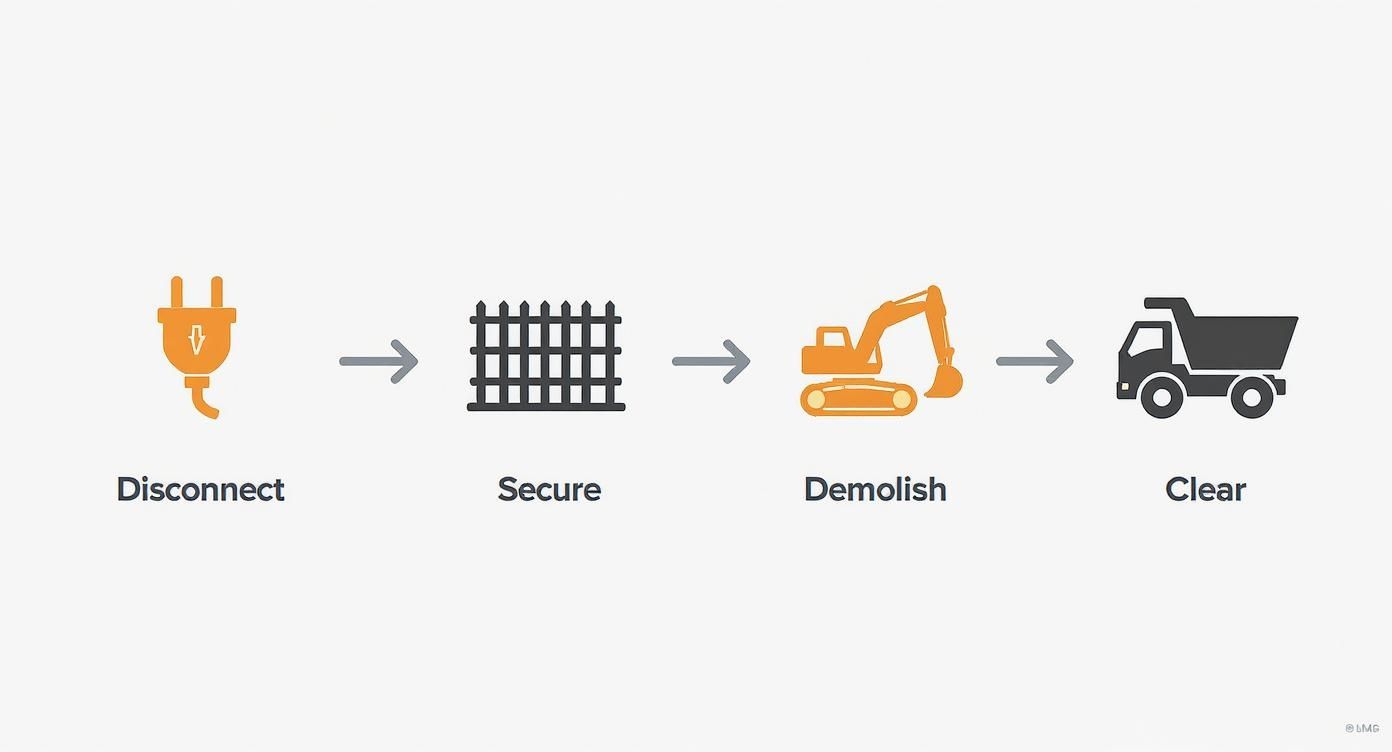
Each of these steps is meticulously planned for safety and efficiency, with waste management integrated directly into the demolishing and clearing phases.
A detailed waste management plan isn't just an add-on; it's a fundamental part of a modern demolition project. It protects the environment, ensures compliance, and directly impacts your project's bottom line by turning potential waste into valuable resources.
While we're focused on C&D waste here, it's worth remembering the broader environmental impact of electronic waste and the importance of managing it responsibly. By adopting a conscious mindset across all waste types, we can collectively make a huge difference. At Booms Up Civil, we bring this environmentally-focused approach to every site we clear on the Central Coast, in Newcastle, and beyond.
How to Choose the Right Demolition Contractor
Picking the right team for your demolition project is single-handedly the most important decision you’ll make. This choice ripples through everything that follows—your budget, your timeline, the safety of the site, and whether you stay on the right side of council regulations. You need a company with proven local experience, the right tickets, and comprehensive insurance.
Imagine you're clearing a block on a tight residential street in Newcastle or a tricky sloping site overlooking the water on the Central Coast. A contractor who gets the local terrain, the council's quirks, and the importance of keeping the neighbours happy is invaluable. They know exactly what it takes to get the job done right, the first time.
Verify Licences and Insurance
Before you even glance at a quote, the very first question should be about credentials. Your contractor must hold a current demolition licence from SafeWork NSW. This isn't just a piece of paper; it’s proof they have the proper training, knowledge, and safety systems locked down.
Just as critical is their insurance. A reputable company will have no problem showing you their Certificate of Currency for both Public Liability and Workers Compensation insurance. This is your shield, protecting you from liability if an accident or damage to a neighbouring property were to happen. Don't just take their word for it—ask to see the documents.
Scrutinise the Quote
A professional quote is much more than just a price; it's a detailed roadmap of the entire job. It should clearly spell out exactly what’s included and, just as importantly, what isn't.
A thorough quote should break down:
- The demolition of the main structure.
- Removal of foundations, footings, and old slabs.
- Clearance of driveways, paths, and other hard surfaces.
- Full site cleanup, including the transport and disposal of all waste.
- Confirmation of whether asbestos removal and council permit fees are included.
A vague, one-line quote is a massive red flag. A detailed document shows the contractor has properly sized up your site and is being transparent about their process.
Prioritise Safety and Sustainability
A professional contractor puts safety above everything else. Never hesitate to ask about their safety record, their specific procedures for handling asbestos, and how they plan to control dust and noise to keep disruptions to a minimum. A true pro will be transparent and confident in their answers.
Their approach to waste management also speaks volumes. The construction and demolition waste recycling market in Australia was valued at a staggering USD 148,727.27 million in 2024 and is only set to grow. This reflects a huge industry shift towards sustainability. Ask your contractor how they sort materials for recycling—it’s not only better for the environment but can often bring down your disposal costs. You can read more about the growth of the C&D recycling market at IMARC Group.
With over 15 years of hands-on experience on the Central Coast and beyond, we at Booms Up Civil hold all the necessary licenses and insurances. Our entire focus is on getting the job done safely and efficiently, managing the whole process from council paperwork right through to the final site clearance. You can also explore our guide on finding the best excavation services near you for more tips on choosing qualified professionals.
Common Questions We Get About Building Demolition
We've heard just about every question in the book when it comes to demolition. To help clear things up, here are some straightforward answers to the most common queries we get from clients across Australia.
How Long Does a Typical House Demolition Take?
This is probably the number one question we're asked, and the answer has two parts. The physical, on-site demolition of a standard single-storey brick home on a relatively flat block is surprisingly quick. Our excavators can typically have the main structure down in about 3 to 7 days.
But the entire project from start to finish is a different story. Realistically, you should budget for 4 to 8 weeks from the day you hire us to the day you have a perfectly cleared site. That extra time is crucial for all the behind-the-scenes work: lodging council permits, conducting asbestos surveys and arranging safe removal, and coordinating the official disconnection of utilities. These essential steps can take several weeks before a single machine can roll onto your property.
Do I Need to Inform My Neighbours About the Demolition?
Absolutely, yes. This isn't just about being a good neighbour; in most council areas across NSW, it's a legal requirement. Most demolition permits, whether from Central Coast Council or Newcastle Council, come with a condition that you must notify all adjacent property owners in writing before work begins.
You’ll typically need to give them 7 to 14 days notice. The letter should briefly explain the work being done and, most importantly, provide the contact details for the demolition contractor. This simple act of courtesy manages expectations about the unavoidable noise and dust, and gives them a direct point of contact if any concerns pop up.
What Happens If Asbestos Is Found Unexpectedly?
It happens, especially in older homes. Even after a thorough initial inspection, a hidden patch of asbestos-containing material can be uncovered during demolition. The moment our team suspects we’ve found something, all work in that area stops immediately. This isn't just our policy; it's a strict SafeWork NSW regulation designed to prevent any risk of fibre release.
The area is immediately secured and isolated. We then call in a licensed asbestos assessor to take a sample and get it tested. If the test comes back positive, a specialist licensed asbestos removal team is brought in to handle, remove, and dispose of the material according to the strict official guidelines. It’s a perfect example of why that initial comprehensive survey is so important, but any professional crew will always have a solid plan for dealing with surprises.
What Should a Demolition Quote Include?
A professional demolition quote should leave no room for doubt. Vague, one-line prices are a massive red flag and often hide future costs.
Look for a comprehensive document that breaks down every single part of the job. This should clearly itemise the demolition of the main structure, the complete removal of foundations and footings, breaking up old driveways or paths, and the full site cleanup, including all transport and disposal costs for the debris.
Crucially, the quote must explicitly state whether things like asbestos removal, tree or stump removal, and the cost of securing council permits are included or are listed as separate items. Always insist on a detailed breakdown—it’s the only way to accurately compare quotes and ensure there are no nasty surprises waiting for you down the track.
Ready to clear the way for your next project? The team at Booms Up Civil Group has the experience and equipment to manage your demolition safely and efficiently, from the initial paperwork to the final site handover. To discuss your project and get a detailed, obligation-free quote, get in touch with us today. https://boomsupcivil.com.au