"Building for demolition" is just another industry term for a knockdown rebuild. It’s a pretty straightforward concept: you demolish an old, existing house to build a brand new one on the very same block of land. This approach has become incredibly popular right across Australia, giving you a completely clean slate without having to leave the neighbourhood you know and love.
So, What Does Building for Demolition Actually Involve?
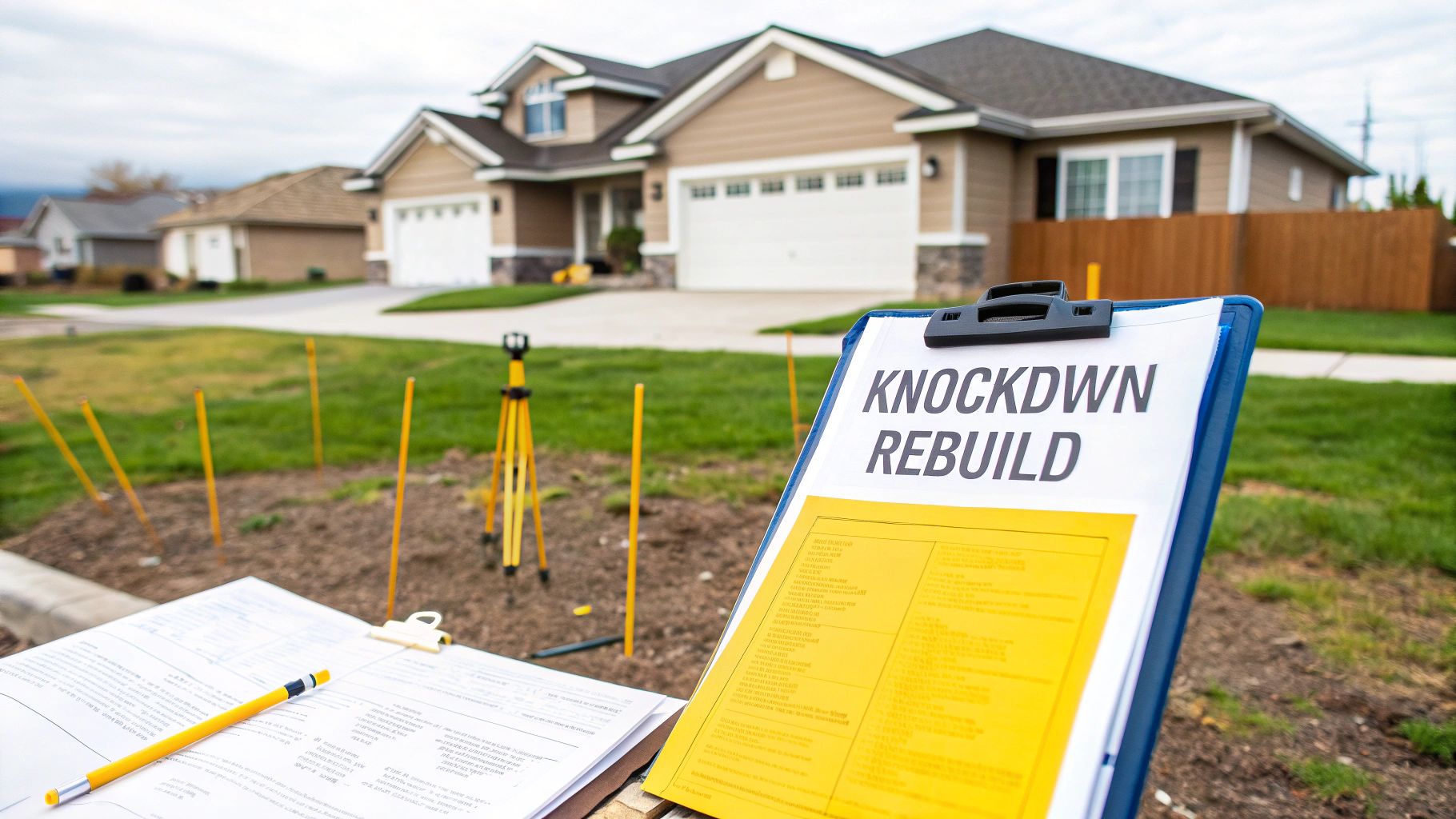
Picture this: you've got an older home on a fantastic block in a great Central Coast suburb like Long Jetty or Woy Woy. The location is perfect, but the house itself is dated, has a terrible layout, or is riddled with serious structural issues. Tackling a major renovation could be like opening a Pandora's box of hidden costs and endless compromises.
This is exactly where a knockdown rebuild—or building for demolition—shines as a smart, and often more cost-effective, alternative.
Instead of patching up old plumbing, wrestling with outdated wiring, or being stuck with a layout that just doesn't work, you get to start completely fresh. You can build the exact home design you've always wanted, engineered to modern standards, without giving up your prized location.
Why Would You Choose a Knockdown Rebuild?
For many property owners here on the Central Coast, the decision boils down to a few key advantages. You're not hemmed in by an existing floor plan; you have the freedom to design a home that perfectly suits your family, maximises the block's orientation for natural light, and includes all the modern, energy-efficient features you want.
While the initial figure might seem high, it’s far more predictable than a large-scale renovation. Renovations are notorious for uncovering expensive surprises—like termite damage, hidden asbestos, or crumbling foundations—once you start opening up walls. A new build gives you much more cost certainty.
Plus, a new home means everything is new, from the slab right up to the roof. You can relax knowing you won't have to deal with the constant upkeep and unexpected repair bills that come with an older property for many years to come.
Your new home will be constructed to the latest Australian Standards (AS) and the Building Code of Australia (BCA). This guarantees it's not just more comfortable, but also safer and more structurally sound, giving you and your family complete peace of mind.
Ultimately, building for demolition gives you a blank canvas. It's about much more than just destruction; it's the first critical step in a construction journey that ends with a home purpose-built for your future. The process starts long before an excavator shows up on site, beginning with meticulous planning and the essential steps for site preparation and excavation.
Navigating Council Approvals and Paperwork
Getting the green light from your local council is the most critical first step, and honestly, it can feel pretty daunting. Whether you're dealing with Central Coast Council, Newcastle Council, or another authority in the Hunter region, the process has specific requirements you just can't afford to miss.
This isn't just about ticking boxes. Think of it as laying the proper foundation for your entire knockdown rebuild. A poorly prepared application can lead to significant delays, pushing your whole construction timeline back by weeks or even months. Getting it right the first time saves you a massive amount of stress, time, and money down the line.
DA or CDC: Which Path Is Right for You?
For most demolition projects, you’ll likely go down one of two approval pathways: a Development Application (DA) or a Complying Development Certificate (CDC). They serve different purposes, and picking the right one is key.
A Development Application (DA) is the traditional route, submitted directly to your local council. This process involves a detailed assessment by council planners and is almost always necessary for projects that don't meet the stricter, one-size-fits-all criteria of a CDC. For example, if your block is in a heritage conservation area or has unique environmental constraints, a DA is pretty much guaranteed.
On the other hand, a Complying Development Certificate (CDC) is a faster, more streamlined alternative for straightforward projects that meet pre-set state-wide standards. If your project is a simple demolition with no complex factors, you might be able to get a CDC from a private certifier, bypassing a lengthy council assessment. The rules are very strict, though, and not all properties are eligible.
Assembling Your Essential Paperwork
Regardless of the path you take, you'll need a comprehensive set of documents. Your application is a formal proposal that tells the council exactly what you plan to do, how you'll do it safely, and how you'll manage the impact on the site and your neighbours.
Your key documents will typically include a detailed demolition plan, a site plan showing boundaries and features, a waste management plan outlining your recycling strategy, and an asbestos report. If the building was constructed before 2004, a hazardous materials survey is mandatory to identify any asbestos that needs specialist removal.
It's also crucial that your plan accounts for all relevant WHS compliance requirements to ensure every aspect of your project meets SafeWork NSW regulations from the get-go.
Expert Tip: Don't forget about service disconnections! You must provide evidence that services like electricity, gas, water, and the NBN have been safely and formally disconnected by qualified providers. Trying to demolish a building with live services is incredibly dangerous and illegal.
Getting this paperwork in order is closely linked to the work done during site and land clearing for residential projects, as both require careful planning and documentation. By being thorough and organised, you pave the way for a smooth approval process, getting your project underway without those frustrating and costly delays.
Preparing Your Site for a Safe Demolition
With your council approvals sorted, the focus shifts from paperwork to the real world – getting your property ready for the main event. Before a single machine rolls onto your block, a whole lot needs to happen.
This isn’t just about ticking boxes. Proper site preparation is about creating a secure, controlled environment that keeps workers safe, protects your neighbours’ properties, and meets the strict standards we have to follow. Getting this part right is fundamental; it lays the groundwork for a demolition that runs smoothly, without any nasty surprises.
Securing the Perimeter and Managing the Site
The very first physical step is to lock the site down. This means installing temporary fencing around the entire demolition zone, which is a non-negotiable requirement under SafeWork NSW regulations.
This fence does more than just keep people out. It prevents unauthorised access and keeps the public, including curious neighbours, a safe distance from heavy machinery and potential hazards. It clearly marks out the worksite and is our first line of defence in maintaining a safe environment.
At the same time, we have to get our sediment control measures in place. This is especially vital on the Central Coast, where suburbs like Umina Beach and Ettalong Beach are so close to our waterways. We install silt fences and other barriers to stop soil, dust, and demolition runoff from washing into stormwater drains and polluting the local environment. Central Coast Council is, quite rightly, very vigilant about this.
Handling Hazardous Materials and Services
One of the most critical safety checks is the professional asbestos assessment. If your home was built before 2004, it’s highly likely to contain asbestos somewhere.
A licensed asbestos assessor has to inspect the property and give us a detailed report. Any asbestos-containing materials they find must be removed by a licensed and qualified professional before any other demolition work can even start. This is a strict, non-negotiable rule enforced by SafeWork NSW to prevent exposure to those dangerous fibres.
Simultaneously, we need to get all the utilities formally and safely disconnected right at the source. This means electricity, gas, water, sewer, and any telecommunications like the NBN. We coordinate directly with all the relevant authorities to make sure every service is properly capped off and certified as safe, which prevents catastrophic risks like gas leaks, electrical hazards, or flooding during the demolition.
A Quick Tip: Before the fences go up, do one final walkthrough of the house and yard. It’s amazing what can be forgotten—from garden ornaments to that old letterbox you wanted to keep. Once demolition starts, everything left behind will be gone for good. Taking the time for a final check ensures no sentimental items are lost in the process, which is an important step in any property clearing services.
The Demolition Process Step-by-Step
So, what actually happens when demolition day arrives? It’s certainly not just a case of swinging a wrecking ball and hoping for the best. A professional demolition is a carefully planned operation, executed in stages to maximise safety and recycling, and to minimise disruption to your neighbours.
It all kicks off with what we in the industry call a ‘soft strip’. Before any heavy machinery gets near the building, our team meticulously goes through the interior to remove all non-structural items. This means pulling out things like carpets, plasterboard, old kitchen cabinets, doors, and window frames. This step is absolutely crucial because it allows us to separate materials for recycling right from the very start.
The Main Event: Mechanical Demolition
Once the soft strip is complete and the building is just a shell, the main event can begin. This is where the mechanical demolition happens, typically using a high-reach excavator handled by a skilled operator. They won’t just knock it all down at once; the operator dismantles the structure methodically, piece by piece, usually from the top down.
This systematic approach is all about control. An experienced operator knows exactly how to bring down walls and roofs safely, making sure debris falls within the designated work zone. Think of it more like deconstructing a puzzle rather than simply smashing it. You can learn more about the specifics of our professional demolition and excavation services and see how we approach each unique project on the Central Coast.
Throughout this entire process, dust suppression is a massive priority. We use targeted water sprays to dampen down the site, preventing clouds of dust from bothering your neighbours and the local environment—a key consideration in any built-up area.
This infographic shows the critical flow of getting the site ready, which is foundational to the actual demolition work itself.
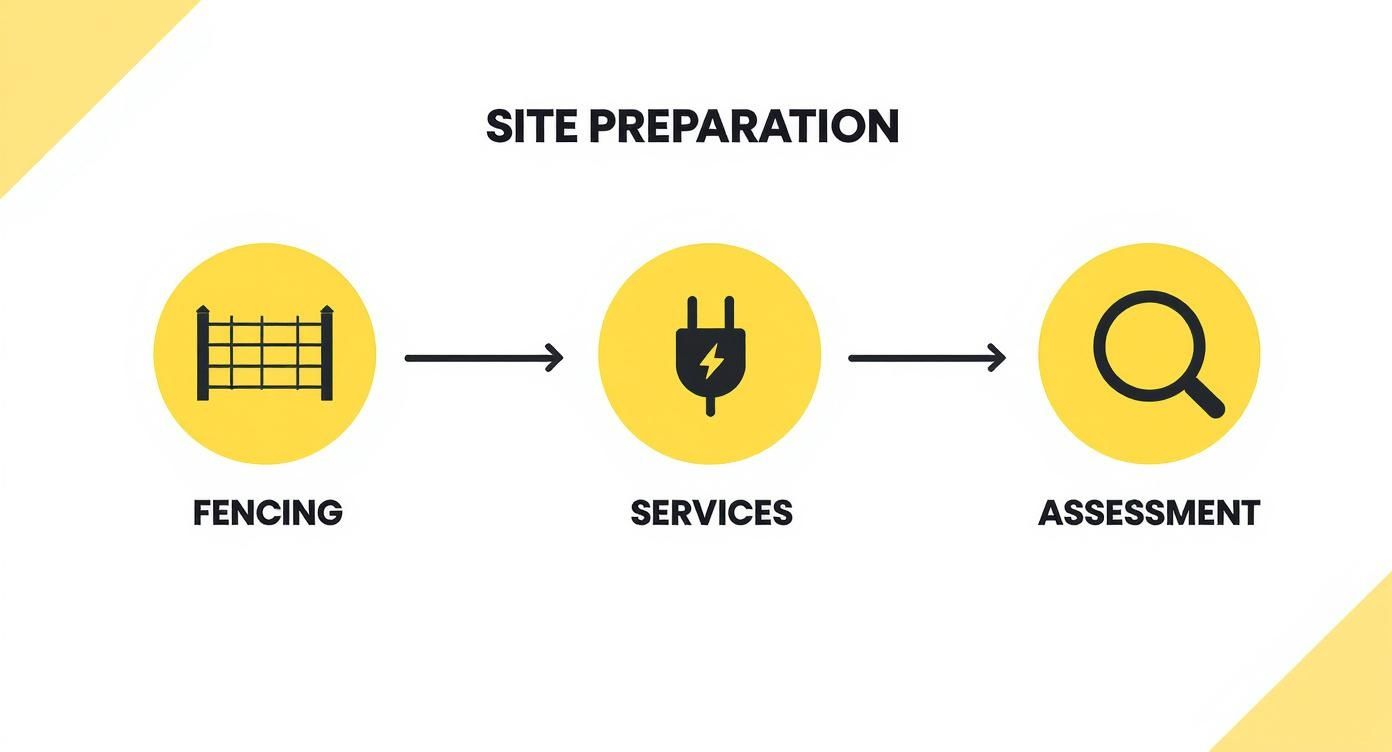
As you can see, methodical preparation involving fencing, service disconnection, and assessment is what enables a safe and efficient demolition process to happen in the first place.
Sorting Materials and Clearing the Site
As the structure comes down, materials are sorted on-site into separate piles. Concrete, bricks, timber, and metals are all segregated. This on-the-spot sorting is vital for effective recycling and is a core part of our waste management plan for every job.
Why It Matters: Properly sorting materials isn't just about being environmentally friendly. It's a requirement under many council DAs, and it ensures your site is left clean and free of contaminants, ready for the next phase of construction.
Finally, once the main structure is gone, we turn our attention to what's left in the ground. The excavator will carefully remove the old concrete slab, footings, and any other underground foundations. This final clearing stage ensures your block is a truly blank canvas, ready for the builders to start creating your new home.
Managing Waste and Environmental Responsibilities
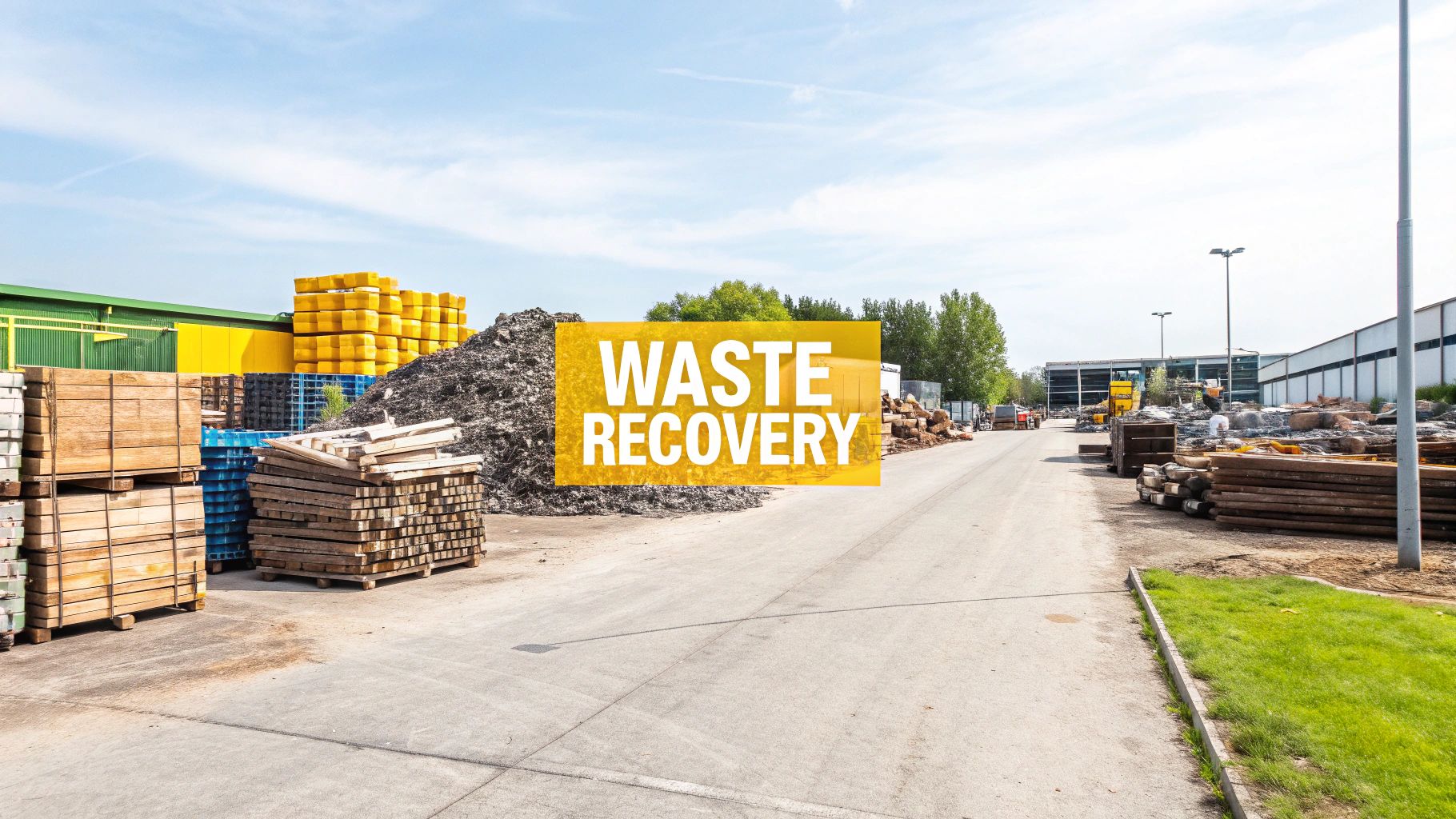
These days, demolition is less about raw destruction and far more about resource recovery and sustainability. A critical part of any council application is a rock-solid Waste Management Plan, which spells out exactly how we'll keep materials out of landfill and get them back into circulation. It’s a responsibility we build into every single project.
This isn’t just about ticking a green box; it’s a non-negotiable requirement under NSW environmental regulations. A well-thought-out plan shows a commitment to sustainable building from the get-go, setting a positive tone for your entire build.
From Old House to New Resources
When we look at your old house, we don't just see a pile of rubble. We see a collection of valuable resources waiting to be repurposed. Our entire process is built around carefully sorting materials on-site so they can be recycled effectively.
Take the old concrete and bricks from your foundations and walls—they don't end up in a tip. We send them to a recycling facility where they’re crushed and processed into aggregate, which gets a second life as a stable road base for new infrastructure projects. The same goes for metals; steel beams, copper pipes, and old aluminium window frames are all separated and sent to scrap metal dealers.
Even old, untreated timber can be chipped down and used for landscaping mulch or other wood products. This meticulous sorting on-site dramatically cuts down the volume of waste that actually ends up in landfill. You can explore more insights about Australia's waste management to see how this fits into the bigger picture.
Why This Matters: Working with a contractor who has a robust recycling program isn't just good for the planet—it can also be good for your wallet. Sending sorted materials to recycling facilities is often cheaper than paying hefty landfill levies, which can positively impact your overall project budget.
Handling Hazardous Materials Safely
Of course, not everything can be recycled. Our number one priority is the safe, compliant disposal of hazardous materials, especially asbestos. As we've mentioned before, any identified asbestos has to be removed by licensed professionals following strict SafeWork NSW guidelines before the main demolition even starts.
This is a highly controlled process. It involves sealing off the affected areas, using specialised equipment, and transporting the material in clearly marked, sealed containers to an approved hazardous waste facility. We handle all the paperwork and provide you with the necessary clearance certificates, proving your site is completely free of asbestos contamination. This leaves your block clean, safe, and ready for your builders to move in.
Choosing the Right Demolition Contractor
Getting your demolition contractor right is probably the single most important decision you'll make for your entire knockdown rebuild. This isn't about chasing the cheapest price; it’s about finding a genuine partner who lives and breathes safety, follows the rules, and delivers quality work. Picking the wrong crew can unleash a world of pain, from council fines and infuriating delays to, worst of all, a serious safety incident on your site.
Think of a professional contractor as your project guide. They’re the ones who make sure everything, from the first bit of site fencing to handing over that final clearance certificate, is done by the book.
What to Look For in a Demolition Pro
When the quotes start rolling in from contractors around the Central Coast or Newcastle, you absolutely have to look past the bottom line. The cheapest quote is often a red flag for hidden costs or dangerous shortcuts you just can't afford to take. A truly professional outfit will be upfront and more than happy to show you their credentials.
Here’s what you need to lock down:
- Correct Licences: They must hold a current demolition licence from SafeWork NSW. If there’s even a hint of asbestos, they need a specific asbestos removal licence. This is non-negotiable.
- Comprehensive Insurance: Always, always ask to see their public liability insurance certificate. This is your financial safety net if an accident happens or the neighbour's fence gets damaged.
- A Proven Track Record: You want a company with years of local runs on the board. They’ll know the ins and outs of local councils and be used to the specific ground conditions, whether it's sandy coastal soil or the heavy clay further inland. For a deeper dive into local ground challenges, check out our guide to excavation challenges on the Central Coast.
Asking the Right Questions
Before you even think about signing a contract, get them on the phone or meet them on-site. The way they answer your questions speaks volumes about their professionalism.
Expert Tip: Don't hold back. Ask detailed, specific questions. A good contractor will welcome your interest and give you clear, confident answers. If they get defensive or vague, that’s a massive red flag.
A great one to ask is about their waste management and recycling process. It’s a huge part of modern demolition, especially with environmental rules getting tighter. Sustainable practices aren't just a "nice-to-have" anymore; they're a sign of a forward-thinking, responsible company.
Beyond just picking the right team, knowing how to manage them throughout the project is key. It's well worth getting familiar with some Contractor Management Best Practices to ensure your worksite stays safe, compliant, and on track from start to finish.
Your Top Demolition Questions Answered
We get a lot of questions about the knockdown rebuild process. Below are some straight answers to the most common queries we hear from homeowners planning a project on the Central Coast, in Newcastle, or across the wider Sydney region.
How Long Does the Demolition Process Usually Take?
For a standard single-storey brick home on the Central Coast, the actual on-site work – the noisy part – is surprisingly quick. We can typically have the structure down in about 5 to 10 working days.
But that's just one piece of the puzzle. The entire journey from signing the contract to having a clean, clear block ready for your builder is much longer. Once you factor in council approvals, disconnecting services like power and water, and the final site cleanup, you should realistically plan for anywhere from 4 to 8 weeks.
Things that can stretch this timeline out include unexpected asbestos discoveries, difficult site access (a common headache on the steep blocks around Terrigal), or the occasional council delay.
What Are the Biggest Hidden Costs in a Demolition Project?
The costs that tend to catch people by surprise usually pop up in a few key areas, especially if an initial quote seemed too good to be true.
Undisclosed asbestos can bring work to a screeching halt, as it requires specialist licensed removal which comes at a premium. It’s also more common than you'd think to uncover old septic tanks or deep footings from a previous structure, and dealing with these takes extra time and machinery.
If your property is on a busy road, the council will likely mandate a formal traffic management plan with professional controllers. This is a non-negotiable safety requirement that adds to the bottom line. A thorough site assessment from an experienced demolition contractor is your best defence to identify these potential issues upfront.
Do I Need to Inform My Neighbours About the Demolition?
Yes, absolutely. While your contractor will handle the formal notifications required by the council as part of the approval conditions, we always recommend speaking with your neighbours personally beforehand.
Giving them a heads-up about the expected timeline and the potential for noise and dust is a simple courtesy that goes a long way. It helps prevent disputes and is just a good way to start off on the right foot with the people you'll be living next to for years to come.
Ready to take the first step towards your new build? The team at Booms Up Civil has the local experience and modern fleet to manage your demolition project safely and efficiently. Get in touch for a straightforward discussion about your project and a no-obligation quote.