

Property clearing is a whole lot more than just a garden tidy-up. Think of it as hitting the reset button on your block of land—a professional process that prepares it for whatever you’ve got planned next, whether that’s a new home, landscaping, or reducing bushfire hazards. It’s all about creating a safe, clean, and stable foundation to build upon.
We find this is the crucial first step that takes a piece of land from its raw state and turns it into a project-ready site. It's a non-negotiable stage for anyone looking to build a new home in Sydney, subdivide a block on the Central Coast, or get serious about managing fire risks in the Hunter Valley.
What Property Clearing Services Truly Involve
When you hear "property clearing," it’s easy to picture a crew just mowing an overgrown lawn. But in reality, it's a specialised trade that makes new development possible. This is a non-negotiable stage for anyone looking to build a new home, subdivide a block, or get serious about managing fire risks.
Let’s put it into context. Say you've just bought an acreage block out in the Hunter Valley, dreaming of a new home with a small vineyard. Right now, it’s probably covered in dense scrub, a few scattered trees, and maybe even a dilapidated old shed from a bygone era. Our professional property clearing service is what you bring in to systematically remove that unwanted vegetation, knock down the old structure, and level the ground to create a stable building pad. It’s not just about taking things away; it’s about preparing the earth correctly.
More Than Just Removing Trees
While getting rid of vegetation is a big part of the job, a comprehensive service goes much deeper. It’s a coordinated effort to get your site completely ready, which often includes:
- Vegetation and Debris Removal: This covers everything from felling trees and clearing thick undergrowth to hauling away rocks, old stumps, and any leftover construction junk.
- Minor Demolition: Taking down old sheds, rickety fences, or crumbling concrete paths that are standing in the way of your new vision.
- Stump Grinding: This involves chewing tree stumps down below the ground's surface to stop them from re-sprouting and to give you a flat, usable area.
- Site Levelling and Grading: After everything is cleared, the land is often a mess of bumps and dips. We use machinery like excavators and posi-tracks to create a level surface or grade the land just right to ensure proper water drainage—an absolutely vital step, especially on the Central Coast with its sandy, erosion-prone soils.
The real goal of any professional property clearing project is to hand you back a site that is not only clean and clear but also safe, compliant, and perfectly prepped for whatever comes next. Getting this foundational step right prevents a world of headaches down the track.
Ultimately, understanding the full scope of professional land clearing and preparation helps you see why it’s a job for seasoned contractors. From navigating the Central Coast Council’s tree preservation orders to making sure the soil is properly compacted for a new build in Newcastle, every single detail counts.
The Property Clearing Process From Start to Finish
Clearing a block of land isn’t just about bringing in the big machines for a day. It’s a carefully staged operation, and understanding each step helps you see how a raw, overgrown plot becomes a clean, prepped canvas ready for your vision. Think of it as a detailed roadmap that takes your land from what it is now, to what you need it to be.
It all starts with a thorough site assessment. This is far more than a quick stroll around the block. An experienced contractor gets their boots on the ground to analyse everything – the slope of the land, the soil type, the density of the trees and undergrowth, and any hidden hazards. It’s a critical diagnostic step that dictates the entire plan of attack.
This initial evaluation is where we spot the challenges early. For instance, a sloping block in Kariong will need a smart erosion control strategy. A property near Tuggerah Lakes might have a high water table, which completely changes how we approach excavation. This level of detail ensures the right equipment and methods are chosen from day one, preventing nasty surprises and budget blowouts later on.
This infographic breaks down some of the most common reasons landowners start this journey in the first place.
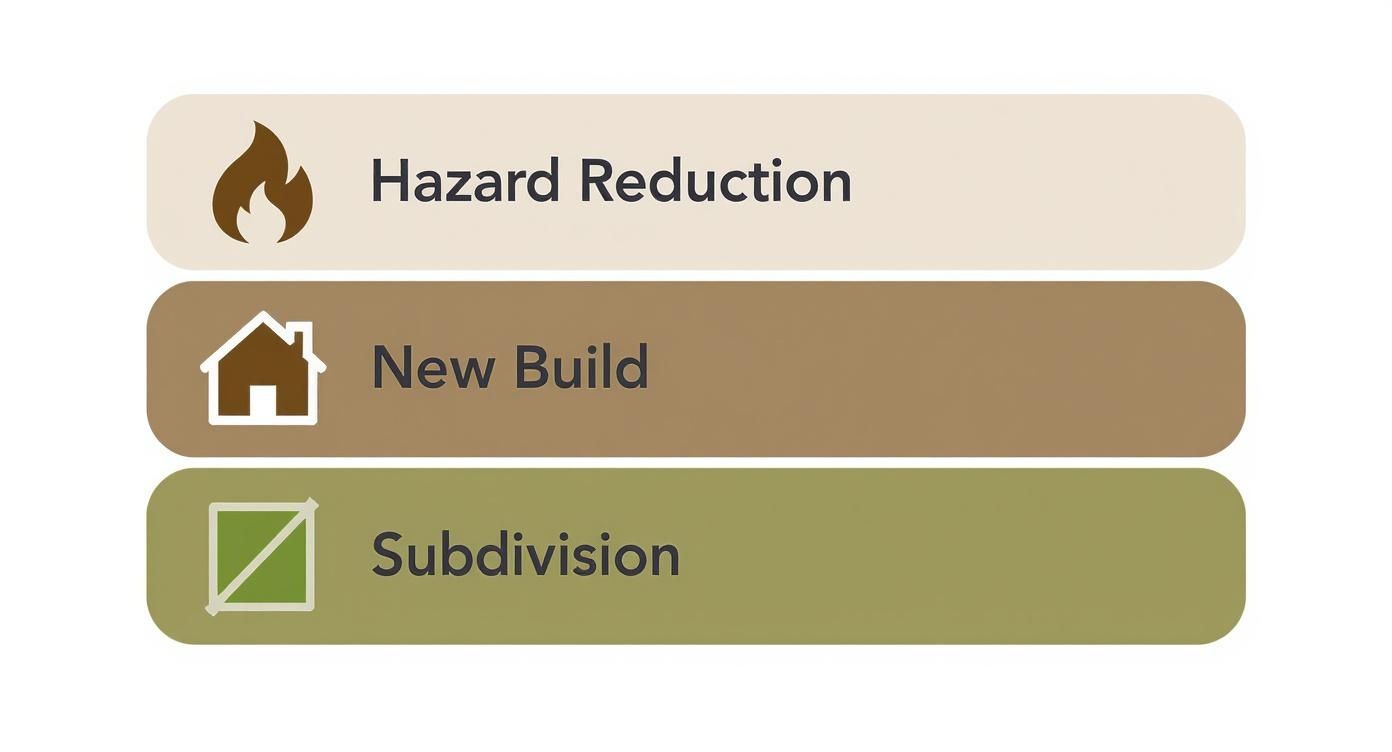
As you can see, whether it’s for safety, a new build, or an investment, the motivation might differ but the need for a professional, structured process remains the same.
Council Approvals and Pre-Start Checks
Before a single engine starts, we hit the compliance phase. This means sorting out the necessary paperwork with your local council, whether that's the Central Coast Council or Newcastle Council. It might involve lodging a Development Application (DA) or ensuring our work respects local tree preservation orders and environmental protection laws.
We also run through essential pre-start checks. This is non-negotiable. It means locating underground services like water pipes and electrical cables, identifying any protected plants or animals, and locking in a solid safety plan that meets SafeWork NSW regulations. A true professional never skips this step.
The Clearing and Demolition Phase
With the green light from council, the real work begins. This is the stage where you see the most dramatic transformation as specialised machinery gets to work clearing the site efficiently. Our crew will systematically remove trees, scrub, and any old structures like dilapidated sheds or fences.
But it’s methodical, not chaotic. We tackle the site in manageable sections to keep the debris under control and maintain a safe, organised work area. Every part of the job is done under strict safety protocols to protect our crew, your property, and your neighbours.
Site Remediation and Waste Management
The final piece of the puzzle—and you could argue the most important—is site remediation. The job isn't done just because the trees are gone. The land itself needs to be made stable and ready for whatever comes next. This involves grinding stumps below ground level, grading the soil for proper drainage, and compacting the earth to create a solid, reliable foundation. You can explore more about the full site preparation and excavation process in our detailed guide.
A professional finish means leaving your property not just clear, but also clean and environmentally sound. This includes responsibly managing all green waste and demolition debris, often through recycling or proper disposal, ensuring we leave a minimal footprint.
At the end of it all, you’re left with a block that is safe, compliant, and perfectly primed for construction, landscaping, or whatever project you have in mind. It's this commitment to seeing the process through from start to finish that guarantees a top-quality result.
Navigating Council and Environmental Regulations
Before the first engine roars to life on your property, the real work has already started—making sense of the maze of council and environmental rules. This isn't just about paperwork. It's about making sure your project is legal and won't get hit with the kind of costly fines or stop-work orders that can bring everything to a grinding halt. Getting this right from day one is absolutely non-negotiable.
Here in New South Wales, your local council is the first port of call for most land development. When it comes to clearing property, that means you'll be dealing directly with bodies like the Central Coast Council or Newcastle Council to get a handle on their specific rules. Each one has its own Local Environmental Plan (LEP) and Development Control Plan (DCP), which are essentially the rulebooks for what you can and can’t do.
Understanding Key Council Requirements
A common roadblock for property owners is the Tree Preservation Order (TPO), which is now usually folded into the council's DCP. These rules are there to protect certain trees or vegetation because of their species, size, or local significance. Just because a tree is standing on your land doesn't give you an automatic green light to remove it. Trying to do so without approval can lead to some eye-watering penalties.
This is usually where a Development Application (DA) enters the picture. If your clearing work doesn’t fall under the simple "exempt or complying" categories, you'll need to lodge a DA with your council. Think of it as a formal request for permission, and it needs detailed plans showing exactly what you want to clear and why. An experienced contractor knows precisely what the council needs to see, making sure the application is solid and professionally managed to avoid unnecessary delays.
State-Level Environmental Protections
Looking beyond your local council, state-level laws play a massive part in protecting NSW's natural landscapes. Legislation like the Biodiversity Conservation Act 2016 is in place to protect native plants and animals, and it applies to projects of every size. Clearing land without thinking about how it might affect the local ecosystem isn't just a bad idea—it's a serious offence.
This is especially true for those larger semi-rural and acreage clearing jobs across the Hunter Valley and the Central Coast hinterlands. The sheer scale of land clearing in NSW is a major environmental concern. You can discover more about the scale of land clearing in NSW to see why these regulations are so vital.
Hiring a professional contractor isn't just about getting access to equipment; it's about bringing on an expert who understands this complex regulatory landscape. We’re your guide through the process, making sure every single action on site is fully compliant with all relevant Australian Standards and environmental laws.
To help clarify what's involved, we've put together a summary of the crucial checks that need to happen before any work begins.
Key Compliance Checks Before Starting Property Clearing
This table outlines the essential regulatory and environmental checks required before any clearing work can kick off in NSW. Getting these right is the foundation of a successful, compliant project.
| Compliance Check | What It Involves | Why It's Crucial |
|---|---|---|
| Local Council LEP/DCP Review | Analysing your council's Local Environmental Plan and Development Control Plan to identify specific rules for vegetation and tree removal. | Prevents breaches of local planning laws, including Tree Preservation Orders, which can lead to heavy fines. |
| Development Application (DA) | Preparing and submitting a formal application to the council if your project doesn't meet exempt development criteria. | This is the legal permission you need to proceed; skipping it can result in a stop-work order and penalties. |
| Biodiversity Impact Assessment | Checking state and federal databases for threatened species, endangered ecological communities, or critical habitats on or near your land. | Ensures you're not breaking state laws like the Biodiversity Conservation Act 2016, which protect wildlife. |
| Aboriginal Heritage Search | Conducting a search of the Aboriginal Heritage Information Management System (AHIMS) to identify any registered sites or artefacts. | Protects culturally significant sites and ensures compliance with the National Parks and Wildlife Act 1974. |
Failing to complete these checks isn't just a risk; it's a guarantee of problems down the line. Each step is a critical part of a professionally managed project.
Proactive Compliance is the Only Way
Honestly, the risks of getting this wrong are far too high. Fines for illegal clearing can run into the tens or even hundreds of thousands of dollars, and councils have the power to shut your project down indefinitely. A professional team deals with these complexities head-on. We carry out the necessary assessments, prepare the paperwork, and talk to the authorities for you. If you’d like to learn more about residential land clearing compliance, we have more detailed information available.
This focus on compliance is what keeps your project moving forward—smoothly, legally, and with respect for the local environment. It's all about doing it right the first time, protecting you from liability, and building your project on a solid, compliant foundation.
Essential Equipment for Professional Land Clearing
When you see a professional property clearing crew in action, it’s the heavy machinery that really catches your eye. But it’s not just about bringing in the biggest and loudest gear; it’s about strategically using the right tool for the right job with absolute precision. Getting the equipment selection right means the work gets done faster, more safely, and to a much higher standard—especially when dealing with the wildly varied conditions across the Central Coast, Sydney, and the Hunter Valley.
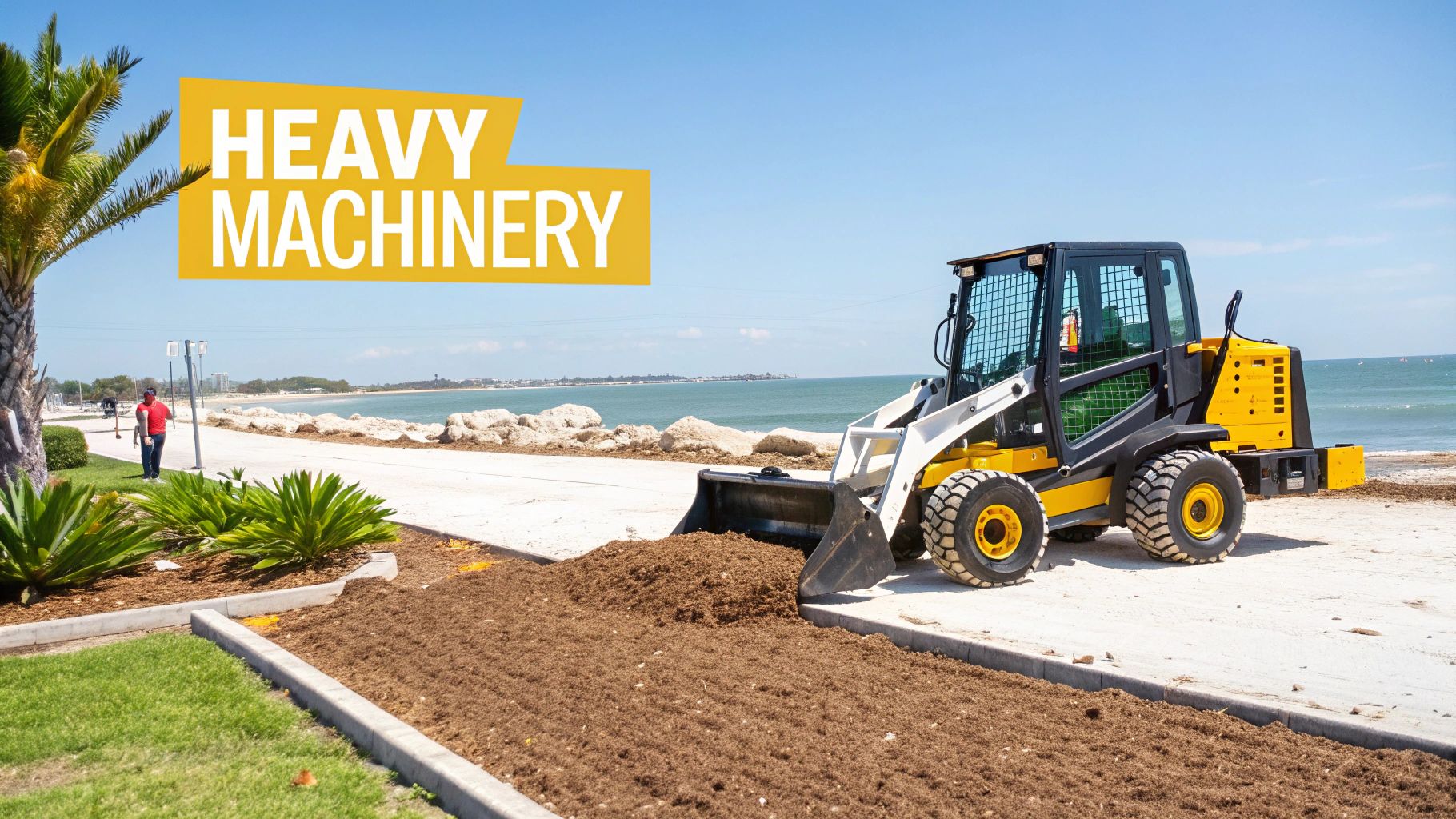
The specific machinery we bring to your site isn’t a one-size-fits-all solution. It’s carefully chosen based on your land’s access, the lay of the land, and exactly what kind of vegetation we need to clear. This is the difference between a messy, drawn-out job and a clean, efficient site ready for the next stage.
The Workhorses of Any Clearing Project
While every site is unique, a few key pieces of machinery form the backbone of almost every clearing operation. Each one has a specific role, and they all work in concert to completely transform your block.
Excavators are the undisputed champions of the land clearing world. They are incredibly versatile machines that can do far more than just dig. Their real power lies in the huge range of attachments they can use, turning a single machine into a multi-tool for site preparation. A grapple attachment makes removing large trees and heavy logs a safe, controlled process, while a rock breaker can make short work of stubborn Sydney sandstone. You can learn more about the full range of excavator attachments and how they make complex jobs possible in our detailed guide.
Posi-Tracks and Skid Steers are the agile movers and shakers on site. Their compact size and tracked design give them excellent traction with low ground pressure, making them perfect for shifting materials around without churning up the soil. On a tight-access residential block in Newcastle or a sandy coastal site on the Central Coast, a posi-track can efficiently load green waste into a truck or spread topsoil where a larger machine simply couldn’t go.
Specialised Tools for Specific Tasks
Beyond the primary movers, it’s the specialised equipment that truly sets a professional service apart. These tools are designed to handle specific challenges with maximum efficiency.
Forestry Mulchers are incredible machines that can turn dense scrub, undergrowth, and small trees into a layer of natural mulch right on the spot. Instead of the massive job of hauling away tonnes of green waste, a mulcher processes it and returns organic matter directly to the soil. This is a highly efficient way to reduce bushfire hazards and clear large areas of thick vegetation in a fraction of the time.
Choosing the right equipment is a strategic decision that directly impacts your project's timeline, budget, and final outcome. A professional contractor analyses your site’s unique conditions to create the perfect fleet for the job, ensuring every task is performed safely and efficiently.
Finally, Stump Grinders are brought in to finish the job properly. These machines use a high-speed cutting wheel to grind tree stumps down well below the ground’s surface. This isn’t just about making the area look good; it creates a flat, hazard-free surface and prevents the stumps from re-sprouting later on. It’s a crucial final step for any land being prepared for new turf, a driveway, or a building foundation.
Understanding Your Property Clearing Costs
One of the first questions we always get is, "So, how much is this going to set me back?" It's a fair question. While there’s no simple price tag for property clearing, understanding what goes into a quote will give you a much clearer picture of the investment involved.
Think of it less like buying something off the shelf and more like a custom-built project. Every single detail of your land—from its size to the type of soil underfoot—plays a part in the final cost. Our goal is to be completely transparent so you know exactly what you’re paying for and can budget with confidence.
Site Size and Accessibility
Naturally, the size of the area is the starting point. Clearing a large block out in the Hunter Valley is a different scale of job compared to a standard residential lot in a Newcastle suburb. But size is only half the equation.
Site accessibility is just as important. A flat, open property with easy street access is pretty straightforward for our machinery. But what about a tricky battle-axe block in Sydney or a site with a narrow driveway? This can limit the size of the excavators we can bring in, sometimes meaning the job takes longer with smaller, more nimble equipment.
Vegetation Density and Type
What we're actually clearing makes a huge difference to the bottom line. A property with little more than light scrub and overgrown grass is one thing. A block choked with dense, mature trees, thick undergrowth, and stubborn old stumps? That's a completely different ball game, demanding more powerful machinery and specialised techniques.
The type of vegetation is also a key factor. For instance, getting rid of invasive species like lantana requires a meticulous approach to stop it from coming back. On the other hand, removing large hardwood trees is a major operation in itself, requiring serious planning and horsepower.
The cost of any property clearing project is a direct reflection of the work required. Key variables include the land's size, ease of access, the amount and type of vegetation, and the site's overall condition and terrain.
Terrain and Ground Conditions
The lay of the land is a massive factor. A steep or heavily sloped site, like many you'd find around the Central Coast, demands specific techniques and equipment just to work safely and prevent soil erosion. Working on an incline always takes more time and carries a higher degree of risk.
The ground itself is another critical piece of the puzzle. Clearing soft, sandy soil is a world away from tackling the tough sandstone bedrock common around Sydney. Rocky ground can add significant time to a project and often requires heavy-duty attachments like rock breakers. We dig deeper into these variables when we talk about our comprehensive land clearing services.
Finally, we factor in any demolition requirements. If there are old sheds, concrete slabs, or fences that need to go, that adds another layer to the job. It all comes down to extra labour, machinery, and ensuring the materials are disposed of correctly. Every one of these elements is carefully assessed during our initial site visit to build an accurate, all-inclusive quote for you.
How to Choose the Right Clearing Contractor
Picking the right team to handle your property clearing is easily the most important decision you'll make for your project's success. The right contractor doesn't just clear the land; they become your partner in navigating compliance, ensuring safety, and setting a solid foundation for whatever comes next. Making the wrong choice, however, can lead to costly delays, budget blowouts, and even legal trouble.

With the need for new housing in hubs like Sydney, Newcastle, and the Central Coast only intensifying, it's vital to choose a contractor who can deliver professional, compliant results. This pressure on the land development sector means you need to be confident in your choice.
Verify Licences and Insurance
This is your absolute non-negotiable first step. A legitimate contractor will never hesitate to provide proof of their licences and insurance policies. In NSW, this means they should hold the appropriate tickets for the machinery they operate and the type of work they perform.
More importantly, they must have comprehensive insurance coverage. This includes:
- Public Liability Insurance: This protects you and your property in the unlikely event of damage or injury.
- Workers Compensation Insurance: This covers their crew, ensuring you're not held liable for any on-site accidents.
Ensuring they meet all necessary general contractor insurance requirements is a critical part of your due diligence. Asking for these documents isn't being difficult; it's being a smart and responsible property owner.
Assess Their Local Experience and Safety Focus
Look for a team with proven experience working in your specific area. A contractor who understands the sandy, erosion-prone soils of the Central Coast will approach a job differently than one dealing with the hard clay or sandstone common in parts of Sydney. This local knowledge is invaluable.
During your initial conversations, ask them about their safety protocols. How do they manage risks on a sloping block? What are their procedures for identifying underground services? A professional team will have clear, confident answers and will always put safety first, referencing SafeWork NSW guidelines as standard practice.
The best contractors don't just clear land; they solve problems. They should be able to look at your site, anticipate challenges, and explain their strategy in plain English, giving you confidence in their ability to get the job done right the first time.
Scrutinise the Quote
A quote should be more than just a single number at the bottom of a page. A detailed, transparent quote is a sign of a professional operation. It should clearly break down the costs, including labour, machinery hire, waste disposal fees, and any allowances for permits or council fees.
Be wary of quotes that seem too good to be true—they often are. Unusually low prices can be a red flag for corner-cutting on safety, insurance, or proper waste disposal. Don't be afraid to ask questions until you understand every line item. This clarity upfront is the best way to avoid hidden costs and nasty surprises down the track.
Your Property Clearing Questions Answered
We get a lot of questions about property clearing, so we've put together answers to some of the most common ones we hear from landowners. This is all about giving you quick, clear information to help you plan your project with confidence.
How Long Will My Property Clearing Project Take?
This is the big question, and the honest answer is: it really depends. A small, relatively flat residential block in a suburb like Gosford might only take a couple of days. Easy.
But if we're looking at a large, densely vegetated acreage in the Hunter Valley with steep terrain, that could easily take a week or more. The timeline is shaped by a few key things: the size of your property, how thick the vegetation is, how easy it is for our machinery to get on-site, and if there's any demolition involved. Weather plays a part, too; heavy rain can cause delays, especially on sites with clay soils. We always give you a realistic timeline estimate right in our initial quote.
What Happens to All the Cleared Vegetation and Waste?
Leaving a pile of green waste behind isn't how a professional job gets done. We have a clear plan for everything that comes off your site, and whenever we can, we go for sustainable methods.
Using a forestry mulcher is often our first choice. It turns green waste right back into a beneficial layer of organic mulch for your soil. For larger timber, we often arrange for it to be repurposed as firewood or sent to a local mill. Anything that can't be recycled on-site, like old concrete or demolition debris, is loaded into our trucks and taken to a licensed waste management facility for responsible disposal.
Do I Need to Be On-Site While You Work?
Not at all. You don't need to be present for the entire job. As long as we have clear access to the site and we've already walked through the project scope with you, our experienced team can get stuck in and get it done efficiently.
We're big believers in clear communication. We’ll give you regular updates on our progress, and we are always just a phone call away if you have any questions. Before we pack up, we’ll arrange a final walk-through with you to make sure you are 100% satisfied with the result.
Can You Work Around Trees I Want to Keep?
Absolutely. Protecting significant trees is a common request and a really important part of our process. During the initial site assessment, you can just point out or mark any trees or vegetation you want to preserve.
Our skilled operators are experts at working with precision. They'll carefully clear around the trees you’ve designated, making sure not to damage their root systems or branches. We ensure these valuable assets are protected while we clear out all the surrounding unwanted vegetation.
Will Property Clearing Increase My Land's Value?
While we're not property valuers, our experience shows that clearing an overgrown or unusable block of land almost always improves its appeal and usability. This can definitely have a positive impact on its market value. A clean, accessible site is far more attractive to potential buyers and much easier for you to develop.
Consider this: an unkempt, inaccessible block can be a major turn-off for potential buyers who can't see the land's true potential. By presenting a clean slate, you're not just selling a piece of land; you're selling a ready-to-go opportunity, which often translates to a better price and a quicker sale.
Ready to transform your property? The team at Booms Up Civil Group has the local expertise and modern fleet to handle your project safely and efficiently.