
Excavator attachments transform standard earthmoving equipment into versatile tools for specialised construction tasks. From standard buckets for digging and earthmoving to hydraulic breakers for demolition, grapple attachments for material handling, augers for drilling, compaction wheels for soil preparation, and specialised demolition tools – the right attachment selection can dramatically improve project efficiency and results. Understanding when and how to deploy different excavator attachments is crucial for successful excavation projects across Sydney, Central Coast, Newcastle, and the Hunter Valley.
Understanding Excavator Attachments
Modern excavators are far more than simple digging machines. Through the strategic use of specialised attachments, a single excavator can transform into a demolition powerhouse, precision drilling unit, material handler, or landscape shaping tool. For contractors and project managers across the Central Coast, understanding the capabilities and applications of different excavator attachments is essential for maximising productivity and achieving superior project outcomes.
The hydraulic quick-connect systems found on contemporary excavators allow for rapid attachment changes, meaning operators can switch between different tools throughout a single workday as project requirements change. This versatility has revolutionised construction methodology, particularly for complex projects that require multiple specialised operations.
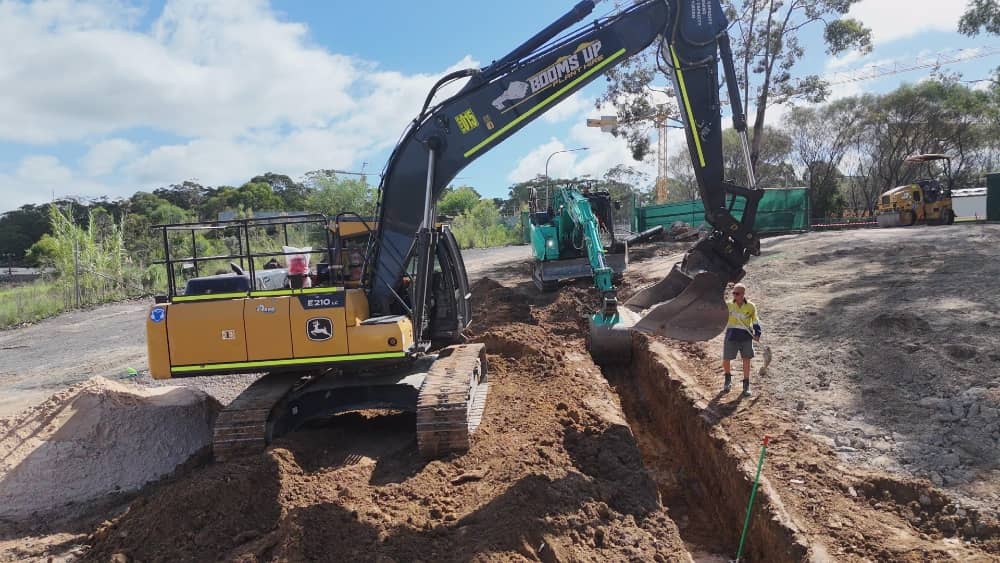
At Booms Up Civil Group, our comprehensive fleet includes excavators configured with the full range of attachments necessary for Central Coast construction challenges. From the tight access requirements common in established suburbs around Gosford and Terrigal to the large-scale earthmoving projects emerging throughout the Hunter Valley, having access to the right attachment for each specific task ensures projects are completed efficiently and to the highest professional standards.
Standard Buckets
The standard digging bucket remains the most fundamental and frequently used excavator attachment. However, not all buckets are created equal, and selecting the appropriate bucket configuration can significantly impact project efficiency and outcomes.
General Purpose Buckets
General purpose buckets feature moderate width and depth, with standard teeth or a cutting edge designed for versatile digging applications. These attachments excel in typical earthmoving operations, site preparation, and general excavation work. The balanced design provides good penetration in various soil conditions while maintaining reasonable capacity for material handling.
For residential construction projects across the Central Coast, general purpose buckets are ideal for foundation excavation, utility trenching, and structural landscape preparation. Their versatility makes them particularly valuable for contractors handling diverse project types, from suburban house sites in Newcastle to commercial developments throughout Sydney.
Trenching Buckets
Narrow trenching buckets are specifically designed for utility installation, drainage systems, and precise excavation work. These attachments typically range from 300mm to 600mm in width, allowing operators to create clean, straight trenches with minimal soil disruption to surrounding areas.
The precision offered by trenching buckets makes them essential for difficult access excavation projects where space is limited and accuracy is paramount. Whether installing stormwater systems in established Central Coast suburbs or creating utility corridors for new developments, trenching buckets provide the precision necessary for professional results.
Grading Buckets
Wide grading buckets, sometimes called finishing buckets, are designed for final site preparation and precision grading work. These attachments feature extended width and reduced depth, allowing operators to create smooth, level surfaces and achieve precise grades for construction preparation.
The smooth cutting edge on grading buckets makes them ideal for fine earthmoving work, including preparation for concrete slabs, road construction, and landscape finishing. For projects requiring precise drainage gradients or smooth finished surfaces, grading buckets are indispensable tools.
Hydraulic Breakers
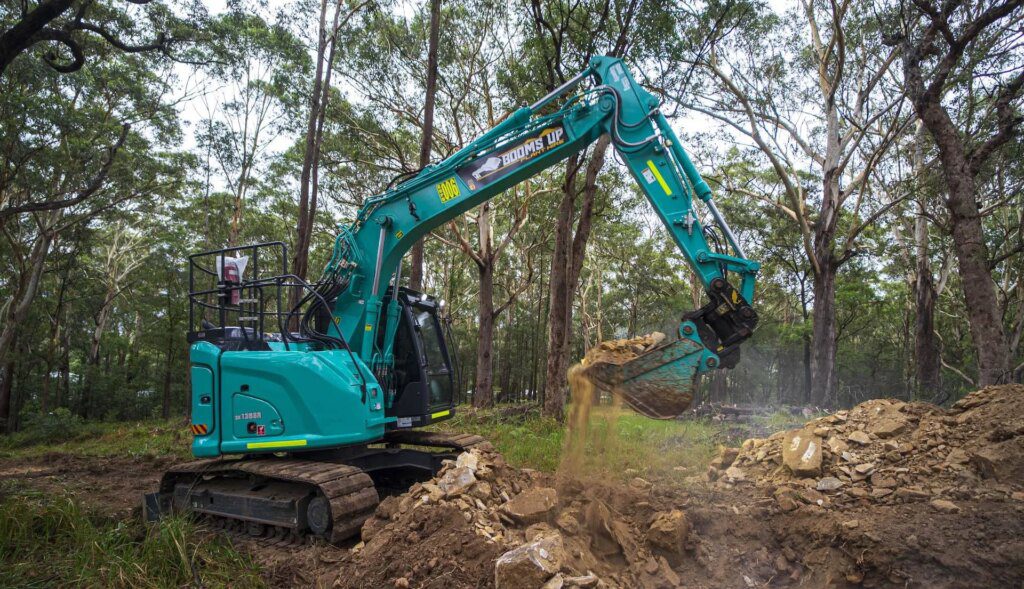
Hydraulic breakers transform excavators into powerful demolition tools, capable of breaking through concrete, rock, and other hard materials with precision and efficiency. These attachments utilise the excavator’s hydraulic system to deliver high-impact blows, making them essential for demolition projects and challenging excavation conditions.
Concrete Demolition Applications
For urban redevelopment projects across Sydney and the Central Coast, hydraulic breakers provide controlled demolition capabilities that allow for selective structure removal while preserving surrounding infrastructure. The precision offered by excavator-mounted breakers makes them ideal for removing concrete footings, breaking up old driveways, and demolishing structures in confined spaces.
The combination of hydraulic breaker attachments with compact excavators enables precise excavation work in established areas where traditional demolition methods would be impractical or excessively disruptive.
Rock Breaking and Site Preparation
The geological diversity across the Central Coast and Hunter Valley means construction projects frequently encounter challenging rock formations. Hydraulic breakers provide an efficient alternative to blasting, allowing contractors to break through rock obstacles while maintaining precise control over the excavation process.
Modern hydraulic breakers feature variable impact energy settings, allowing operators to adjust breaking power based on material hardness and proximity to sensitive structures. This adaptability makes them suitable for everything from large-scale quarrying operations to delicate utility excavation around existing services.
Grapple Attachments
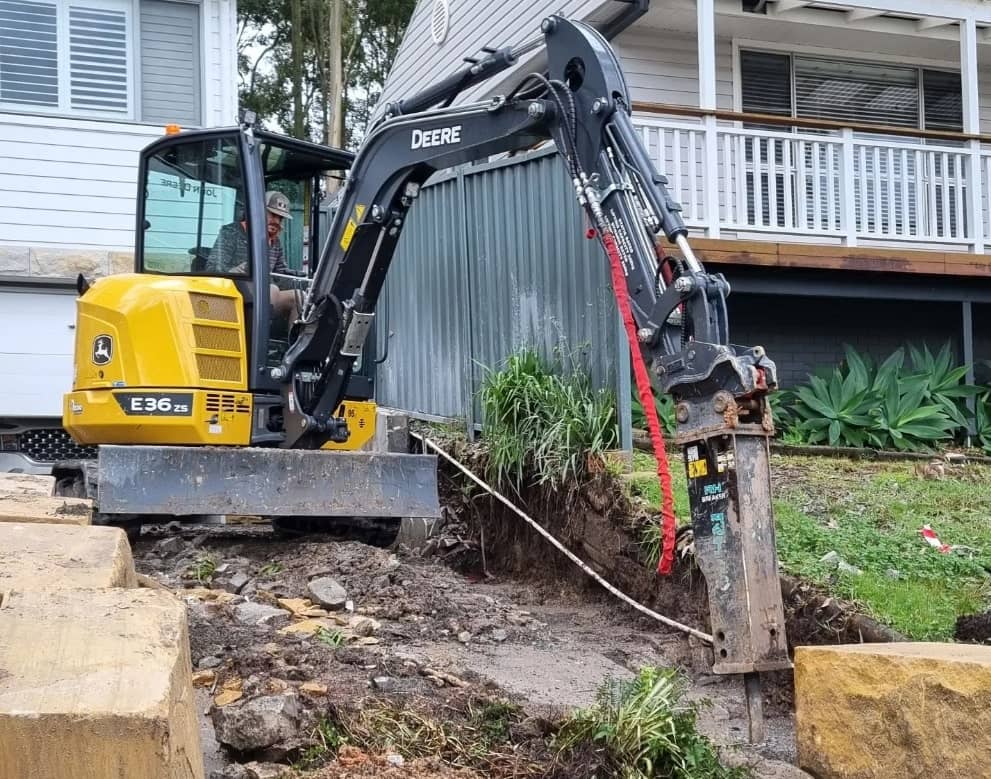
Grapple attachments transform excavators into sophisticated material handling machines, providing the dexterity needed for precise placement and manipulation of various materials. From construction materials to vegetation, grapples offer unparalleled versatility for projects requiring careful material management.
Construction Material Handling
For projects involving sandstone retaining wall construction, grapple attachments provide the precision necessary for placing heavy stone blocks exactly where they’re needed. The controlled grip offered by hydraulic grapples allows operators to position materials with millimetre accuracy, essential for quality stonework and landscape construction.
Timber framing projects, steel placement, and precast concrete installation all benefit from the precision material handling capabilities of grapple attachments. The ability to grip, lift, and precisely position materials reduces manual handling requirements and improves workplace safety.
Vegetation and Debris Management
Land clearing operations across the Central Coast require careful vegetation management to comply with environmental regulations while preparing sites for construction. Grapple attachments excel at selective vegetation removal, allowing operators to clear specific trees and shrubs while preserving valuable specimens.
The sorting capabilities of grapple attachments make them invaluable for demolition cleanup and site preparation. Operators can separate materials for recycling, sort debris by type, and carefully stack materials for removal or reuse.
Auger Attachments
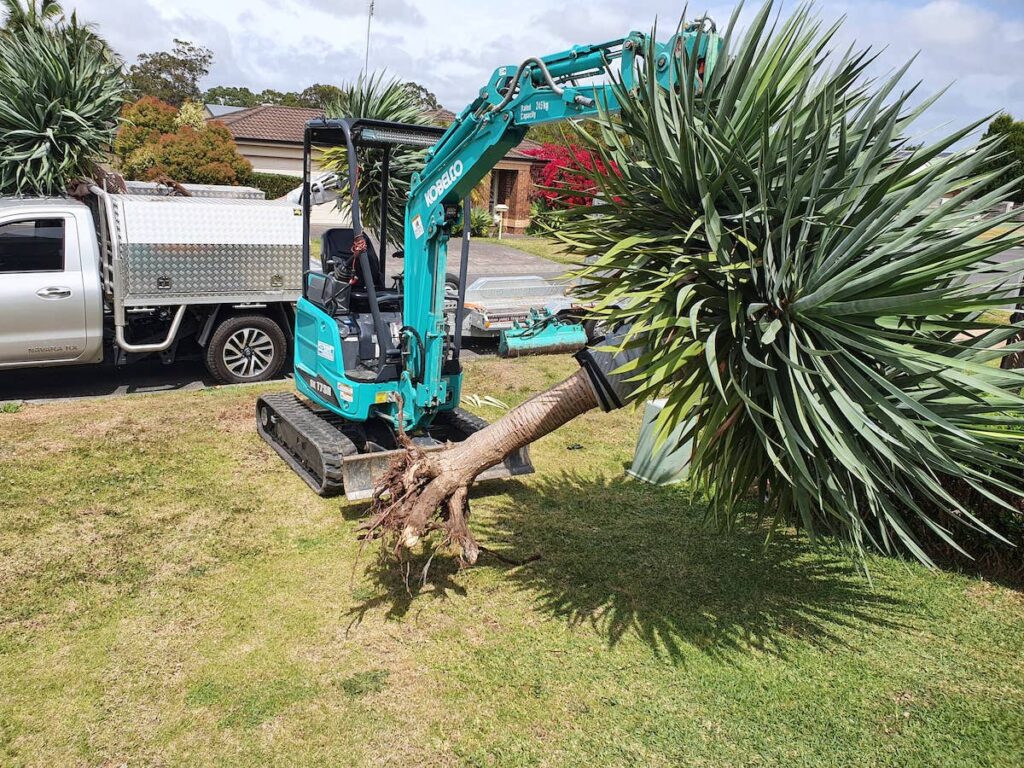
Auger attachments convert excavators into powerful drilling platforms, capable of creating precise holes for various construction applications. From foundation piling to landscape installation, augers provide efficient drilling solutions for projects requiring accurate hole placement.
Foundation and Structural Applications
Post hole drilling for retaining walls, fence installation, and signage placement requires precision and consistency that manual methods cannot match. Excavator-mounted augers provide the power and accuracy necessary for professional foundation work, whether installing residential fencing across Central Coast suburbs or constructing commercial signage in Newcastle business districts.
For projects requiring deep foundation elements, such as pier construction or underpinning work, large diameter augers can create precise holes for concrete placement or structural element installation. The controlled depth and diameter offered by hydraulic augers ensures foundations meet engineering specifications.
Landscape and Utility Installation
Tree planting projects benefit significantly from auger attachments, which can create perfectly sized holes for root ball placement while minimising soil compaction around planting sites. For large-scale landscaping projects throughout the Hunter Valley, augers enable efficient tree installation while maintaining soil health.
Utility pole installation, ground anchor placement, and subsurface investigation all utilise auger attachments for efficient, precise drilling. The versatility of different auger sizes and configurations makes them adaptable to various project requirements.
Compaction Attachments
Proper soil compaction is crucial for construction success, providing stable foundations and preventing future settlement issues. Excavator-mounted compaction attachments offer powerful, efficient soil preparation capabilities for projects of all sizes.
Compaction Wheels and Plates
Vibratory compaction wheels attach to excavator arms to provide powerful soil compaction in trenches, around foundations, and in confined spaces where traditional compaction equipment cannot operate effectively. These attachments are particularly valuable for utility trenching projects where proper backfill compaction is essential for long-term infrastructure integrity.
Compaction plates offer precision compaction for smaller areas, such as around structures, near property boundaries, and in landscape areas where maintaining existing vegetation is important. The controlled compaction force prevents over-compaction while ensuring adequate soil density.
Trench and Foundation Compaction
For excavation projects requiring precise compaction specifications, such as road construction and commercial building foundations, excavator-mounted compaction attachments provide measurable, consistent results. The ability to compact soil immediately after placement reduces project timelines while ensuring quality outcomes.
Pipeline installation, underground service placement, and foundation backfilling all benefit from the precision compaction capabilities offered by specialised excavator attachments. Proper compaction prevents future settlement and ensures long-term infrastructure performance.
Specialised Demolition Attachments
Beyond standard hydraulic breakers, modern excavators can be equipped with highly specialised demolition attachments designed for specific material types and controlled demolition requirements.
Concrete Pulverisers and Crushers
Concrete pulveriser attachments feature powerful crushing jaws designed to break apart reinforced concrete structures while separating rebar for recycling. These attachments are essential for sustainable demolition practices, allowing contractors to process concrete on-site rather than requiring complete material removal.
For urban redevelopment projects across Sydney and the Central Coast, concrete pulverisers enable efficient demolition while reducing truck movements and disposal costs. The ability to process materials on-site supports environmental sustainability goals while improving project economics.
Shear Attachments
Hydraulic shear attachments are designed for cutting through steel beams, structural elements, and heavy metal components during demolition projects. These precision tools provide clean cuts through substantial structural materials while maintaining operator safety and control.
Industrial facility demolition, bridge dismantling, and structural modification projects all utilise shear attachments for efficient material removal. The precision cutting capabilities reduce the need for additional processing while enabling selective demolition techniques.
Selecting the Right Attachment for Your Project
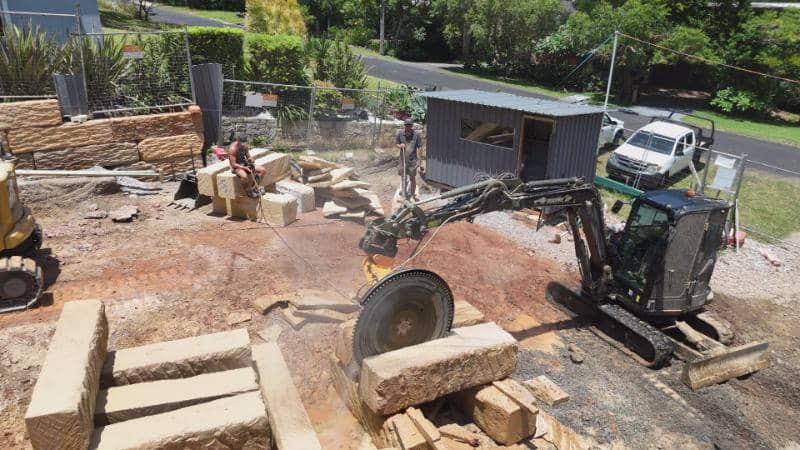
Choosing appropriate excavator attachments requires careful consideration of project requirements, site conditions, and operational constraints. The diverse terrain and construction challenges across the Central Coast, Newcastle, Sydney, and Hunter Valley demand thoughtful equipment selection to achieve optimal results.
Site Access and Space Constraints
Projects in established areas often face access limitations that influence attachment selection. Compact attachments designed for tight spaces may be necessary for urban redevelopment work, while large-scale attachments can be deployed efficiently on open construction sites.
The ability to quickly change attachments becomes particularly valuable for projects with varying requirements throughout different construction phases. Planning attachment requirements during project development ensures efficient workflow and minimises equipment downtime.
Material Types and Project Scope
Understanding the specific materials and challenges your project will encounter guides attachment selection. Rocky conditions may require hydraulic breakers, while precision landscaping demands grapple attachments and specialised buckets.
For complex projects involving multiple material types, such as commercial developments with both earthmoving and structural requirements, having access to a full range of attachments ensures project continuity and quality outcomes.
Maximising Attachment Efficiency and Safety
Proper attachment utilisation requires trained operators who understand both the capabilities and limitations of specialised equipment. Safety considerations become particularly important when working with high-force attachments such as breakers and shears.
Operator Training and Competency
Each attachment type requires specific operational knowledge to achieve optimal performance while maintaining safety standards. Understanding hydraulic system requirements, attachment limitations, and proper operating techniques ensures both efficiency and longevity of expensive specialised equipment.
Regular operator training updates keep teams current with evolving attachment technology and safety protocols. Investment in operator competency development pays dividends through improved productivity and reduced equipment damage.
Maintenance and Performance Optimisation
Specialised attachments require specific maintenance protocols to ensure reliable performance and extended service life. Understanding lubrication requirements, wear patterns, and replacement schedules prevents costly downtime and maintains peak operational efficiency.
Proper attachment care includes regular inspection of hydraulic connections, cutting edges, and structural components. Proactive maintenance schedules prevent minor issues from developing into major equipment failures.
The Future of Excavator Attachment Technology
Advancing technology continues to expand excavator attachment capabilities, with new innovations improving efficiency, precision, and operator safety. Understanding emerging attachment technologies helps contractors prepare for future project requirements and competitive advantages.
Smart Attachment Systems
Modern attachment technology increasingly incorporates sensors and automation to optimise performance and provide real-time feedback to operators. These systems can automatically adjust operating parameters based on material conditions and task requirements.
Integration with excavator telematics systems allows for remote monitoring of attachment performance and maintenance requirements, enabling proactive service scheduling and performance optimisation.
Environmental and Efficiency Improvements
New attachment designs focus on reducing environmental impact while improving operational efficiency. Noise reduction technology, improved hydraulic efficiency, and enhanced durability contribute to more sustainable construction practices.
For projects across environmentally sensitive areas of the Central Coast and Hunter Valley, these improvements enable construction activities while minimising ecological disruption.
Conclusion: Maximising Construction Potential Through Strategic Attachment Selection
The strategic selection and deployment of excavator attachments can transform project outcomes, improving efficiency, quality, and safety across all types of construction work. From the precision required for difficult access excavation to the power needed for major earthmoving operations, the right attachment makes the difference between adequate and exceptional results.
For contractors and project managers across Sydney, Central Coast, Newcastle, and the Hunter Valley, understanding excavator attachment capabilities enables better project planning, more accurate cost estimation, and superior execution. Whether you’re constructing sandstone retaining walls in Terrigal, conducting utility excavation in Gosford, or managing large-scale earthmoving in the Hunter Valley, the right attachment selection ensures your project achieves its full potential.
At Booms Up Civil Group, our comprehensive understanding of excavator attachments and their applications, combined with our extensive equipment fleet, via Booms Up Plant Hire, enables us to tackle any construction challenge with confidence. From initial site preparation through final finishing work, our attachment expertise ensures your project is completed efficiently, safely, and to the highest professional standards.
Ready to discuss your excavation and earthmoving requirements? Contact Booms Up Civil Group today to discover how the right excavator attachments can maximise your project potential across the Central Coast, Sydney, Newcastle, and Hunter Valley regions.