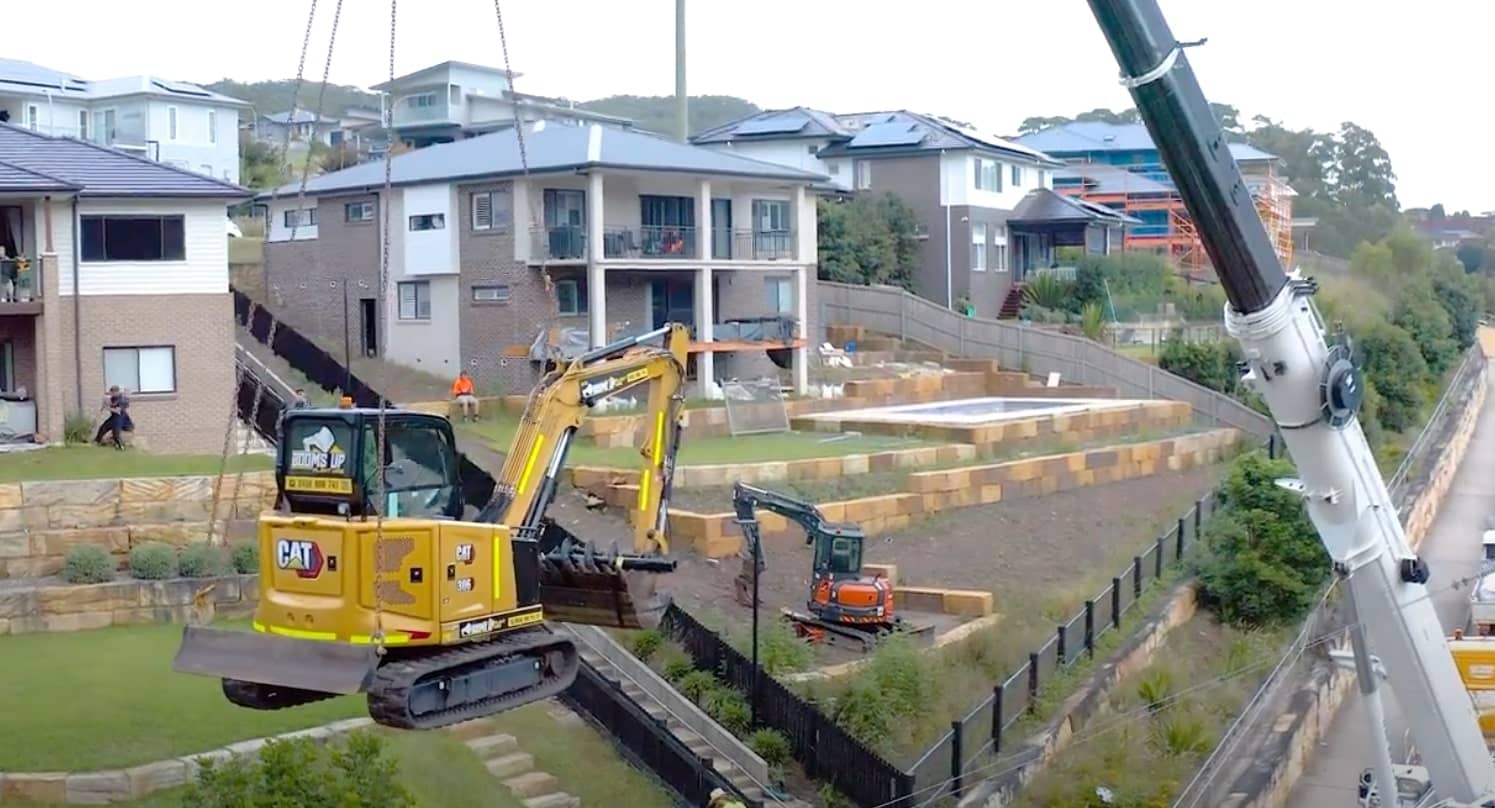
Picture this: you’ve found the perfect block on the Central Coast with stunning valley views stretching toward Terrigal Beach, but there’s one small problem – the only way to access your proposed building site is down a narrow, steep driveway that barely fits a car, let alone traditional construction equipment. Or perhaps you’re a contractor who’s won a fantastic renovation project in the hills around Gosford, only to discover the backyard access is through a standard doorway with a swimming pool on one side and the neighbour’s fence on the other.
Welcome to the world of difficult access excavation – where standard earthmoving equipment simply won’t cut it, and specialist knowledge becomes the difference between a successful project and a logistical nightmare.
The Central Coast’s diverse landscape, from the steep escarpments around Woy Woy and the Peninsula to the rolling hills of Wyong and beyond, presents unique challenges that require more than just hiring the first excavation service you find online. When access is limited, terrain is challenging, or space is at a premium, you need excavation specialists who understand both the technical requirements and the local conditions that make the Central Coast such a beautiful – yet sometimes tricky – place to build.
What Makes Excavation Access “Difficult”?
Difficult access excavation isn’t just about tight spaces, though that’s certainly part of it. It’s any excavation project where standard large machinery can’t reach the work site, where terrain presents challenges beyond typical flat block construction, or where environmental and space constraints require creative solutions and specialied equipment.
On the Central Coast, we see difficult access scenarios regularly. The region’s natural beauty comes from its varied topography – coastal plains giving way to steep hillsides, creek lines cutting through properties, established neighborhoods with mature trees and narrow access points, and heritage areas where preservation requirements limit how work can be undertaken. Each of these scenarios demands a different approach and specialist equipment designed for precision work in confined or challenging conditions.
Narrow Access Excavation: Threading the Needle
Some of the most common difficult access situations involve simply getting equipment to where it needs to be. Narrow access excavation becomes necessary when your project site can only be reached through spaces that standard excavators simply cannot navigate. Think of those charming older Central Coast neighborhoods around Gosford or established areas on the Peninsula, where homes were built closer together and driveways were designed for much smaller vehicles.
Modern mini excavators and compact track loaders are game-changers in these situations. These machines can navigate through spaces as narrow as 900mm wide, allowing access through standard doorways, between established buildings, or down pathways that would be impossible for larger equipment. But it’s not just about fitting through the gap – these compact machines need to have enough power and capability to handle serious excavation work once they reach the site.
The key to successful narrow access projects lies in careful planning and the right equipment selection. A 1.7-tonne mini excavator might be perfect for creating garden beds and minor earthworks, but if you’re excavating for pool installation or major drainage works, you might need a 3-tonne compact excavator that can still navigate narrow access while providing the digging power and reach required for substantial excavation work. Understanding these nuances makes the difference between a smooth project and costly delays.
Steep Slope Excavation: Conquering Central Coast Terrain
The Central Coast’s stunning hillside properties offer some of the most spectacular views in NSW, but they also present unique excavation challenges. Steep slope excavation requires specialised techniques and equipment to safely and effectively work on terrain that might have grades of 30 degrees or more. These aren’t jobs for standard excavation equipment – they require machines specifically designed for stability and safety on challenging terrain.
Track-mounted excavators with low ground pressure and superior stability become essential for steep slope work. The distributed weight and enhanced grip of tracked machines allow them to operate safely on slopes that would be dangerous or impossible for wheeled equipment. But equipment is only part of the story. Proper steep slope excavation also requires understanding soil behavior, drainage management, and erosion control – particularly important in the Central Coast’s varied soil conditions and seasonal weather patterns.
Whether you’re creating building platforms on hillside blocks around Terrigal, installing sandstone retaining walls on sloping sites, or managing drainage on steep residential properties, the approach needs to account for both immediate excavation requirements and long-term site stability. This is where local knowledge becomes invaluable – understanding how different Central Coast soil types behave, what drainage patterns are typical for the area, and what solutions work best in our specific climate conditions.
Confined Space Excavation: Precision in Tight Quarters
Confined space excavation takes difficult access work to another level entirely. These are projects where not only is access limited, but the actual working area is restricted by existing structures, underground utilities, or environmental constraints. Think of excavating for new foundations in established backyards, creating swimming pool sites surrounded by existing landscaping and structures, or utility work in developed areas where precision is critical.
Successful confined space excavation requires more than just smaller equipment – it demands exceptional operator skill and detailed project planning. Every movement needs to be calculated, every dig precise, because there’s no room for error when you’re working inches away from existing foundations, utility lines, or valuable landscaping. This is where the combination of advanced equipment and experienced operators becomes critical.
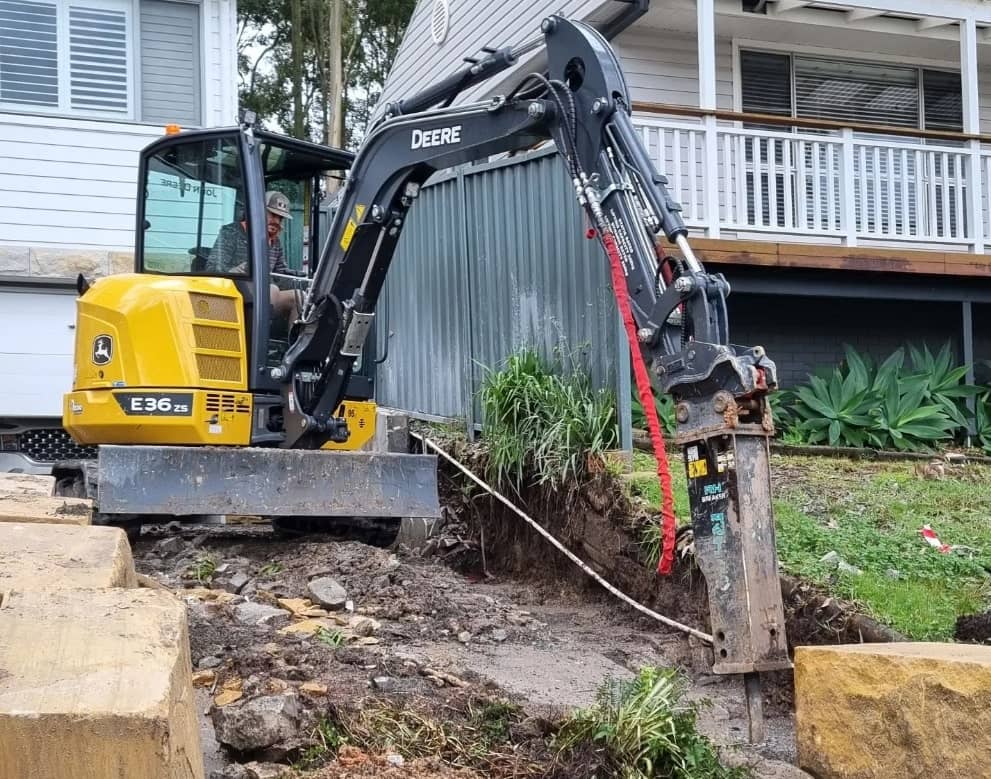
Mini excavators equipped with specialised attachments like narrow buckets, hydraulic breakers, or precision grading attachments allow for surgical precision in confined areas. But perhaps more importantly, experienced operators understand how to work efficiently in tight spaces, managing not just the excavation itself but also material handling, access for other trades, and site safety when space is at a premium.
Demolition Access: Bringing Buildings Down Safely in Tight Spaces
Demolition access presents some of the most complex challenges in difficult access excavation. When buildings need to come down but standard demolition equipment can’t reach the site, specialised approaches become necessary. This might involve partial demolitions in renovation projects, removing structures in backyards with limited access, or demolition work in established areas where protecting surrounding structures is paramount.
Compact excavators equipped with hydraulic breakers, concrete pulverisers, or specialised demolition attachments can handle substantial demolition work while operating in spaces that large demolition equipment simply cannot access. The key is matching the right equipment configuration to the specific demolition requirements while ensuring safe material removal and site management.
Remote-controlled or compact demolition robots represent the cutting edge of difficult access demolition, capable of working in spaces too dangerous or confined for operator-occupied equipment. While not every project requires this level of specialization, having access to advanced demolition techniques ensures that even the most challenging access situations can be handled safely and efficiently.
Utility Work: Precision Excavation for Essential Services
Utility excavation in difficult access situations requires a combination of precision, safety awareness, and specialised equipment. Whether you’re a contractor working on underground services installation, stormwater management, or utility repairs in established areas, difficult access utility work demands careful planning and execution.
Compact excavators equipped with specialised buckets and attachments can handle precise utility trenching while minimising disruption to surrounding areas. Vacuum excavation capabilities become particularly valuable for utility work, allowing for safe exposure of existing services without the risk of damage that comes with traditional digging methods.
The Central Coast’s mix of established infrastructure and ongoing development means utility work often involves navigating around existing services while installing new ones. This requires not just the right equipment, but also thorough understanding of local utility layouts, proper location procedures, and safety protocols that protect both workers and existing infrastructure.
Equipment That Makes the Difference
The success of any difficult access excavation project ultimately comes down to having the right equipment for the specific challenges involved. Mini excavators form the backbone of most difficult access work, but the specific configuration matters enormously. A 1.5-tonne mini excavator might be perfect for landscaping work but inadequate for serious earthmoving, while a 5-tonne compact excavator might have the power but lack the maneuverability for truly tight access excavation situations.
Skid steers and compact track loaders bring different capabilities to difficult access projects. Their four-wheel drive and tight turning radius make them ideal for material handling, site preparation, and finish work in confined spaces. Modern compact track loaders with positive traction control can operate effectively on slopes and in conditions that would challenge wheeled equipment.
The key is understanding not just what equipment you have access to, but how to configure and deploy it for maximum effectiveness. This might mean selecting specific bucket sizes, hydraulic attachments, or auxiliary equipment that transforms a standard compact excavator into a precision tool for specific project requirements.
Why Central Coast Projects Need Local Expertise
The Central Coast’s unique geography, soil conditions, and regulatory environment mean that successful difficult access excavation requires more than just the right equipment – it requires local knowledge and experience. Understanding how different soil types behave across the region, what drainage considerations are critical for long-term success, and how to navigate local council requirements can make the difference between a smooth project and costly complications.
Local contractors who specialize in difficult access work understand the nuances of Central Coast conditions. They know which areas are prone to specific soil challenges, what equipment works best in different terrain types, and how to plan projects that account for seasonal weather patterns and local environmental considerations.
This local expertise becomes particularly valuable when projects involve multiple challenging factors – steep terrain combined with narrow access, confined spaces with complex utility requirements, or demolition work in sensitive environmental areas. These complex scenarios require not just technical skill, but the kind of problem-solving experience that comes from years of working in challenging Central Coast conditions.
Planning Your Difficult Access Project
Successful difficult access excavation starts with thorough planning and realistic assessment of site challenges. The best time to address access limitations is in the project planning phase, not after equipment arrives on site and discovers it can’t reach the work area.
Professional site assessment should evaluate not just the excavation requirements themselves, but also material handling needs, equipment access routes, safety considerations, and integration with other project phases. This comprehensive approach ensures that difficult access challenges are addressed systematically rather than becoming costly surprises during construction.
For contractors and homeowners planning projects in challenging Central Coast locations, early consultation with excavation specialists can identify potential issues and solutions before they impact project timelines and budgets. This proactive approach often reveals opportunities to optimize project design for better access or identify equipment solutions that weren’t initially apparent.
Getting Professional Results
Difficult access excavation represents the intersection of advanced equipment, specialised skills, and local knowledge. Whether you’re a homeowner with a challenging residential project or a contractor managing complex commercial work, the right specialist makes all the difference in project success.
The Central Coast’s continued growth and development mean that tight access situations are becoming more common, not less. As available land becomes more challenging and established areas undergo renovation and redevelopment, the demand for specialist excavation services continues to grow.
When your project faces access challenges, terrain difficulties, or space constraints, you need excavation professionals who understand both the technical requirements and the specific conditions that make the Central Coast unique. The combination of advanced equipment, skilled operators, and local expertise ensures that even the most challenging excavation projects can be completed safely, efficiently, and to the highest professional standards.
Ready to discuss your difficult access excavation needs? Whether you’re in Gosford, Terrigal, Woy Woy, Wyong, or anywhere across the Central Coast, Newcastle, Hunter Valley, or Sydney regions, professional assessment and planning can turn challenging access situations into successful project outcomes.
Get in touch today for a consultation and quote – because when access is difficult, expertise makes all the difference.