Imagine you've just finished a major excavation for a new home on the Central Coast. You're left with a massive pile of soil, clay, and sandstone. The old way of thinking was to pay hefty fees to haul it all to a landfill.
But there's a smarter approach. Rock and dirt recycling is the process of turning that 'waste' into a valuable resource, right there on your property. It’s an efficient, sustainable method that saves both time and money.
Why You Should Care About Rock and Dirt Recycling
When you dig, you create waste—it’s an unavoidable part of any construction project. For years, the standard process was to simply truck this material away. You’d pay for the excavator, pay for the trucks, and pay the landfill disposal fees. Then, you’d turn around and pay again to buy and transport new materials like road base or drainage gravel back to your site.
Rock and dirt recycling completely flips this outdated model on its head.
It’s about viewing the earth from your site not as a problem to be removed, but as a raw ingredient you already own. By using specialised mobile equipment, we can process this material directly on your property, turning it into certified, high-quality products ready for immediate reuse. This modern way of working brings huge benefits to any project, from a small residential build in Kariong to a large commercial development in Newcastle.
The Core Benefits of On-Site Recycling
Instead of thinking about how to get rid of soil, recycling gets you thinking about what you can create with it. This shift in perspective is crucial for modern, cost-effective construction. The advantages are clear and immediate:
- Massive Cost Savings: You slash expenses by avoiding landfill levies, minimising truck haulage costs, and eliminating the need to buy new quarried materials. For many projects, this can translate to thousands of dollars in savings.
- Environmental Responsibility: Recycling conserves natural resources by reducing the demand for virgin aggregates. It also lowers your project’s carbon footprint by taking countless truck journeys off local roads around Sydney and the Hunter Valley.
- Greater Project Efficiency: Keeping materials on-site speeds up timelines. There are no delays waiting for deliveries or coordinating disposal runs. You have a ready supply of fill, road base, or drainage aggregate exactly when and where you need it.
Ultimately, understanding the basics of how to dispose of soil properly is the first step, but recycling takes it to the next level. This guide will walk you through the entire process, from the initial screening and crushing to navigating council compliance, showing you how it works in the real world.
The On-Site Recycling Process From Start to Finish
So, how do we transform a pile of excavated rubble into a quality-assured building product? Think of it as a mobile factory we bring directly to your site. This whole process is designed to eliminate the double-handling of materials, ensuring the final product is fit for purpose and saving you a significant amount of time and money.
The entire workflow, from the moment the material is dug up to the point it's reused, is a closed loop built for maximum efficiency.
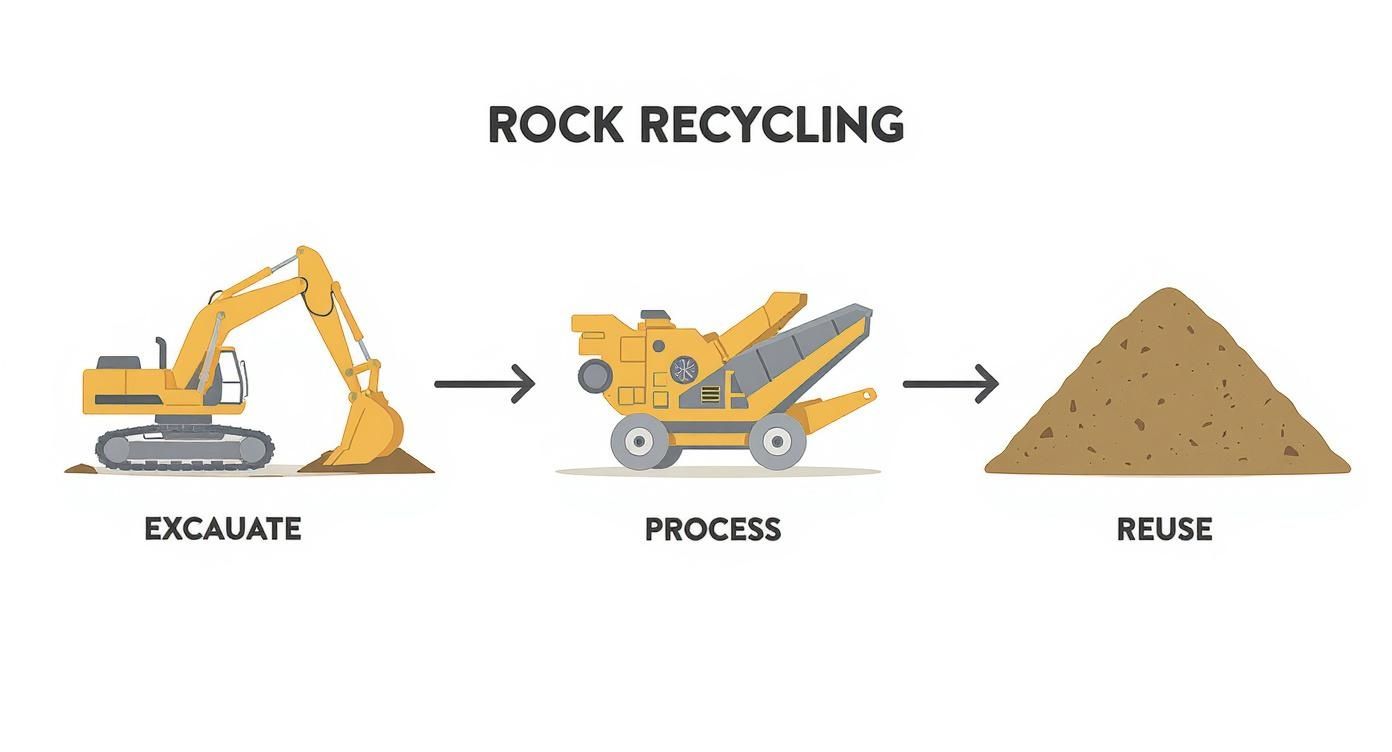
This visual shows the simple yet powerful journey of on-site material: it's excavated, processed right there on the spot, and then put straight back to work building the very same project.
Step 1: Screening and Sorting
The first step after any initial site preparation and excavation is screening. We bring in large, mobile screening plants to separate all the different materials by size. It works on the same principle as a giant, powerful kitchen sieve sorting ingredients.
Fine soils, sand, and smaller particles fall through the mesh screens, while larger rocks, concrete fragments, and any vegetation are separated out. This allows us to create distinct stockpiles of different materials, each destined for a specific purpose or for further processing. For example, that fine soil might be perfect for landscaping down the track, while the rock is sent on to the next stage.
Step 2: Crushing and Sizing
Next up is the crushing phase. Any oversized rock, excavated sandstone, or old concrete is fed into a mobile crushing plant. This powerful machine uses immense force to break down large, unusable chunks into specific, uniform sizes we can actually work with.
This is where the real magic happens. We can adjust the crusher to produce aggregates that meet precise engineering specifications. Whether your project needs a 75mm road base for a sturdy driveway in the Hunter Valley or a 20mm aggregate for drainage behind a new retaining wall in Terrigal, this is where we create it. This step is what truly converts site "waste" into a valuable, custom-made construction product.
Step 3: Stockpiling and Blending
Once the materials are screened and crushed, they’re moved into clean, separate stockpiles. This organised approach is absolutely critical for quality control and preventing cross-contamination. Keeping different sizes and types of material apart ensures that when we need a specific product, it’s ready to go and hasn't been mixed with other debris.
In some cases, we might even blend different stockpiles to create a custom mix. An engineer might specify a particular blend of sand, clay, and aggregate to achieve the perfect compaction for a building pad, and proper stockpiling makes this precise blending possible. Managing an on-site recycling operation also means having essential utilities ready. For example, water is frequently needed for dust suppression and washing equipment, and to address these needs effectively, it's often necessary to consider robust options such as vertical water storage tanks.
Crucial Takeaway: An organised site is a safe and efficient site. Proper stockpiling isn't just about neatness; it's a fundamental part of quality assurance and compliance with SafeWork NSW guidelines, preventing material degradation and ensuring easy access for machinery.
Step 4: Testing and Certification
This final stage is non-negotiable—it’s the most important step for ensuring compliance and structural integrity. Before any recycled material can be used in a structural capacity, it must be proven to be clean and fit for purpose. We take samples from the processed stockpiles and send them to an independent, NATA-accredited laboratory.
The lab tests for any contaminants and verifies that the material meets the relevant Australian Standards (AS) for its intended use, whether that's road base or structural fill. Once it passes, we receive a certificate that legally classifies the material. This is your green light, allowing it to be reused on-site or even transported to another project. This certification is your guarantee that the material is safe, compliant, and just as good as a product you'd buy from a quarry.
The Financial and Environmental Case for Recycling
So, why bother with on-site rock and dirt recycling for your project? The answer really boils down to two massive advantages: serious cost savings for your bottom line and a much smaller environmental footprint. For any project on the Central Coast, in Sydney, or across the Hunter Valley, choosing to recycle isn’t just a ‘green’ decision—it's a smart financial one.
The old "dig and dump" method is frankly an outdated and expensive way to handle site waste. You pay to excavate it, you pay for trucks to haul it away, and then you get hit with ever-increasing landfill levies. After all that, you still have to spend more money buying and trucking in new quarried materials. Recycling completely flips this model on its head.
Slashing Your Project Costs
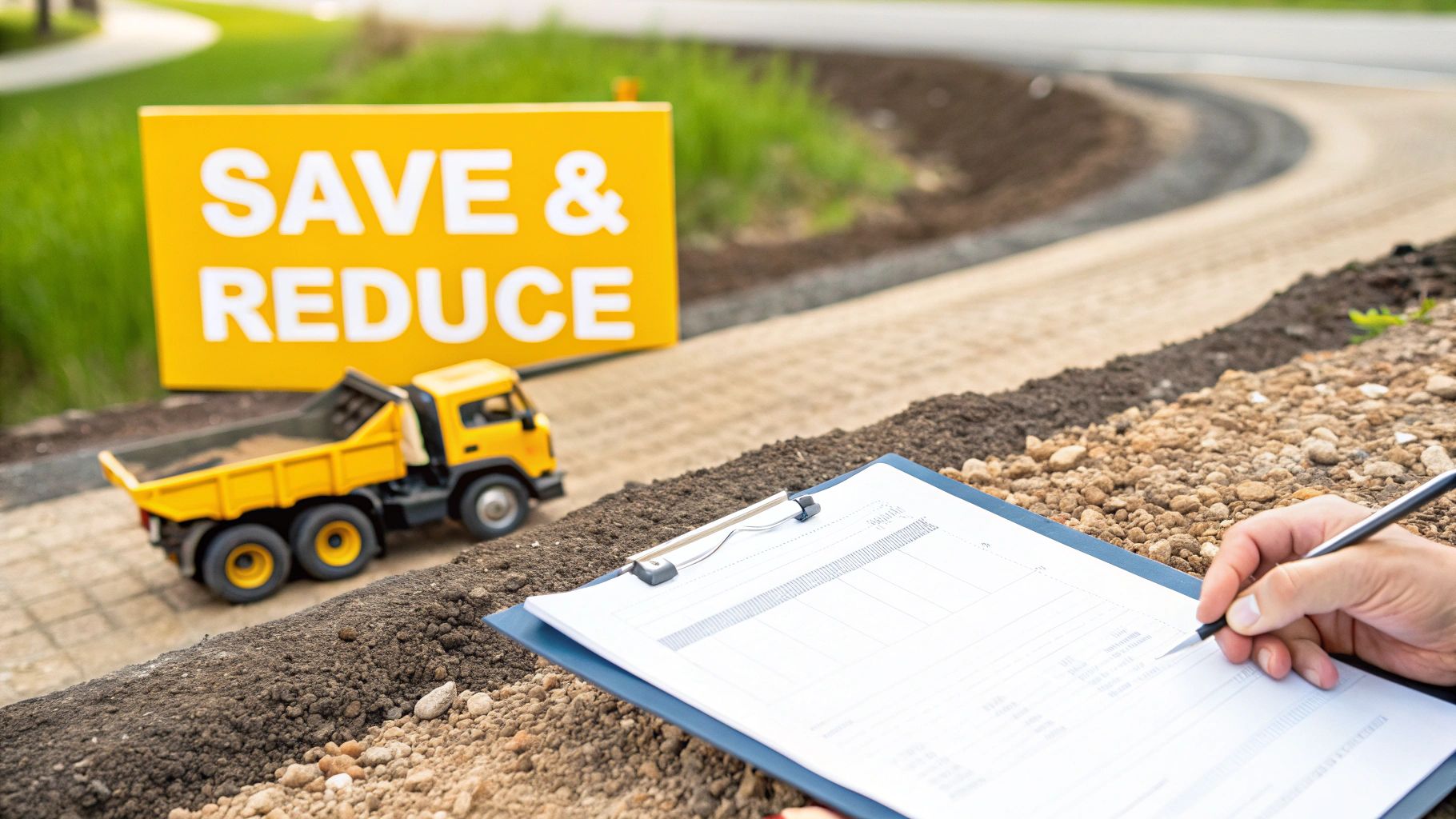
The most immediate and compelling reason to recycle on-site is the money it saves. By processing materials right where they’re excavated, you can pretty much wipe several major expenses off your project budget.
Let's break down where the savings come from:
- No Landfill Levies: Tipping construction waste at a licensed facility is expensive, and it's getting worse, especially in the Sydney metro area where levies are highest. Recycling on-site means you sidestep these fees altogether.
- Reduced Transport Costs: Fewer truck movements mean huge savings on fuel, labour, and vehicle wear and tear. You're not paying for endless trips to the tip or waiting around for deliveries of new aggregate to show up.
- Lower Material Purchasing Costs: You essentially create your own high-quality, certified road base, fill, or drainage material from the rock and dirt you already have. This drastically cuts down what you need to spend on buying virgin products from a quarry.
A Greener, More Sustainable Approach
Beyond the direct cash benefits, on-site recycling delivers some pretty substantial environmental wins. It’s a practical way to make your construction project more sustainable and lessen its impact on the local community and our natural resources.
The environmental case is just as strong as the financial one. Every truckload of material that doesn't have to be hauled off-site means less diesel burned, fewer carbon emissions pumped out, and less traffic clogging up local roads like the M1 or quiet suburban streets. This is a tangible way to shrink your project's carbon footprint. Partnering with reliable earthmoving contractors near me who are experts in these sustainable practices is key.
Thinking in a Circular Economy: By reusing materials, you're plugging directly into Australia's circular economy. This simple practice conserves our finite natural resources by cutting the demand for new quarried stone and sand, helping to preserve our landscapes for future generations.
This sustainable approach is gaining serious momentum across the country. In fact, between 2006-07 and 2020-21, construction and demolition waste recovery in Australia increased by an incredible 121 percent. This growth shows a major shift in the industry, driven by both government targets and the innovative recycling tech that makes it all possible. To learn more about these trends, you can read the full analysis on Australian waste statistics.
Navigating NSW Regulations and Council Compliance
Getting compliance right isn’t just good practice—it's a non-negotiable part of any civil construction project in New South Wales. When it comes to recycling rock and dirt, a crystal-clear understanding of the rules set by the NSW Environment Protection Authority (EPA) and your local council is the only thing standing between a smooth project and hefty fines.
Think of the EPA as the state-level authority setting the big-picture rules for waste management. Local councils, like Central Coast Council or Newcastle Council, then bring those rules to ground level, managing development approvals (DAs) and making sure every project sticks to the script. Getting this wrong can mean stop-work orders, penalties, and delays that can derail your entire schedule.
Understanding Material Classifications: VENM and ENM
At the very heart of compliance are two critical acronyms: VENM and ENM. Getting these classifications right is the key that unlocks the legal reuse of your excavated material.
-
VENM (Virgin Excavated Natural Material): This is the gold standard. It’s natural material—think soil, clay, or sandstone—dug up from a site that has never been touched by commercial, industrial, or agricultural activities. It's essentially "clean" earth, straight from the ground.
-
ENM (Excavated Natural Material): This is material that has passed a rigorous testing and certification process, proving it’s clean and meets the EPA's strict chemical and physical criteria. Once a batch of soil gets the ENM tick of approval, it can be legally reused on other sites, turning what was once waste into a valuable resource.
Make no mistake, failing to properly classify your material can have serious consequences. Illegally dumping or reusing uncertified soil is a major offence under NSW law, and the responsibility ultimately lands squarely on the site owner.
The Chain of Responsibility in Waste Management
It's a common and costly misconception that once a contractor hauls material away, it's no longer your problem. In NSW, the "chain of responsibility" principle means that the person who generates the waste (the site owner) is legally accountable for where it ends up.
This means you need to be absolutely certain your contractor is transporting and disposing of—or recycling—material in a fully compliant way. This extends to ensuring all activities on your site follow SafeWork NSW guidelines for machinery operation and material handling. Your best defence is proper documentation, like waste dockets and classification certificates. For a deeper dive into the safety and planning required, check out our guide on demolition and excavation processes.
Construction and demolition waste, which includes excavated rock and dirt, is a massive issue. The construction industry is Australia's single largest source of waste, contributing approximately 39 percent of the nation's total waste output. In 2022-23 alone, Australia generated around 75.6 million tonnes of waste, with C&D materials making up a huge portion of that.
Key Takeaway: You can't afford to be passive about compliance. Always ask your contractor for proof of material classification and disposal records. This diligence protects your project, your finances, and the local environment from the consequences of illegal dumping.
Ultimately, navigating these complex rules requires expertise. A good contractor will manage the entire compliance process for you, from initial soil testing to final certification. To ensure your team is fully equipped to meet all legal requirements and operational standards, consider implementing effective regulatory compliance training.
Where Recycled Rock and Dirt Get a Second Life
Once the excavating, screening, and crushing are done, you’re left with high-quality, certified materials ready for a new purpose. This is where the real value of rock and dirt recycling shines through—turning what was once considered waste into essential components for your project and saving you from buying new quarried products.
The versatility of these materials is incredible. From creating a solid foundation for a new building to shaping the final look of your landscaping, almost every part of a construction project can benefit. Let's look at the most common and effective ways we put these materials to work across the Central Coast and beyond.
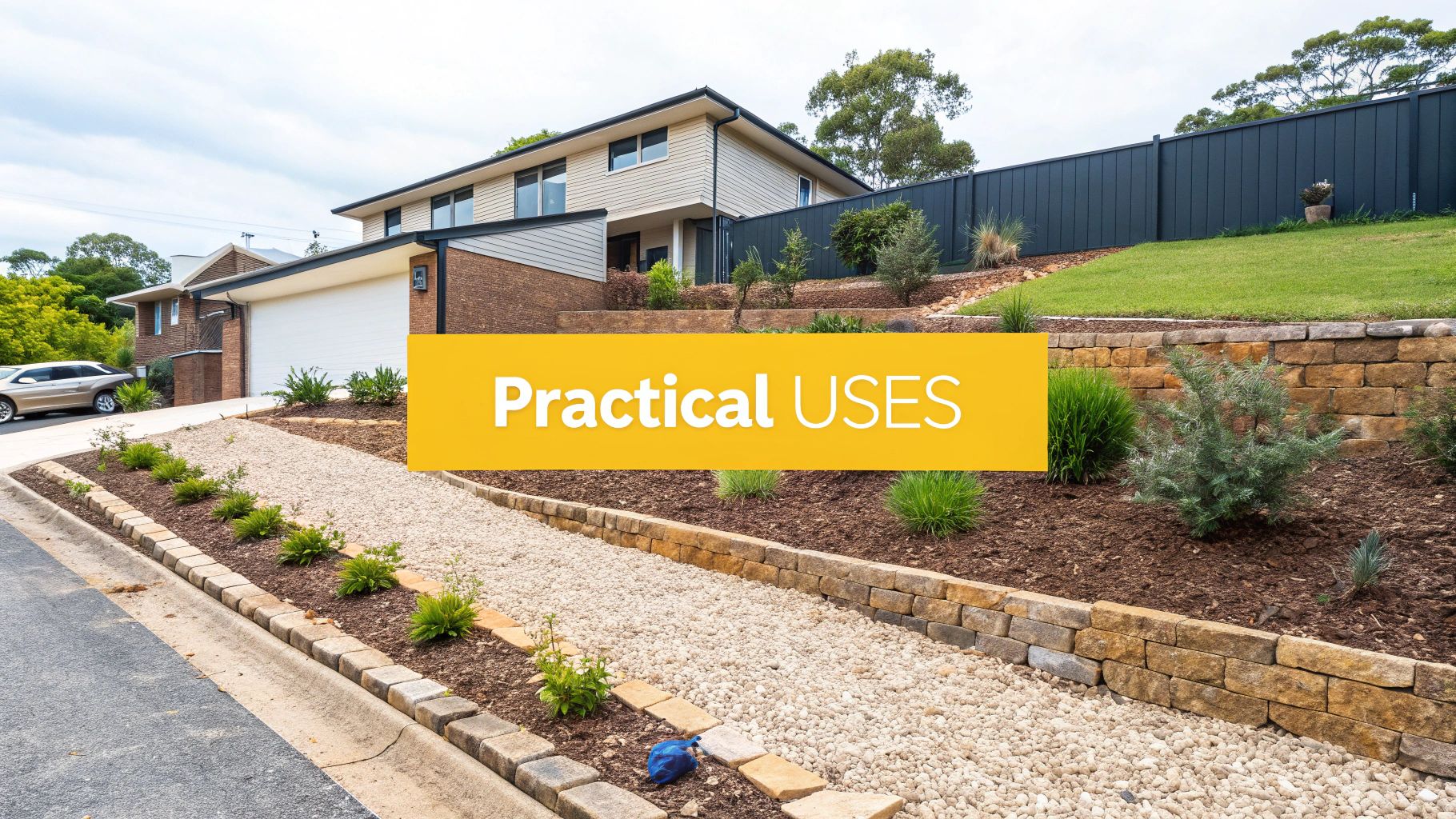
Structural Fill and Building Pads
One of the most critical uses for recycled material is as structural fill. It's all about using processed and compacted material to raise ground levels or create a stable, engineered base for a structure. This is the unseen foundation that everything else relies on.
Imagine you're building a new home on a sloping block in Terrigal. We can process the excavated sandstone and soil right there on site to create a certified fill material. This is then used to build up a level pad for your concrete slab, ensuring the ground beneath your home is solid and won't shift over time—all while using resources pulled directly from your own land.
Road Base and Access Ways
Another key application is creating road base for driveways, access roads, and carparks. Recycled rock, concrete, and aggregates are crushed to a specific size—often a mix of 20mm to 75mm particles—that compacts brilliantly to form a durable, stable surface.
Consider a rural property in the Hunter Valley that needs a long, sturdy access road. Instead of paying a fortune to truck in quarried road base, we can often recycle the rock cleared from the site itself. This creates a high-performance base for asphalt or gravel that’s capable of handling heavy vehicle traffic for years to come.
Drainage Aggregates
Effective water management is crucial on any construction site, especially in coastal areas like the Central Coast that see heavy rainfall. Recycled aggregates are perfect for drainage because their uniform size lets water pass through freely, preventing hydrostatic pressure from building up where you don't want it.
These aggregates are commonly used in several key areas:
- Behind Retaining Walls: A layer of clean, recycled gravel is placed behind the wall to relieve water pressure and channel it away safely. When you’re planning a major structural wall, understanding drainage is vital, which you can learn more about in our guide to sandstone retaining wall design.
- In Trench Drains: They’re used to fill trenches for agricultural drains (ag-pipes), helping to manage subsurface water around buildings and landscaped areas.
- Under Slabs: A layer of drainage aggregate beneath a concrete slab can help prevent moisture from rising up from the ground.
Landscaping and Finishing Touches
Beyond the heavy structural work, recycled materials are fantastic for finishing a project. The finer, screened soil becomes a high-quality topsoil, perfect for establishing new garden beds or laying turf. It's often much richer and more fertile than the sandy topsoil found in many coastal suburbs.
Meanwhile, larger, more interesting rocks that were separated during screening can be repurposed as feature rocks in garden designs or used to build attractive, informal landscape mounds. This allows you to create a unique and natural-looking landscape using materials sourced directly from your property, ensuring the final result feels perfectly integrated with its surroundings.
Choosing the Right Recycling Partner for Your Project
When it comes to on-site rock and dirt recycling, picking the right contractor is single-handedly the most important decision you'll make. The success, compliance, and financial outcome of your entire project are riding on this choice.
A great partner doesn't just show up with a machine to crush rock. They manage the whole process, from the first look at your site to signing off on the final certifications. They make sure everything is done right the first time, preventing those costly headaches that come from cutting corners.
You're not just hiring someone with an excavator; you're handing over significant legal and financial responsibilities. An informed choice now is your best defence against problems down the track.
Essential Licences and Insurance
First things first, before any work even thinks about starting, you need to check their credentials. Your contractor must hold all the necessary licences to operate heavy machinery and carry out civil works in NSW. Critically, they need comprehensive public liability insurance to cover any potential accidents or property damage.
Never hesitate to ask for copies of their certificates of currency for insurance. A legitimate, professional outfit will have these documents on hand and be more than happy to provide them. This one simple check protects you from enormous financial risk.
Deep Regulatory and Local Knowledge
A truly competent partner understands the rulebook inside and out. They should be able to talk fluently about NSW EPA guidelines, material classifications like VENM and ENM, and the specific quirks of your local council, whether that's Central Coast Council or Newcastle Council.
This knowledge isn't just academic; it's crucial. Ground conditions can vary wildly from one suburb to the next. A contractor with over 15 years of experience on the Central Coast, for example, will instinctively know how to handle the region's sandy soils versus the tough, stubborn shale you find in Western Sydney. This local expertise is invaluable for creating an efficient, site-specific recycling plan that ticks every compliance box.
Our Commitment to You: At Booms Up Civil, our deep local experience means we provide more than just machinery. We deliver compliant, efficient recycling solutions tailored specifically to your site's unique ground conditions and your project’s goals.
Modern Equipment and Proven Experience
Finally, take a good look at their fleet and their track record. A reliable contractor owns and maintains a modern, efficient fleet of crushing and screening equipment. Well-maintained gear means fewer breakdowns, which is what keeps your project on schedule and on budget.
Ask them about their experience on jobs similar to yours. Choosing the right partner is about finding a team that combines technical skill with a solid commitment to compliance and safety. They should be a problem-solver who can confidently guide you through the process, making sure your project reaps all the cost and environmental rewards of recycling on-site.
Ready to see what's possible on your site? Contact Booms Up Civil today for a no-obligation site assessment. We can help you explore your rock and dirt recycling opportunities.
Your Top Rock and Dirt Recycling Questions Answered
We get a lot of questions about rock and dirt recycling from clients across NSW, whether they're on a tight residential block in Sydney or a sprawling commercial site on the Central Coast. Here are some clear, no-nonsense answers to the most common ones.
Is Recycled Material Actually as Good as New Stuff from a Quarry?
Yes, absolutely—as long as it's been processed and tested the right way. It’s a common concern, but certified recycled materials have to jump through the exact same hoops as their quarried counterparts, meeting strict Australian Standards (AS) for things like strength, composition, and particle size.
For most applications, like building a solid road base for a driveway in Newcastle or using it as structural fill for a new build in Gosford, properly recycled product is functionally identical to the virgin material. The key is that certification. Think of it as an independent stamp of approval that guarantees the product is clean, safe, and engineered to do the job you need it to do.
How Much Space Will I Need on My Site for Recycling?
This really depends on the scale of your project. The amount of space you'll need is tied directly to how much material you’re dealing with and the specific machinery required to process it. At a minimum, we need a safe, reasonably level area for the screening and crushing equipment to operate without putting people or property at risk.
You'll also need to plan for a couple of distinct stockpile areas: one for the raw, unprocessed material you’ve just dug up, and another for the finished, certified products ready for reuse. When we do an initial site visit, we can map out the most efficient and safest setup for your specific layout.
What Happens If We Find Contamination in the Excavated Material?
This is a big one, and it's non-negotiable. Before any material can be processed for recycling, it has to be tested for potential contaminants. If those tests come back showing asbestos, nasty chemicals, or even too much general waste like plastic and metal, that material cannot be recycled on-site. Full stop.
Contaminated soil or rock must be handled and disposed of at a specially licensed facility, following strict NSW EPA guidelines. Catching contamination early is absolutely critical to preventing major project delays and avoiding some very hefty penalties.
Can I Sell My Excess Recycled Material to Other Sites?
Often, yes! This can be a great way to turn a waste product into a revenue stream for your project. However, it's not as simple as just loading it onto a truck. The material must be correctly classified and certified under the NSW EPA's resource recovery framework to be legally sold and moved off-site.
If you end up with more certified material (like Excavated Natural Material, or ENM) than your project needs, it can be sold and transported. But there are strict regulations and specific exemptions that apply, so it’s vital to work with an experienced contractor who can handle all the compliance paperwork and make sure everything is done by the book.
At Booms Up Civil Group, we manage all the complexities of rock and dirt recycling so you can stay focused on your project. If you have more questions or want to see if on-site recycling is the right move for your property, get in touch with our experienced Central Coast team. We can provide a comprehensive site assessment and a clear plan to save you time and money. Visit us online to get your project started: https://boomsupcivil.com.au.