Getting your head around how to dispose of soil correctly is about much more than just finding a spot to dump it. It's about navigating a maze of strict environmental and council regulations to sidestep hefty fines and protect our local ecosystems. The smart way we go about it is to figure out what kind of soil you have, see what you can reuse on-site, and then pick a legal disposal method for whatever is left over—like a licensed facility or a specialised haulage service.
The Hidden Rules of Getting Rid of Dirt
Before you even think about breaking ground, you need to get one thing straight: you can't just move excavated soil wherever you feel like it. In NSW, the Protection of the Environment Operations (POEO) Act dictates how soil disposal is handled, turning what seems like a simple task into a seriously regulated process. This isn’t just bureaucratic red tape; it's about stopping land contamination in its tracks and looking after our environment.
Why Compliance Matters
Taking shortcuts with illegal dumping is a risky game. Councils like Central Coast Council or Newcastle Council won't hesitate to issue on-the-spot fines for improper disposal, which can quickly spiral into massive penalties for bigger offences. But it's not just about the money. Dumping unclassified soil can introduce invasive weeds, chemical contaminants, or other nasty materials into sensitive local ecosystems, causing damage that can last for years.
The bottom line is simple: you are responsible for where your soil ends up. Getting it wrong can lead to eye-watering clean-up orders and legal nightmares, turning your project into a financial and logistical disaster.
Your First Step Is Identification
The very first thing you need to do is figure out exactly what you're dealing with. Soil isn't just "dirt"; its makeup determines all your disposal options and how much it’s going to cost. For instance, if you're digging out a pool in a Gosford backyard, you might find you’ve got clean, sandy loam. But if you’re on a commercial dig near an old industrial site in the Hunter Valley, you could easily uncover soil with hidden contaminants.
Trying to figure out all the specific rules can be a headache, especially since different waste removal options have their own guidelines, including detailed regulations on what can be placed in a dumpster. This is where professional haulage and disposal services come in—we’re geared up to manage these complexities for you.
The scale of this issue is enormous. Back in 2018-19, waste from construction and demolition made up about 44% of Australia's total waste, which works out to be a staggering 27 million tonnes every year. Managing this properly and recovering as much as possible is critical to easing the pressure on our landfills and hitting national waste policy targets. You can read the full report on national waste data to get the bigger picture.
What Kind of Soil Are You Dealing With?
Knowing exactly what's in your soil is the most critical part of disposing of it correctly. Before you can even think about where that dirt is going, you have to classify it according to NSW Environment Protection Authority (EPA) guidelines. Getting this wrong isn't just a compliance issue—it can blow out your project's budget and timeline in a big way.
The best-case scenario? You've got Virgin Excavated Natural Material (VENM) on your hands. This is the clean, natural stuff – soil, clay, gravel, or sand that has never been built on or had waste dumped on it. Consider this scenario: you're digging on a pristine block in the Hunter Valley; the soil you pull out is likely VENM, making it the easiest and cheapest to get rid of or reuse.
Next up is Excavated Natural Material (ENM). This is also naturally occurring soil that might have been moved around before or has minimal additions, like tiny traces of building rubble. It's still considered clean enough for specific reuse applications under an EPA order. Anything that doesn't meet these clean criteria is potentially contaminated and needs a much more careful, and usually more expensive, approach.
Visual Checks and When to Bring in the Experts
For any project, a simple visual check is your first line of defence. Keep an eye out for red flags like strange discolouration, oily sheens, chemical smells, or chunks of concrete, brick, and especially asbestos-containing materials (ACM). If you’re digging up a suburban Sydney backyard with an old shed, you absolutely have to be on alert for these signs.
But let's be clear: a visual inspection is never enough if you suspect contamination or if you need to officially certify your soil as VENM or ENM to get those cheaper disposal rates. This is where professional soil testing becomes a legal necessity, not just a nice-to-have. A certified lab provides a detailed report that officially classifies your soil, giving you the paperwork you need to prove you're doing everything by the book.
Getting your soil properly certified can unlock more affordable disposal and reuse options, saving you significant time and money down the track. It's the difference between paying top dollar at a specialised landfill and finding a local project happy to take your clean fill for free.
To help you get your head around the first steps, here's a quick reference table breaking down the common soil types you'll encounter under the NSW framework.
Common NSW Soil Classifications and What They Mean
This table is a quick reference for understanding the main soil types under NSW EPA rules and how each one impacts your disposal options.
| Soil Classification | What It Means | Typical Disposal Path |
|---|---|---|
| VENM (Virgin Excavated Natural Material) | Completely natural and untouched. No man-made contaminants. | Easiest to manage. Can be reused on other sites as clean fill, often for free or even sold. |
| ENM (Excavated Natural Material) | Natural soil that might have been moved or has trace amounts of non-natural material. | Can be reused on approved sites under a specific EPA order. Requires some paperwork but is still a cost-effective option. |
| General Solid Waste (GSW) | Soil that doesn't meet VENM/ENM criteria but isn't hazardous. Contains some building waste, etc. | Must go to a licensed landfill that accepts GSW. Costs are moderate but higher than clean fill. |
| Restricted Solid Waste (RSW) | Contains higher levels of contaminants than GSW but isn't classified as hazardous. | Requires disposal at a landfill specifically licensed to handle RSW. More expensive and fewer facilities available. |
| Hazardous Waste | Contains substances like asbestos, heavy metals, or chemicals that pose a significant risk to health/environment. | Must be handled by specialists and disposed of at a highly specialised, licensed hazardous waste facility. This is the most complex and expensive path. |
Understanding these classifications from the start helps you plan your project budget and timeline realistically. It’s the foundation of a compliant and cost-effective disposal strategy.
To get started, this decision tree gives you a simplified look at the initial steps.
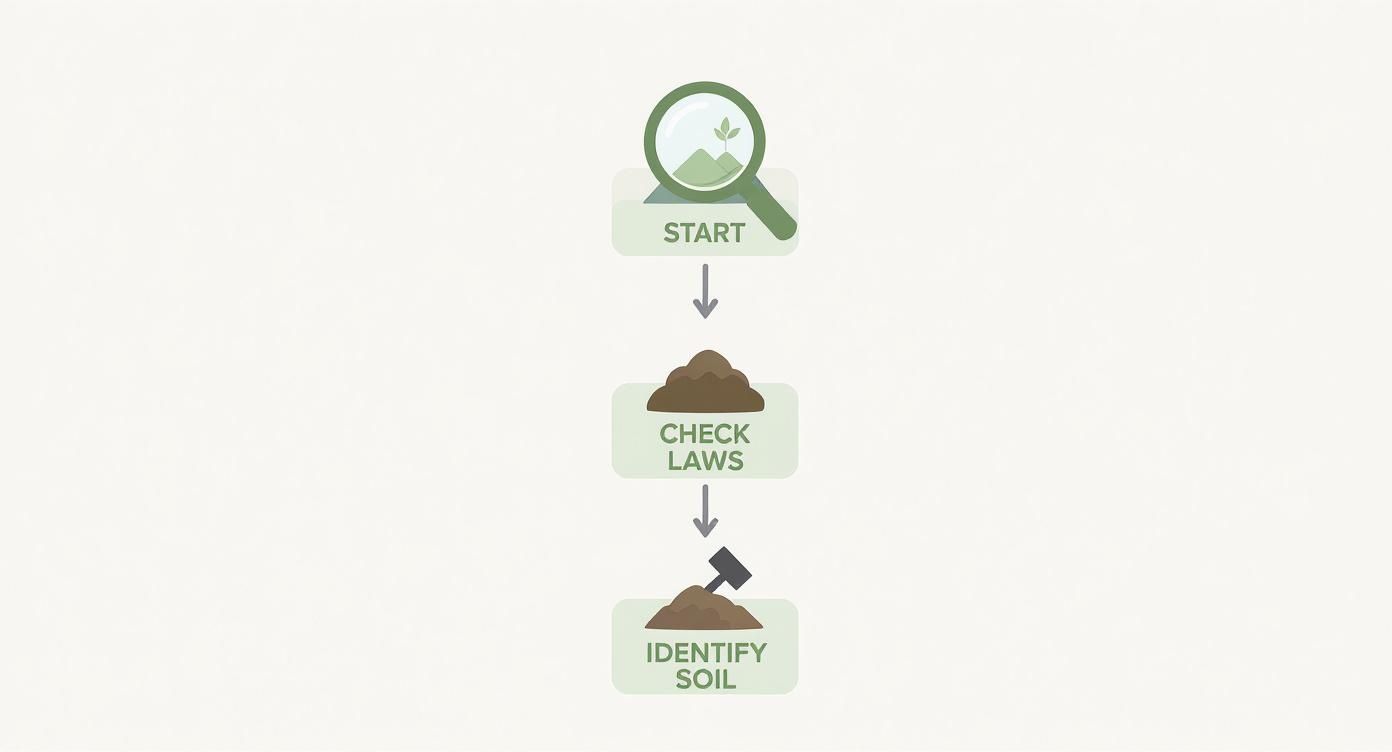
As the graphic shows, checking the rules and knowing your soil type are the foundational steps that dictate everything else. A key part of figuring out its suitability for reuse involves learning how to test soil pH and other basic properties.
Ultimately, managing the classification process correctly takes experience and the right gear. For complex sites or large volumes of dirt, using professional excavation and plant hire services ensures you have the machinery and expertise to separate different soil types on-site. This prevents cross-contamination and keeps your project compliant from day one.
Council-Approved Ways to Remove Your Soil
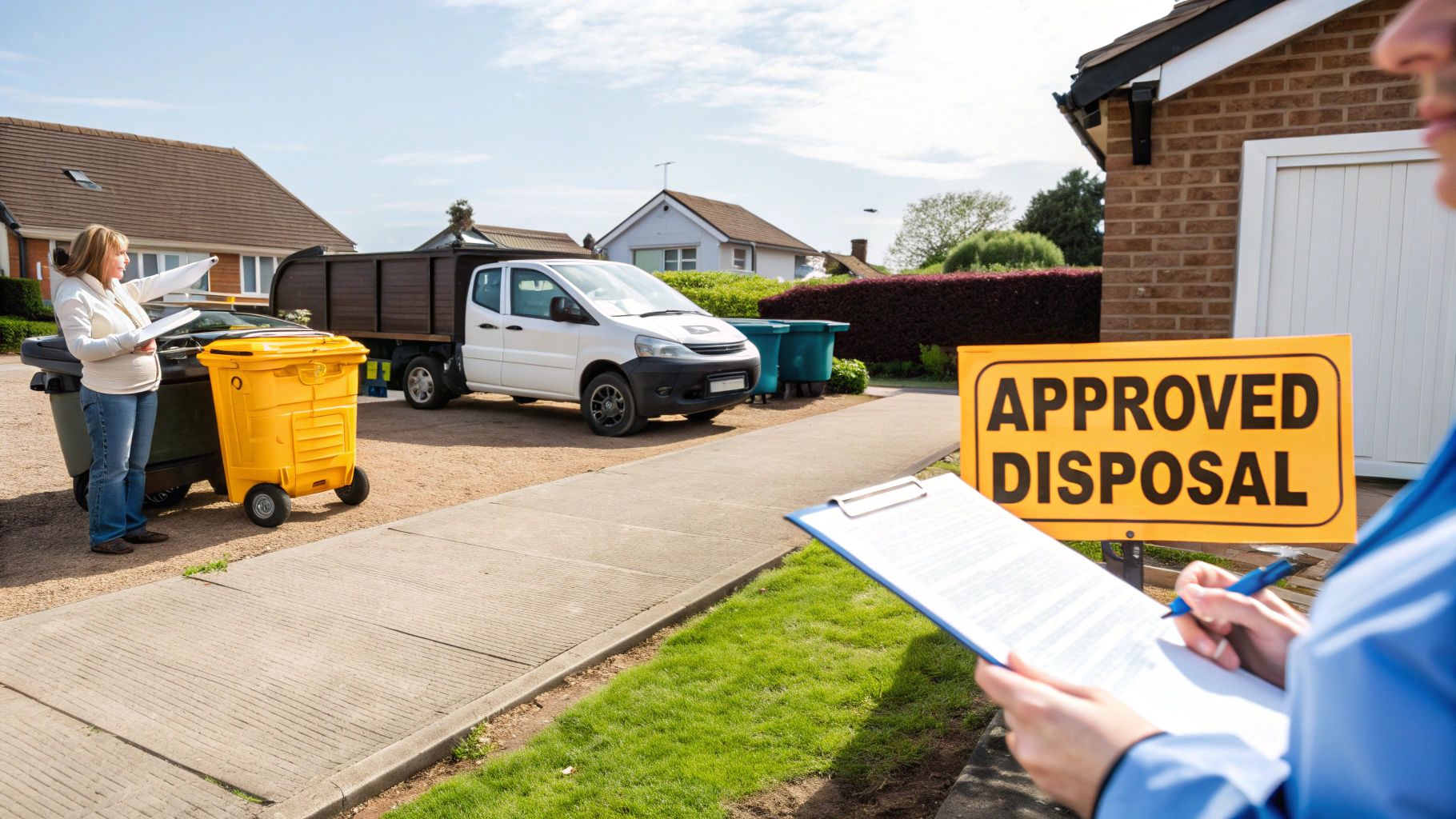
Once you've got your soil classified, the next step is getting it off your property the right way—using a legitimate, council-approved method. Choosing the right approach is key to keeping your project moving, whether you’re doing a small backyard tidy-up in Terrigal or a major commercial build in the Hunter Valley.
Let's dig into the most common and compliant ways to manage soil removal in NSW.
Hiring a Skip Bin for Soil
For smaller residential projects, hiring a skip bin specifically for soil can be a pretty straightforward solution. It’s perfect for jobs producing anywhere between two to ten cubic metres of dirt. You order the bin, fill it up, and the company hauls it away. Simple.
There are a few critical things to get right, though. You absolutely must fill it with clean soil only. Mixing it with other waste like green cuttings or building rubble is a definite no-go and will almost certainly lead to extra charges from the bin company. Also, pay close attention to the weight limits. Soil is incredibly heavy, and overloading a bin isn't just expensive—it's a serious safety hazard for lifting and transport.
Arranging a Tipper Truck Pickup
When you're dealing with anything more than a few cubic metres, a tipper truck service is easily the most efficient way to go. This is the standard for most civil and commercial projects, from digging a new pool in a Sydney suburb to clearing a large block for development in Newcastle.
A tipper can haul away a massive amount of soil in a single trip, making it far more cost-effective for bulk removal.
A crucial part of using tipper trucks is the paperwork. You absolutely must have a waste tracking docket for every single load that leaves your site. This document is non-negotiable; it proves where the soil came from and its final destination, ensuring you’re fully compliant with SafeWork NSW and local council regulations.
This method is the backbone of professional excavation services, where we handle all the logistics and compliance for you. It's the only way to guarantee every load is accounted for and disposed of legally and responsibly.
Hauling It Yourself to a Licensed Facility
Taking the DIY route and hauling the soil yourself is technically possible for tiny amounts, but honestly, it’s often more hassle than it's worth.
You'll need a suitable vehicle and a heavy-duty trailer, and then you have to find a licensed resource recovery centre or landfill that actually accepts soil from the public. These facilities charge by weight, and you'll still need to provide documentation proving what kind of soil you have.
For anything more than a single trailer load, the time, fuel, and tipping fees add up incredibly fast, making professional removal a much simpler and often cheaper choice in the long run.
Smart Ways to Reuse Soil and Save Money
Disposal isn’t your only choice, and let's be honest, it's almost always the most expensive one. Before you pay to have perfectly good soil hauled away, it’s worth looking at the smarter, more sustainable alternatives that can save you a heap of money and even improve your property or help someone in the community.
Thinking creatively about reuse is the key.
If you’re working with clean fill—especially VENM (Virgin Excavated Natural Material)—the best place to start is your own backyard. Excavated soil is an incredibly valuable resource for landscaping. You can use it to build up and revitalise tired garden beds, finally level out that frustratingly sloped yard, or get creative with landscape features like mounds or berms.
Repurposing on Your Own Property
Imagine you’re digging a new pool on a sloping block in Kariong. That excavated soil could be perfect for building a series of terraced garden beds along the fence line, turning a tricky site into a feature.
It's a common-sense strategy we see all the time. If your project involves extensive site works as part of a land clearing and preparation plan, setting aside the clean topsoil for later use in landscaping is a highly effective move. This approach not only wipes out disposal costs but also saves you from having to buy and truck in new soil later on. It’s a win-win that keeps valuable resources right where they belong.
Offering Clean Fill to Others
What if you have absolutely no use for the soil yourself? Your excess dirt could be exactly what someone else is looking for. This is a fantastic way to connect with people in your local area, from the Central Coast to Lake Macquarie, who might need fill for their own projects.
Let's say a homeowner is building a new retaining wall and desperately needs clean fill for backfilling. By offering your soil for free, you solve their problem while getting rid of yours without the hefty tipping fees.
To do this effectively and safely, here are a few tips from our experience:
- Get it Online: List your free clean fill on sites like Gumtree, Facebook Marketplace, or local community noticeboards. They get snapped up fast.
- Be Clear and Honest: In your listing, be specific. Mention the soil type (e.g., "sandy loam," "clean clay fill"), the estimated volume, and confirm it's VENM. It’s also wise to mention if there are any rocks and note that you can't guarantee it's 100% free of organic matter.
- Set Clear Access Rules: Explain exactly where the soil is stockpiled and what the access is like for a truck or trailer. Make it crystal clear that the person taking it is responsible for all the loading and transport.
Reusing soil this way is also great for the environment. The Australian government has set a target to cut landfill waste by 80% by 2030, and finding local uses for clean fill is a direct contribution to this goal. You can discover more about national waste reduction efforts and see how small, practical actions like this really do make a big difference.
Handling Potentially Contaminated Soil
Finding out your soil might be contaminated can feel like a project-stopping problem, but it’s entirely manageable if you follow the correct process from the very start. This is where knowing how to dispose of soil safely and legally becomes more critical than ever.
We're not talking about clean fill anymore; this is soil that requires a specialist approach.
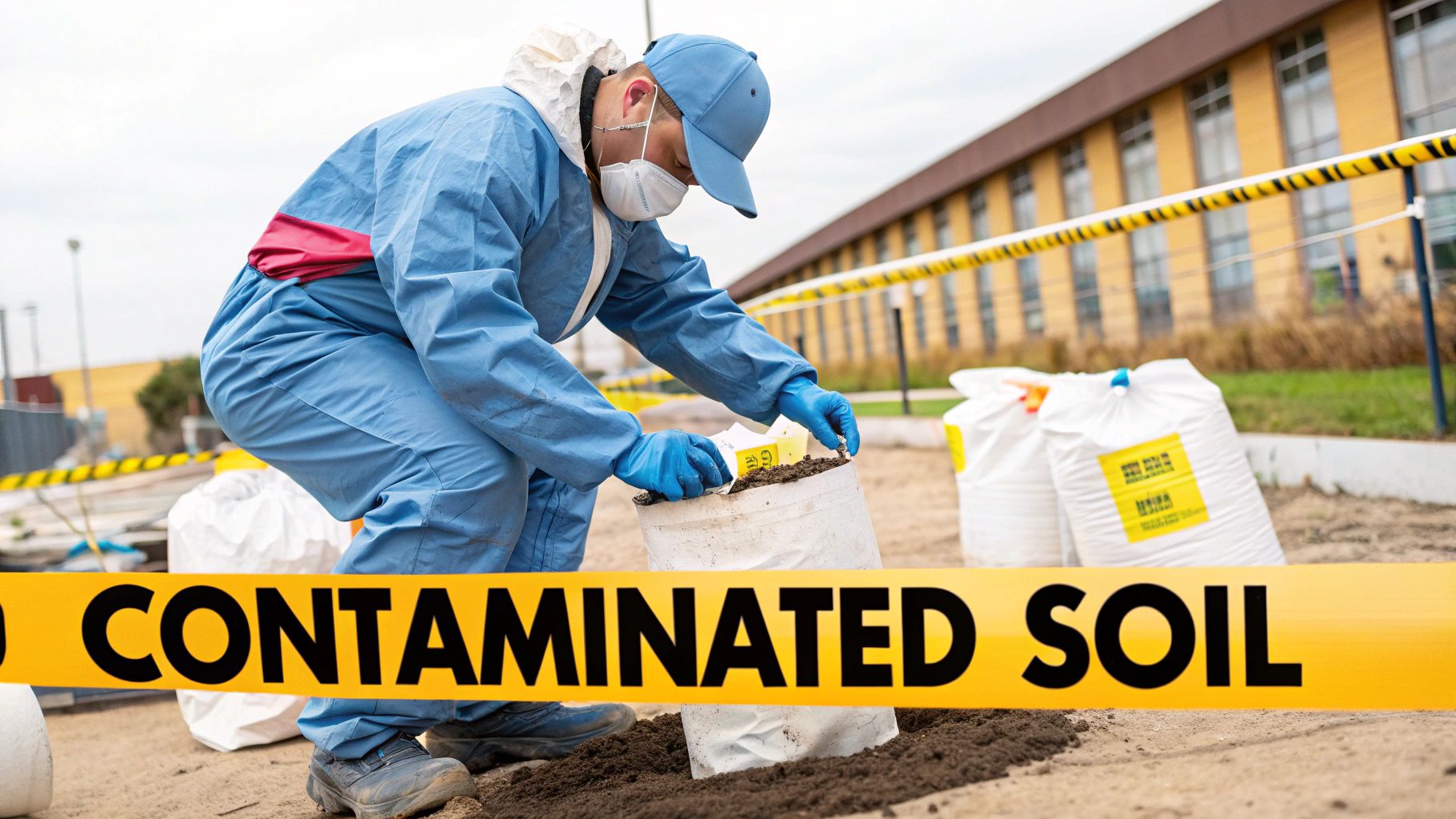
Across Sydney and the Central Coast, it’s not uncommon for excavation to uncover hidden issues. This could be asbestos-containing materials (ACM) from an old fibro shed, heavy metals from previous industrial use, or hydrocarbons from a leaking underground tank. These discoveries immediately change the game for your disposal plan.
Strict Protocols and Zero Compromises
Once contamination is suspected or confirmed through testing, you must follow strict protocols set by the NSW Environment Protection Authority (EPA). This is non-negotiable. It requires a completely different level of management compared to handling clean fill.
The soil must be carefully handled, transported by licensed carriers, and taken to a facility specifically equipped for hazardous or restricted waste. This isn’t a job for a standard skip bin or a weekend trailer run.
For example, if asbestos is found during a dig in an older Newcastle suburb, SafeWork NSW regulations kick in immediately. The site must be secured, and only licensed asbestos removalists can handle and transport the material. This is all about ensuring the safety of workers and the public.
The Dangers of Cross-Contamination
We can’t stress this enough: never mix contaminated soil with clean fill.
The temptation to dilute it or hide it might seem like a way to save money, but the consequences are severe. A single fragment of asbestos can contaminate an entire truckload of otherwise clean soil, turning a cheap disposal job into an incredibly expensive and legally fraught clean-up operation.
The legal, financial, and health risks associated with mishandling contaminated material are massive. Getting it wrong can lead to stop-work orders, huge fines from the EPA, and long-term liability. Safety and compliance must be your top priorities.
Handling these complex situations is a core part of professional demolition and excavation services. An experienced contractor knows how to identify potential risks, manage the testing and classification process, and ensure every gram of contaminated soil is disposed of according to the law, protecting both you and the environment.
DIY or Professional Soil Removal: Making the Right Call
When you’re staring at a freshly dug pile of earth, one of the first questions that comes to mind is: can I handle this myself, or is it time to call in the professionals? Honestly, the answer almost always comes down to the scale of your project and exactly what kind of soil you're dealing with.
A DIY approach can sometimes work for those very small, straightforward jobs. Let’s say you’ve done a bit of light landscaping in the backyard and ended up with less than a cubic metre of clean garden soil. If you have a decent ute or a trailer, you might just manage a trip to a local resource recovery centre.
But that’s usually where the simplicity ends.
When to Call the Professionals
For anything more than a tiny amount of soil, bringing in an expert team is nearly always the smarter, safer, and ultimately more cost-effective choice. Professional excavation companies are set up to handle the entire process, taking all the logistical and legal headaches completely off your plate.
We manage everything from getting the soil properly classified and sorting out the compliance paperwork to the physical loading and transport. Just imagine trying to coordinate tipper trucks for a large excavation on a tight-access block in a Sydney suburb—it’s a massive logistical challenge that requires real-world experience and the right network of contacts.
Getting it right the first time is always the cheapest option in the long run. Using a professional service means you avoid any future run-ins with councils or the EPA, which can end up costing you far more than the initial removal fee ever would have.
The True Cost of Soil Disposal
Professionals become absolutely essential when you're dealing with large volumes, tricky sites, or any material that isn't certified clean fill. The economic scale of waste management in Australia is massive. Back in 2018-19, the nation spent a staggering $17 billion on waste services, with the construction industry alone chipping in $2 billion of that.
These numbers really highlight the complexity and cost involved, reinforcing the value of experts who know how to navigate the system efficiently. You can read more about Australia's waste account estimates to get a sense of the full scope.
Got Questions About Soil Disposal? We've Got Answers
Over the years, we've helped countless clients across the Central Coast, Sydney, and Newcastle navigate the often-confusing world of soil disposal. It’s no surprise that the same questions pop up time and time again.
To save you some guesswork, here are the answers to the most common queries we get.
How Much Does It Cost to Dispose of Soil in NSW?
This is the big one, and the honest answer is: it depends. The final bill can vary wildly based on your soil’s classification, how much of it you have, your location, and where it’s going.
Clean fill (VENM) is always the cheapest to deal with. At the other end of the spectrum, contaminated soil is the most expensive, as it requires specialist transport and racks up hefty tipping fees at licensed facilities. Without a doubt, the most cost-effective options are reusing the soil on your own property or finding someone local who needs it.
Can I Just Put Soil in My Council Kerbside Bin?
Definitely not. Your regular household rubbish and garden organics bins are not designed to handle the sheer weight of soil. Shovelling dirt into them is a sure-fire way to have your bin left on the kerb come collection day.
Worse still, you could even cop a fine from your local council for trying. It’s best to avoid this route altogether.
What Is "Clean Fill" and How Do I Know if I Have It?
In the industry, we call it Virgin Excavated Natural Material (VENM). Put simply, it’s natural soil that’s completely free of contaminants – think building waste, chemicals, grass, or any other foreign material.
A quick visual check is a good place to start, but the only way to be 100% certain is to get it tested by a professional lab. That said, if the soil is coming from a patch of land that has never been developed, there’s a much higher chance it qualifies as clean VENM.
Do I Need a Special Licence to Transport Soil Myself?
For a small load of clean fill on your car trailer, you generally won’t need a special licence.
However, the moment you’re dealing with larger quantities or any type of potentially contaminated soil, you must use a licensed transporter. This isn't just a suggestion; it's a legal requirement under NSW EPA regulations to ensure every load is properly tracked from your site to its final destination.
At Booms Up Civil Group, we take the guesswork out of soil disposal. If you need a reliable, compliant solution for your project, from classification to final transport, get in touch with our team for a straightforward quote.