When you're planning a project that involves digging, you'll often hear the terms trenching and excavation thrown around. While they're definitely related, they aren't interchangeable.
Putting it simply, trenching is digging a narrow channel for things like pipes or cables. On the other hand, excavation is the much broader process of removing earth, usually for a larger purpose like a building foundation or a swimming pool. Getting this right from the start is absolutely crucial because it dictates the machinery we use, the safety precautions we take, and even the council approvals your project might need.
Understanding The Difference Between Trenching And Excavation
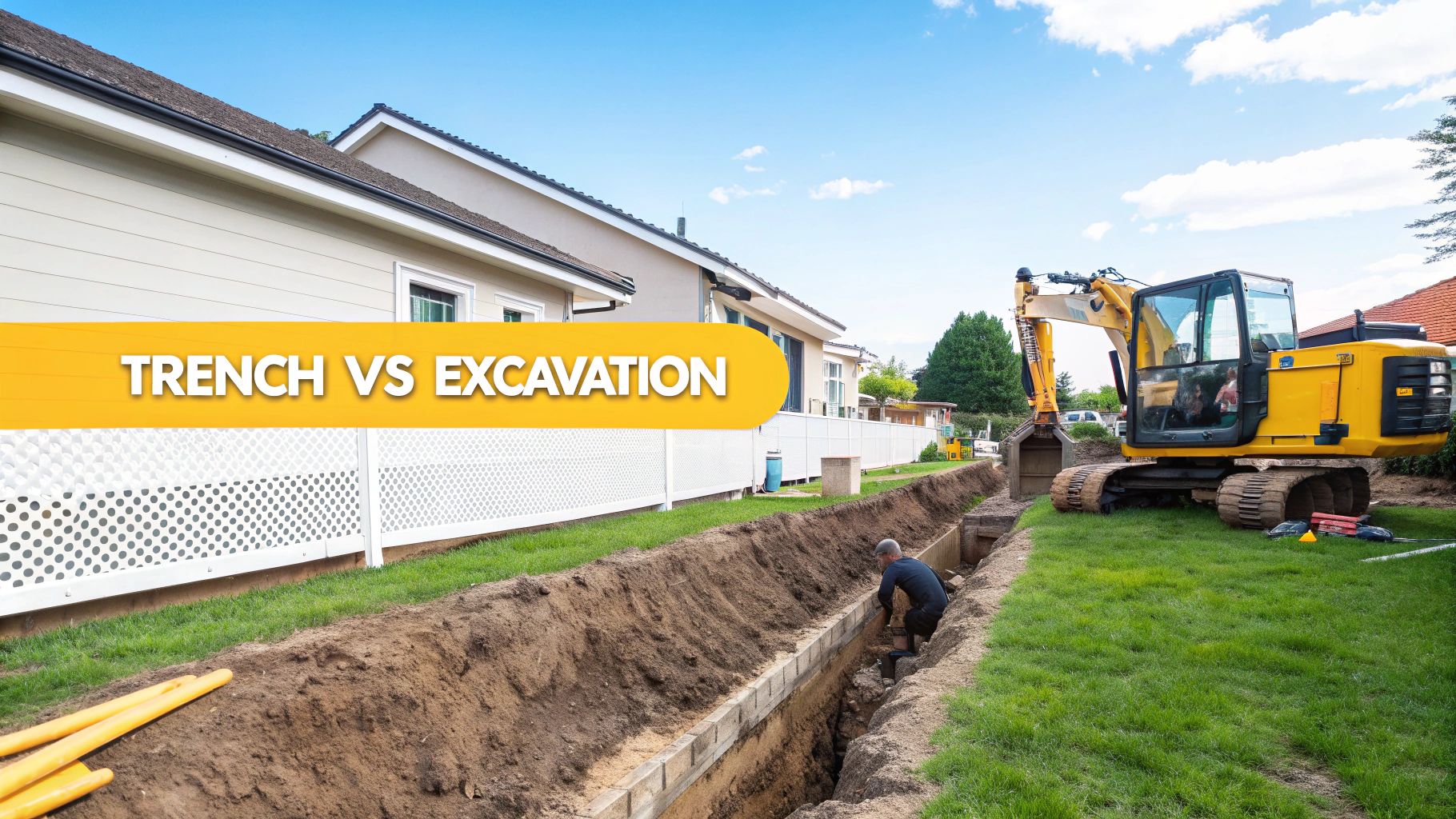
Here’s a good way to think about it: all trenching is a form of excavation, but not all excavation is trenching. The real distinction comes down to the purpose, scale, and shape of the work.
Getting this right from the start is absolutely crucial. Why? Because it dictates the machinery we use, the safety precautions we take, and even the council approvals your project might need.
What Is Trenching?
Trenching is all about creating a narrow incision in the ground that is deeper than it is wide. Almost without exception, the goal is to install services or utilities.
Picture a new home build in a suburb like Kariong on the Central Coast. A plumber needs precise trenches dug to lay stormwater, sewer, and water pipes. An electrician will need them too, for running underground power conduits safely.
These channels have to be dug to exact depths and grades to make sure everything works as it should. Because trenches can be deep and the soil unstable, they pose a serious risk of collapse. This is exactly why strict SafeWork NSW regulations are in place to keep everyone on site safe.
What Is Excavation?
Excavation is a much bigger umbrella term. It covers any project where we move earth, rock, or other materials with tools and machinery. This can be something as small as digging footings for a new deck, or a massive undertaking like clearing and levelling a site for a commercial carpark in Newcastle.
The scope of excavation is broad and can include:
- Bulk Excavation: This is about removing huge volumes of soil for things like foundations, basements, or pools.
- Detailed Excavation: This requires more precision for tasks like digging footings or carefully shaping the land.
- Site Cuts: This is about creating a level platform on a sloping block of land – a very common job for properties in Terrigal or along Sydney's Northern Beaches.
To really get a handle on what your project involves, it helps to understand what groundwork in construction covers, since excavation is a key part of it. The terms are often used alongside earthmoving, and learning more about excavation vs earthmoving will give you an even clearer picture.
Ultimately, choosing the right method is the very first step toward a successful project.
The Right Machinery for Your Excavation Project
Picking the right machine for a trenching and excavation job is about a whole lot more than just digging a hole. It's one of those critical decisions that directly shapes your project's efficiency, safety, and final cost. Bring in a machine that’s too big for the job, and you risk damaging your property. Go too small, and you’re looking at frustrating delays and ballooning labour costs. It’s all about matching the tool to the task at hand.
Take a typical residential project on the Central Coast, for example. In established suburbs like Kariong or Woy Woy, tight access is the name of the game. A narrow driveway or a small side gate is simply no place for a hulking 20-tonne excavator. This is where our compact mini excavators really prove their worth, navigating these tight spots with ease for backyard pool digs or detailed footing work without wrecking the surrounding landscape.
Matching the Machine to the Mission
Every piece of equipment in our fleet has a specific purpose. A large excavator might be the undisputed workhorse for a massive bulk earthmoving job on a new commercial site in Tuggerah, but it’s absolutely the wrong choice for grading a delicate lawn area.
A posi-track loader, with its much lighter footprint, is the perfect machine for carefully spreading topsoil or levelling a site with minimal ground disturbance. Then, when it's time to get all that excavated material (or 'spoil') off-site, a reliable tipper truck is non-negotiable for keeping things clear and the project humming along. We meticulously size up every site to make sure the machinery we bring in is perfectly suited to the conditions.
The Australian market for excavators, valued at USD 2.06 billion, really highlights how crucial this specialised equipment is to our construction and development industries. With major infrastructure projects and ongoing urban growth, this market is set to expand even further, proving just how vital it is to have the right gear. You can dig into these industry growth trends at imarcgroup.com.
It’s Not Just About the Excavator
The excavator itself is only half the story. The real magic happens with the attachments you put on the end of the boom. A standard digging bucket is great for shifting bulk material, but specialised jobs demand different tools.
A rock breaker attachment, for instance, is absolutely essential when we hit the notorious sandstone bedrock found all over Sydney and the Central Coast. Without one, a project can grind to a complete halt. In the same way, we use augers for drilling precise piers for footings or fence posts, and rippers to break up heavily compacted ground. Understanding how to combine these tools is key, and you can learn more in our complete guide to excavator attachments.
A true professional doesn't just own machinery; they own the right machinery and have the expertise to use it effectively. At Booms Up Civil, our hands-on experience on projects across the Central Coast, Sydney, and Newcastle means we can see challenges coming and select the gear that stops problems before they even start. Having a modern, well-maintained fleet isn't a luxury—it's the core of how we get the job done safely, on time, and right the first time, avoiding the kind of budget blowouts and site damage that can derail an entire project.
How to Prepare Your Site for Excavation Work
Before a single bucket of dirt gets moved, a bit of forward planning makes all the difference. Proper site preparation isn't just about ticking boxes; it’s the foundation for a safe, efficient, and cost-effective excavation project. Getting this stage right helps prevent nasty surprises, like unexpected utility strikes or council stop-work orders.
Think of it as the groundwork before the groundwork. By tackling these crucial steps upfront, you set the entire project up for success and ensure our team can get straight to work the moment we arrive. It’s all about being proactive to avoid reactive, expensive problems down the line.
Your Pre-Excavation Checklist
The first and most critical step, before any digging whatsoever, is lodging a Dial Before You Dig enquiry. This is a free national service and, more importantly, a legal requirement in NSW. It provides you with plans showing the location of underground utilities like water pipes, telecommunications cables, and gas lines on your property. Hitting one of these isn't just an inconvenience—it can be incredibly dangerous and costly to repair.
Next, you need to think about council approvals. For any significant work like a new home foundation, a large retaining wall, or a swimming pool, a Development Application (DA) with your local council, such as Central Coast Council or Newcastle City Council, is almost always necessary. We can certainly help guide you on what’s needed, but starting this process early is the key to avoiding project delays.
Understanding Your Ground Conditions
For many sites, especially those on a slope or in areas known for tricky soil, a geotechnical report is an invaluable investment. Imagine you're building on a steep block in Terrigal; this report is what analyses the soil composition, stability, and load-bearing capacity.
This information tells us if we're dealing with stable rock, reactive clay, or loose sand, which in turn dictates the excavation methods and safety precautions we need to take. It completely removes the guesswork and allows us to provide a far more accurate quote, preventing budget blowouts from unforeseen ground conditions. Our guide on essential site preparation for excavation dives deeper into this topic.
The process of selecting the right machinery is directly influenced by this initial site analysis, from the plot itself to the specific task required.
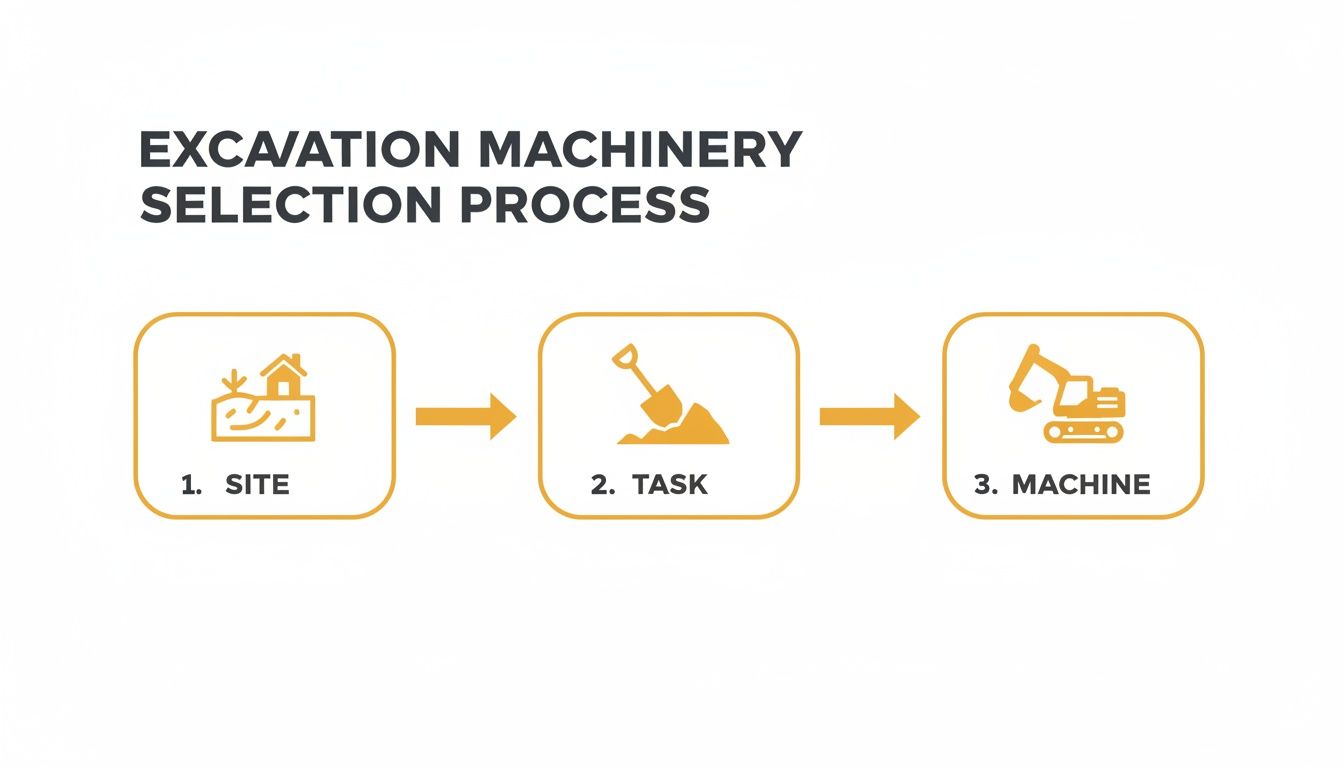
This simple flow shows that a solid understanding of your site and the job at hand has to come before any equipment decisions can be made.
Practical Site Logistics
Finally, there are the practicalities of the site itself. We need clear and safe access for our machinery, like excavators and tipper trucks. This might mean temporarily removing a fence panel or clearing a pathway ahead of time. If access is tight, we need to know beforehand so we can plan to bring in our specialised mini excavators.
You’ll also need to consider erosion and sediment controls. Councils are very strict about preventing soil and debris from washing into stormwater drains. Simple measures like installing silt fences are often required to stay compliant. Lastly, have a plan for the excavated material (spoil). We can arrange its removal, but knowing where it will go is a key part of the project plan from day one.
Navigating Critical Safety Rules and Regulations
On any trenching and excavation site, safety isn't just a good idea—it's the law. When you're moving tonnes of earth, the risks are immense, and cutting corners is never an option. The rules set by SafeWork NSW are there for a very good reason: to protect everyone, from our operators on the ground to anyone else near the site.
Understanding these rules helps you see why a professional contractor takes certain precautions that might seem overly cautious. It’s not about slowing the job down; it’s about making absolutely sure everyone goes home safely at the end of the day. The consequences of getting it wrong are severe, leading to hefty fines, project shutdowns, and, most importantly, serious injuries or worse.
The Unforgiving Risks of Trenching
The single greatest danger in our line of work is a trench collapse. It’s a sobering fact, but just one cubic metre of soil can weigh as much as a small car. A cave-in isn't just a bit of dirt falling; it's an incredibly deadly event. This risk is precisely why any trench deeper than 1.5 metres legally requires robust protective systems.
Another massive hazard is striking underground utilities. Hitting a high-voltage electrical cable or a high-pressure gas main can have catastrophic results. This is why a Dial Before You Dig search is a non-negotiable first step before any soil is broken. It’s a simple check that prevents a potentially life-threatening accident.
Key Safety Measures We Never Skip
To manage these risks, we adhere strictly to the guidelines mandated by SafeWork NSW. These aren't optional extras for us; they are fundamental to how we operate on every single site, whether it's a small residential job in Kariong or a large commercial project in Newcastle.
Here are a few of the key safety protocols we always have in place:
- Trench Protection Systems: For any deeper trench, we have to use methods to prevent the walls from collapsing. This might involve shoring, which uses supports to brace the walls, or benching, which cuts the trench walls into a series of steps. You can explore a more detailed explanation of shoring in excavation to understand these critical techniques.
- Safe Access and Egress: It’s vital that workers have a safe way to get in and out of a trench. Ladders or ramps must be positioned correctly so that no one is ever more than a short distance from an exit point.
- Spoil Pile Management: The excavated dirt (we call it spoil) has to be placed a safe distance from the edge of the trench—at least 0.6 metres back. Piling it too close adds immense pressure to the trench walls and dramatically increases the risk of a collapse.
A critical part of our safety culture is constant vigilance. A designated 'competent person' must inspect the excavation daily and after any event that could change conditions, like heavy rainfall on the Central Coast, before anyone is allowed to enter.
To help illustrate just how seriously these risks are taken, the table below outlines the most common hazards we face and the non-negotiable safety measures required to mitigate them.
Key Excavation Risks and Mitigation Strategies
| Potential Hazard | Primary Risk | Required Safety Measure / Mitigation |
|---|---|---|
| Trench Collapse | Entrapment, asphyxiation, blunt force trauma. Can be fatal. | Shoring, benching, or battering for any trench deeper than 1.5 metres. Daily inspections by a competent person. |
| Underground Utilities | Electrocution, explosions, gas leaks, flooding from water mains. | Conduct a comprehensive Dial Before You Dig (BYDA) search. Use non-destructive digging methods when near known services. |
| Falls (People/Equipment) | Serious injury to workers inside the trench; equipment damage. | Barricades, fencing, or clear exclusion zones around the excavation. Safe access and egress points (ladders/ramps). |
| Hazardous Atmosphere | Poisoning or asphyxiation from toxic gases or lack of oxygen. | Conduct atmospheric testing before entry into deep or confined excavations. Ensure adequate ventilation. |
| Spoil Pile Collapse | Soil and rocks sliding back into the trench onto workers. | Place spoil piles at a safe distance from the trench edge (at least 0.6m). |
This table isn't just a checklist; it's a reflection of the hard lessons learned by the industry over many years. Adhering to these measures is what separates professional, reputable contractors from the rest.
The Human Element of Site Safety
Beyond physical barriers and documented procedures, people are the most important part of keeping a worksite safe. Clear, constant communication is essential, especially when heavy machinery is operating. This is why you’ll always see our team using a qualified spotter to guide operators in tight spaces or near identified hazards.
Everyone on our site is required to wear high-visibility clothing and other appropriate Personal Protective Equipment (PPE). Understanding safety standards is a global priority; for example, reviewing guides on Canadian Safety Standards shows how different regions tackle these same universal challenges.
When you hire a contractor, don’t ever feel hesitant to ask about their safety procedures. A true professional will be happy to walk you through their safety plan. It’s a clear sign they take their responsibility seriously—not just for their crew, but for the success and security of your entire project.
Understanding Trenching and Excavation Costs
The first question on just about everyone's mind is, "So, what's this going to cost?" While there's no single price tag for trenching and excavation work, we can certainly demystify the key factors that shape your final quote. Getting your head around these variables helps you read a quote intelligently and appreciate where the value truly lies.
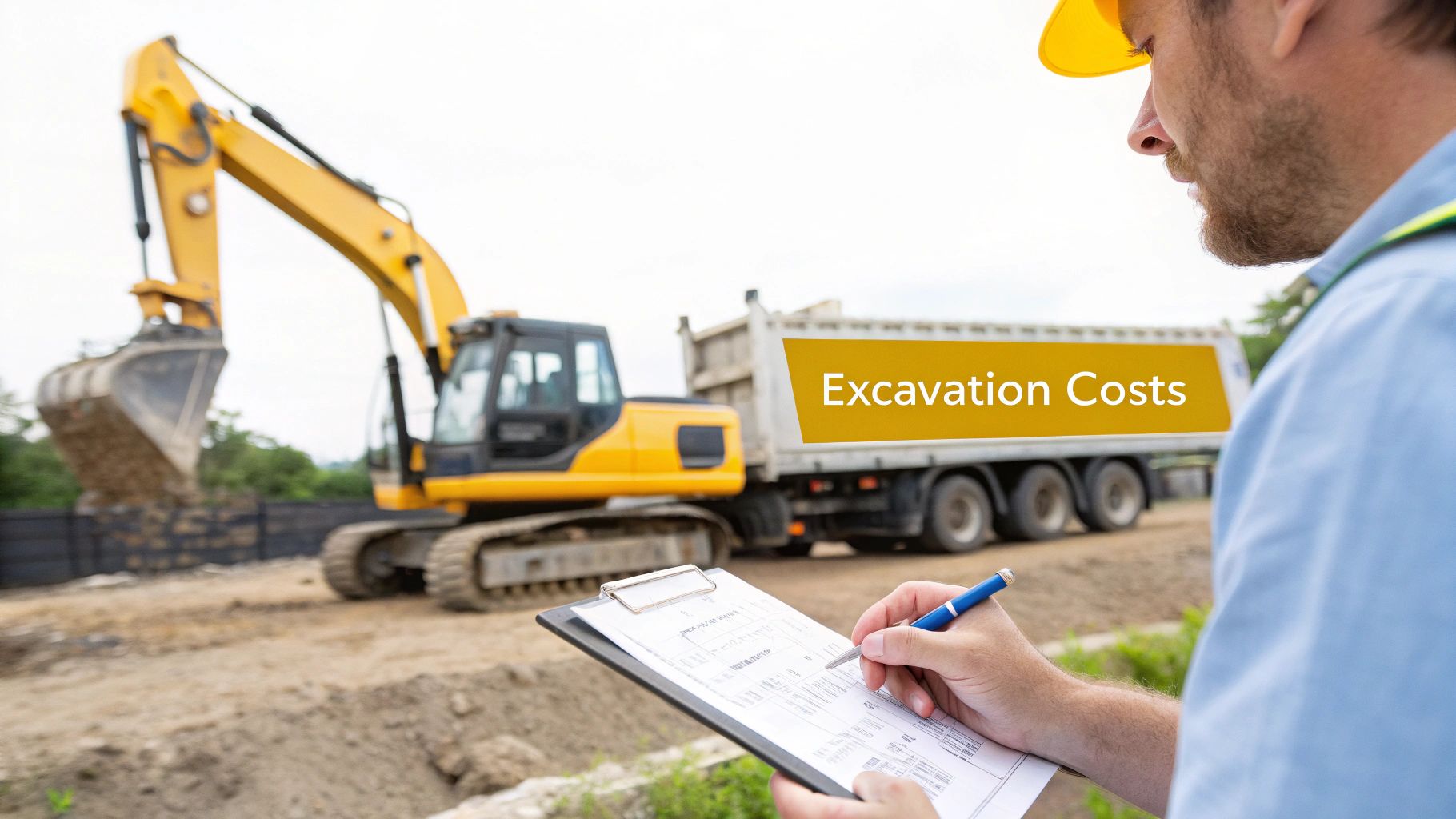
It’s about much more than just the time on site. The true cost is a combination of labour, machinery, disposal fees, and the expertise needed to manage the entire process smoothly and safely.
What Shapes Your Excavation Quote
The biggest cost drivers are the scale of your project and the conditions on your site. A simple trench for a plumber will naturally cost less than a full site cut for a new home foundation.
Several key factors come into play:
- Project Size and Complexity: The sheer volume of earth to be moved is a primary factor. A deep, large-scale excavation requires more machine time, more labour, and more trucks to haul away the material.
- Soil Type: The ground itself plays a huge role. Digging through the soft, sandy soils common along the Central Coast is very different from breaking through the hard sandstone bedrock found across much of Sydney. Rock excavation requires specialised attachments like hydraulic hammers, which adds to the cost.
- Site Accessibility: How easily can we get machinery to the work area? A wide-open block is straightforward, but navigating tight access in established suburbs requires smaller, more specialised machines and more careful planning.
The Hidden Costs of Spoil Removal
One of the most significant and often underestimated costs is spoil removal. All the dirt, clay, and rock we dig up has to go somewhere. The process involves loading the spoil onto tipper trucks and transporting it to a licensed disposal facility, which charges by weight or volume.
These haulage and tipping fees are a major component of the final price. A well-planned project aims to reuse clean fill on-site where possible, but any excess or contaminated material must be professionally managed, and this is a non-negotiable part of the job.
The Australian site preparation services industry, which includes all critical trenching and excavation work, is a substantial part of the economy. This sector has grown steadily, reflecting the constant demand for skilled operators and reliable equipment to get projects off the ground. You can discover more insights about these industry trends at ibisworld.com.
Wet Hire vs Dry Hire Explained
When you get a quote, it will almost certainly be for wet hire. This means the price includes both the machine (excavator, tipper truck) and a skilled, licensed operator. The alternative, dry hire, is just renting the machine itself, leaving you responsible for operating it.
For safety, compliance, and efficiency, we always recommend wet hire. Our experienced operators know their machines inside and out, work faster, and are fully insured. This approach protects you from liability and ensures the job is done correctly, ultimately saving you money by avoiding costly mistakes or damage. A professional team gets it right the first time.
How to Choose the Right Excavation Contractor in NSW
Hiring the right team for your trenching and excavation is single-handedly the most important decision you'll make for the success of your project. It's the critical difference between a job that runs smoothly, on time and on budget, and one that's plagued by frustrating delays, surprise costs, and even safety nightmares.
Think of it less like hiring a tradie and more like bringing on a crucial project partner. A great contractor doesn't just dig a hole; they anticipate challenges, understand the local ground conditions, and prioritise safety above all else. This guide is a straightforward checklist to help you choose a contractor in NSW with complete confidence.
Your Non-Negotiable Checklist
Before you even think about signing a contract, there are a few absolute must-haves. Consider these the minimum entry requirements for any professional you'd let on your property.
First up, verify their licences and insurances. Your contractor absolutely must hold a current NSW contractor licence for the work they're doing. Just as important is proof of current Public Liability insurance—this is what protects you financially if something goes wrong. Don't just take their word for it; ask to see the physical documents. A pro will have them ready to go.
Next, you need to confirm they have proven local experience. An excavator who understands the sandy, shifting soils of the Central Coast or the brutal sandstone bedrock around Sydney has a massive head start. They know what to expect, how to handle unexpected rock, and won't get caught off guard by the specific requirements of the Central Coast Council or Newcastle Council. For a deeper dive, check out our guide on finding the best excavation contractors near you.
Critical Questions to Ask Potential Contractors
Once you’ve got a shortlist, it’s time to dig a little deeper. The way they answer these questions will tell you everything you need to know about their professionalism and expertise.
A brilliant opening question is, "Can you provide a detailed, itemised quote?" A vague, one-line quote is a giant red flag. A true professional will break down all the costs: machinery hire (wet hire), labour, spoil removal, and any other potential expenses. You need to know exactly what you’re paying for, with no hidden surprises.
You should also get a feel for their approach to safety. Ask them directly, "What are your standard safety procedures on a site like mine?" Their answer should immediately reference things like daily site inspections, mandatory Dial Before You Dig searches, and specific plans for trench shoring if it’s needed. If they brush off safety concerns, they’re not the contractor for you. It’s an immediate deal-breaker.
With Australia's construction market projected to surge, relying heavily on skilled trenching and excavation, the demand for qualified contractors is booming. This growth underscores the importance of choosing a partner with a proven track record in civil works across regions like Sydney, the Central Coast, and the Hunter Valley. You can read the full research on this construction market growth.
Ultimately, you’re searching for a reliable partner who communicates clearly and has a genuine commitment to getting the job done right the first time. Taking the extra time to properly vet your contractor is the best investment you can make in your project's future.
Common Trenching and Excavation Questions
After 15+ years on job sites across the Central Coast, Sydney, and the Hunter Valley, you start to hear the same questions pop up. It makes sense. Most people don’t deal with excavation every day, and getting clear, straightforward answers is the best way to feel confident about your project.
So, let's cut to the chase and tackle the queries we hear most often.
Do I Need Council Approval for My Excavation Project?
For the big stuff – a new home build, a serious retaining wall, or putting in a pool – the answer is almost always yes. You’ll be looking at lodging a Development Application (DA) with your local council, whether that’s the Central Coast Council or Newcastle City Council.
Now, for some minor landscaping, you might get away with it as an exempt development. But honestly, it’s always smarter to check their specific guidelines first. A quick call can save you a world of headaches down the track.
And one thing is non-negotiable: a Dial Before You Dig enquiry is a legal must-do before a single bucket of dirt is moved. Hitting a hidden utility is a costly and dangerous mistake.
How Long Does a Typical Residential Excavation Take?
This is a classic "how long is a piece of string?" question. It really does depend entirely on the job. Digging a simple trench for a plumber might be an in-and-out job, done in a single day. But a full site cut for a new house on a tricky sloping block? That could easily take a week or more.
A few key things dictate the timeline. Unpredictable weather is a big one. So are the ground conditions – hitting a shelf of solid rock you weren’t expecting will definitely slow things down. Site access and the sheer volume of material we need to move also play a huge part. Any good contractor will give you a realistic timeline in their quote that accounts for these variables.
What Happens to All the Dirt and Rock You Dig Up?
All that excavated material – we call it ‘spoil’ in the industry – has to go somewhere, and it needs to be managed properly. In a perfect world, we can reuse some of the clean soil right there on-site for things like backfilling or building up garden beds.
But more often than not, there’s excess or unsuitable material that needs to be trucked away to a licensed disposal facility. The cost of transport and tipping, known as ‘haulage’, is a standard and pretty significant part of any excavation quote. We always work out a spoil management plan with you from the get-go so there are no surprises.
Can You Work on Sites with Tight or Limited Access?
Yes, absolutely. This is our bread and butter, especially in the established suburbs of Sydney and the Central Coast where blocks are tight and getting machinery in is a challenge. It's a problem we solve every single week.
We have a fleet of specialised gear, like mini excavators and compact loaders, that are built specifically to squeeze through standard gates and work efficiently in confined spaces. This lets us do detailed excavation work in backyards, down the side of houses, and in other spots where the big machines simply can’t go. We always do a thorough site assessment beforehand to match the right machine to your access.
At Booms Up Civil Group, our whole approach is built on doing the job right the first time, with clear communication and no nasty surprises. If you have more questions or you’re ready to get an expert team on your next project, we're here to help.