Starting a project that means moving a serious amount of dirt can feel like a massive undertaking. Whether you're preparing a site for a new build in Newcastle, digging out for a pool in Terrigal, or finally tackling that sloping block in Sydney, the single most important decision you'll make is choosing the right excavation contractor.
This guide is your game plan for hiring the best local team, from your initial search right through to signing on the dotted line. We'll give you a complete checklist to ensure you find a safe, compliant, and experienced partner who gets the job done right the first time.
What Do Excavation Contractors Actually Do?
When you search for "excavation contractors near me," you're not just looking for someone with an excavator. You need a professional partner who understands the unique challenges of your area—from the sandy coastal soils of the Central Coast to the stubborn sandstone bedrock you find all over Sydney.

Get this choice wrong, and you could be facing costly delays, serious safety issues, or a nightmare of council compliance problems. A professional's work is the literal foundation for your entire project, and getting it right from day one is crucial for stability and safety.
Their core services include:
- Site Cuts & Foundation Prep: Precisely levelling an area for a house slab or shed, following a surveyor’s pegs down to the millimetre. They also handle detailed excavation for footings, piers, and basements where every measurement must be perfect.
- Trenching for Services: Creating neat channels for plumbers, electricians, and NBN installers to lay pipes and conduits, carefully avoiding existing utilities.
- Land Levelling & Grading: Shaping the entire block to ensure water drains away from your future home, not towards it. Proper site preparation and excavation is everything.
Why Local Knowledge Matters
An excavation contractor with deep local experience brings a lot more to the job than just machinery. They have a built-in understanding of the specific ground conditions and council regulations that can derail a project's timeline and budget if you're not prepared.
Let's say you're building on a steep block in Terrigal. A local contractor knows that area is known for sandy, unstable soil. They'll factor in the need for proper shoring and sediment control right from the start, saving you from a massive cost blowout down the track. Our guide to excavation on the Central Coast dives deeper into these regional challenges.
A contractor’s familiarity with local council requirements, like those from Central Coast Council or Newcastle Council, is a huge green flag. It tells you they know the rules for sediment control, spoil removal, and working near boundaries, which ultimately protects you from being hit with fines.
Hiring locally also means you’re getting a team that has probably worked on a street just like yours before. They have established relationships with local suppliers and waste facilities, which is crucial for keeping your project moving without a hitch.
Essential Qualifications: Your Non-Negotiable Checklist
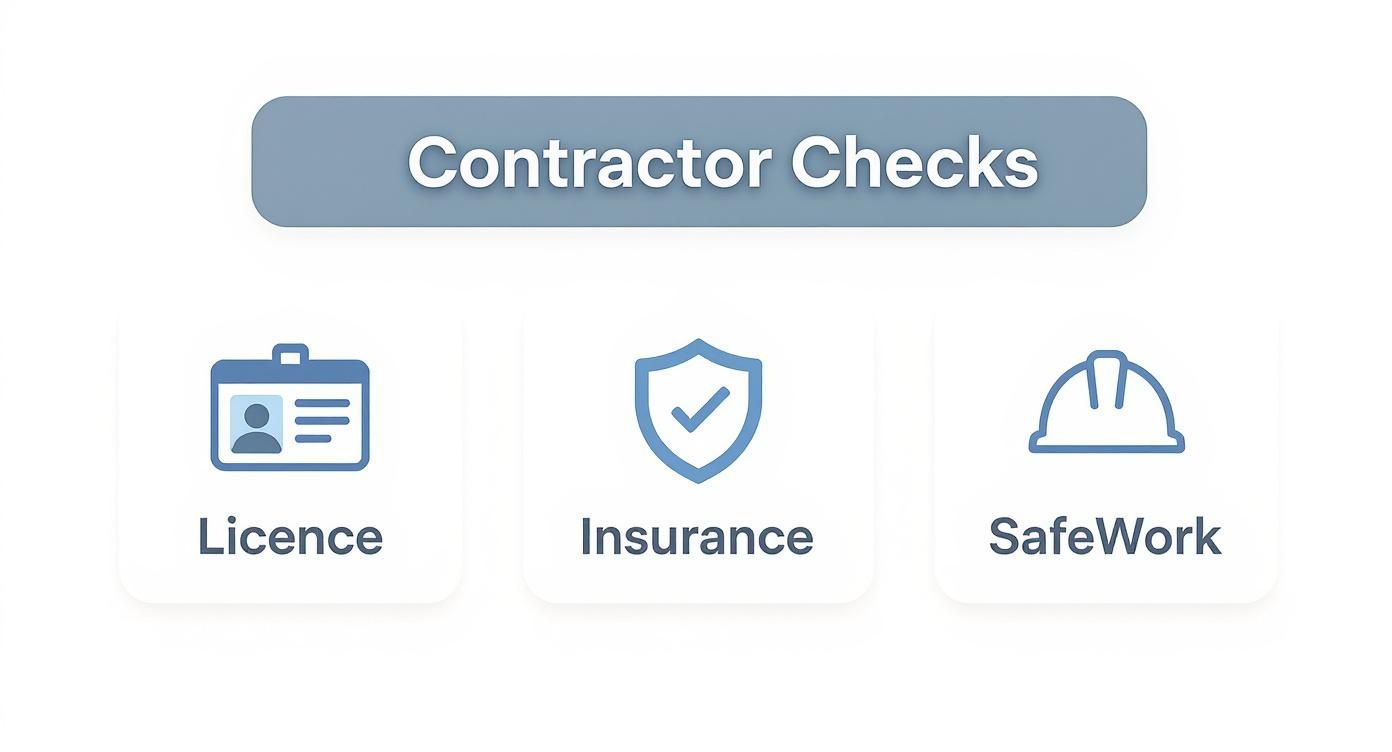
Before you even think about comparing quotes, you need to do your homework. Hiring an excavation contractor without the right licences or insurance is a massive risk, and it’s one that can leave you seriously exposed if anything goes wrong. This isn’t just about ticking boxes; it’s about protecting yourself, your property, and everyone on-site from day one.
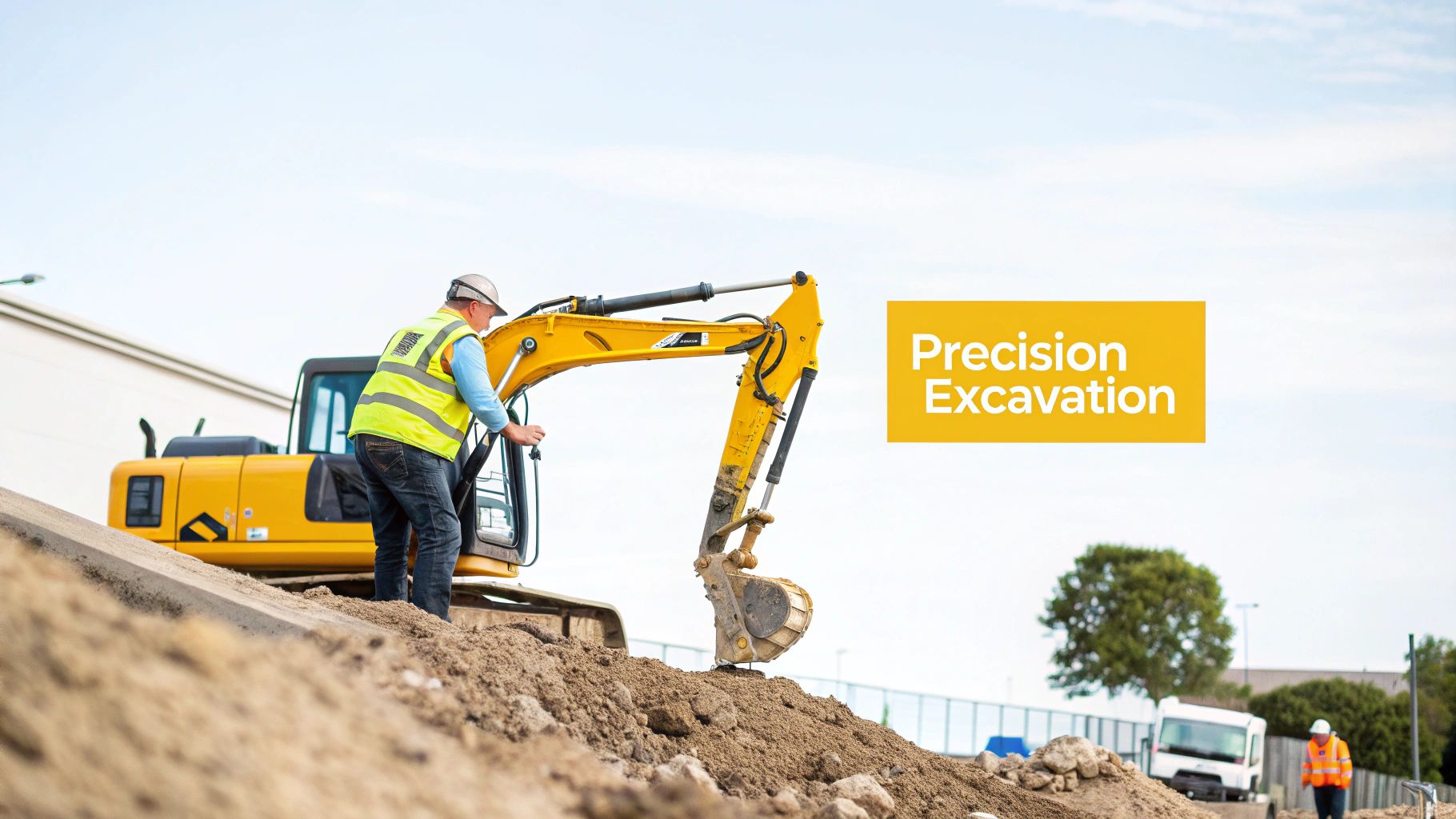
A professional excavation company is a key player in Australia's site preparation industry, a sector that’s foundational to the entire construction landscape. You can read more about the site preparation services industry in Australia to get a sense of the scale here. What separates the real pros from the cowboys is their commitment to compliance.
Licence and OH&S Compliance
In NSW, the specific licence an excavation contractor needs depends on the job they're doing. For most residential projects, they might be working under a builder's licence, but there are other specialised tickets you should look out for. Any work that involves digging deep trenches, for example, requires specific qualifications in line with SafeWork NSW regulations.
This is where things like shoring in excavation come into play, which often requires operators to hold high-risk work licences.
Key Takeaway: A pro will have their contractor's licence and any relevant high-risk work tickets from SafeWork NSW ready to show you, no questions asked. If they hesitate or make excuses, that’s a huge red flag. This simple check speaks volumes about their commitment to safety and doing things by the book.
Insurance Is a Deal-Breaker
Seriously, never hire an excavation contractor without first seeing their current insurance certificates. There are two policies you absolutely must see.
- Public Liability Insurance: This is your safety net. If their excavator clips your neighbour’s fence or accidentally hits an underground pipe, this policy is what covers the damage. A legitimate, professional outfit should carry at least $20 million in public liability cover.
- Workers Compensation Insurance: In NSW, this is mandatory for any business that has employees. It protects the workers on your project. If a contractor is cutting corners here, you could be dragged into a messy and expensive legal situation.
Always ask for a Certificate of Currency for both policies. Don't just glance at it—check the expiry date (formatted DD/MM/YYYY) and make sure the business name on the certificate is the exact same one you're hiring.
Key Questions to Ask Before You Hire Anyone
Once you’ve ticked the boxes on licences and insurance, it’s time to dig a little deeper. Asking the right questions at this stage is what separates a generic operator from a genuine project partner who’s the perfect fit for your job. The goal isn’t just to get a price; it’s to understand their experience, their process, and how they handle the curveballs that can pop up on any site.
A few smart questions now can save you a world of pain and budget blowouts down the track.
Do They Have the Right Experience and Equipment for Your Job?
Not all excavation jobs are created equal. The team that does bulk earthworks for new housing estates day-in and day-out might not have the finesse needed for a tight-access job next to a heritage building in Newcastle.
Get specific with your questions:
- "Have you worked on sloping blocks with sandstone before? What were the challenges?"
- "What's your experience with tight-access sites in inner-city suburbs like this one?"
- "Do you own your own equipment, or do you hire it in?" (Owning equipment gives them more control over scheduling).
- "Will you be using any subcontractors for parts of the job?"
How Do They Handle the Unexpected?
Even the most meticulously planned jobs can uncover surprises once you break ground. How a contractor answers your "what if" questions speaks volumes about their experience and problem-solving skills.
Put them on the spot with a few real-world scenarios:
- What’s your process if you hit unexpected rock? Do they have rock saws or hammers ready to go? Critically, how are those extra costs calculated and communicated to you?
- How do you handle finding asbestos or other contaminated soil? A pro will have a clear, compliant procedure that follows SafeWork NSW guidelines to the letter.
- What happens if you damage an underground service? Sometimes services aren't where the plans say they are. Good operators minimise this risk with techniques like hydro excavation (you can learn about the benefits of non-destructive digging in our guide) and have a clear protocol if the unexpected happens.
A good contractor won't just shrug these questions off. They will have clear, confident answers based on years of real-world experience, explaining their safety protocols and how they communicate with you to get approval for any variations before proceeding.
How to Navigate Quotes and Spot Red Flags
Getting a few quotes is a standard first step, but it’s about way more than just lining up the final numbers. The cheapest price is almost never the best deal; a transparent, comprehensive quote is the first sign you’re dealing with a pro who won’t sting you with nasty surprises later.

A proper quote should always follow a thorough on-site inspection. If a contractor throws a price at you over the phone without ever setting foot on your property, that’s your first major warning sign.
What a Good Quote Looks Like
A legitimate quote should be a written document, broken down and easy to follow. It’s not just a single figure; it’s a clear scope of works.
You’ll want to see these key components:
- A Detailed Scope of Works: This isn't just "dig a hole." It should list every specific task, like "Excavate footing trenches to 450mm depth as per engineer's plans."
- Inclusions and Exclusions: What’s covered, and what isn’t? This is critical. For instance, is spoil disposal included in the price? A professional approach to how soil removal is a major project cost is crucial.
- Provisional Sums: If there are unknowns, like the potential for hitting rock, the quote should clearly state a provisional sum or an hourly rate for dealing with it.
- Timeline: A realistic estimate of how long the job will take, weather permitting.
Major Red Flags to Watch Out For
While you’re comparing quotes, keep your eyes peeled for warning signs. The Australian construction industry is booming, and this high demand can attract some less-than-reputable operators. You can discover more about the construction industry's growth projections to see why finding a reliable contractor is more important than ever.
Warning: Be extremely wary of any contractor who offers a significant discount for cash-only payments. This is a classic sign they are avoiding tax and may not have proper insurance, leaving you completely exposed if something goes wrong.
Other serious red flags include:
- An unwillingness to provide a detailed written contract.
- Using high-pressure sales tactics to get you to sign on the spot.
- Being vague when you ask to see their insurance certificates.
- A quote that is dramatically lower than all the others—it often means they've missed something crucial or are cutting dangerous corners.
The Final Checks: Reviews, References, and Gut Feel
After you've shortlisted contractors based on their quotes and qualifications, the final step is to check their reputation. Look for reviews on platforms like Google, but read them carefully. Vague, one-line reviews aren't as helpful as detailed ones that describe the project and the client's experience.
Don't be afraid to ask for references from recent, similar projects. A confident contractor will be happy to connect you with past clients. When you speak to a reference, ask about their communication, how they handled any issues, and whether the project stayed on budget.
Ultimately, trust your gut. A true professional will be transparent, patient, and happy to answer all your questions. Anyone who makes you feel rushed or uncomfortable simply isn’t the right partner for your project.
Local vs. Large National Companies
You'll likely come across both small, local owner-operators and large, state-wide companies. Local contractors often provide more personalised service and have invaluable on-the-ground knowledge of council quirks and soil types. Larger companies may have more resources but can sometimes be less flexible. For most residential and small commercial projects, a reputable local expert is often the best choice.
Ready to move from questions to action? The team at Booms Up Civil Group has over 15 years of hands-on experience with projects just like yours on the Central Coast, in Sydney, and across the Hunter Valley. We believe in clear, detailed quotes and getting the job done right the first time. Get a free, no-obligation quote for your project today.