
Any big construction or landscaping job starts with shifting dirt, and it's amazing how quickly that dirt piles up. We've seen it time and again: a homeowner starts a project, thinking they can manage the excess soil, only to find a mountain of earth taking over their lawn. What started as a weekend job suddenly becomes a major logistical headache that needs a professional solution.
Common Reasons for Professional Soil Removal
Just about any significant change you make to your property is going to involve some digging. While you might find a use for a few barrowloads in your garden beds, larger projects generate far more soil than you can realistically handle on your own. That’s when you need to call in the pros.
New Builds and Extensions
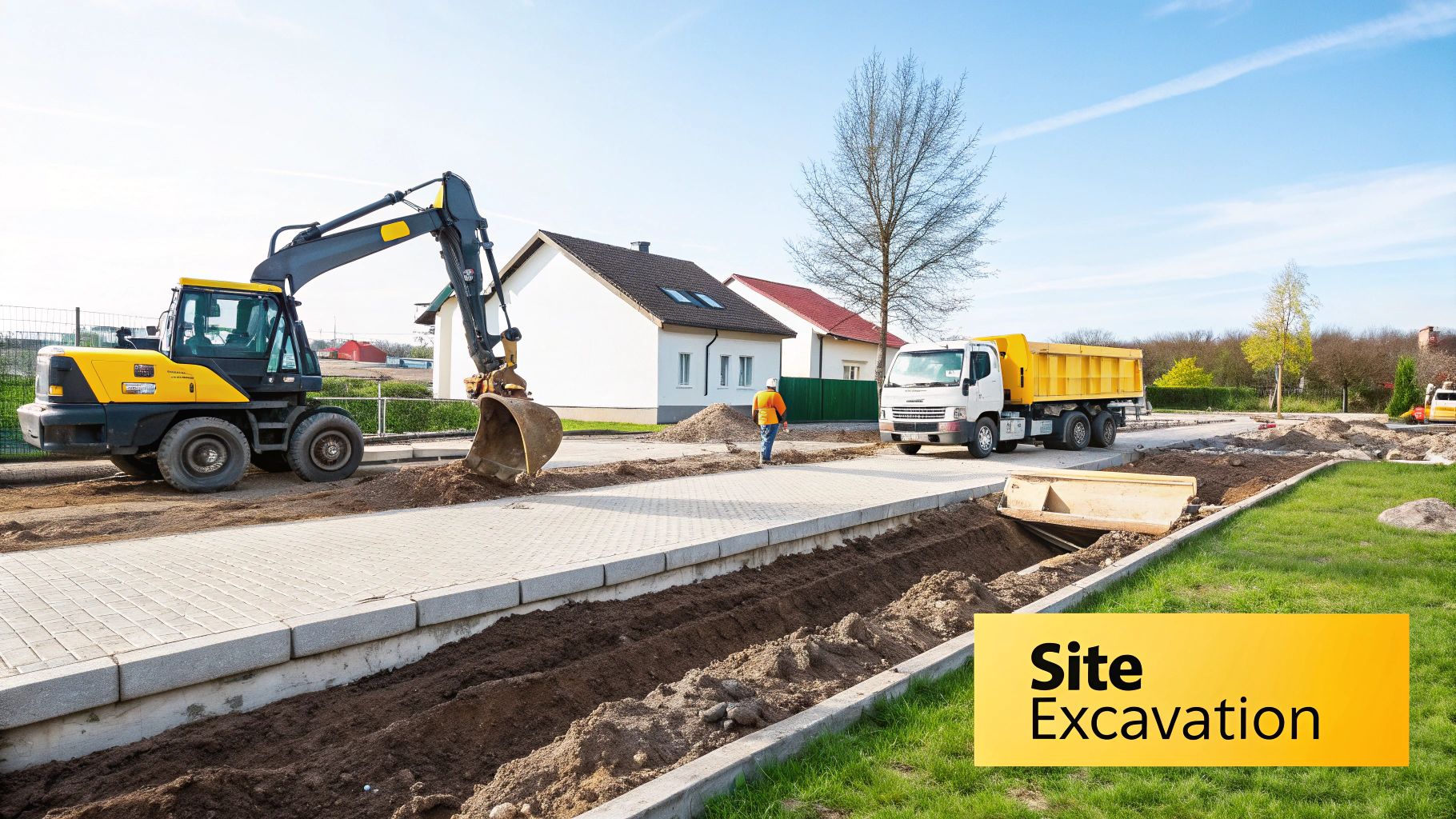
Building a new home, adding a granny flat, or putting on an extension is probably the number one reason for large-scale soil removal. Imagine digging the foundations for a new home on a sloping block in the Hunter Valley or a granny flat in a tight Hornsby backyard. The excavation for the slab and footings alone can easily churn out dozens, sometimes hundreds, of cubic metres of soil.
Trying to stockpile that much material on-site just isn't practical. It gets in the way of other trades, messes with your site's drainage, and can even get you in trouble with the local council.
Swimming Pool Installations
A new swimming pool is a classic Aussie backyard dream, but it starts with digging a very big hole. Even a standard 8×4 metre pool can generate 30 to 50 cubic metres of excess soil. On the smaller blocks you often find in suburbs like Gosford or Terrigal, there’s simply nowhere to put it.
Trust us, trying to move that much soil yourself without the right machinery is a monumental task that will eat up your time and energy.
Landscaping and Site Levelling
Turning a sloped, uneven yard into a beautiful, functional space often involves a 'cut and fill' process. You cut into the high spots and use that soil to fill the low spots. The problem is, you almost always end up with a surplus that needs to be hauled away.
This is especially true for big landscaping changes that kick off with clearing the land. For DIYers tackling these jobs, knowing your disposal options, like using residential dumpster rental services, can be a lifesaver. Leaving huge piles of dirt on your property will kill the grass underneath and turn into a muddy quagmire the first time it rains.
How Soil Type Affects Your Removal Project and Costs
When you’re staring at a pile of dirt on your property, it’s easy to think it’s all the same stuff. But from where we stand, the type of soil you have is one of the biggest variables in a removal project. It dictates everything—from the machinery we bring to the site to the final number on your quote.
Honestly, understanding what’s under your feet is the first real step in planning an excavation that doesn’t blow the budget.
The physical nature of the soil completely changes how we approach the job. Sandy soils, for instance, are light and a breeze to dig. The catch? They have a high "bulking factor," which means a small pile on the ground fluffs up and takes up way more space in the truck.
On the other end of the spectrum is heavy clay. It's dense, stubborn, and a nightmare to handle after a bit of rain. It turns into a sticky, heavy mess that seriously puts our equipment to the test.
Let's say you're building on a coastal block in Terrigal. The sandy soil there is a totally different beast compared to digging out heavy clay inland around Cessnock. The sand might mean more truckloads because of its sheer volume, while the clay demands more powerful machinery and a careful eye on the weather forecast.
Clean Fill vs. Contaminated Soil
Beyond texture, the most critical factor is the soil’s official classification. In New South Wales, every bit of earth is categorised based on its purity, and this has massive implications for disposal costs and legal compliance. Getting this wrong simply isn't an option.
The best-case scenario is what we call Virgin Excavated Natural Material (VENM), or more commonly, 'clean fill'. This is soil that’s completely untouched by industrial processes, building waste, or chemical contamination. It’s the kind of dirt you’d expect to find on a pristine rural block. Because it’s clean, it can often be recycled or reused on other sites, making it the cheapest and easiest to dispose of.
The Challenge of Contaminated Materials
Things get complicated—and more expensive—when we hit contaminated soil. This isn't just about glowing green waste; it can be as simple as soil mixed with building debris like old concrete and bricks. More serious issues include asbestos, chemicals, or heavy metals from a property's past industrial life.
When a project involves digging deep, like the detailed work required for footings excavation, uncovering any potential contaminants early is absolutely vital.
You can't just take contaminated soil to the local tip. It requires special handling, transport, and disposal at a licensed facility, all governed by strict NSW EPA regulations. This process often involves sending samples to a lab to identify the specific contaminants and determine the correct—and legal—disposal method. Unsurprisingly, this adds significant cost and complexity to the job.
Across Australia, responsible soil management is a major focus, especially with the strict regulations in NSW. Proper handling isn't just about compliance; it's about protecting community health and our local ecosystems from potential harm.
To give you an idea of what we're looking for, here's a quick breakdown of common soil types in NSW and what they mean for a removal project.
Common Soil Types and Disposal Considerations
| Soil Classification | Description | Typical Removal Process | Cost Impact |
|---|---|---|---|
| VENM / Clean Fill | Virgin Excavated Natural Material. Free of any man-made waste or contaminants. | Straightforward excavation and transport. Can be reused or recycled at many facilities. | Low – The cheapest and easiest to dispose of. |
| ENM | Excavated Natural Material. Has been excavated but is still clean. Requires specific testing and certification to be reused. | Requires assessment and certification under an EPA resource recovery order before reuse. | Low to Medium – Slightly more admin than VENM, but still very manageable. |
| GSW | General Solid Waste (Non-Putrescible). Soil mixed with common building waste like bricks, concrete, timber, or plastic. | Must be transported to a licensed landfill that accepts this waste class. Cannot be recycled. | Medium to High – Tipping fees are significantly higher than for clean fill. |
| Restricted Solid Waste | Contains contaminants like asbestos fragments (non-friable) or certain heavy metals at low concentrations. | Requires special permits, licensed transport, and disposal only at specific, highly-regulated facilities. | High – Very expensive due to strict handling and disposal protocols. |
| Hazardous Waste | Soil with high concentrations of dangerous contaminants like friable asbestos, lead, pesticides, or industrial chemicals. | The most complex. Requires EPA consignment authorisation, licensed hazardous waste transport, and disposal at a specialised facility. | Very High – The most expensive category, with costs escalating rapidly. |
As you can see, knowing what you're dealing with from the start is crucial for keeping your project on track and on budget.
Why a Professional Assessment Is Crucial
This is precisely why a professional site assessment is non-negotiable before we start moving any soil. We can visually inspect the ground, identify potential red flags, and get a good idea of the likely classification. This allows us to map out the right excavation strategy from day one and give you an accurate quote that accounts for the correct disposal method.
Getting it right from the start ensures your project stays on schedule, on budget, and fully compliant with all environmental laws.
From Site Assessment to Final Disposal: How Soil Removal Works
So, what actually happens when you hire a professional for soil removal? It’s a lot more than just digging a hole and driving away. We want to pull back the curtain on the process so you know exactly what to expect when working with us on the Central Coast, in Sydney, or across the Hunter Valley.
It all kicks off with a detailed site assessment. This is where one of our team comes to your property to get a real feel for the job. We’re not just measuring the area to calculate the soil volume; we’re also figuring out the best and safest way to get our machinery in and out. Every site has its own quirks, and this initial visit is crucial for a smooth operation.
The Stages of Haulage and Disposal
Once we have a solid plan, the real work begins with the excavation. We'll bring in the right-sized excavator for your site—maybe it's a tight-access machine for a tricky residential block in Kariong or a larger beast for an open commercial site. The goal is always efficiency.
As the soil comes out of the ground, it's loaded directly into our tipper trucks. We coordinate this part of the job carefully to avoid double-handling the material, which keeps the project on schedule and on budget. From there, the soil is transported to a fully licensed and approved disposal facility. This isn't just best practice; it's a critical step for legal and environmental compliance.
The first step in disposal is easily the most important: correctly classifying the soil.
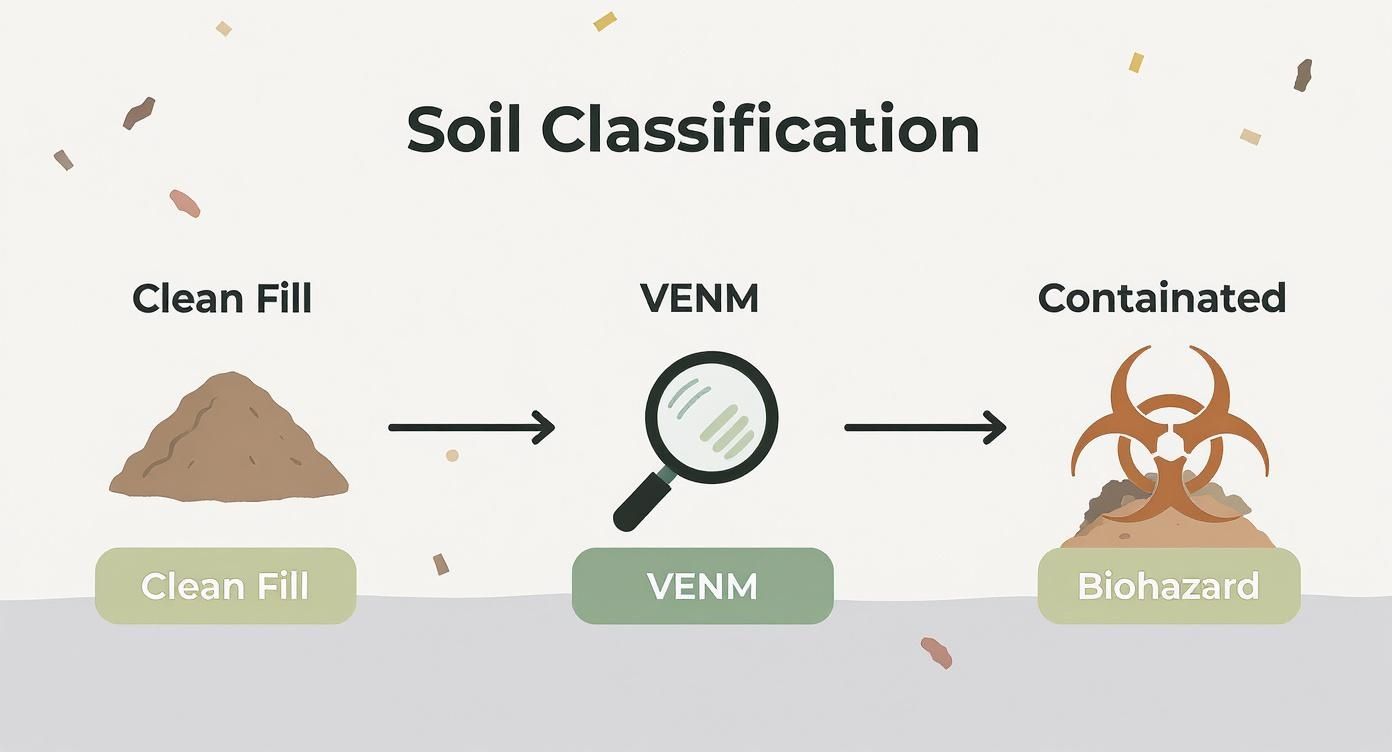
As you can see, figuring out whether your soil is clean, VENM, or potentially contaminated sets the entire path for disposal. It has a massive impact on both the cost and the timeline of the project.
Nailing the Environmental and Safety Rules
The final stage—disposal—is governed by some pretty strict regulations. Clean fill can often be recycled or reused, which is always the best outcome for both your wallet and the environment. But if there are any contaminants present, that soil has to go to a facility specifically licensed by the NSW EPA to handle it.
We take care of all the transport dockets and follow SafeWork NSW guidelines to the letter, ensuring every single load is tracked and disposed of correctly. This isn't just about us doing our job; it's about protecting you from any potential liability and guaranteeing the work is done right. For a deeper dive into the specifics, check out our guide on how to dispose of soil.
Key Factors That Determine Your Soil Removal Costs
When you start searching for "soil removal near me," the first question that pops into your head is almost always, "So, what's this actually going to cost me?"
It's the million-dollar question. While we can't give you a flat rate without laying eyes on your site, we can pull back the curtain on exactly what goes into building your quote. Understanding these moving parts gives you a much clearer picture of the investment involved and helps you spot a quality quote from a questionable one.
The final price isn't just one number plucked from the air; it's a careful calculation based on several key variables. Every project has its own unique challenges, and a professional quote will always reflect the specific labour, machinery, and disposal requirements needed to get the job done right.
The Big Three Cost Drivers
There are three main elements that will have the biggest impact on your final soil removal bill. Get your head around these, and you'll understand how different quotes are structured and why prices can vary so much between contractors.
-
Amount of Soil (in Cubic Metres): This one’s the most straightforward. The more dirt you need gone, the more it’s going to cost. We measure everything in cubic metres (m³), and this number directly dictates how many truckloads are needed and, crucially, how much time the job will take. A small backyard landscaping job might only create 10m³ of spoil, but a foundation dig for a new home could easily generate over 100m³.
-
Soil Type and Classification: As we've covered, not all dirt is created equal. Clean fill is always the cheapest and easiest to dispose of. But the moment that soil gets mixed with building waste (GSW) or, even worse, contaminated materials, the cost starts climbing. The significantly higher disposal fees and stricter handling protocols for contaminated soil can dramatically inflate the total project cost.
-
Site Access and Location: This is a huge one. How easily can we get our machinery to the soil and our trucks to the road? A flat, open block in the Hunter Valley with wide street access is a completely different beast to a steep, narrow site tucked away in a dense Sydney suburb. Tight access often means we have to bring in smaller, more specialised machinery, which can increase the time and labour needed. For a deeper dive on this, our guide to excavator hire on the Central Coast explains how the right machine choice is critical.
The bottom line is that accessibility directly impacts efficiency. The more time it takes our team to load and haul each cubic metre of soil, the more labour is involved, and that will be reflected in the final quote.
Other Important Cost Considerations
Beyond those main three, a few other logistical details play a role in shaping the final price. Think of these as the fine-tuning elements of your quote.
The distance from your property to the nearest licensed disposal or recycling facility is a key one. Longer travel times mean higher fuel costs and more hours spent on the road for our drivers and trucks. This naturally affects the haulage component of your quote.
Finally, the sheer complexity of the dig matters. Carefully excavating around existing services like water pipes and electrical cables requires a far more delicate and time-consuming approach than a simple bulk dig on a clear, open site. We factor in this level of detail to make sure the job is done safely and without causing any expensive damage.
Navigating Council Compliance and Environmental Rules
Moving soil off your property isn't just about digging a hole and calling a truck. It's a heavily regulated activity with some serious legal and environmental strings attached. Honestly, getting this part wrong is one of the quickest ways to attract hefty fines and grind your project to a halt, so it's something we take very seriously. You can't just dump excess soil anywhere, and local councils are rightly strict about how it's all managed.
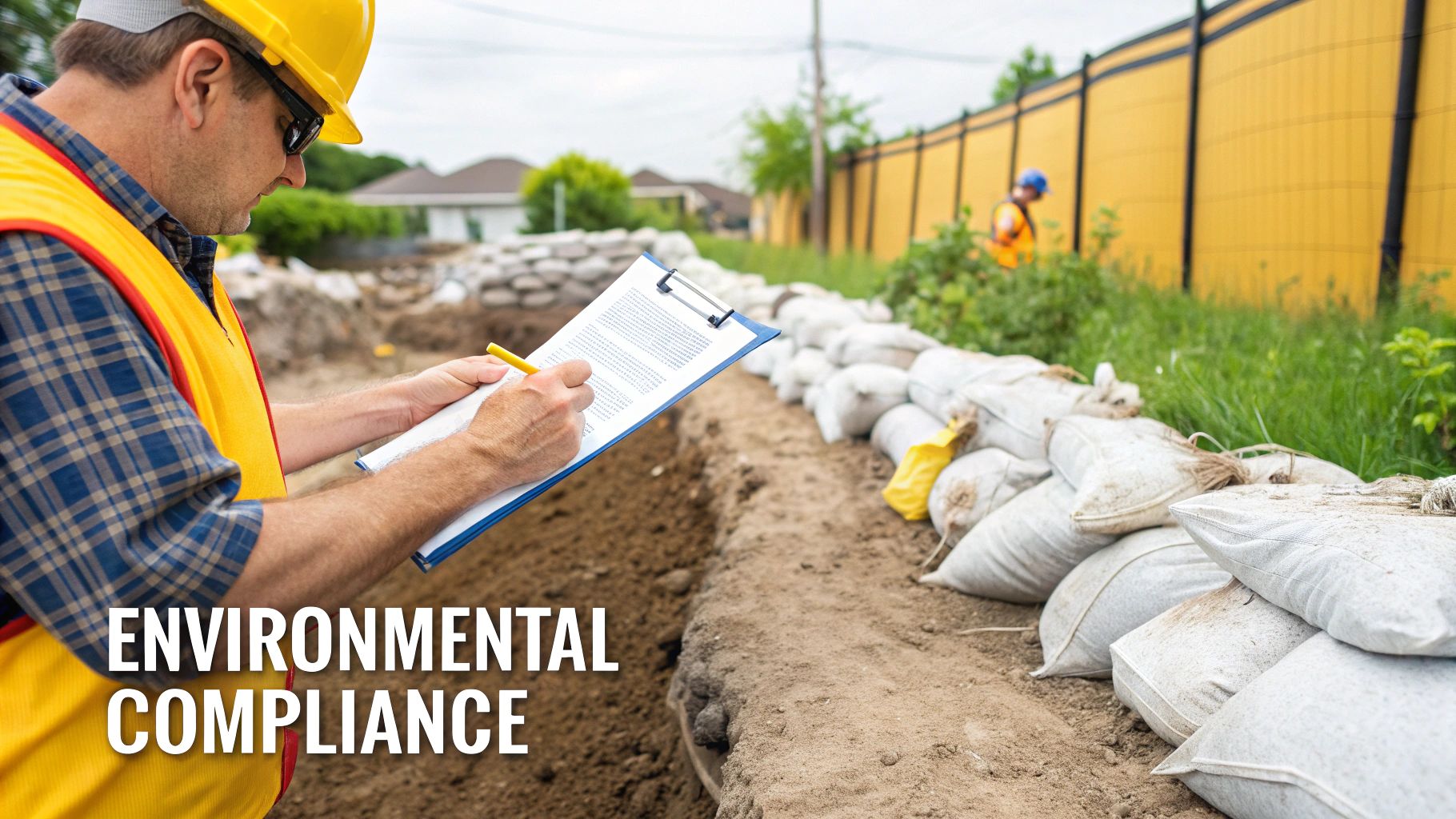
Whether your site falls under Central Coast Council, City of Newcastle, or another local authority, there are specific rules about how you manage it. These aren't just bureaucratic hurdles; they're in place to prevent real environmental damage, like sediment-filled water running off your site and polluting local treasures like Brisbane Water or the Hunter River.
That’s precisely why a crucial part of any professional job is setting up proper erosion and sediment controls before the first bucket of dirt is even moved. Think of it as putting up the safety barriers to protect both your property and the surrounding environment.
Local Rules and State-Level Oversight
Local councils are the ones who set the rules for what happens on your block, but state bodies like the NSW Environment Protection Authority (EPA) are looking at the bigger picture. They’re the authority on waste classification and disposal, defining what’s considered ‘clean fill’ versus ‘contaminated waste’ and dictating exactly where each type of material can legally end up.
Understanding how these regulations overlap is key. For example, you might need a specific council approval for your earthworks, especially if they're near a waterway or involve major changes to the landform. With over 15 years of experience working across the Central Coast and Sydney, our team knows how to navigate these requirements to ensure every job is fully compliant from day one.
This focus on compliance goes beyond just soil. When you're undertaking major earthworks, you can sometimes uncover hazardous materials. It's vital to know the rules and procedures for things like professional asbestos removal and abatement services to keep your project safe and fully compliant.
Our Commitment to Doing It Right
For us, compliance isn't just about ticking boxes on a form. It's about protecting you, the community, and the local environment we all share.
We make sure every single load of soil is tracked with the right paperwork and taken to a licensed facility. We push to recycle clean fill whenever possible and have strict protocols for handling and disposing of any other materials we encounter.
This meticulous approach is essential for any earthmoving project, including those that involve structural elements. To get a better handle on the rules that might affect your site, have a read of our detailed guide on the latest retaining wall regulations in NSW. It all comes down to one simple principle: get the job done right the first time, ensuring your project is safe, legal, and sustainable.
Finding Local Services: What to Ask
We get asked a lot about the nuts and bolts of soil removal. After more than 15 years on sites all over Sydney, the Central Coast, and Newcastle, we've pretty much heard it all. So, here are some straight answers to the questions that pop up most often, giving you the practical info you need to plan your project with confidence.
Can I Just Remove the Soil Myself to Save a Few Bucks?
Look, it's tempting, especially for what seems like a small job. But DIY soil removal is one of those things that can get deceptively expensive and complicated, fast. You’ve got to hire the right equipment, find a suitable truck, and then pay disposal fees at a licensed facility – it all adds up surprisingly quickly.
Honestly, for anything more than a couple of trailer loads, the sheer physical effort, the time it eats up, and the risk of damaging your property usually make hiring a professional the more cost-effective option. We bring in the right machinery to get it done efficiently, we're fully insured to protect you from liability, and we can do in hours what might take you a whole weekend.
How Do You Figure Out Exactly How Much Soil Needs to Go?
It all starts with a simple formula: Length x Width x Depth. This gives us the volume in cubic metres (m³). But that’s only half the story. The real expertise comes in accounting for the 'bulking factor'.
When soil is dug up, it loosens and expands, taking up way more space in a truck than it did in the ground. Depending on the soil type, it can expand by 20% to 40%. An experienced estimator always factors this in. It's how we make sure the right number of trucks are booked, saving you from the headache of unexpected costs or delays on the day.
What Happens If You Find Asbestos in the Soil?
Simple: safety is non-negotiable. If we even suspect we've found contaminated material like asbestos fragments, all work in that area stops immediately. There are absolutely no shortcuts when it comes to hazardous materials.
We follow strict SafeWork NSW protocols, securing the area to prevent any disturbance. We’ll then walk you through the necessary next steps, which always involves bringing in a licensed asbestos assessor for testing and a specialised removalist to handle the material.
That contaminated soil must be taken to a landfill facility specifically licensed to accept it. We can help manage this entire process to ensure full compliance and, most importantly, the safety of everyone on and near the site.
How Long Does a Typical Soil Removal Job Take?
The timeline really boils down to two things: how much soil we're moving and what the site access is like. Every project is unique, which is why a proper site inspection is so crucial for giving you a realistic schedule.
A straightforward job, say removing 30-40 cubic metres from an open block in Wyong with easy truck access, might be done and dusted in a single day. On the other hand, a larger project with over 100 cubic metres, tight access that forces us to use smaller machinery, or hitting unexpected sandstone could easily stretch over several days. We always provide a clear, realistic timeline in our quote so you know exactly what to expect before we even start the engine.
Ready to get that mountain of soil out of your way and keep your project moving? The team at Booms Up Civil Group is here to help with professional, compliant, and efficient soil removal services across the Central Coast, Sydney, and the Hunter Valley.
Contact us today for a free, no-obligation quote and site assessment.