

You've probably landed here because you need fill for a real job, not because you're curious about dirt. Maybe you're levelling a backyard in Kariong, building up a garden edge in Newcastle, or trying to prep a driveway area on a sloping block near Terrigal. The search is usually the same. Free dirt near me.
The catch is simple. Free dirt can save money, but it can also create a bigger problem than the one you started with. If the material is poor quality, too wet, full of rubble, or not suitable for your site, you'll still pay in labour, haulage, rehandling, and sometimes clean-up.
There is a reason free fill shows up so often in NSW. The state produces a huge amount of excavated material from subdivisions, transport jobs, site cuts, and infrastructure work. The NSW EPA reported that New South Wales generated about 21.7 million tonnes of waste classified as excavation material in 2021–22, making it one of the largest waste streams in the state, as noted in this summary on excavation material volumes in NSW. That volume is why homeowners, outdoor contractors, and owner-builders can sometimes pick up clean fill for no purchase price.
That doesn't mean every load is worth taking.
Introduction
If you're looking for free dirt near me, start with the right mindset. You're not really shopping for “free”. You're trying to find usable fill that suits your project, arrives safely, and won't create a compliance headache later.
On the Central Coast, that matters more than people think. A sandy block in Copacabana behaves differently from a tighter inland site around Wyoming or Narara. Material that's fine for building up a garden mound might be useless under a slab or behind a retaining wall. The same load can be a bargain for one job and a costly mistake for another.
Why free dirt is available in the first place
A lot of fill comes from jobs where someone else needs to get rid of spoil quickly. Pool excavations, footing digs, site cuts, drainage trenches, and new builds all produce excess material. On bigger civil and commercial jobs, soil removal is part of keeping the programme moving. If a contractor can offload suitable material to a nearby site, that often works better than sending it away.
Practical rule: The best free fill usually comes from a known source with a clear reason for disposal, not from a vague listing that says “dirt available, must take today”.
What actually matters to a homeowner
Before you accept a single load, pin down three things:
- Project use: Are you filling a low patch, shaping a yard, backing a wall, or preparing for structural work?
- Access: Can a tipper get in without damaging the driveway, turf, fence, or crossover?
- Risk level: If the material turns out to be wrong, can you live with it, or will you need to remove and replace it?
For garden reshaping, you might have more flexibility. For any work affecting drainage, finished levels, retaining, paving, or a future slab, you need to be much stricter.
Where to Find Free Fill Across Sydney and the Central Coast
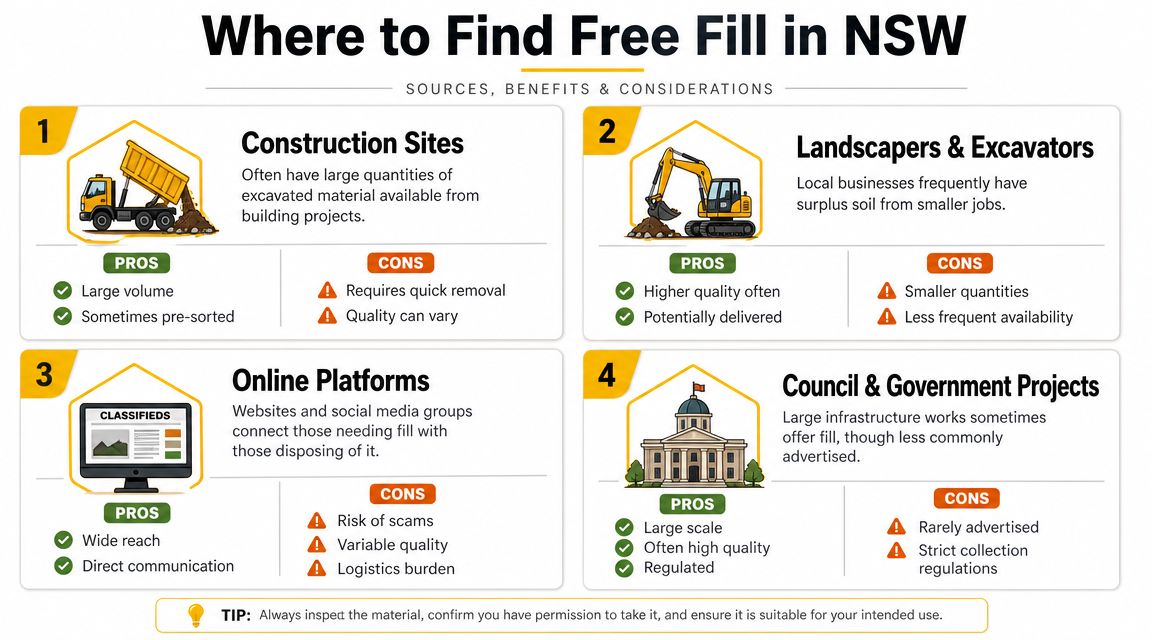
Free fill is out there, but the good stuff rarely falls into your lap. You usually find it through local networks, timing, and being ready to take it when it becomes available.
Australia's construction activity is a big reason these opportunities keep appearing. The Australian Bureau of Statistics reported that the total value of construction work done in Australia reached $152.1 billion in 2023–24, with residential, non-residential, and engineering work all feeding earthworks activity. A practical summary of that trend is covered in this guide on construction activity and free fill availability. In plain terms, spoil is constantly moving through contractor networks.
Small residential digs
For many homeowners, the easiest source is a nearby residential excavation. Think pool digs in Kincumber, site cuts in Saratoga, or footing work in a new estate near Warnervale. These jobs can be a good match when you only need a modest amount and the source is close.
The upside is convenience. The downside is inconsistency. One backyard dig may produce clean sandy material. The next may produce mixed clay, roots, broken brick, and wet spoil.
A quick chat with the excavator operator usually tells you a lot. Ask where on the block the material came from and whether it's straight excavation or mixed with demolition debris.
Landscapers, excavators and local haulage operators
This is often the most practical path. Smaller contractors regularly know where surplus fill is coming off a job, and they also know whether it's worth moving. That local knowledge matters more than most online ads.
If you're trying to source fill sensibly, it's also worth reading about rock and dirt recycling on the Central Coast. It helps you understand why some material gets reused, why some doesn't, and why separation at source makes such a difference.
Online classifieds and local groups
Gumtree, Facebook Marketplace, and community groups can work, but you need to treat every listing with caution. The best listings usually mention the source clearly, describe the material accurately, and explain who loads and who hauls.
The worst ones are vague, rushed, or written by someone who doesn't know what's in the pile.
If the ad can't tell you where the dirt came from, don't assume it's clean enough for your block.
Builders and larger developments
On bigger jobs around Western Sydney, Newcastle growth areas, or the Hunter, there may be larger volumes available. That sounds attractive until logistics get involved. Large sites often need fast turnaround, formal induction, strict pickup windows, and suitable trucks.
For a homeowner with a trailer, that usually isn't realistic. For an owner-builder with organised haulage and room to receive material, it can work well if the source is suitable and documented.
Council and government works
Sometimes fill is associated with public works or infrastructure activity, but access is usually more controlled. You won't often see these opportunities advertised in a simple way, and there may be stricter rules around collection, transport, and reuse.
If you're checking local activity, pay attention to works that may affect your suburb and drainage conditions. On the Central Coast, level changes and runoff matter a lot, especially on sloping blocks and near sensitive bushland edges.
How to Assess Soil Quality and Avoid Contamination
Most free dirt mistakes occur at this point. People ask, “Is it clean?” and accept whatever answer comes back. That's not enough.
In NSW, clean fill and excavated natural material sit inside a regulated framework, and whether material is suitable depends on contamination risk, traceability, and intended use. That practical point is explained well in this article on contamination, traceability and usable fill in Australia.
What to look for on the pile
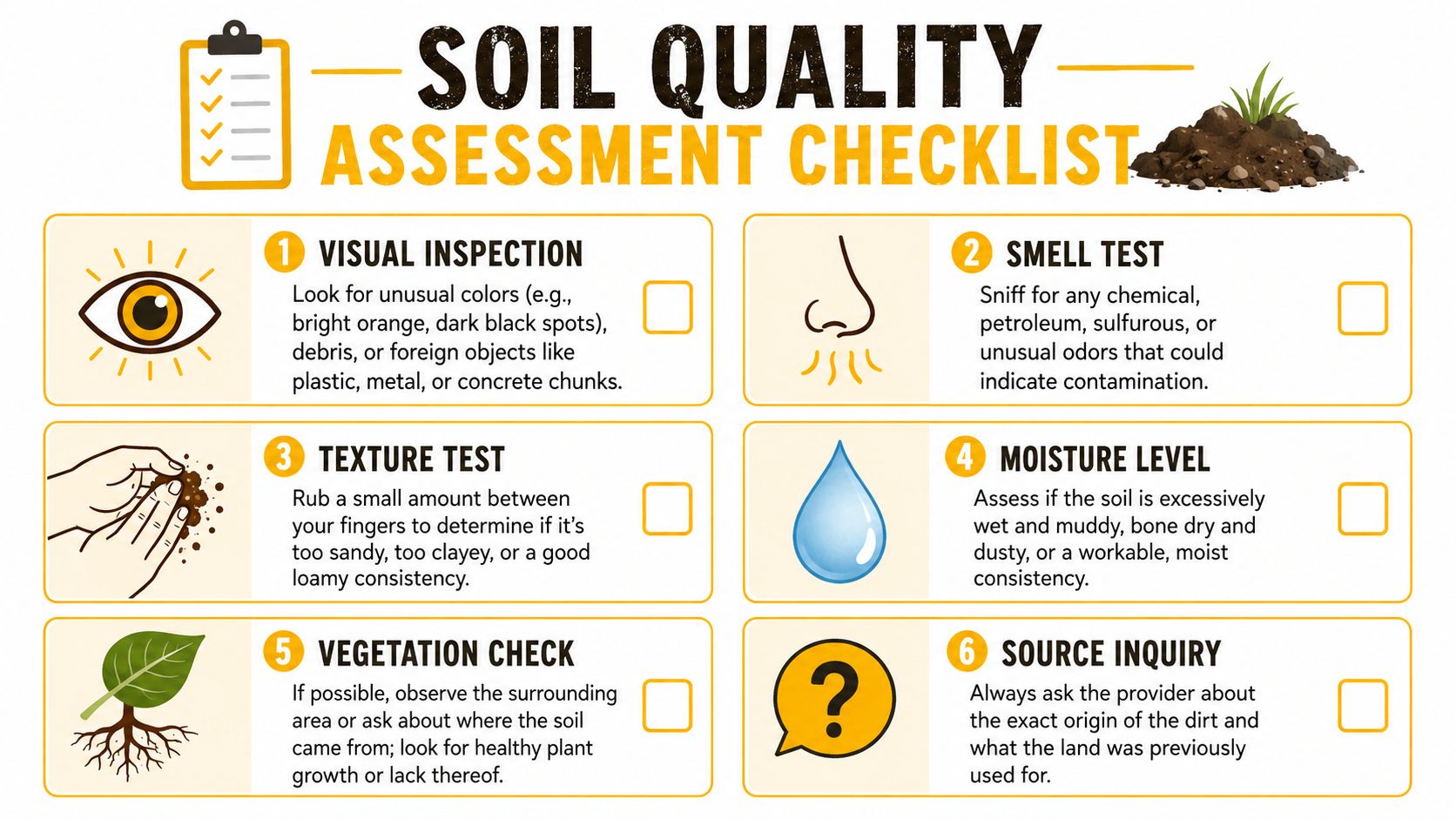
Start with your eyes. If you can inspect the material before delivery, do it. You're looking for consistency, not perfection.
Watch for these red flags:
- Foreign material: Plastic, brick fragments, concrete, glass, metal, timber, cable, gyprock, or general rubbish.
- Odd colour patches: Unusual staining, black pockets, bright orange zones, ash, or mixed layers that don't belong together.
- Organic content: Roots, turf, mulch, leaves, or dark topsoil mixed through what's supposed to be fill.
- Excess water: If it's sloppy and sticking to everything, it will be harder to place and compact.
For structural use, random mixed material is a warning sign. It won't behave consistently once spread and compacted.
Use your nose and your hands
A simple smell test tells you more than people expect. Soil shouldn't smell chemical, oily, or strange. If it has a petroleum smell or anything sour and unnatural, walk away.
Rub a sample through your fingers. If it's all organics and soft loam, it may be fine for garden shaping but not for building up under paving or hardstand. If it's heavy clay, it may hold moisture and become difficult to work, especially after rain.
Ask source questions that actually matter
Don't just ask whether it's clean. Ask where it came from and what was happening on that site.
Useful questions include:
- Was it from a pool dig, footing trench, service trench, or site cut?
- Was the source block residential, industrial, rural, or previously developed?
- Has anything been mixed into it during loading or stockpiling?
- Is it suitable for garden fill only, or was it being considered for general engineered fill?
The answers won't replace proper testing where needed, but they'll help you decide whether the load is worth pursuing.
A load with a clear origin is always safer than a load with a cheap story.
Know when to stop and get advice
If you see sheeting fragments, fibrous cement-like pieces, or suspicious building debris, don't poke around and hope for the best. Material from older sites can present asbestos risks, and homeowners often miss the visual cues. This guide on how to identify asbestos sheeting is worth reviewing before you accept fill from any uncertain source.
For a garden bed, poor-quality dirt is annoying. Under a driveway, slab edge, or retaining wall zone, it can become a much bigger problem.
Arranging Haulage and Preparing Your Site
Finding the fill is one job. Getting it onto your property safely is another.
A typical day goes like this. You get a call from a site foreman in Gosford or a machine operator finishing a backyard dig in Woy Woy. They've got material ready, but they need it gone that day or the next morning. That sounds simple until you realise you still need a truck, a clear unloading area, and a plan for where the pile will sit.
DIY pickup versus organised delivery
If you only need a small amount, a trailer can work. Even then, you need to think about legal load limits, tie-downs, spillage, and whether your vehicle can safely tow the weight. Dirt gets heavy very quickly, especially if it's damp.
For anything beyond a small landscaping quantity, a tipper is usually the better option. You'll save time, reduce repeat handling, and avoid the usual backyard bottleneck of loading by hand, driving back and forth, then barrowing it all again.
If delivery matters more than hunting around, local Central Coast haulage services can make the whole exercise more predictable. That's especially useful on tight access sites where one bad truck movement can crack a driveway edge or flatten a drainage grate.
Prepare the drop zone before the truck arrives
This part gets overlooked all the time. Don't wait until the truck is at the gate to decide where the load should go.
Check these basics first:
- Access width: Gates, side access, fences, and parked cars all matter.
- Ground condition: Wet grass, soft soil, and steep entries can stop a loaded truck fast.
- Overhead clearance: Trees, power lines, awnings, and carports need to be accounted for.
- Protection: If you're worried about a driveway or finished surface, sort out protection before delivery day.
A narrow block in Umina or an older property in East Gosford often has less room than the owner thinks. A truck needs turning room, tipping space, and a stable surface.
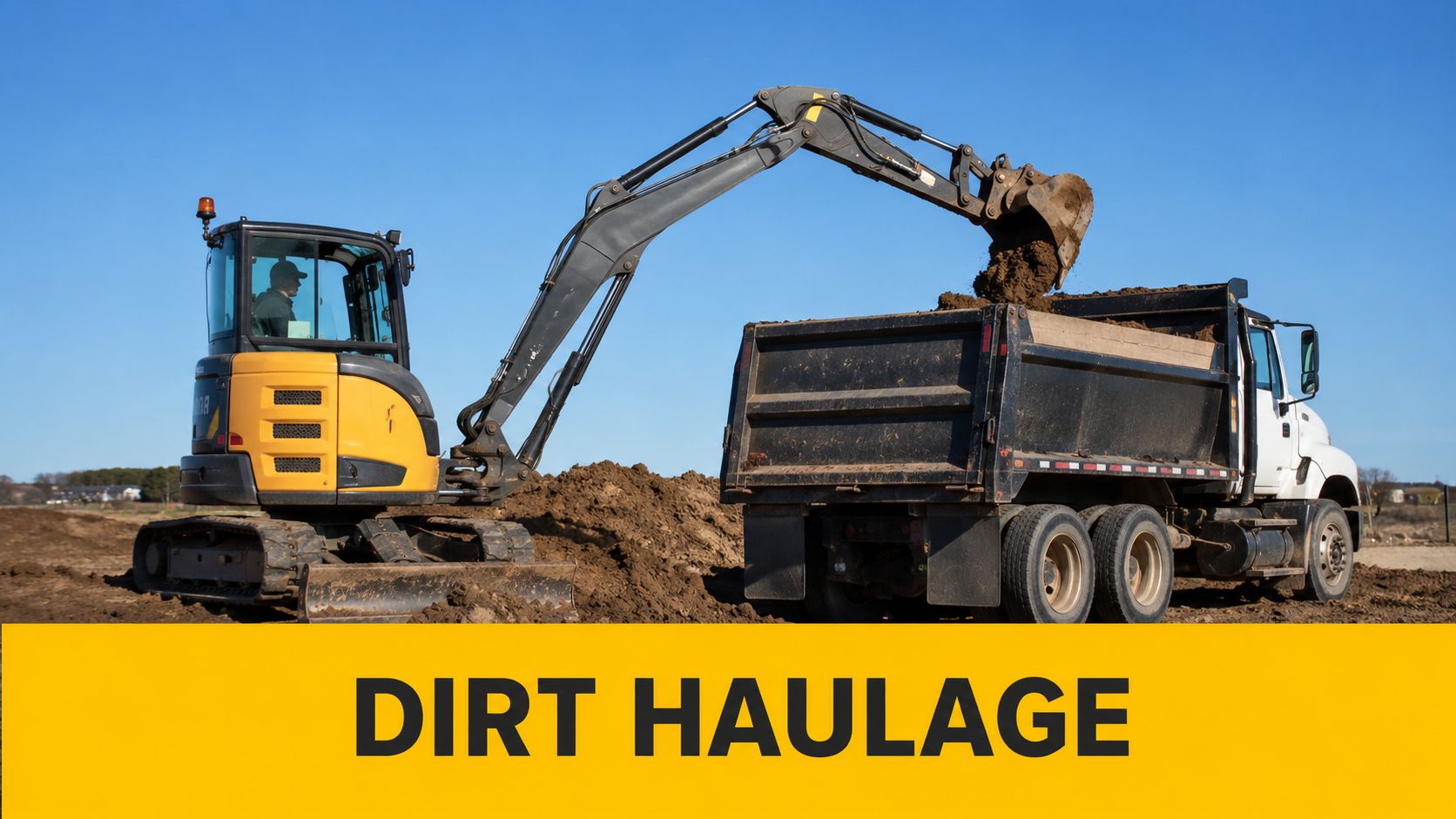
Here's a useful visual if you're trying to picture how site access and machine movement affect delivery planning.
Timing matters
If the source site is trying to keep machines moving, delays cost everyone. Be ready before pickup is booked. If rain is coming through the Central Coast or Newcastle, expect wet spoil, messy access, and slower unloading.
That's often the difference between a free load that helps and a free load that turns into a weekend of mud management.
Understanding Legal and Council Requirements in NSW
Placing fill on private land isn't always just a matter of tipping it and spreading it out. Councils care because fill changes levels, drainage paths, stability, and sometimes bushfire or environmental conditions.
Why councils pay attention
Let's say you're building up a backyard in a Central Coast suburb within the 2250 to 2264 area. If that fill alters surface water flow onto a neighbour, changes the way a retaining wall needs to perform, or affects an approved building pad, the issue stops being “just dirt” very quickly.
The same applies in places like the Northern Beaches, where steep sites and runoff control can be sensitive. Bushfire prone land, flood-prone land, and constrained sites usually come with closer scrutiny.
What you need to check before importing fill
The main questions are practical:
- Will the new fill change finished ground levels in a meaningful way?
- Will it affect stormwater movement, neighbouring land, or existing structures?
- Does the material need records showing where it came from and what it is?
- Is the fill supporting something structural, such as a driveway, wall, slab, or access track?
If the answer to any of those is yes, don't rely on a verbal okay from a truck driver or a seller online. Check with the relevant council and, if needed, your certifier, engineer, or contractor.
For retaining-related work, this overview of Retaining Wall Supplies legal advice is a useful starting point because it explains how approvals and responsibilities can sit around level changes and wall construction.
Keep records and match the material to the work
If fill is going under something important, keep basic records of where it came from, when it arrived, and what it was described as. That won't solve every compliance issue, but it's far better than having no paper trail at all.
Where the project involves reshaping levels, balancing onsite material, or preparing a pad, it also helps to understand cut and fill earthworks on residential sites. Homeowners often underestimate how much a simple level change can affect drainage and retaining requirements.
The legal risk usually isn't the dirt itself. It's what that dirt changes on the block.
Paid Alternatives When Free Is Not an Option
Sometimes free dirt is a sensible pickup. Sometimes it's false economy.
The hidden cost shows up in pieces. You spend time chasing listings. Then you organise a truck. Then the load arrives too wet, too rocky, or full of rubbish, so you move it twice or reject it after the fact. If the source is uncertain, you may also need extra checks before using it confidently.
That's why the value question isn't “Is the material free?” It's “What will this load cost me by the time it's on the ground and ready to use?” A practical summary of that issue appears in this article on the true cost of free dirt in Australia, which notes that cartage, handling, and potential testing can make verified material the cheaper option on tighter jobs.
Free Dirt vs Paid Certified Fill
| Factor | Free Dirt | Paid Certified Fill |
|---|---|---|
| Material price | Often no purchase price | Paid supply cost applies |
| Source clarity | Can be unclear or inconsistent | Usually clearer and easier to verify |
| Suitability | May be fine for non-critical landscaping only | Easier to match to the job |
| Haulage | Often your responsibility | Often arranged with delivery |
| Risk of contamination | Higher if origin is vague | Lower when properly supplied and documented |
| Rehandling | More likely if the load is poor | Less likely when the spec is known |
| Timeline | Depends on someone else's job schedule | Easier to program around your works |
| Compliance confidence | Can be limited | Better for projects needing sign-off |
When paying makes more sense
Paid fill is usually the smarter call when the job involves a slab area, driveway base, retaining wall backfill, or any situation where levels and compaction matter. It also makes sense on tight-access sites where you don't get many chances to place material efficiently.
If the project needs to be done once and done properly, certainty has real value. You're not just paying for dirt. You're paying for fewer unknowns.
Your Partner for Safe Earthworks on the Central Coast
Free fill can work well for the right job. You just need to treat it like a material decision, not a bargain hunt. Source matters. Access matters. Drainage matters. Compliance matters.
That's especially true around the Central Coast, Sydney, Newcastle, and the Hunter, where site conditions change suburb by suburb. A coastal sandy block, a reactive inland yard, and a tight urban access site all need different thinking. If your project also involves retaining or structural work, this guide to core filled blockwork is a handy extra reference for understanding how fill and wall systems relate.
If you need reliable help with imported material, site levels, or Central Coast earthmoving support, get advice before the trucks start rolling. It's always cheaper to ask early than to fix a bad load later.
If you're planning a driveway, slab, retaining wall, or site prep and want practical advice before you bring fill onto your block, Booms Up Civil Group can help. We work across the Central Coast, Sydney, Newcastle, and the Hunter, and we're happy to talk through access, haulage, clean fill options, and whether free material is worth using on your job. Call or send an enquiry for a straightforward quote or some honest guidance on the safest way forward.