
That backyard pool. Once the heart of summer, it can slowly turn into a black hole for your time and money. For a growing number of homeowners, an in ground swimming pool removal is the most practical way forward, trading endless maintenance for a backyard that actually works for their lifestyle.
Why Homeowners Are Removing Their Pools
We've worked with countless homeowners across the Central Coast, Newcastle, and Sydney who've decided their pool's best days are behind it. What might have been a dream feature a decade ago often doesn't fit with changing lifestyles, kids growing up, or the simple, hard reality of what it takes to keep a pool running.
When people call us, the decision almost always boils down to a few very real, very relatable reasons.
Escaping the Maintenance and Cost Cycle
Let's be blunt: pools are demanding. One of the biggest drivers for removal is the financial drain that many people underestimate. It's not just a bit of chlorine; it's the significant annual cost of maintaining a pool that quietly chips away at your bank account, covering everything from chemicals and electricity to the pump that inevitably needs fixing at the worst possible time.
And it’s not just the money. Think about the hours spent scooping out leaves, battling with water tests, or trying to figure out what that strange noise from the filter is. Most people would much rather spend that time enjoying a low-maintenance garden or hosting a BBQ on a new deck. It’s about getting your weekends back.
You might be surprised to learn that the average annual maintenance for an in-ground pool can run into thousands of dollars. Over ten years, you could easily spend a significant amount of money just keeping it afloat, which is why so many see removal as a sensible long-term investment.
Reclaiming Valuable Land for New Projects
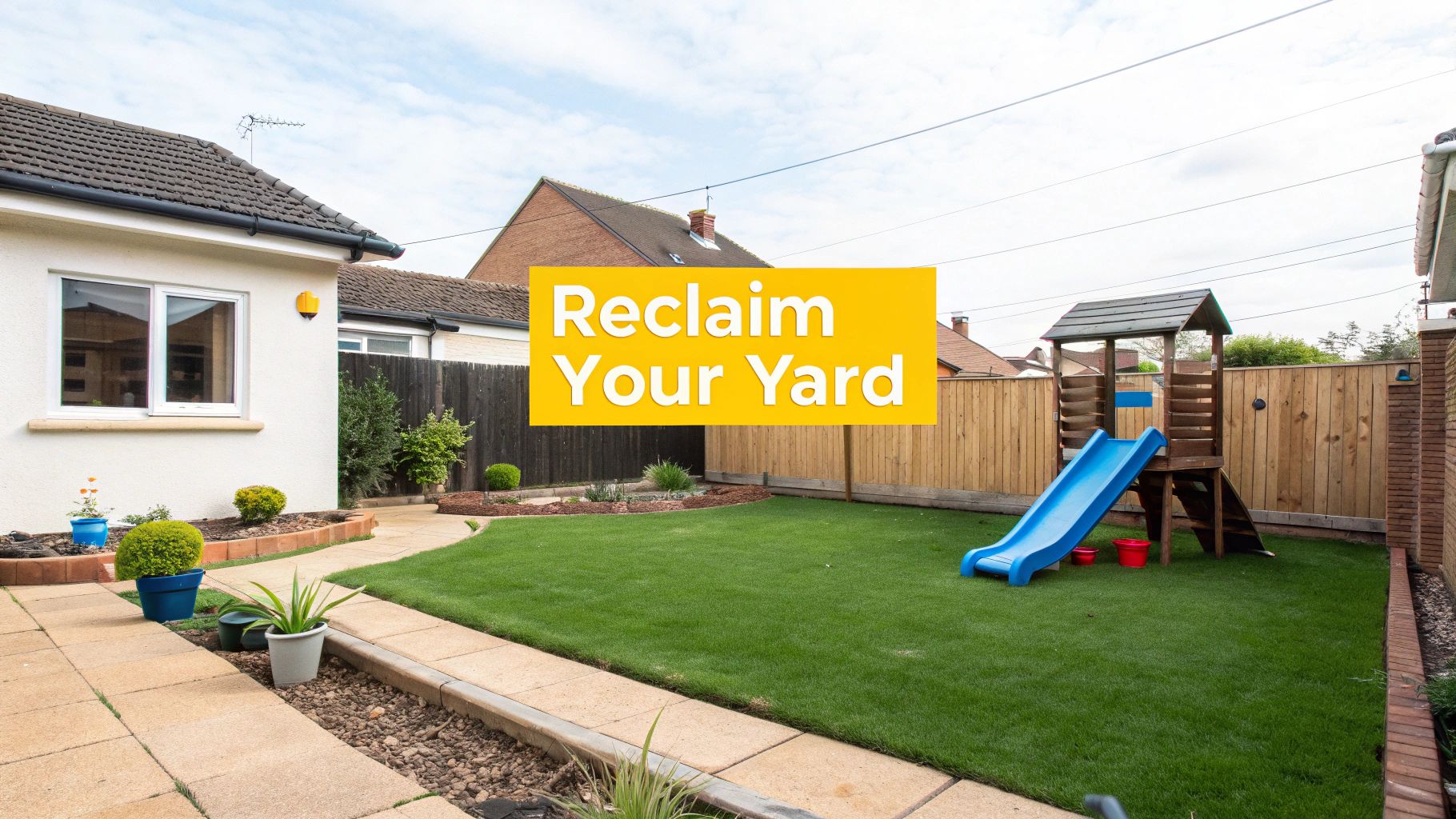
Your backyard is some of the most valuable real estate you own, and an unused pool is just a massive, water-filled hole taking up prime position. We work with clients from Newcastle to the Hunter Valley who have bigger, better plans for that space.
Here’s what people are doing with their newfound land:
- Building a granny flat: It's a hugely popular move for generating rental income or keeping family close, and the old pool footprint is often the perfect spot.
- Creating a proper entertaining area: Imagine swapping the pool for an alfresco dining space, a fire pit, or a modern, sprawling deck.
- Making space for kids and pets: A simple, open lawn gives kids a safe place to play and pets room to run, free from the constant worry a pool brings.
- Extending the house: Sometimes, the only logical direction to build out is exactly where the pool is currently sitting.
At the end of the day, an in ground swimming pool removal is about transforming a single-use feature into a blank canvas, unlocking the true potential of your property.
Full Removal vs Partial Fill-In: Choosing the Right Method
Once you've decided the pool has to go, the next big question is how. This isn't just about filling a hole in the ground; it's a major decision that will affect your property's value and what you can do with the land for years to come.
There are two main paths you can take: a partial fill-in or a full removal. Each has its place, but understanding the crucial differences is key. What seems like a straightforward choice now can lock you out of future plans, whether you’re on a tight block in a Sydney suburb or have more space to play with in the Hunter Valley.
Let's break them down so you can make the right call.
The Partial Fill-In Method Explained
A partial fill-in is often the quicker, more budget-friendly option upfront. As the name suggests, we don't take out the entire pool shell. Instead, we demolish the top section—usually about 600-800mm—of the pool's concrete walls and the surrounding bond beam.
Once that's done, we punch large drainage holes in the bottom of the remaining shell. This is a critical step to prevent water from pooling underground down the track. The broken-up concrete from the top section is then pushed into the bottom of the cavity, and the rest of the space is backfilled with clean soil, which is compacted in layers.
This method works perfectly well if your only plan is to get your yard back for a new lawn, a garden bed, or maybe a simple paved entertaining area. It gets the job done quickly and effectively for general landscaping. But it comes with one massive string attached.
Because a significant part of the old pool structure is still buried, councils like Central Coast Council or Newcastle City Council will classify the area as non-buildable. This means you can't construct any habitable dwellings or significant structures on top of it. This is the deal-breaker for many homeowners.
The Full Pool Removal Method Explained
A full removal is exactly what it sounds like. We go in and systematically demolish and excavate every last piece of the old pool. The entire concrete or fibreglass shell, the bond beam, old plumbing, steel reinforcement—everything comes out.
All of this debris is loaded onto our trucks and hauled away to a licensed recycling facility. Nothing gets left behind. With the site completely clear, we start the backfilling process. This is done using certified clean fill, brought in and compacted in engineered layers to ensure the ground is solid and stable.
This is the only method that truly returns your land to a blank canvas, as if the pool was never there. It’s the gold standard. Think about a tight block in Hornsby where every square metre counts for a potential extension—a full removal makes that reclaimed land just as stable and usable as the rest of your property.
Even on tricky sites, a full removal is usually possible. Our extensive experience with tight access excavations on the Central Coast means we have the right gear and techniques to manage the job in confined spaces.
Once the backfilling and compaction are complete, a structural engineer inspects the work and provides a certificate confirming the ground meets the required standard. We lodge this official documentation with your local council, and the land is officially reclassified as buildable, free from any restrictions. For anyone thinking about future construction, this is the only way to go.
Comparing Full Removal vs. Partial Fill-In Methods
To make the decision clearer, it helps to see the two methods side-by-side. The right choice really depends on your budget, timeline, and most importantly, your long-term plans for the property. A partial fill-in is a good option for landscaping, but a full removal is essential if you ever plan to build.
| Consideration | Full Pool Removal | Partial Pool Fill-In |
|---|---|---|
| Future Land Use | Buildable Land. Certified for any future construction (extensions, granny flats). | Non-Buildable Land. Restricted to landscaping, gardens, or light paving only. |
| Property Value | Maximises value by adding usable, unrestricted land area. | Can potentially devalue the property due to building restrictions. |
| Upfront Cost | Higher initial cost due to complete demolition and debris removal. | Lower initial cost as less demolition and material disposal is required. |
| Process | Complete demolition, all debris hauled off-site, certified engineered backfill. | Top section demolished, debris used as fill, drainage holes created, backfilled. |
| Council Certification | Engineer’s certificate provided; land is reclassified as buildable. | No certification; land is permanently classified as non-buildable. |
| Peace of Mind | No buried structure to worry about. Complete return to original state. | Buried structure remains, which must be disclosed when selling the property. |
Ultimately, while the lower upfront cost of a partial fill-in can be tempting, the limitations it imposes are permanent. A full removal is a bigger investment initially, but it’s an investment in the future flexibility and value of your home.
The Pool Removal Process From Start to Finish
Ever wondered what really goes on when an in ground swimming pool is removed? It’s far more than just filling in a hole. Think of it as a methodical civil works project, engineered from the ground up to leave your land safe, stable, and ready for whatever you have planned next.
Let’s walk through a typical job, from the moment we first step on-site to the final handover, so you know exactly what to expect.
Step 1: Draining and Demolition
Once we have all the approvals locked in, the real work begins. First up, the pool has to be completely drained, with every drop of water managed in line with local environmental regulations.
Next, it's time for demolition. For a concrete pool, this means bringing in an excavator with a powerful hydraulic hammer to systematically break up the shell. If it’s a fibreglass pool, we typically cut the shell into more manageable sections for easy lifting and removal. Every piece of debris is then sorted and loaded for transport.
Step 2: Removal of Debris
The goal here is simple: leave a clean slate. We don't just bury the problem; we remove it entirely. All the concrete, steel reinforcing, and other materials are hauled away to licensed recycling facilities. This minimises landfill and keeps the worksite responsible.
Step 3: Backfilling and Compaction
This is, without a doubt, the most important part of the entire process. It’s where "getting it right the first time" is absolutely crucial. A sloppy backfill job can lead to a sinking backyard and unstable ground for years to come.
We only ever use certified clean fill—never leftover rubble from the site. This clean soil is brought in and carefully placed into the void in layers, typically around 300mm thick. After each layer goes in, we use a compaction machine to compact the soil to a specific engineering standard. You can learn more about the precision needed in our complete guide to pool excavation, as it covers many of the same ground engineering principles.
This side-by-side graphic shows how your choice of removal method impacts what you can do with your new space.
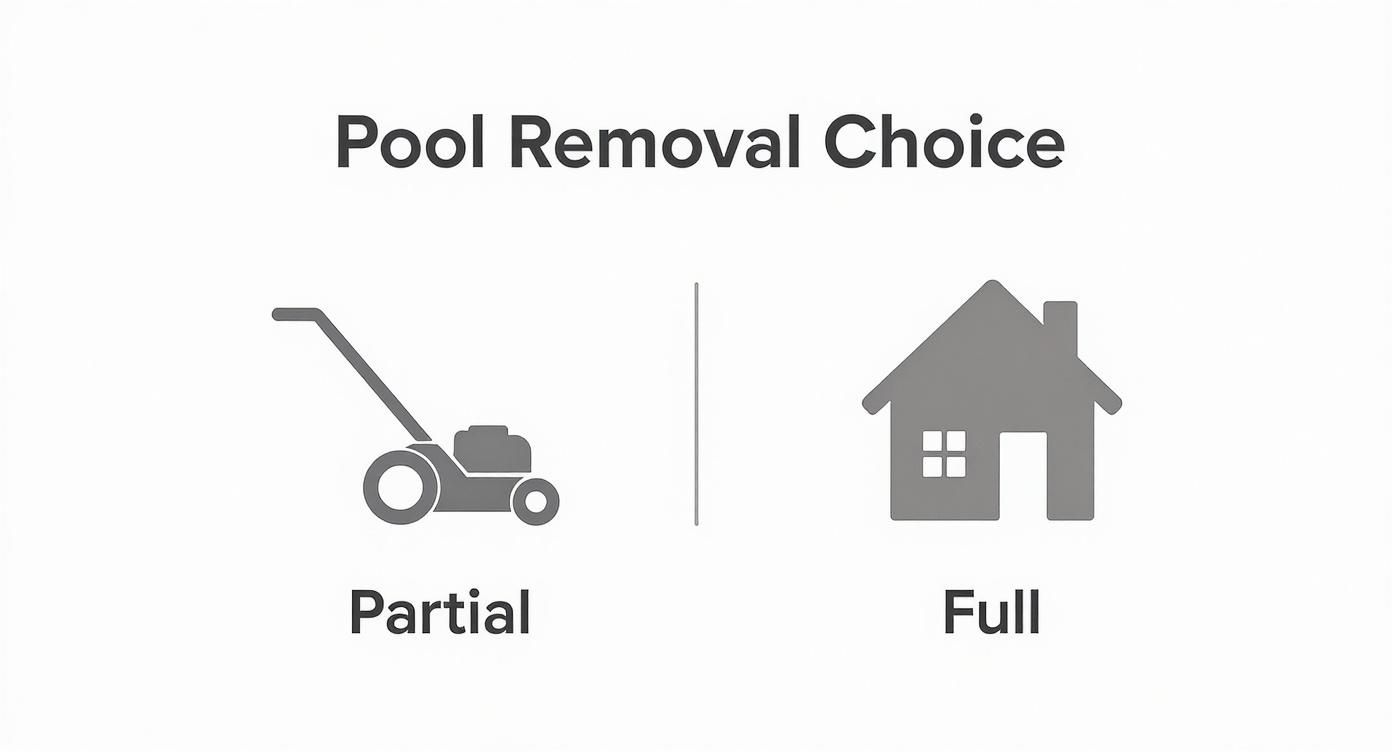
The key takeaway is clear: a full removal, represented by the house icon, is the only path that unlocks your property's future building potential.
Step 4: Final Grading and Site Restoration
The final stage is all about leaving you with a clean, functional, and ready-to-use space. We bring in a final layer of quality topsoil and grade the entire area to ensure it’s level and promotes proper water runoff, preventing any future pooling.
We take great care to clean up the site, removing any stray materials and leaving your property looking tidy. The result is a clean, level, and stable blank canvas. You’re left with a safe, usable backyard, ready for a new lawn, a garden, or the foundations of your next big project.
Getting the Paperwork Right: Council Permits and NSW Regulations
Let's be honest, dealing with council paperwork is probably the least exciting part of getting rid of your old pool. It can feel like a massive headache, but when it comes to an in ground swimming pool removal, it’s a step you simply can't afford to skip.
Across New South Wales, this kind of job almost always needs a formal thumbs-up from your local council. This isn't something you can just start digging on a weekend. Depending on your specific property and the job's scope, you'll generally need either a Development Application (DA) or a Complying Development Certificate (CDC). We take care of this entire process for you, making sure every 'i' is dotted and every 't' is crossed long before our machines roll up your driveway.
Why Council Approval Isn't Just a Box-Ticking Exercise
Getting the right approvals is about much more than just dodging a potential fine from the council. It’s about ensuring the work is done safely, professionally, and that your property remains compliant for years to come.
Councils, whether it's the Central Coast Council or Newcastle City Council, have strict guidelines in place for a reason – to protect both you and any future owners of your property.
These rules ensure the ground is left stable and won't cause nasty surprises later on. A properly documented pool removal gives you the ultimate peace of mind. You know the job was done by the book and won't suddenly become a problem when you decide to sell. Understanding these rules is a key part of any demolition and excavation project, and pools are certainly no exception.
The Engineer's Certificate: Your Golden Ticket
One thing nearly every council in NSW will insist on is a final report from a qualified structural engineer. This isn’t a friendly suggestion; it's a mandatory part of signing off the project.
Once we’ve finished the backfilling and compaction, the engineer comes in to inspect the site and issue a certificate. This crucial document officially confirms that the area has been filled and compacted to the required Australian Standards, which is typically AS 3798-2007 for Level 1 supervision. Think of it as the official proof that the ground is stable and ready for whatever you have planned next.
This engineering certificate is the single most important piece of paper in the whole process. It’s what allows us to finalise everything with your council, effectively closing out the original pool permit and wiping the pool from your property's records for good. Without it, your property records will still show a pool exists, which can create huge legal and financial headaches.
Understanding Your In-Ground Pool Removal Costs

Alright, let's talk numbers. While it's impossible to give a fixed price without seeing your property, we can definitely break down the factors that shape the final cost of an in ground swimming pool removal.
Knowing what drives the price helps you properly compare quotes and, more importantly, spot one that’s cutting dangerous corners. The final figure isn't just plucked from thin air; it’s a careful calculation based on labour, machinery, materials, and making sure everything is done by the book.
Key Factors Driving the Cost
The two biggest variables are easily the size and material of your pool. A huge, deep concrete pool from the 80s is a much bigger beast to tackle than a small, modern fibreglass shell. More material means more labour, bigger machinery, and higher disposal fees, which all gets reflected in the quote.
Site access is another massive factor. Just imagine trying to get an excavator into a tight backyard in a dense Sydney suburb like Manly versus working on a spacious block out in the Hunter Valley. Limited access forces us to use smaller, more specialised machinery and often more manual labour, which naturally adds to the time and cost.
A word of warning: an unusually low quote is almost always a red flag. It could mean the contractor is using uncertified fill, skipping proper compaction, or disposing of the old pool illegally. These shortcuts can lead to huge problems for you down the track.
What a Comprehensive Quote Should Include
A professional quote for an in ground swimming pool removal should be transparent and fully itemised. Beyond the obvious demolition and backfill, there are several other critical costs that have to be factored in to do the job right.
Here’s what should be clearly outlined:
- Council Fees & Permits: The cost of lodging the DA or CDC application with your local council.
- Engineering Reports: Fees for the structural engineer who needs to inspect and certify the compaction work.
- Certified Fill Material: The cost to supply and deliver clean, certified soil for the backfill.
- Debris Disposal: Tipping fees at licensed recycling facilities for the old pool shell and other materials.
- Labour & Machinery: The cost for our skilled operators and the specific equipment needed for your site.
By understanding what goes into the price, you can have a much clearer and more productive conversation with your contractor. For a deeper dive into budgeting for your project, check out our detailed guide on the cost to fill in a swimming pool.
Your Pool Removal Questions Answered
When you're looking at a project as big as removing an in-ground swimming pool, it's totally normal to have questions swirling around. We get calls every week from homeowners across the Central Coast and Sydney, and many of them are asking the exact same things.
To help you get some clarity, we've pulled together the answers to the questions we hear the most. This way, you can move forward with your project feeling confident you've got all the facts.
Will Removing My Pool Increase My Property Value?
In many situations, absolutely. While a sparkling, modern pool can be a great selling point, an old, tired, or unused one is often a red flag for potential buyers. They don't see a lifestyle benefit; they see a money pit of ongoing costs, maintenance, and safety worries.
Taking back that space to create a big, low-maintenance backyard often has a much wider appeal, especially for families. In competitive markets like Sydney's Northern Beaches or fast-growing areas around Newcastle, having a functional and versatile outdoor space can seriously boost your property's appeal and even its final sale price.
How Long Does The Entire Pool Removal Process Take?
The on-site work is actually the quickest part of the whole job, usually taking just two to five days for a typical backyard pool. It’s the behind-the-scenes prep that really shapes the overall timeline.
This "pre-construction" phase covers our initial site assessment, getting your quote locked in, and then the waiting game for council approvals. Depending on your local council, this can sometimes take a few weeks. We always tell our clients to budget for a total timeline of about 4-6 weeks from our first chat to the final handover.
What Happens To The Old Pool Materials?
We're big believers in doing things the right way, and that means responsible, sustainable disposal. The concrete and rubble from the old pool shell isn’t just hauled off to a tip. It’s taken to a licensed recycling facility.
There, it gets crushed down and repurposed into aggregate material, ready to be used in other construction projects like new road bases. Any steel reinforcing is carefully separated and sent to scrap metal recyclers. This approach dramatically minimises landfill waste and aligns with the guidelines set by SafeWork NSW. You can read more on our process in our guide covering how to dispose of soil and other site materials.
Can I Build An Extension Where The Pool Used To Be?
This is a critical point: you can only build a habitable structure, like a home extension or a granny flat, on the site if you choose a full pool removal.
A full removal is the only method where the ground is properly backfilled and compacted to strict engineering standards. This process creates a stable, certified foundation that’s ready for construction. A partial fill-in simply won't give you the ground stability needed, and your local council will officially mark the area as non-buildable.
Once the pool is gone and the ground is ready, many homeowners are eager to create a brand new outdoor living area. A popular next step is laying down some beautiful pavers for patios to craft a durable and inviting space for entertaining.
Ready to reclaim your backyard? The team at Booms Up Civil has over 15 years of experience in safe, compliant in ground swimming pool removal across the Central Coast, Newcastle, and Sydney. Contact us today for a free, no-obligation site assessment and quote.
https://boomsupcivil.com.au