

That old backyard pool. It was probably the heart of summer fun once upon a time, but now? For many homeowners, it's become more of a chore than a charm. The endless cycle of balancing chemicals, cleaning out filters, and watching those electricity bills creep up is enough to make anyone reconsider its value.
But it’s rarely just about the money. It’s about getting your time and your yard back, shaping your space to fit the life you live now. We've been helping homeowners do just that for over 15 years on the Central Coast, so we've seen every reason under the sun for saying goodbye to a pool.
Why Homeowners Are Reclaiming Their Backyards
For most people we talk to, the decision to fill in a swimming pool is a practical one. It's about reshaping their property to better suit their current needs. Maybe that means creating a safer space for a growing family, or maybe it’s as simple as wanting a bigger patch of lawn for the kids and the dog to run around on.
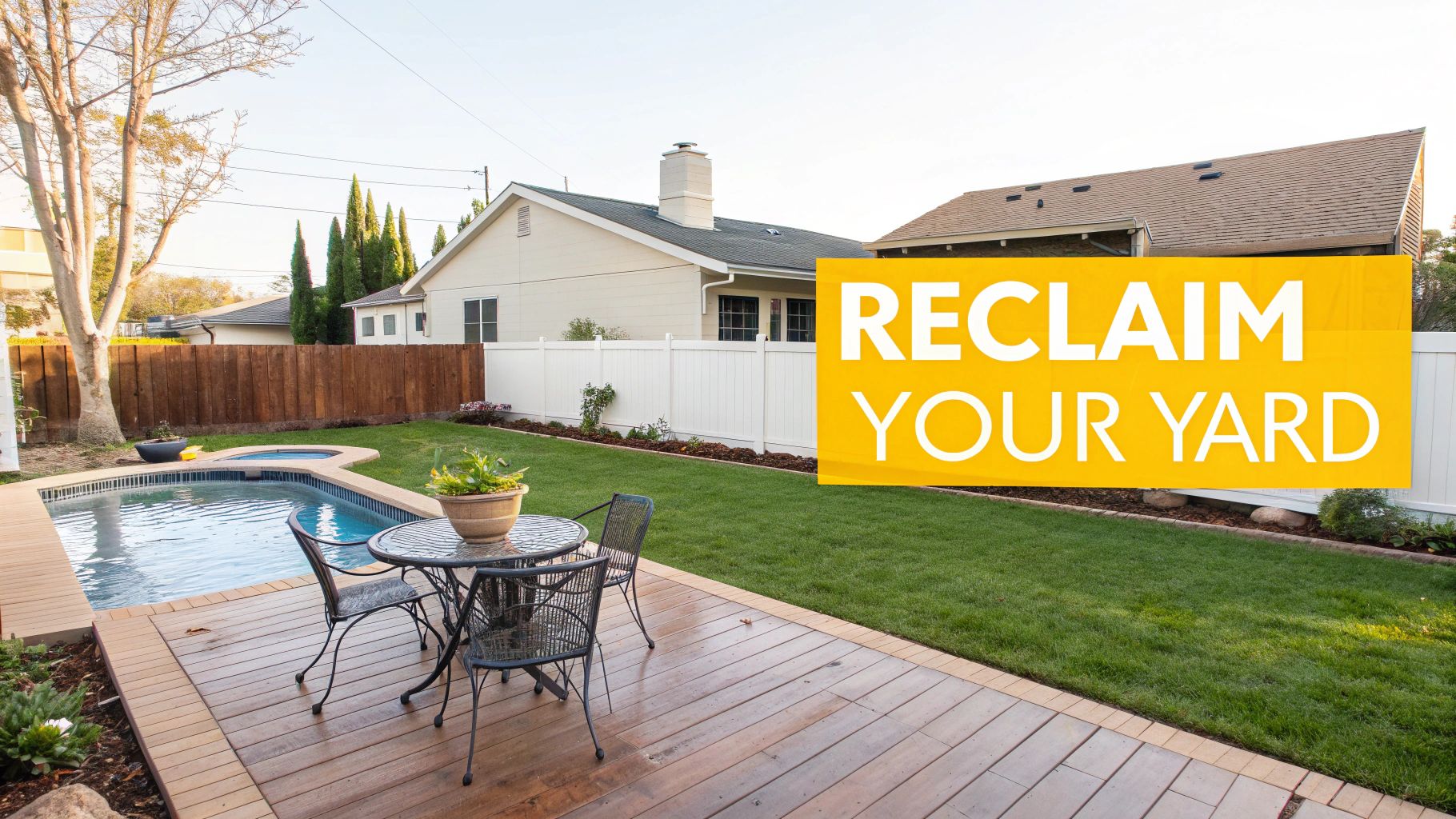
The real appeal is in what you stand to gain. Imagine swapping that pool for a sprawling outdoor deck perfect for entertaining, a veggie garden that feeds the family, or even laying the groundwork for a future home extension. Especially for homeowners on the Central Coast or in the tighter suburbs of Sydney, usable land is a premium asset. Removing a pool can instantly unlock your property's hidden potential.
Trading Maintenance for Peace of Mind
Let’s be honest: pool ownership is a serious commitment. The weekly chores and seasonal upkeep chew up a huge amount of time and money. The tipping point for many is when the hours spent on the pool start to outweigh the hours spent in it. Getting your yard back means getting your weekends back and ditching a constant source of worry.
This is particularly true for families with young kids or pets. Even with the best fencing, an open body of water is a persistent safety concern. Removing that hazard brings a level of peace of mind that you just can't put a price on.
Preparing for a New Chapter
A pool can also be a real hurdle when it comes time to sell. While some buyers see it as a dream feature, many others view it as a liability they'd rather not inherit. Filling in the pool can seriously broaden your property's appeal to a wider market of buyers looking for a low-maintenance, versatile backyard.
In other cases, getting rid of the pool is just the first step in a much bigger plan. Many homeowners we work with are clearing the way for new construction or a complete property overhaul, sometimes as part of comprehensive knock down and rebuild services that totally transform their block.
The reclaimed space becomes a blank canvas for whatever you have planned next, whether it’s a granny flat or a major landscaping project. That’s often where our professional forestry mulching services come in, clearing the slate and preparing the ground for new growth.
Partial Fill vs Complete Pool Removal: What's the Difference?
When you decide it's time for the pool to go, you’re at a fork in the road. This isn’t just about filling a hole in the ground; it’s a decision between two fundamentally different approaches that will impact your property for years to come: a partial fill or a complete structural removal. Getting your head around the difference is the first step to avoiding some serious long-term headaches.
A partial fill involves demolishing the top section of the pool shell—usually the top 500-600mm—punching drainage holes through the bottom, and then backfilling the cavity. It's the faster option, and the upfront cost to fill in a swimming pool this way is certainly lower because there's less demolition and less material to haul away.
A complete removal, on the other hand, is like hitting the reset button. We systematically break down and excavate the entire pool structure—every last bit of concrete or fibreglass is trucked off-site. The ground is then re-engineered with clean fill, compacted in layers, to restore its original structural integrity. This is the only way to truly reclaim your land for future use.
The Long-Term View on Partial Fills
A partial fill definitely looks attractive on paper because it's quicker and kinder to the initial budget. For a homeowner who just wants to roll out some new turf and has zero plans for future construction, it can be a perfectly fine solution.
But—and this is a big but—this method comes with some hefty strings attached. That old pool shell is still buried in your yard, which can lead to problems with drainage and soil settlement down the track. More importantly, councils across NSW, including both Central Coast Council and Newcastle Council, will not let you build any kind of permanent structure over a partially filled pool. That means no sheds, no decks, no granny flats, and certainly no home extensions.
A partial fill effectively turns that patch of your yard into non-structural land. While it gets rid of the immediate pool problem, it can seriously limit your property's future potential and is something you’d likely need to declare when you sell.
Why Complete Removal Is an Investment
Opting for a complete pool removal is a bigger job and a bigger investment upfront, but it's the only way to truly give you your land back. By taking out the entire structure and compacting the ground with certified fill, we create a stable, load-bearing surface. It’s the classic "get it right the first time" approach.
This is the non-negotiable route if you have any plans to build on that space in the future. Once the work is certified, the land is treated as if the pool was never there, giving you total freedom for whatever comes next. The initial savings of a partial fill can be completely wiped out if you ever need to dig it all up and do it properly later. Understanding the initial planning is vital, a topic we break down in our complete guide to pool excavation and planning.
Breaking Down the Cost to Fill In a Swimming Pool
When you get a quote to fill in your pool, it can seem like just one big number. But pulling back the curtain on what goes into that final figure helps you see the true value of the work and ensures there are no nasty surprises down the track. Let's break down the key parts of the cost, so you know exactly where your money is going.
First things first, you have two main paths to choose from. This decision is the biggest fork in the road and sets the stage for every other cost.
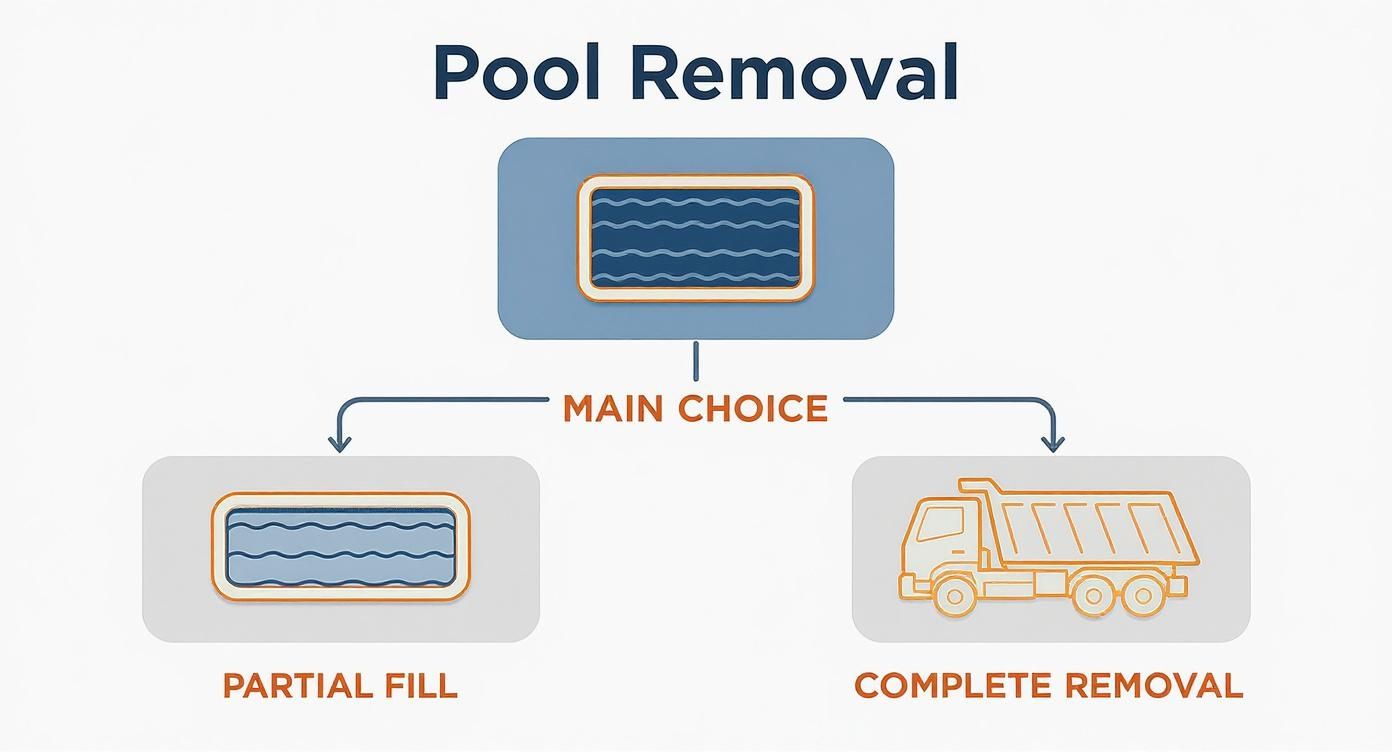
Your initial choice between a partial fill (cheaper upfront, but with long-term limitations) and a complete removal (more involved, but gives you a true blank slate) directly influences everything from the demolition work to the type of soil we bring in. To give you a clearer picture, here’s a typical breakdown of where the costs lie.
Estimated Cost Components for a Standard Inground Pool Removal
This table provides a snapshot of the major expenses you can expect. Keep in mind that every project is unique, and factors like site access and pool size can shift these numbers. A standard concrete pool removal can often range from $8,000 to over $20,000, depending on complexity.
| Cost Component | Typical Cost Range (AUD) | Key Factors Influencing Cost |
|---|---|---|
| Demolition | $3,000 – $8,000 | Pool size, material (concrete vs fibreglass), reinforcement |
| Fill Material | $3,000 – $8,000+ | Volume needed, type of fill (clean fill vs recycled), delivery distance |
| Labour & Machinery | $4,000 – $9,000 | Excavator size, operator hours, site access, project complexity |
| Waste Disposal & Tipping | $2,000 – $5,000 | Weight of demolished material, local facility fees, number of truckloads |
| Compaction & Finishing | $1,000 – $3,000 | Compaction equipment hire, labour for layering and levelling |
| Council & Certification Fees | $500 – $1,500 | Varies by council, includes application and final inspection costs |
These estimates give you a solid idea of the investment required. The key takeaway is that professional pool removal is a multi-step civil works project, not just a simple backfilling job.
Demolition Based on Pool Type
The material your pool is made of has a direct impact on the demolition cost. Each type presents a different challenge, demanding specific tools and techniques.
- Concrete Pools: These are the tanks of the swimming pool world—tough and time-consuming to break up. They require a heavy-duty hydraulic hammer attached to an excavator to punch through the thick, reinforced concrete. The sheer weight and volume of the rubble also means higher costs for haulage and disposal.
- Fibreglass Pools: A fibreglass shell is a completely different ball game. The main job is to cut the shell into manageable pieces so it can be lifted out and carted away. It’s generally a much faster and less machinery-intensive process.
- Vinyl-Liner Pools: With these pools, the liner is stripped out first, then the underlying frame is dismantled. This is typically the most straightforward and least expensive type of pool to demolish.
Fill Material Costs and Volume
The fill itself is often one of the biggest variables in the total price. And it's not just a matter of ordering "some dirt." You need a specific type of fill and a carefully calculated volume to make sure the ground stays stable and doesn't sink in a few years.
First, we do the maths. For a standard 8m x 4m pool with an average depth of 1.5m, you'll need about 48 cubic metres of fill. We then adjust this number to account for compaction, because the material will settle as we compact it in layers.
Then comes the choice of fill. Certified clean fill, known in the industry as VENM (Virgin Excavated Natural Material), is the top-shelf option. Recycled crushed concrete is another brilliant choice, offering fantastic stability. Both are miles better than cheap, uncertified fill, which can be a real gamble—it might contain contaminants or organic material that rots away, causing the ground to slump down the line. Our guide on how to correctly dispose of soil offers valuable insights into managing leftover materials.
Additional Costs to Consider
A few other factors often pop up. Council permits are a must, and fees vary. If your pool is surrounded by paving or decking, that will need to be demolished too. Proper drainage might need to be installed to prevent the area from becoming a swamp. Finally, you'll need a licensed electrician and plumber to safely disconnect all the pool equipment. A good contractor will outline all these potential costs upfront.
Why Your Choice of Fill Material Is So Important
The long-term success of your entire pool removal project rests on one critical decision: what you fill the hole with. This isn’t just about making an empty space disappear; it’s about engineering stable, reliable ground that will serve you safely for decades to come. Get this step wrong, and you could be facing serious and expensive problems down the track.
The materials and methods used are what determine the stability of your new backyard. Skimping on the quality of the fill or rushing the compaction process is a recipe for disaster. It can lead to sinkholes, cracked paving, or an unstable surface that severely limits what you can do with the land in the future.
Understanding Your Fill Options
Not all dirt is created equal. Standard topsoil might be perfect for a new garden bed, but it’s completely unsuitable for creating a stable, load-bearing surface. Why? Because it’s full of organic matter that decomposes over time, creating voids and causing the ground to sink.
That's why we rely on engineered materials that provide predictable, long-lasting stability.
- Certified Clean Fill (VENM/ENM): This is the gold standard for backfilling. Virgin Excavated Natural Material (VENM) is clean, uncontaminated soil, clay, or rock brought in from another site. It's completely free of waste and organic matter, which allows it to be compacted into a dense, solid base.
- Recycled Crushed Concrete: This is an excellent and sustainable option. Crushed concrete offers fantastic compaction and drainage properties. To get a better idea of how these materials are processed, check out our guide on responsible rock and dirt recycling.
If you're thinking of finishing the top layer with a slab for a patio or shed, there are various residential poured concrete options that offer brilliant durability and versatility once the backfilling is complete.
The Critical Role of Compaction
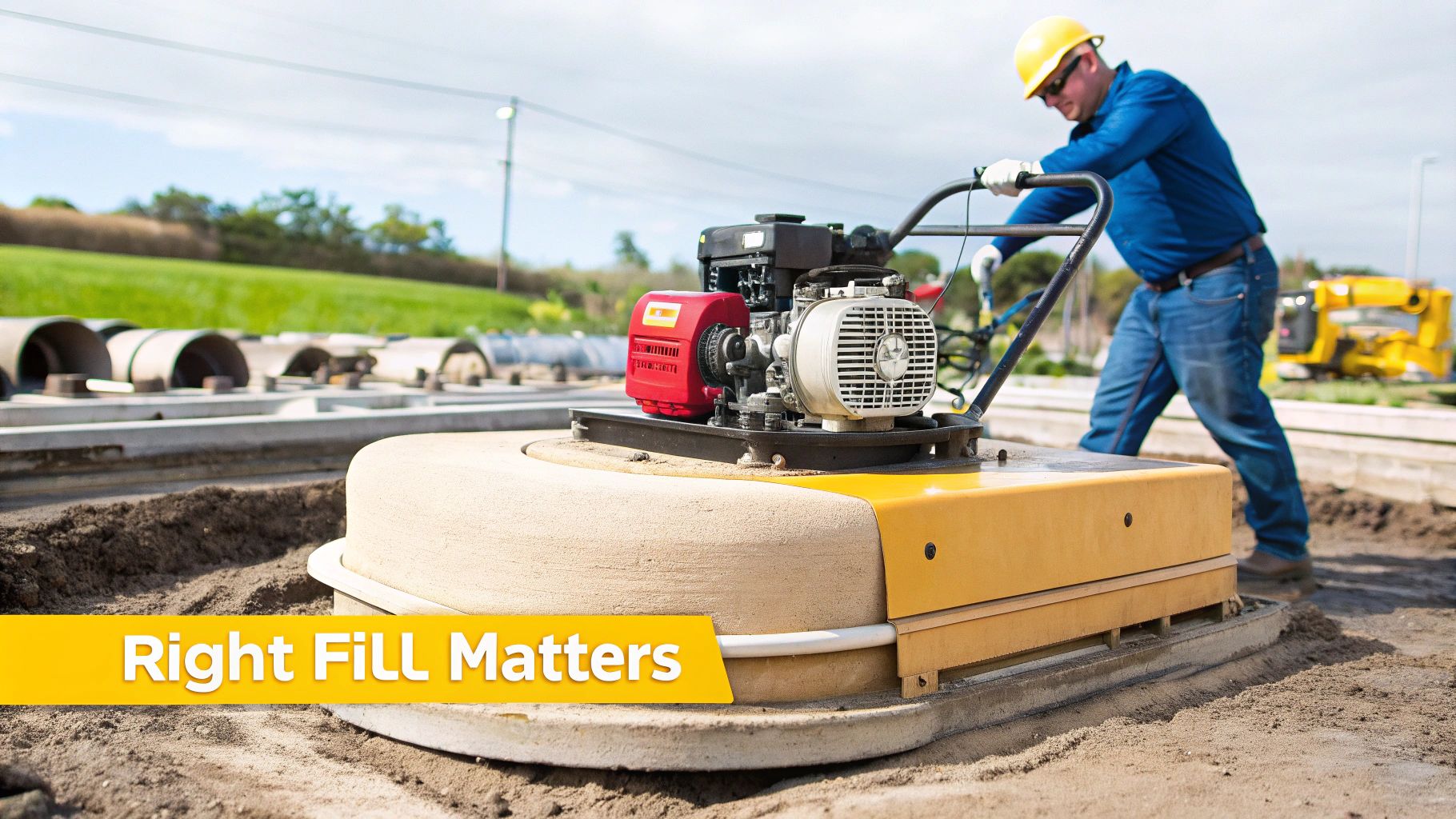
Simply dumping fill into the hole is the single biggest mistake you can make. The real secret to creating stable ground is compaction, and it has to be done correctly. Think of it like making a lasagne. You don't just throw all the ingredients in the dish at once; you build it up in careful layers.
We do the same with your old pool cavity. The fill material is added in stages, which we call 'lifts'. Each lift, usually around 200-300mm thick, is individually compacted with heavy machinery like a plate compactor or a roller. This process forces out any air pockets and makes sure the ground is uniformly dense from the very bottom right up to the top.
Skipping or rushing compaction is a guaranteed way to create future problems. A properly compacted base is a long-term investment in your property’s safety and value, preventing subsidence that can damage future landscaping or even building foundations.
The Pool Removal Process From Start to Finish
Ever wondered what it actually takes to get rid of an old swimming pool? It’s more than just chucking some dirt in the hole. Knowing the proper steps transforms a daunting project into a clear, manageable process, giving you a roadmap from that unwanted pool to a brand-new backyard space.
Let’s walk through the entire journey, from the first phone call to the final patch of fresh soil.
The whole thing kicks off with getting detailed, accurate quotes. A trustworthy quote is never just a single number pulled from thin air; it’s a transparent breakdown of labour, machinery, fill material, and disposal costs. This is your first and best chance to see how a contractor operates and find a team that communicates clearly from day one.
Your Pre-Demolition Checklist
Once you've picked your contractor, a bit of prep work is needed to make sure the project runs smoothly and safely. Getting these ducks in a row is absolutely critical.
- Council Application: The first big hurdle is lodging the right application with your local council, whether that's Central Coast Council or Newcastle Council. A good contractor will guide you through the paperwork maze, but remember, the responsibility as the homeowner ultimately rests with you.
- Service Disconnection: Before a single bit of concrete is cracked, every service connected to the pool needs to be professionally and safely decommissioned. This means getting a licensed electrician to disconnect and make safe all the wiring for pumps and lights, and a plumber to properly cap off any water lines.
- Site Access Preparation: We need to get machinery to the pool area, and that means clearing a path. This could involve temporarily taking down a section of fencing, moving some garden beds, or laying down protection for your lawn. For those tight-access jobs, we often use smaller machines, a common need for Central Coast excavator hire.
The On-Site Workflow
With the prep work ticked off, the real transformation begins. The on-site process is a well-oiled machine of demolition, filling, and finishing.
The first day is usually the noisiest. This is demolition day. For a concrete pool, our excavator comes in with a hydraulic hammer to break up the shell. If you've got a fibreglass pool, we'll cut the shell into manageable sections for removal. All that rubble is then loaded into tipper trucks and hauled away to be recycled or disposed of responsibly.
Next comes what is arguably the most crucial part of the entire job: the filling and compaction. We don't just dump soil in the hole. Fill material is brought in and laid down in layers, or 'lifts', usually 200-300mm deep at a time. After each lift, heavy compaction equipment is used to make sure the ground becomes solid and incredibly stable. This meticulous process is what prevents that dreaded sinkage down the track.
Hiring Tip: When you're choosing a contractor in NSW, always, always verify their licence and insurance. Ask to see examples of similar pool fill-ins they’ve done in your area, and make sure they have a rock-solid understanding of local council requirements. This is how you ensure you're working with a professional who will get the job done right the first time.
The final step is the site clean-up and final grading. The crew will meticulously level the filled area, leaving you with a clean, stable, and perfectly graded blank canvas. From there, it's ready for whatever you have planned next—turf, paving, or your next big backyard dream.
Common Questions About Pool Removal
When you're weighing up the cost to fill in a swimming pool, the questions start to pile up. It's a big decision, and you want to have all the facts straight before you commit. We get it. To help out, we’ve put together some clear, straightforward answers to the questions we hear most often from homeowners across the Central Coast and Sydney.
Think of this as your quick-reference guide to iron out those final details and put any nagging concerns to rest.
Do I Need Council Approval to Fill In My Swimming Pool in NSW?
Yes, in nearly every case, you absolutely will need council approval. Decommissioning a swimming pool isn't just a simple backyard job; it's considered development work. This means lodging an application with your local council, whether that's Central Coast Council, Newcastle City Council, or another local authority.
This process is there to ensure the work is done safely, with the right materials, and is properly documented on your property's official records. Getting this step right is non-negotiable, especially when it comes to any future plans for selling or developing your property.
Can I Build an Extension or Granny Flat Over the Old Pool Area?
This is a big one, and the answer hinges entirely on how the pool is removed. If you go for a partial fill where the shell is just punctured and buried, the area is generally not suitable for building on. The risk of the ground sinking and creating drainage nightmares is just too high for any structure that needs to bear weight.
If you have any future construction in mind—whether it’s a deck, a shed, or a granny flat—you need a complete structural removal of the pool shell. This has to be followed by professionally engineered compaction to make the ground solid and stable. Don't be surprised if the council also requires a geotechnical engineer to certify the ground before they'll even look at approving new building work on that spot.
How Long Does It Take to Fill In a Swimming Pool?
For a standard inground pool, the actual on-site work usually takes between two to five days. That timeline covers the demolition, bringing in the fill, and compacting it all down. But the whole journey, from signing a quote to having a finished, usable yard, can stretch out over several weeks.
What’s the biggest hold-up? Often, it’s waiting for council approval, and that can vary wildly between different local government areas. Unpredictable wet weather can also throw a spanner in the works, so it’s always smart to build a little bit of buffer time into your project timeline.
Ready to reclaim your backyard and get a clear picture of your project costs? The team at Booms Up Civil Group has over 15 years of experience helping homeowners across the Central Coast, Sydney, and Newcastle. We can provide a detailed, obligation-free quote and expert advice on the best removal method for your property.