
So, you're eyeing a knock-down rebuild on the Central Coast or maybe a major renovation in Sydney, and the first question that pops into your head is always the same: "What's this demolition going to set me back?" It’s a critical question, because the cost of clearing the old structure sets the financial foundation for your entire project. Getting this number right from the start is the key to a smooth build.
For a standard three-bedroom house, you’re generally looking at a range between $15,000 to $40,000. If it’s just a garage, that could be anywhere from $5,000 to $12,000, and a small backyard shed might only be around $1,000 to $3,000. These figures give you a decent starting block for your budget, but the real cost depends on the unique details of your property. This guide will help you understand what drives those costs and how to estimate your own.
Your Guide to Australian Demolition Costs
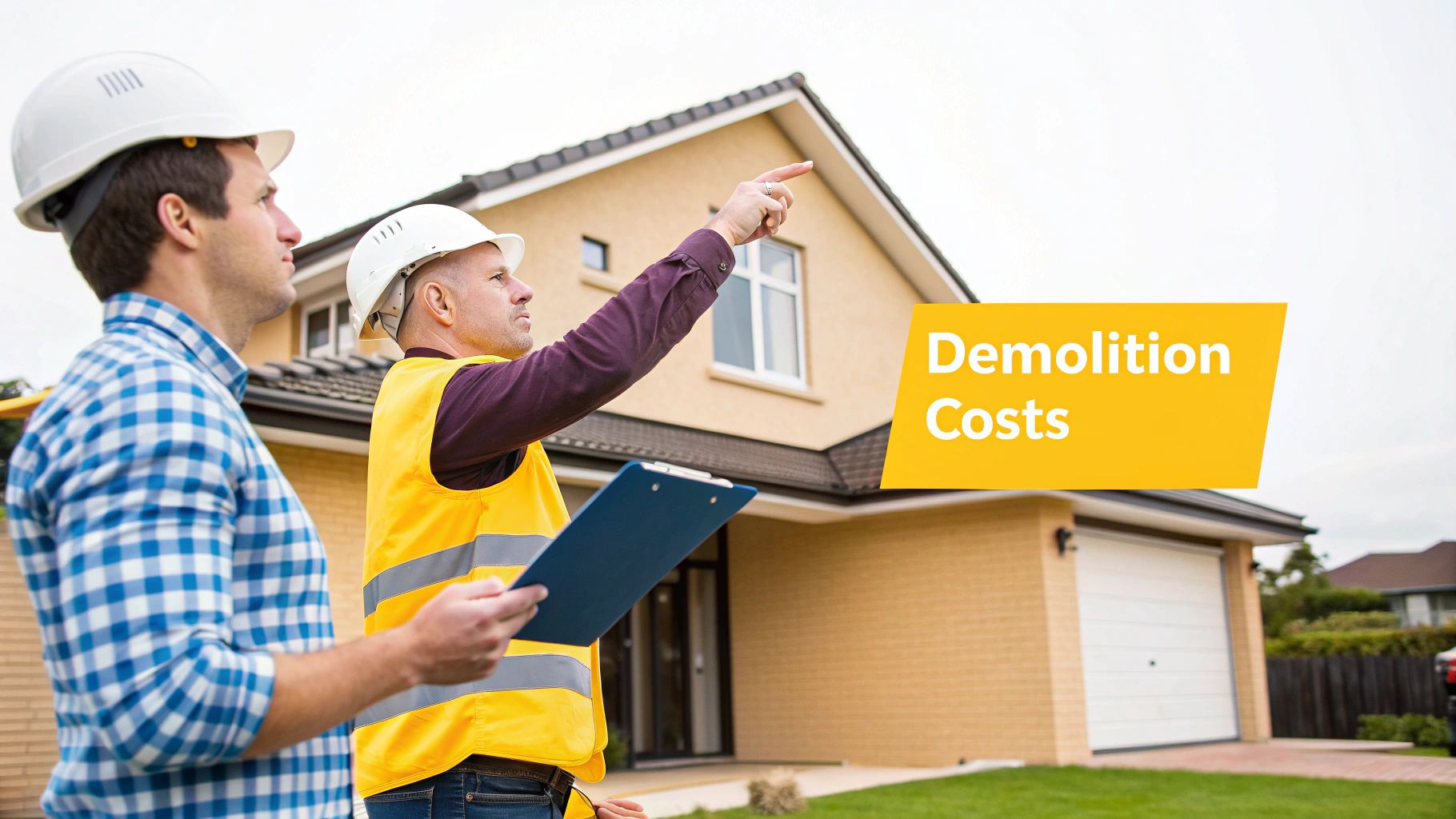
Before you can get to the exciting part of building your dream home, the old structure has to go. Getting a handle on the costs involved is the first real step in planning a project that doesn't blow the budget. A professional quote is always going to be your most accurate figure, but understanding the fundamentals helps you ask the right questions and spot a fair price when you see one.
The total cost isn't just about the excitement of knocking down walls. It's a carefully calculated sum of several essential services that ensure the job is done safely, legally, and cleanly. We've been helping clients on the Central Coast for over 15 years, and we know that getting it right the first time starts with a transparent and realistic budget.
The Core Components of a Demolition Quote
At its heart, any demolition quote is built on three pillars: labour, machinery, and disposal.
Labour is straightforward—it covers the wages for the skilled team on site, from the excavator operator deftly taking the building apart to the crew managing site safety and sorting materials. Machinery, or 'plant hire', is the cost of bringing in the heavy hitters like excavators, bobcats, and trucks needed to do the job efficiently.
Lastly, and this is a big one, is waste disposal. This involves the significant expense of hauling away all the debris and tipping it at licensed facilities. A reputable contractor won't just dump everything in landfill; they'll prioritise recycling by separating materials like concrete, metal, and timber. This isn't just good for the planet—it's a legal requirement.
Estimated Demolition Cost Ranges by Structure Type
To give you a clearer picture, let's break down some typical scenarios you might find in places like Newcastle or the Hunter Valley. This table offers a quick glance at what you can generally expect for different types of structures.
| Structure Type | Typical Size | Estimated Cost Range (AUD) |
|---|---|---|
| Standard House | 3-bedroom, single-storey | $15,000 – $40,000+ |
| Double Garage | Approx. 6m x 6m | $5,000 – $12,000 |
| Small Shed | Approx. 3m x 3m | $1,000 – $3,000 |
Keep in mind, these figures are a general guide. The actual cost to demolish a house in Australia can swing quite a bit based on its size, the materials it’s made from, and how easy it is to get machinery onto the site. For a standard house demolition, the combination of labour, machinery, and disposal fees often makes up between $15,000 and $30,000 of the final bill.
This initial estimate is just the first step in a much bigger journey. To see what comes next, you can learn more about the complete demolition and excavation process in our detailed guide.
Key Factors That Drive Your Demolition Quote
Ever received two demolition quotes for the same job, only to find they’re thousands of dollars apart? It’s easy to assume someone’s made a mistake. But in reality, a professional demolition quote isn't just a number pulled from the air. It’s a careful calculation based on a specific set of variables unique to your property.
Getting your head around these factors is the first step to setting a realistic budget and understanding the estimates you receive.
Every project we tackle is different. A small residential knockdown in a Gosford cul-de-sac presents different challenges to clearing a large commercial site in the Hunter Valley. These unique challenges directly influence the time, machinery, and labour needed, which ultimately shapes the final price. Let's pull back the curtain on what we're looking at when we prepare your quote.
Building Size and Storeys
The most obvious starting point is the physical size of the structure. We measure this in square metres (sqm), because a larger footprint simply means more material to demolish, sort, and haul away. This naturally translates to more labour hours and higher disposal fees.
But it’s not just about the footprint; height is a major player. A two-storey house demands a completely different strategy to a single-storey bungalow. We often need larger excavators with a longer reach, and the process itself is more complex. It requires a careful, staged approach to bring the structure down safely, all of which adds time and machinery costs to the job.
Construction Materials
What your house is actually made of is one of the biggest cost drivers. The difference in effort between knocking down a timber-frame cottage and a double-brick home is massive.
- Timber and Fibro: These materials are generally lighter and quicker to demolish. The big catch, however, is that older fibro cottages—common right across the Central Coast and Newcastle—often contain asbestos. That’s a major cost factor we’ll dive into separately.
- Brick Veneer and Double Brick: Heavier materials like brick and concrete demand more powerful machinery and take a lot longer to break down. They also generate a much heavier load of waste, which bumps up the cost of transport and tipping fees at the tip. On the plus side, clean brick and concrete can often be recycled.
To put it in perspective, demolishing a 150sqm double-brick house in a suburb like Adamstown will almost always cost more than a 150sqm weatherboard home in Wyong. The sheer weight of the material dictates a huge part of the quote, even before you consider anything else.
Site Access and Location
This is a question we ask on every single job: how easily can we get our machinery onto your property? An ideal site is on a wide, flat street with plenty of room to move. Unfortunately, that’s not always the case, especially in dense urban areas or on tricky coastal blocks.
A tight site isn't a deal-breaker, but it does require careful planning. Limited access means we might need to use smaller, more specialised machinery, bring in materials by hand, or arrange for road closures with the local council—all of which adds to the overall cost.
Imagine a demolition on a steep, narrow block in Terrigal with only one way in and out. It's a logistical puzzle. We might need smaller excavators and trucks, which means more trips to remove all the waste. Compare that to an open, acre-lot in the Hunter Valley, where we can bring in large, efficient machinery and get the job done much faster. The challenges of working on constrained properties are something we specialise in, and you can learn more about how we handle tight access excavations in our detailed guide.
These three elements—size, materials, and access—form the core of any demolition cost calculation. Getting a firm grip on them will help you see why your quote is structured the way it is and empowers you to have a more informed conversation with your contractor about the scope of works.
Why Asbestos Changes Everything
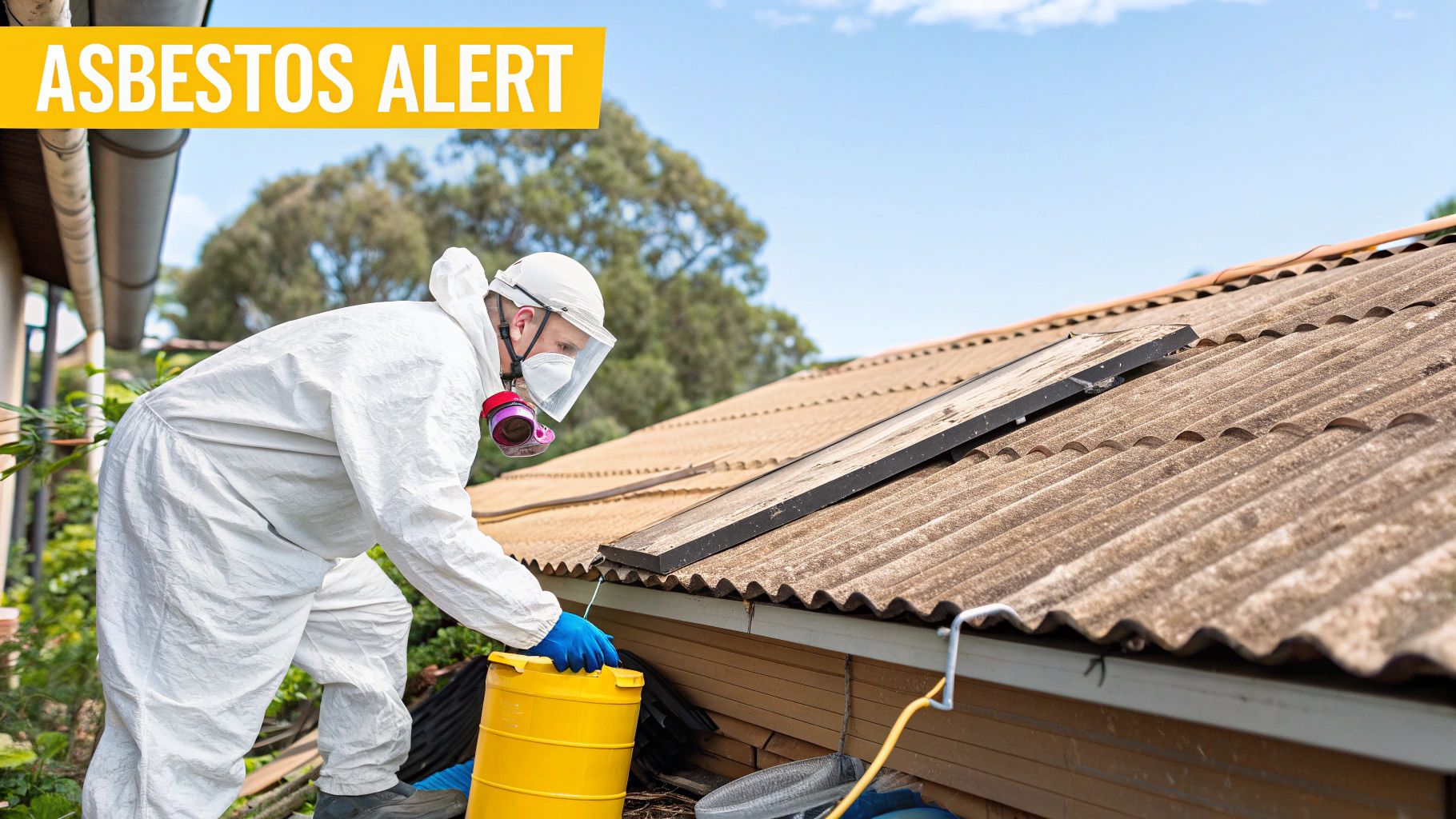
If there's one thing that can completely blow up a demolition budget, it's finding asbestos. For any building put up or renovated before 1990 in Australia, you have to assume asbestos-containing materials (ACMs) are present until proven otherwise. This isn't just a small hiccup; it fundamentally changes the entire job—the scope, the cost, and the timeline.
The moment asbestos is confirmed, a standard demolition job turns into a hazardous material removal operation, governed by strict SafeWork NSW regulations. This is non-negotiable. It's also the single biggest reason why any demolition cost calculator in Australia has to treat asbestos as a major variable.
The Legal and Safety Imperative
Under Australian law, you can't just have a crack at removing asbestos yourself. Handling friable asbestos (the crumbly, high-risk stuff) or more than 10 square metres of non-friable asbestos (like common fibro sheeting) requires a licensed asbestos removalist. This is not a DIY job. The health risks from airborne fibres are severe, and the penalties for getting it wrong are massive for both the homeowner and the contractor.
Safety and compliance are everything. A professional, legal asbestos removal follows a series of critical steps that simply don't exist in a standard demolition. These specialised procedures are exactly what drive the cost up.
What Asbestos Removal Actually Involves
When we find asbestos, the game plan changes completely. The focus shifts from knocking things down efficiently to taking things apart methodically and safely.
Here’s a quick rundown of what that looks like:
- Site Containment: The entire work area is sealed off with heavy-duty plastic sheeting. This creates a negative air pressure environment to stop any fibres from escaping and contaminating your property or your neighbours'.
- Air Monitoring: We often bring in an independent hygienist to conduct air monitoring before, during, and after the removal. This is to get a clearance certificate confirming the area is safe for everyone.
- Specialised Labour: Only technicians with specific licenses and training are legally allowed to touch the material. They'll be kitted out in full personal protective equipment (PPE), including disposable overalls and respirators.
- Controlled Removal: The asbestos materials are carefully wetted down to keep dust to a minimum and removed in whole pieces wherever possible. Each piece is then double-wrapped in thick, labelled plastic.
- Specialised Disposal: This wrapped asbestos waste can only go to a landfill specifically licensed to accept it. As you can imagine, these tip fees are significantly higher than for regular building waste.
Finding asbestos isn't just about adding one more task to the list. It’s about switching to a completely different, highly regulated methodology for the entire project. This is why a simple square-metre rate for demolition becomes totally unreliable the moment asbestos enters the picture.
To get a better handle on the entire process, it helps to understand what's involved in demolishing buildings safely and efficiently when hazardous materials are a known factor.
The Financial Impact Illustrated
Let's put this into a real-world scenario to see how the numbers stack up.
Imagine two identical 150sqm fibro cottages sitting side-by-side in a suburb like Umina Beach. House A was built in 1995 and is asbestos-free. House B, built on 15/03/1975, is clad in asbestos fibro and has it in the eaves and bathroom linings.
The quote for House A might come in around $20,000. It's a straightforward job: bring in the excavator, knock it down, sort the debris, and haul it away.
For House B, the standard demolition cost is still there, but first, you have to pay for the asbestos removal. That specialised work alone could easily add $10,000 to $15,000 or more to the total, pushing the final project cost into the $30,000-$35,000+ range. That extra cost covers the licensed specialists, the containment setup, air monitoring, and those hefty disposal fees needed to do the job safely and by the book. This is precisely why a professional site assessment is non-negotiable before you lock in a budget.
Uncovering the Hidden Demolition Costs
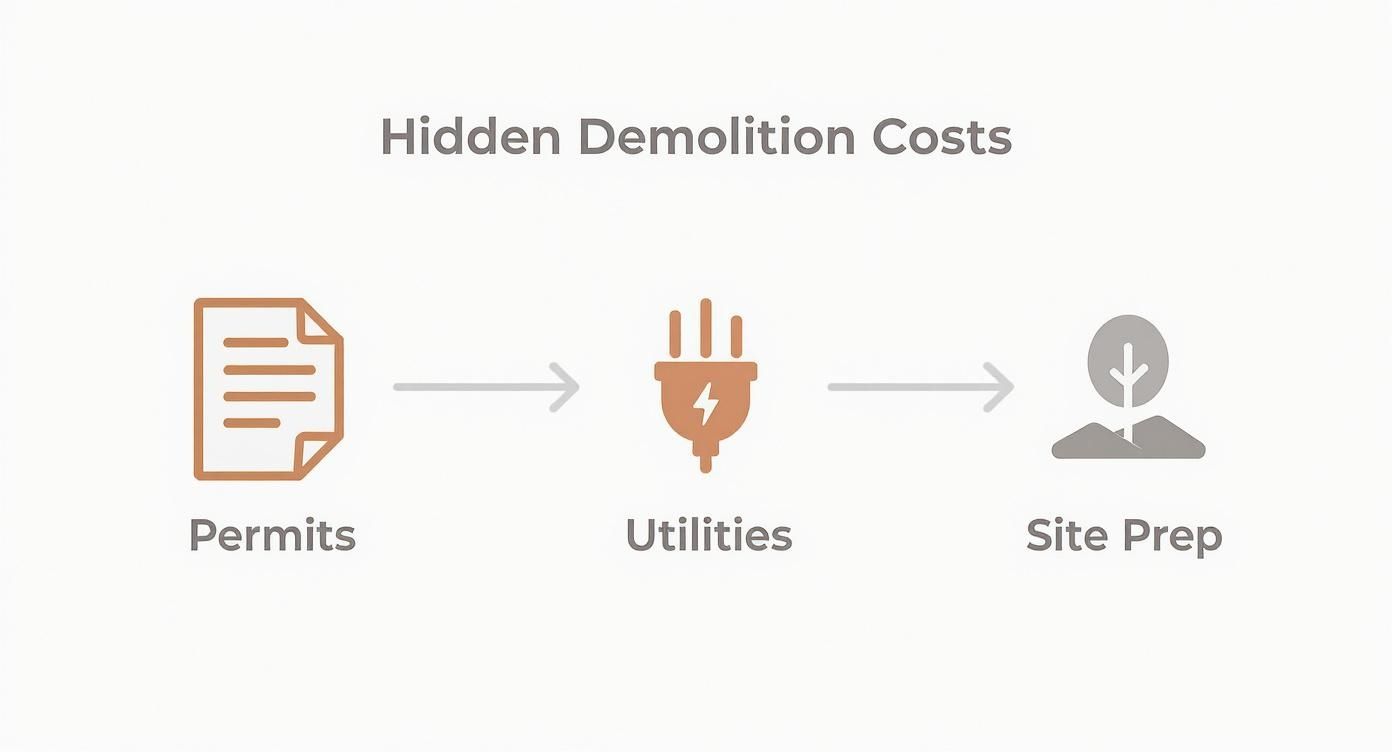
When you get a detailed quote from a demolition contractor, it’ll cover the big-ticket items like labour, machinery, and waste disposal. But a successful project budget has to account for everything, and there are several crucial costs that often fall outside that standard quote. These are the expenses homeowners forget, which can lead to some nasty financial surprises down the track.
Getting a handle on these "hidden" costs is the key to building an accurate budget. From council paperwork to getting the site ready for what comes next, each piece of the puzzle is vital to making sure your project runs smoothly, legally, and safely from start to finish.
Council Permits and Fees
Before a single brick is touched, you need the green light from your local council. Securing a demolition permit is completely non-negotiable, and the fees can vary quite a bit. Depending on where you are—whether it's under Central Coast Council, City of Newcastle, or another local government area—these permits can set you back anywhere from $500 to over $2,000.
This fee covers the council's time to review your plans, check they comply with local planning schemes, and make sure all the safety and environmental protocols are in place. It's an upfront cost that needs to be factored right into your initial budget.
Disconnecting Utilities
You can't exactly knock down a building that's still hooked up to the grid. It's your responsibility as the property owner to get essential services like electricity, gas, water, and sewerage disconnected. Each utility provider has its own process and fee structure for what they call "abolishment."
This isn't as simple as flicking a switch, either. It often requires specialised technicians to safely cap off the lines at your property boundary. These fees can really add up, often totalling several hundred to a few thousand dollars, so it’s smart to contact your providers early to get a clear picture of the costs and timelines.
Essential Site Preparation and Management
Beyond the main house, your property might have other bits and pieces that need sorting before the heavy machinery rolls in. These tasks are usually quoted separately because they need different equipment or skills. Consider this scenario: your block has several large gum trees close to the house. These will need to be professionally removed or pruned to create a safe work zone for the excavator, which is an additional cost.
Councils are incredibly strict about protecting local waterways. You’ll be required to install sediment fencing and other erosion controls to stop soil and debris from washing into stormwater drains. This is a mandatory part of environmental protection laws. An empty demolition site can also be a magnet for theft or illegal dumping, so you also need to think about things like proper construction site security, which can add to the overall project expenses.
Post-Demolition Site Clearing and Soil Removal
Once the house is gone, the job isn't quite done. Your quote should clearly state what level of site clean-up is included. This usually means removing all the demolition debris, but what about the soil that's left? If your new building plans require a different site level or foundation depth, you might need extra excavation and soil removal.
This is a completely separate service with its own costs for labour, machinery, and disposal. For a much deeper dive into how that works, have a look at our guide on professional soil removal services. By planning for these extra steps from the outset, you’ll create a much more resilient and realistic budget for your entire project.
How to Calculate a Demolition Cost Estimate
While getting a professional quote is always the final word, you can put together a surprisingly solid estimate yourself. Think of it as a way to test the financial waters before you dive in. This hands-on approach helps demystify the quoting process and gives you a realistic starting point for your budget.
This simple, step-by-step method will guide you through calculating a rough figure for your project. We'll start with the basics of your building's size and materials, then layer in the common variables that always influence the final cost.
A Simple DIY Demolition Cost Formula
To get a rough estimate, you can use a simple formula that takes into account the three main factors: the building's size (in square metres), the type of materials it's made from, and any major extra costs like asbestos removal.
First, determine the building's footprint. You can usually find this on your building plans, but if not, just measure the length and width of the building's exterior and multiply them together. For example, if a house is 15 metres long and 10 metres wide, its footprint is 150sqm.
Next, apply a base rate per square metre based on the construction materials. Let's say a typical demolition rate is around $100-$150 per square metre. For our 150sqm brick veneer house, we might pick a mid-range rate of $125/sqm.
Calculation: 150sqm x $125/sqm = $18,750
This gives us a starting point of $18,750. Now, we need to adjust this for the big-ticket items. If you suspect asbestos, you must add a significant contingency—let's say $10,000. Then, budget around $2,000 for council permits and utility fees. This brings our total estimate closer to $30,750—a much more realistic picture than what a generic online calculator might spit out. Understanding the core principles of accurate estimating is crucial for a successful project.
When to Get a Professional Quote
An estimate is great for initial planning, but you should seek professional quotes once you are serious about proceeding. A formal quote from an experienced contractor is essential because it's based on an on-site inspection. We can see the real-world challenges, like that tricky access down the side of your house or the condition of the neighbouring properties, that a simple formula can't account for.
A professional quote is a legally binding document that details the full scope of works, inclusions, exclusions, and a fixed price. This protects both you and the contractor and ensures there are no surprises. It's the only way to get a figure you can confidently take to your bank or builder.
DIY Demolition Estimate Worksheet
Want to run the numbers for your own project? Use this simple worksheet to plug in your variables and get a ballpark figure. It's a great way to put the theory into practice.
| Cost Component | Your Estimate (Calculation/Notes) | Estimated Cost (AUD) |
|---|---|---|
| Base Demolition Cost | Building Footprint (sqm) x Base Rate ($/sqm) | $ |
| Asbestos Removal | (Note any known or suspected asbestos) | $ |
| Site Access Surcharge | (e.g., add 10-20% for difficult access) | $ |
| Permits & Fees | (Council permits, utility disconnections, etc.) | $ |
| Tree/Vegetation Removal | (Estimate for any significant clearing needed) | $ |
| Other Costs | (e.g., pool removal, retaining walls) | $ |
| Total Estimated Cost | (Sum of all costs above) | $ |
This DIY method is perfect for getting your head around the numbers, but remember it’s a starting point. It can never replace a detailed, on-site quote from an experienced contractor. We can provide a comprehensive assessment that considers every variable, from soil type to the specific machinery required.
If you're planning a project, it’s worth exploring all your options. Understanding the cost of machinery, for example, is a big part of the puzzle. Feel free to check out our guide on excavator hire on the Central Coast to get a better handle on plant costs.
Got More Demolition Questions? We've Got Answers
Even with a detailed quote in hand, it’s completely normal to have more questions pop up as demolition day gets closer. To help you feel confident and prepared, we've pulled together straight answers to the most common queries we hear from property owners across the Central Coast, Sydney, and Newcastle.
Think of this as your practical guide for those last-minute, "just wondering…" thoughts that are bound to surface.
How Long Does a Typical House Demolition Take in NSW?
On-site, the physical work for a standard single-storey house (without major asbestos headaches) is usually done in about 3 to 7 days. That window covers everything from setting up the site to the actual knockdown and loading out all the debris.
But the whole process, from our first chat to you having a perfectly clear block, is a different story. You should realistically budget for 4 to 8 weeks. This bigger timeframe is what really matters, as it has to account for quoting, getting asbestos tests and reports done, lodging applications with your local council, waiting for them to process permits, and coordinating utility disconnections. It's not uncommon for things like council backlogs, a week of bad weather, or finding unexpected surprises like old concrete footings to stretch this timeline out.
Can I Save a Few Bucks Doing Some of the Demo Work Myself?
It’s tempting to think you can cut costs by getting your hands dirty, but we strongly advise against DIY demolition for anything structural. Demolition is a high-risk game, heavily regulated by SafeWork NSW, and for good reason. It demands specific licenses, hefty insurance policies, and years of experience to handle heavy machinery and hazardous materials without things going wrong.
Trying to do it yourself can lead to serious injuries, accidental damage to your neighbour's place, and eye-watering fines. Where you can save a little money is with a ‘soft strip’. This just means you remove non-structural items yourself before we arrive—things like carpets, curtains, light fittings, and maybe the kitchen cabinets. Always have a chat with your contractor about this first to make sure it works with their plan and doesn't cause any headaches.
Does Your Quote Include Removing the Concrete Slab?
This is a fantastic question, and the answer isn't always yes. It’s absolutely vital to check your written quote. Most of the time, a standard demolition quote will cover taking the house down to the top of the concrete slab.
Pulling up the slab itself, its footings, and any other buried surprises like old driveways or swimming pools is usually quoted as a separate item. If you’re clearing the block for a new build, your engineer will almost certainly need the old slab gone to make way for the new foundations. Always get this clarified with your demolition contractor upfront to avoid a budget blow-out down the track.
What Actually Happens to All the Rubble and Waste?
Any professional, reputable demolition company is serious about managing waste responsibly. The materials from your site are carefully sorted, either as they're loaded into the trucks or at a licensed recycling facility.
Our goal is to divert as much material from landfill as we possibly can. This isn't just about being good to the environment; it’s a non-negotiable part of modern, compliant demolition work.
Everything is separated into different streams to be processed and reused. Concrete and bricks get crushed down to be used again as road base or aggregate. Metals like steel, copper, and aluminium are sent off to scrap metal recyclers. Timber is often mulched for landscaping, or if it's in great condition, it can be repurposed.
Only the genuinely non-recyclable stuff and any contaminated waste actually end up in landfill. Asbestos, of course, is a special case—it follows its own strict disposal rules and is taken directly to a facility licensed to handle it safely. Never be afraid to ask your contractor about their recycling rates; it’s a great sign you’re working with a professional and environmentally conscious team.
At Booms Up Civil, we know that a well-informed client is a happy client. If you have more questions or need a detailed, transparent quote for your project on the Central Coast, in Sydney, or across the Hunter Valley, our experienced team is here to help you get started on the right foot.