
Shoring is the temporary muscle you bring in to hold back the earth during an excavation. Think of it as scaffolding, but for the ground itself. It acts as a temporary shield, bracing against immense soil pressure and carving out a safe, stable work area for everyone on site. Without it, deep excavations aren't just risky—they're downright dangerous.
What Is Shoring in Simple Terms?
When we dig a trench for new plumbing or excavate a basement for a new build, the surrounding soil walls are suddenly under enormous pressure. Gravity wants to pull everything back into the hole. Shoring is the engineering that answers the crucial question: what’s holding all this earth back? It's a non-negotiable safety measure that protects workers, nearby buildings, and the future of your entire project.
Picture this: you're planning a new home on a sloping block in a tightly packed Sydney suburb. That excavation for the basement could easily undermine your neighbour's foundation if the ground isn't properly supported from day one. Shoring provides that essential temporary stability, making sure the job gets done safely and correctly the first time.
Why Shoring Is a Legal Requirement in NSW
Beyond just being good practice, shoring is a strict legal requirement enforced by SafeWork NSW. Here in New South Wales—where we operate across Sydney, Newcastle, and the Central Coast—compliance is an absolute must under the Work Health and Safety Regulation 2017. This regulation is crystal clear: shoring is mandatory for any excavation deeper than 1.5 metres to prevent catastrophic cave-ins.
The risks aren't just theoretical. Data shows that between 2015 and 2024, trench collapses contributed to 12% of construction fatalities in Australia. In NSW alone, 28 serious incidents were linked to inadequate shoring, resulting in over $15 million in fines and compensation. It’s a stark reminder of the severe consequences of cutting corners. You can explore further industry safety statistics on the Jobs and Skills Australia website.
Common Scenarios That Require Shoring
You might need shoring for more projects than you'd first imagine. It’s a critical part of countless residential and commercial jobs we see every day across the Central Coast and Hunter Valley.
Here’s a quick look at some common scenarios where shoring becomes essential.
| Shoring at a Glance: When You Might Need It |
|---|
| Project Scenario |
| Basement Excavations |
| Digging a new basement or underground carpark, especially on tight blocks. |
| Deep Trenching |
| Installing major plumbing, electrical conduits, or drainage systems that go below the 1.5-metre mark. |
| Foundation Repairs or Underpinning |
| Supporting the surrounding earth while work is carried out on an existing building's foundation. |
| Pool Installations |
| Excavating for a new swimming pool, particularly on a sloped or unstable site. |
| Retaining Wall Construction |
| When building a new retaining wall, temporary shoring is often needed to support the ground behind it until the wall is complete. |
| Working Near Existing Structures |
| Any excavation close to a neighbouring property, road, or footpath that could be undermined by ground movement. |
No matter the specific job, the goal remains the same: to create a secure environment and prevent any ground movement that could compromise safety and the structural integrity of your project.
Exploring Common Shoring Methods Used in NSW
Just like the soil varies from the sandy coast of Terrigal to the reactive clay of the Hunter Valley, the methods we use for shoring have to adapt. Not all ground is the same, so no single solution fits every job. Getting your head around the different types of shoring helps you appreciate what's happening on your site and why a specific method was chosen.
This breakdown covers the core concepts of shoring—the why, where, and when.
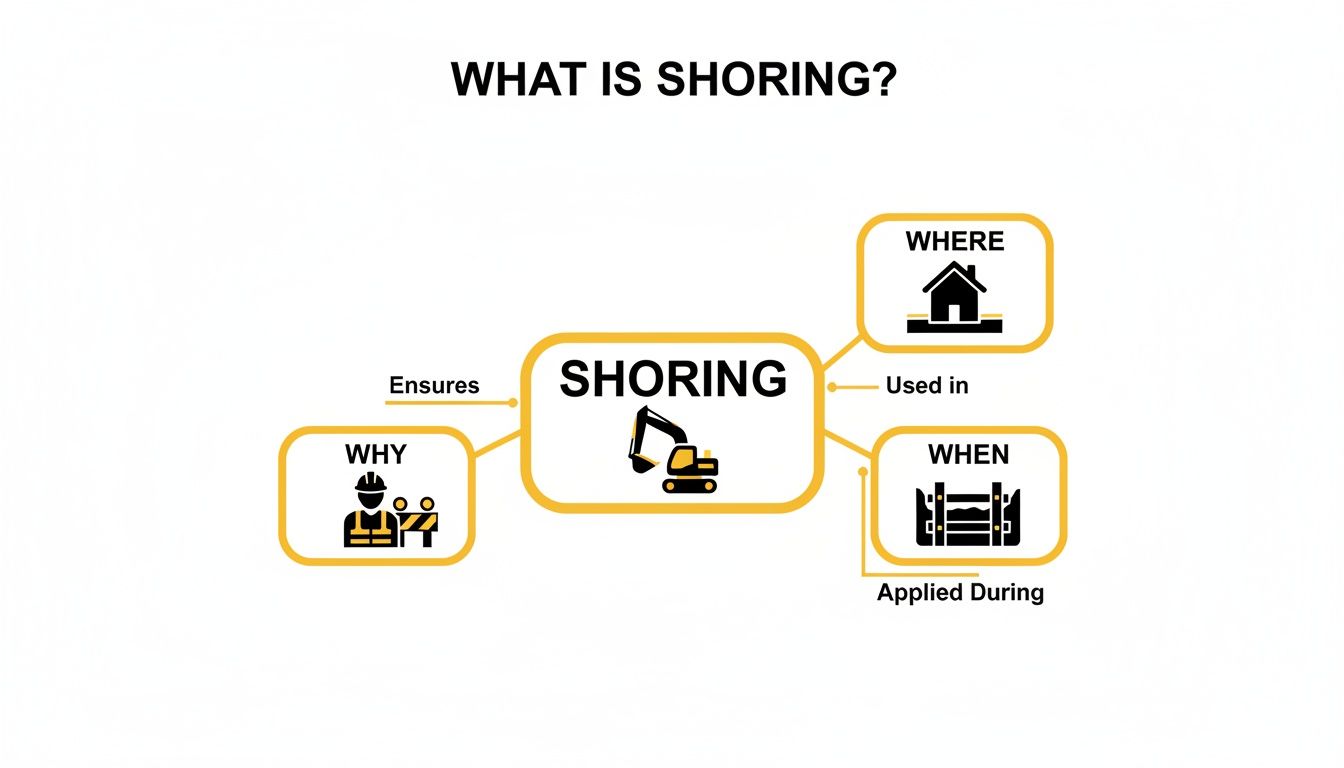
As you can see, shoring is fundamentally about keeping workers safe, especially when digging foundations and trenches. Let's dive into the most common methods we use on projects across NSW.
Hydraulic Shoring and Trench Boxes
When it comes to speed and safety in trench support, hydraulic shoring is king. It's our go-to for a huge amount of utility and plumbing works because it uses hydraulic pistons to press aluminium or steel rails firmly against the trench walls. This provides immediate, reliable support without a single worker needing to set foot in an unprotected trench.
You'll often see this method used in the form of trench boxes. These are prefabricated steel shields that we lower directly into the excavation. They create a safe bubble for our team to work inside, which is why they’re so common on residential sites in suburbs like Kariong or for council infrastructure upgrades. Their speed and reusability make them a cost-effective and incredibly safe choice for many projects.
Soldier Piles and Lagging
When you need to go deep, soldier piles and lagging is the heavy-duty system for the job. This method is the workhorse for large-scale excavations, like those for underground carparks in Newcastle or deep basements for new commercial builds in Sydney.
The process involves drilling vertical steel piles (the "soldiers") into the ground at regular intervals around the excavation's edge. As we dig down, we slot timber planks, precast concrete panels, or steel plates (the "lagging") horizontally between the soldier piles. This creates a strong, continuous wall that holds back the earth, providing rock-solid support for major construction. It’s a versatile system that can be adapted to all sorts of soil conditions and excavation depths.
Sheet Piling
Got a project near water or in loose, sandy soils? Sheet piling is a brilliant solution. This method uses interlocking steel sheets with a corrugated profile that are driven into the ground with a vibratory hammer or press. The interlocking edges form a continuous, watertight barrier, making it perfect for cofferdams, seawalls, or digging near the water table—a classic challenge on many Central Coast sites.
Imagine you're building close to a creek in a suburb like Woy Woy. Sheet piling would be the ideal choice to stop water getting in and prevent soil collapse, keeping the site stable and dry. Although it requires specialised equipment, its effectiveness in unstable or water-logged ground is second to none. The process is also relatively quick and creates a very secure excavation wall. For a deeper dive, you can learn more about trenching and shoring safety.
Choosing the right shoring method is a critical decision that always comes down to a professional site assessment. The depth of the dig, soil type, groundwater levels, and proximity to other structures all play a massive role. In fact, SafeWork NSW data highlights just how important it is to get this right. Their records show 35 shoring-related near-misses in civil works between 2018 and 2024, with incident rates dropping 22% after 2022 regulations mandated hydraulic shoring for trenches over 3 metres. This sharp focus on compliance and safety is central to everything we do.
Shoring, Underpinning, and Retaining Walls: What's the Difference?
On almost any construction site, you'll hear the terms shoring, underpinning, and retaining walls thrown around. It’s easy to get them mixed up. While they all involve holding back earth or supporting a structure, they each have a very different job to do.
Getting the language right isn't just about sounding like a pro—it's about understanding exactly what your project needs to be safe and successful.
The biggest difference comes down to timing and purpose. Shoring is always temporary. Its one and only job is to provide support during an active excavation. Once the permanent structure, like a new basement wall, is built and ready to take the load, the shoring comes out.
Underpinning, on the other hand, is a permanent fix for a problem that already exists. It’s used to strengthen or repair the foundation of a building that has started to fail or settle. Think of it as a rescue mission for a wobbly foundation, not a temporary construction helper.
Then you have retaining walls. These are permanent, visible structures built to hold back soil, usually for landscaping or to create usable flat ground on a sloped block. They are a finished, long-term feature of a property.
A Practical Scenario in Sydney
Let’s bring this down to earth with a real-world Sydney example. It’ll make everything click into place.
Imagine you're building a new home with a deep basement, and your property line is right up against your neighbour's house in a tight suburban block.
Shoring: To dig out your basement, you'll need to install shoring along the boundary. This temporary wall prevents the ground under your neighbour's house from collapsing into your excavation pit. It’s a non-negotiable safety step that’s only there for the construction phase.
Underpinning: Now, let's say a pre-construction engineering report reveals your neighbour's old brick foundation is already showing signs of cracking and settlement. Before you even start digging your basement, their foundation might need to be permanently strengthened with underpinning to prevent further damage.
Retaining Wall: Once your home is finished, you decide to create a tiered garden in your sloping front yard. The beautiful sandstone wall you build to hold back the soil for the garden beds? That’s a retaining wall.
Knowing these differences is critical. You might think you need a retaining wall construction in Sydney when the immediate safety issue actually calls for shoring. Clear communication with your builder starts with knowing the right terms.
Shoring vs Underpinning vs Retaining Wall Key Differences
It's easy to get these terms mixed up, but their roles on a construction site are completely different. The table below breaks down the core functions to help you quickly tell them apart.
| Feature | Shoring | Underpinning | Retaining Wall |
|---|---|---|---|
| Purpose | Temporarily support excavation walls | Permanently strengthen existing foundations | Permanently hold back soil |
| Duration | Temporary (removed after construction) | Permanent | Permanent |
| Visibility | Usually below ground and then removed | Hidden beneath the existing foundation | Visible as a finished structure |
| When it's Used | During new construction or deep digs | To repair foundation settlement or damage | For landscaping or creating level land |
At the end of the day, it's all about function. Shoring is for the process of construction, while underpinning and retaining walls are part of the permanent solution.
Navigating Shoring Safety and NSW Regulations
When we talk about shoring, safety isn't just a priority; it's a legal and moral obligation. On any construction site, from a residential build in Terrigal to a major civil project in Newcastle, our most important job is making sure every single person goes home safely at the end of the day. This isn't about ticking boxes on a form—it's about understanding the real-world risks and putting robust systems in place to manage them.
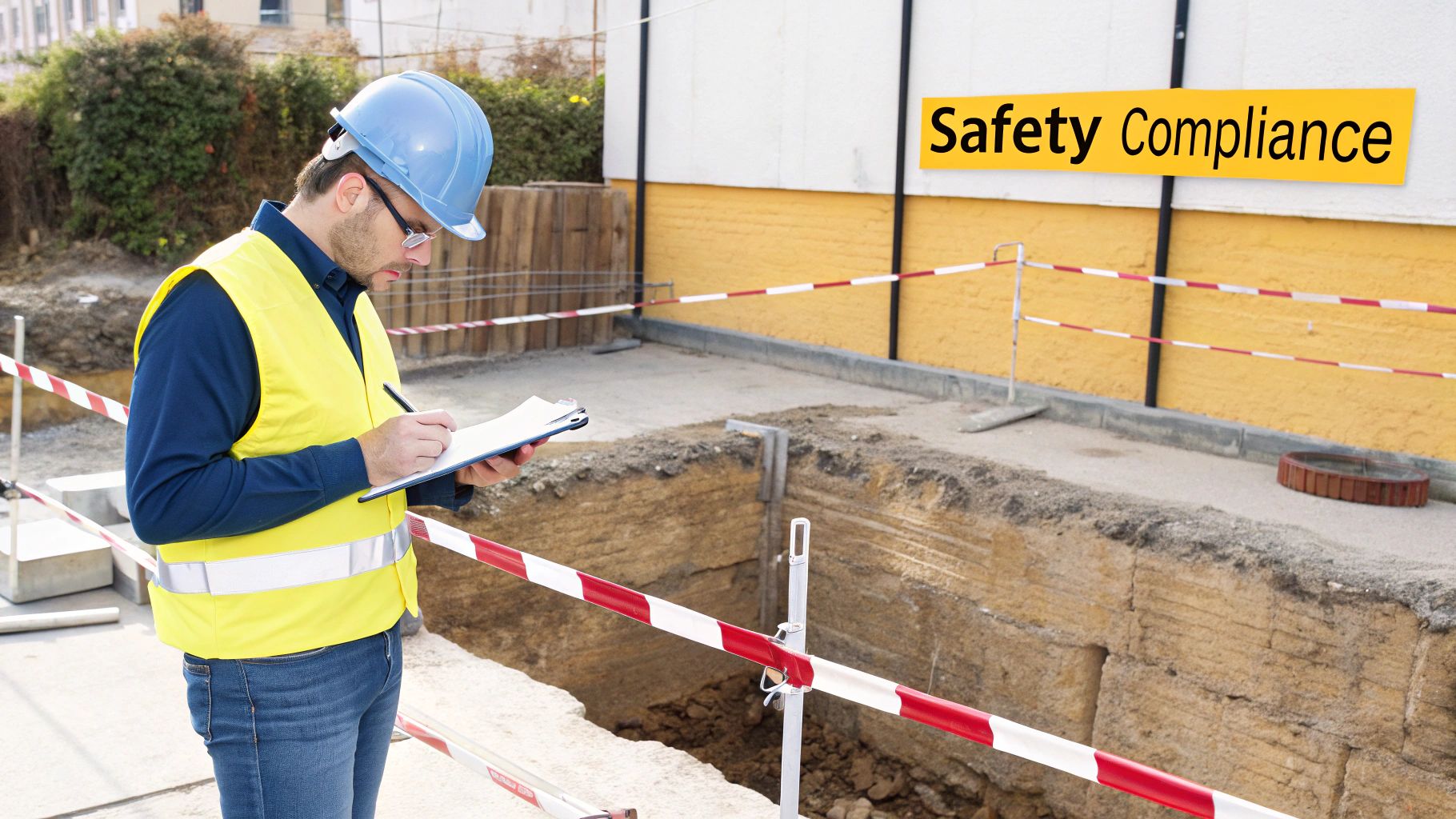
In New South Wales, all excavation and shoring work falls under the Work Health and Safety (WHS) Act and the detailed guidelines in the SafeWork NSW Excavation Work Code of Practice. These regulations aren't just suggestions; they are the benchmark for our industry, and compliance is completely non-negotiable.
The 1.5 Metre Rule and Beyond
You’ll often hear about the “1.5-metre rule,” a key mandate stating that any trench or excavation deeper than 1.5 metres must have a protective system like shoring. But any competent contractor knows that safety isn’t just about depth. A shallower trench can be just as deadly in the wrong conditions.
Think about the Central Coast's sandy, unstable coastal soils. A one-metre trench dug after heavy rain could easily collapse without warning. That’s why a professional assessment goes way beyond just using a tape measure. We look at the soil type, recent weather, groundwater levels, and any nearby weight (like machinery or buildings) to figure out the real risk.
The Role of Geotechnical Engineers
For any significant or complex excavation, getting a professional soil assessment from a qualified geotechnical engineer is the absolute first step. They’re the experts who analyse the ground conditions and provide an engineered design for the shoring system. This isn't an optional extra; it's a critical part of due diligence that ensures the shoring method is perfectly suited to your site's specific challenges.
An engineer’s report gives us the hard data we need to select the right equipment and materials—whether that’s soldier piles for a deep basement in Sydney's solid sandstone or hydraulic trench boxes for a utility line in the Hunter Valley.
Daily Inspections are Non-Negotiable
Once a shoring system is in, it's not a "set and forget" solution. Conditions on a construction site can change in a heartbeat. A heavy downpour, vibrations from passing traffic, or the movement of heavy gear can all affect the stability of an excavation.
That's why a "competent person"—a trained and experienced team member—must conduct and document daily inspections of the shoring system before anyone enters the work area. These checks look for any signs of stress, movement, or damage to ensure the system remains 100% effective. For a deeper dive into the risks, we've outlined more in our guide to trenching and excavation safety.
Key Takeaway: Shoring compliance is about more than just avoiding fines from SafeWork NSW. It's about creating a fundamentally safe working environment, protecting your property and neighbouring structures, and keeping your project on track without costly and dangerous delays.
The consequences of getting it wrong are severe. According to SafeWork NSW statistics from 2020-2024, shoring failures were linked to 15% of 145 excavation-related incidents, leading to 22 serious injuries and $8.2 million in penalties. This has prompted mandatory training that we at Booms Up Civil Group prioritise for full compliance. You can learn more about the ongoing need for skilled workers in the industry and what it means for Australian businesses.
Unpacking the Factors That Drive Shoring Costs
One of the very first questions we get is always, "So, how much is this shoring going to cost me?" While it’s impossible to just throw a number out without a proper site assessment, we believe in being completely transparent about how a quote comes together. When you understand the key variables, you can see exactly where the value lies in a professional shoring solution.
Think of effective shoring not as just another expense, but as a critical investment in your project's safety and timeline. Trying to cut corners here is a false economy. It’s a shortcut that can lead to catastrophic failures, project delays, hefty fines from SafeWork NSW, and repair bills that make the initial savings look tiny.
Excavation Size and Depth
Let's start with the most straightforward factor: the scale of the job. A deeper, wider excavation simply requires more materials, more labour, and a more robust engineering design to handle the immense pressure from the surrounding soil.
For example, a four-metre-deep basement dig for a new home in a dense Sydney suburb will have significantly higher shoring costs than a two-metre trench for a plumbing upgrade on the Central Coast. The sheer volume of earth being held back directly dictates how much steel, timber, and machinery we need on site.
Local Soil Conditions
The type of ground we’re working with is a massive cost driver. Soil isn't the same across NSW, and each type throws its own unique challenges at us, demanding specific shoring methods to match.
- Sandy Coastal Soils: Common across the Central Coast (postcodes 2250-2264), this stuff is loose and loves to collapse. It often requires methods like sheet piling just to keep the trench walls from constantly caving in.
- Reactive Clay: You'll find this throughout the Hunter Valley. This soil swells and shrinks dramatically with moisture changes, putting enormous lateral pressure on any shoring system.
- Solid Sandstone: While it's incredibly stable, digging into Sydney's sandstone bedrock needs powerful equipment. The shoring, often soldier piles, must be engineered perfectly to anchor into the rock and ensure stability.
This is why a geotechnical engineer's report is non-negotiable. It tells us exactly what we're dealing with so we can design the safest and most cost-effective solution.
Shoring Method and Duration
The specific shoring system we need to use directly influences the price tag. A simple hydraulic trench box that we can drop in for a short-term utility job is far quicker and cheaper to install than a complex soldier pile and lagging system that needs to stay put for several months on a major commercial build.
How long the shoring needs to be in place also plays a big part. Longer projects tie up our equipment and require ongoing inspections and maintenance to guarantee everything remains safe and secure for the duration. Seeing how this fits into the overall cost of excavation can give you a much clearer picture of your project's budget.
Site Access and Complexity
Finally, how easily we can get our team and machinery to the work area is a major factor. A tight, difficult-to-access site in a built-up area—think limited street parking and overhead power lines—is going to require more labour, specialised equipment, and meticulous planning than an open, flat block with easy access. That logistical complexity is a significant component of the final quote.
Choosing the Right Shoring Contractor for Your Project
Picking the right team for your shoring and excavation work is one of the most critical decisions you'll make for your project. This isn't just about digging a hole; it's about safeguarding your property, ensuring site safety, and making sure the entire project is built on a stable foundation. Skimping here is a recipe for disaster. You absolutely need a contractor with proven, hands-on experience and an unshakeable commitment to safety.

Experience with Local Ground Conditions
Local knowledge is everything in this game. Whether your site is on the Central Coast, wedged between buildings in Sydney, or out in the Hunter Valley, the ground beneath your feet has its own personality and presents unique challenges. A team that has spent years working in your specific area will instinctively know the difference between tricky coastal sands and the reactive clays you find further inland.
This kind of expertise is invaluable. It means they can spot potential problems before they become expensive headaches, choose the most effective shoring method from the get-go, and ensure the engineering is perfectly matched to your site. It’s a non-negotiable for us at Booms Up Civil, built on more than 15 years of tackling projects right here in the region.
Check for Licences, Insurance and a Safety Record
Don't be shy about asking for the paperwork. Any reputable contractor will be ready and willing to show you their current licences and full insurance policies, especially public liability. This isn't just red tape; it's your protection, your neighbour's protection, and peace of mind for everyone on site.
Just as crucial is their safety record. Ask about their safety management systems and how they ensure full compliance with SafeWork NSW regulations. A truly professional outfit will often use a dedicated contractor management system, which is a great sign they take safety and compliance seriously and handle it systematically.
Key Questions to Ask a Potential Shoring Contractor:
- Can you show me examples of similar projects you’ve completed in my area?
- What is your process for site assessment and soil analysis?
- How do you ensure compliance with SafeWork NSW and the Excavation Work Code of Practice?
- Can you provide copies of your current licences and insurance certificates?
Look for Clear Communication and Problem-Solving Skills
A good contractor should be able to walk you through their plan in plain English. They need to explain why they’ve chosen a particular shoring method and exactly what steps they’ll take to keep everything safe and stable. If a contractor gets defensive or can't explain their process with confidence, consider it a major red flag.
You also want a team that brings you solutions, not just a list of problems. Complex sites, tight access, and difficult ground conditions are all part of the job. A great contractor is a natural problem-solver who can navigate these hurdles safely and efficiently. If you need more pointers, our guide on finding the best excavation contractors near you has more practical tips to help you make a confident choice.
Your Shoring Questions Answered
We get a lot of questions about shoring, so let's tackle some of the most common ones head-on. Getting these fundamentals right from the start helps you plan your project with confidence and understand exactly what's required.
How Deep Can You Dig Before Shoring Is Legally Required in NSW?
The black-and-white rule in New South Wales is that SafeWork NSW requires shoring for any excavation deeper than 1.5 metres. That’s the critical benchmark set out in the Work Health and Safety Regulation 2017. But it's a dangerous mistake to think anything shallower is automatically safe.
The reality on site is that any trench can be a serious risk. It all depends on the conditions. Think about the soil type (is it loose, crumbly sand or stable rock?), recent weather (has heavy rain saturated the ground?), and what's nearby. The weight from machinery, adjacent buildings, or even the pile of excavated soil can be enough to cause a collapse. A professional site assessment is always the smartest and most compliant way to go, even for those "shallow" digs.
Can I DIY a Small Shoring Project?
In a word: no. We strongly advise against attempting any shoring yourself, no matter how small or simple the job might seem. Shoring is a high-stakes, engineered task, and the safety risks are extreme if it's not done perfectly. A trench collapse happens in an instant, and the consequences can be devastating.
Proper shoring is so much more than just wedging a few planks against a trench wall. It demands professionally engineered designs, certified equipment built for the job, and a trained crew who knows how to install, monitor, and remove the system safely. Trying to do it yourself not only exposes you to massive legal liability but, far more importantly, puts lives on the line. Every shoring system must comply with WHS regulations to keep everyone safe.
How Does the Soil on My Property Affect Shoring?
Soil type is probably the single most important factor we look at when planning a shoring job. The ground conditions across the Central Coast, Sydney, and the Hunter Valley vary wildly, and what works in one suburb is completely wrong for another.
For example, the sandy coastal soils you find in places like Terrigal are incredibly unstable and just want to collapse, often demanding a robust solution like sheet piling. Head into Sydney, and you’re dealing with stable sandstone bedrock, which presents its own unique challenges. Then, go further inland to the Hunter Valley, and you'll find reactive clays that swell and shrink with moisture, putting huge pressure on any support system. A professional contractor will always start with a proper look at your site’s specific soil to design a shoring solution that's both safe and effective.
How Long Does Shoring Stay in Place?
At its heart, shoring is a temporary support system. It’s designed and engineered to do one job: hold back the earth while the excavation is open and work is underway. It’s all about creating a safe zone for the construction phase.
Once the permanent structure is built—whether that's a basement wall, a concrete foundation, or a new pipeline—and it has cured enough to take on the load of the surrounding ground itself, the shoring has done its job. At that point, it’s carefully removed, often in stages, as the new structure permanently takes over the role of providing stability.
Ready to discuss the specific shoring needs for your project on the Central Coast, Newcastle, or Sydney? The team at Booms Up Civil Group is here to provide expert advice and ensure your excavation is handled safely and professionally from the start. Contact us today for a consultation and a free, no-obligation quote.