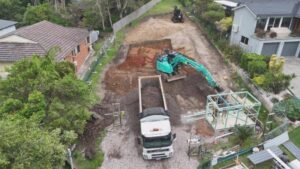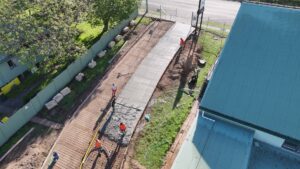

So, you’re dreaming of putting a pool in your Terrigal backyard, but the only way to get equipment in is through a skinny side gate. That’s the classic puzzle Central Coast tight access excavation is designed to solve. It’s a specialised service for those jobs where standard machinery just isn’t an option. With over 15 years of experience solving these exact problems on the Central Coast, we understand the unique challenges our local properties present.
Unlocking Your Property’s Potential
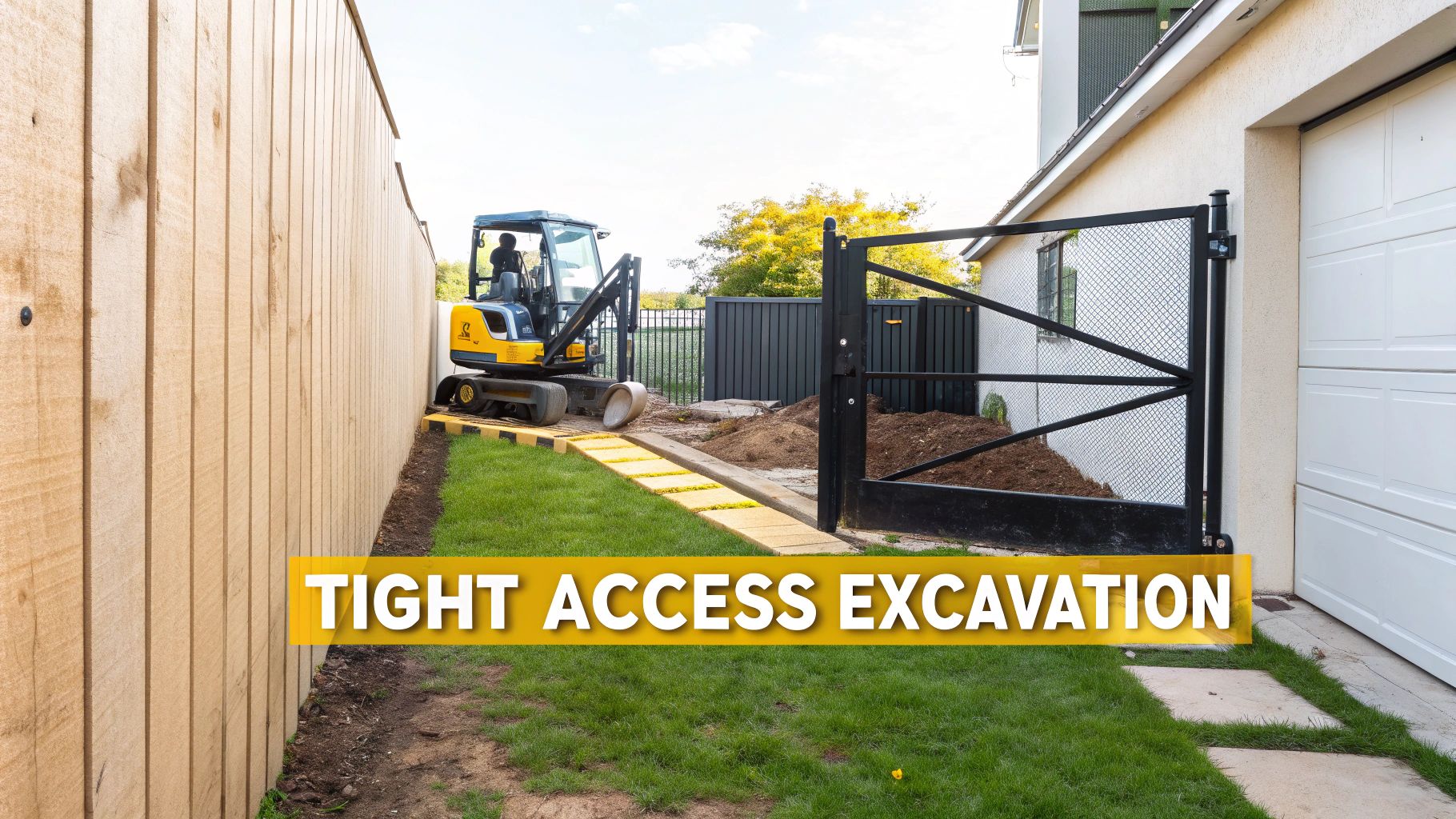
Forget complex jargon. Think of tight access excavation as the key that unlocks the true potential of tricky properties. It’s for those sites with narrow laneways, steep blocks, or existing buildings that hem you in. Here on the Central Coast, where blocks can be tight and the terrain is anything but flat, this service isn’t a luxury—it’s essential.
It brings projects to life that might otherwise seem completely out of reach. Just think about these common local scenarios where there’s simply no other way:
- Digging the foundations for a granny flat in a Gosford backyard with only a 1.5-metre side path for access.
- Excavating for urgent plumbing repairs between two tightly packed homes in Woy Woy.
- Carving out a level base for a new deck on a steep, sloping block in Copacabana.
- Carefully digging under an existing house in Umina Beach for underpinning work or new footings.
In every one of these situations, trying to bring in a standard 5-tonne excavator is a non-starter. You’d end up with a destroyed fence, a ruined garden, or even damage to the house itself. The old-school alternative was back-breaking manual labour with shovels and wheelbarrows—a slow, expensive, and exhausting process.
Today, things are different. We have a fleet of powerful yet compact machines built to navigate these exact challenges with incredible precision. Our mini-excavators can literally shrink their tracks to squeeze through a standard doorway, then expand them again for total stability once they’re on site.
It’s all about bringing the muscle and efficiency of a machine without the destructive footprint. This is smart problem-solving for difficult spaces, making sure your project moves forward safely and efficiently, no matter how tight the squeeze.
Navigating the Challenges of Confined Space Digging
Digging in a tight spot is a whole lot more than just squeezing a machine through a narrow gate. It’s a complex puzzle of logistical and environmental challenges where one small mistake can lead to some seriously expensive damage or safety hazards. Getting it right means having a deep, practical understanding of the unique hurdles that confined spaces throw at you.
One of the biggest worries on any suburban block is what’s hiding beneath the surface. Underground services like NBN fibre, water mains, sewer pipes, and stormwater drains often crisscross properties in completely unpredictable ways. Hitting one of these isn’t just an inconvenience; it can cause major service disruptions and a very painful repair bill. Before any bucket touches the ground, a professional must use service locators to map out these hidden dangers. It’s the only way to ensure the work can proceed safely.
Protecting Your Property and Your Neighbours
When you’re working inches away from a boundary fence or the wall of your neighbour’s house, there is absolutely zero room for error. The vibration from machinery, the constant movement of soil, and the risk of an accidental bump can easily damage structures that aren’t yours. This is where the skill of the operator is everything. A professional team will use precise techniques and sometimes ground protection mats to make absolutely sure that fences, retaining walls, and neighbouring foundations stay completely untouched.
Beyond protecting the solid structures, just managing the dirt itself is a huge hurdle. Picture this: we’re digging a pool in a Woy Woy backyard with only a 1-metre side access. How on earth do you get 20 tonnes of sandy soil out when a large truck can’t get anywhere near the site? This process, known as spoil removal, requires specialised gear like mini-dumpers or motorised barrows to ferry every last bit of material from the excavation site out to a truck or skip bin on the street. It’s a methodical, labour-intensive part of any tight access job that needs to be planned meticulously. To see how this is managed in detail, you can explore our guide on overcoming difficult access excavation challenges.
Adapting to Local Ground Conditions
The Central Coast’s diverse geology just adds another layer of complexity to the mix. The sandy, often unstable soils you find in coastal suburbs like Umina or Ettalong behave very differently from the tough sandstone and reactive clay that’s common around Kariong and Somersby.
Sandy soil is notorious for collapsing, which often means you need trench shoring just to keep everyone safe. Rock and sandstone, on the other hand, demand powerful hydraulic hammers and rock saws to even make a dent. An experienced local contractor knows what to expect, can identify these conditions on sight, and will show up with the right attachments and expertise to get the job done properly the first time, preventing frustrating delays.
The Specialised Machinery That Makes It Possible
Successfully tackling a tight access excavation project comes down to one simple thing: having the right tools for the job. You can’t just bring a smaller version of a standard excavator; you need purpose-built machinery designed with intelligence and precision to work where others simply can’t. These machines are the true heroes of any confined space project.
The cornerstone of our fleet is the mini-excavator. Think of it as a powerhouse that can perform a magic trick. Its most incredible feature is a retractable track base, which lets it shrink down to less than a metre wide to squeeze through a standard side gate or doorway. Once it’s on site, the tracks expand back out, creating a stable platform for some serious digging.
Compact Power and Precision
These machines aren’t just small; they’re incredibly smart. They use rubber tracks instead of steel, which gives them very low ground pressure. This means we can move a mini-excavator across your driveway or lawn with minimal risk of damage—something that would be impossible with heavier, steel-tracked equipment. It’s this combination of power and a gentle touch that makes them perfect for residential work.
Consider a project like excavating under an existing house in Newcastle for new footings. This job requires careful, precise digging in an extremely confined space. A mini-excavator, often paired with a compact mini-dumper, is the only way to perform this task efficiently and safely, replacing what would have been weeks of back-breaking manual labour with shovels. As technology has improved, mini-excavators and dumpers have become essential. For instance, some models are specifically designed for pathways as narrow as 1200mm, enabling precise work in the most restricted conditions.
This infographic outlines the main challenges these machines are built to overcome.
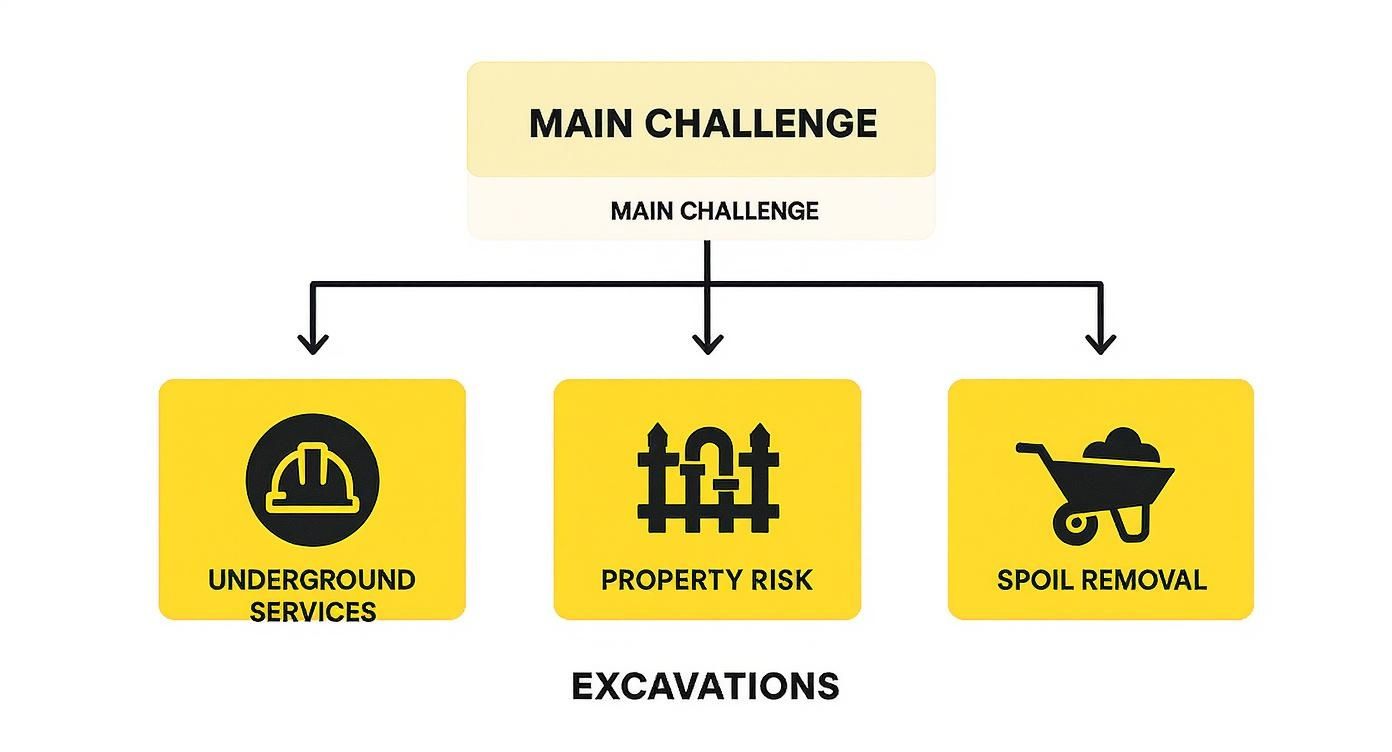
The visualisation clearly shows how managing underground services, protecting property, and removing spoil are the three core pillars of a successful tight access project.
To put the differences into perspective, let’s compare the workhorses of a standard site with the agile specialists of a tight access job.
Standard vs Tight Access Excavation Equipment
| Feature | Standard Excavator (e.g., 5-tonne) | Tight Access Mini-Excavator (e.g., 1.7-tonne) |
|---|---|---|
| Width | Typically 2 metres or more | Can retract to less than 1 metre |
| Weight | 5,000kg or more | Around 1,700kg |
| Ground Impact | High; steel tracks can damage concrete and lawns | Low; rubber tracks minimise surface damage |
| Accessibility | Requires wide, open access | Can fit through standard gates and doorways |
| Best For | Bulk earthworks, large open sites | Basements, pools, under-house work, landscaping |
This comparison really highlights just how different the equipment is. It’s not about size alone, but a completely different design philosophy built for precision in confined spaces.
More Than Just a Bucket
A mini-excavator’s true strength lies in its versatility. It’s not just a digging machine; it’s a multi-tool that can adapt to the unique demands of any site.
By using the right hydraulic attachments, a single mini-excavator can transform to handle rock, concrete, and soil with incredible efficiency. This adaptability is what makes professional tight access excavation so effective.
For example, on a rocky block in Kariong, we can quickly switch from a standard bucket to a powerful hydraulic hammer to break through sandstone. For clearing stubborn tree roots or old concrete, a rock saw or grab attachment can be fitted in minutes. This ability to change tools on the fly means we can handle whatever the Central Coast ground throws at us without needing to bring in multiple machines, saving everyone time and money. Our guide to the complete range of excavator attachments explains these tools in more detail.
Prioritising Safety and Council Compliance
On any excavation project, safety is always priority number one. But when you’re working in a tight, confined space, that focus gets dialled up to eleven. There’s simply less room for error, fewer escape routes, and a much greater potential for things to go wrong, fast.
This is exactly why SafeWork NSW has such a serious view of any and all excavation work. The rules aren’t just red tape; they’re there for a very good reason.
According to Safe Work Australia, any excavation that goes deeper than 1.5 metres is automatically classified as high-risk construction work. This isn’t just a label—it legally triggers the need for a formal Safe Work Method Statement (SWMS) before a single bucket of dirt can be moved. Think of a SWMS not as paperwork, but as a detailed game plan that identifies every potential hazard and maps out exactly how to control it. This is absolutely critical on tight urban sites where workers have limited ways out.
Managing Site-Specific Risks
The biggest and most immediate danger in any excavation is, without a doubt, the risk of a trench collapse. In the tight confines of a residential job, where you might be digging right up against a neighbour’s fence or the footings of the house, a collapse is nothing short of catastrophic. That’s why proactive safety measures like installing trench shoring or shields are completely non-negotiable.
Another major risk is accidentally hitting underground utilities. Striking a gas line, a water main, or an electrical cable can have devastating consequences. This is why a non-negotiable first step for any professional contractor is a comprehensive part of their initial site preparation for excavation—using a service locator to map out every single pipe and cable buried beneath the surface. It’s always essential to consult general safety guidelines for equipment operation and site management to effectively manage these risks.
Meeting Local Council Requirements
On top of workplace safety, we also have to navigate the specific rules set by local councils. Bodies like the Central Coast Council or Newcastle Council have their own stringent regulations, all designed to protect public property and keep disruption to the local community to an absolute minimum.
These rules often cover important details like:
- Sediment control: We must have measures like silt fences in place to stop soil and runoff from washing into stormwater drains.
- Work hours: There are strict limits on when noisy work can happen, especially in quiet residential streets.
- Protecting public assets: If we need to drive machinery over a public footpath, we are required to use ground protection mats and take full responsibility for any damage.
When you’re working on a tight access project, these council compliance issues are magnified because the work is often happening right on the property boundary. A seasoned, professional contractor knows these local obligations inside and out, making sure your project runs smoothly without any costly fines or stop-work orders from council inspectors.
Understanding the Cost of Your Excavation Project
“So, how much is this going to cost?”
It’s usually the first question we get, and for a good reason. But when it comes to tight access excavation, the answer isn’t as straightforward as it is for a wide-open site. A unique set of challenges drives the final price, and knowing what they are helps you see the real value behind a professional quote.
The two biggest factors are always the complexity of your site and what we’re digging into. Just getting our machines to the work area can be half the battle. A property with steep slopes, a maze of stairs, or a long, winding path from the street means more time, more labour, and specialised gear just to get started.
Breaking Down the Key Cost Factors
The ground itself has a huge say in the final price tag. Digging through the soft, sandy soil you find around Central Coast suburbs like Umina is one thing. Smashing through the hard sandstone bedrock common in places like Kariong is a completely different ball game.
Rock excavation demands powerful hydraulic hammer attachments and takes a whole lot longer, which naturally bumps up the cost. If your project involves a larger, undeveloped site, you might also need to consider the cost to clear an acre of land as part of your initial budget.
Another major piece of the puzzle is the total volume of material—or spoil—that needs to be dug up, moved out, and legally taken care of. It’s not just about the digging; it’s the logistics of getting tonnes of earth off your property. This is a critical step, and you can get the full rundown in our guide on how to properly dispose of excavated soil.
The bottom line is that tight access work almost always costs more per cubic metre than a standard open-site job. This premium comes from the specialised machinery, the extra labour needed to get spoil out, and the slower, more careful pace required to operate safely in confined spaces.
Broader economic trends also play a part. The demand for site preparation services in Australia often moves with the housing market. Even if new builds slow down, we often see a rise in extensions and tricky urban projects, which keeps the demand for specialist excavation services strong in cities like Sydney and Newcastle.
Choosing the Right Excavation Contractor
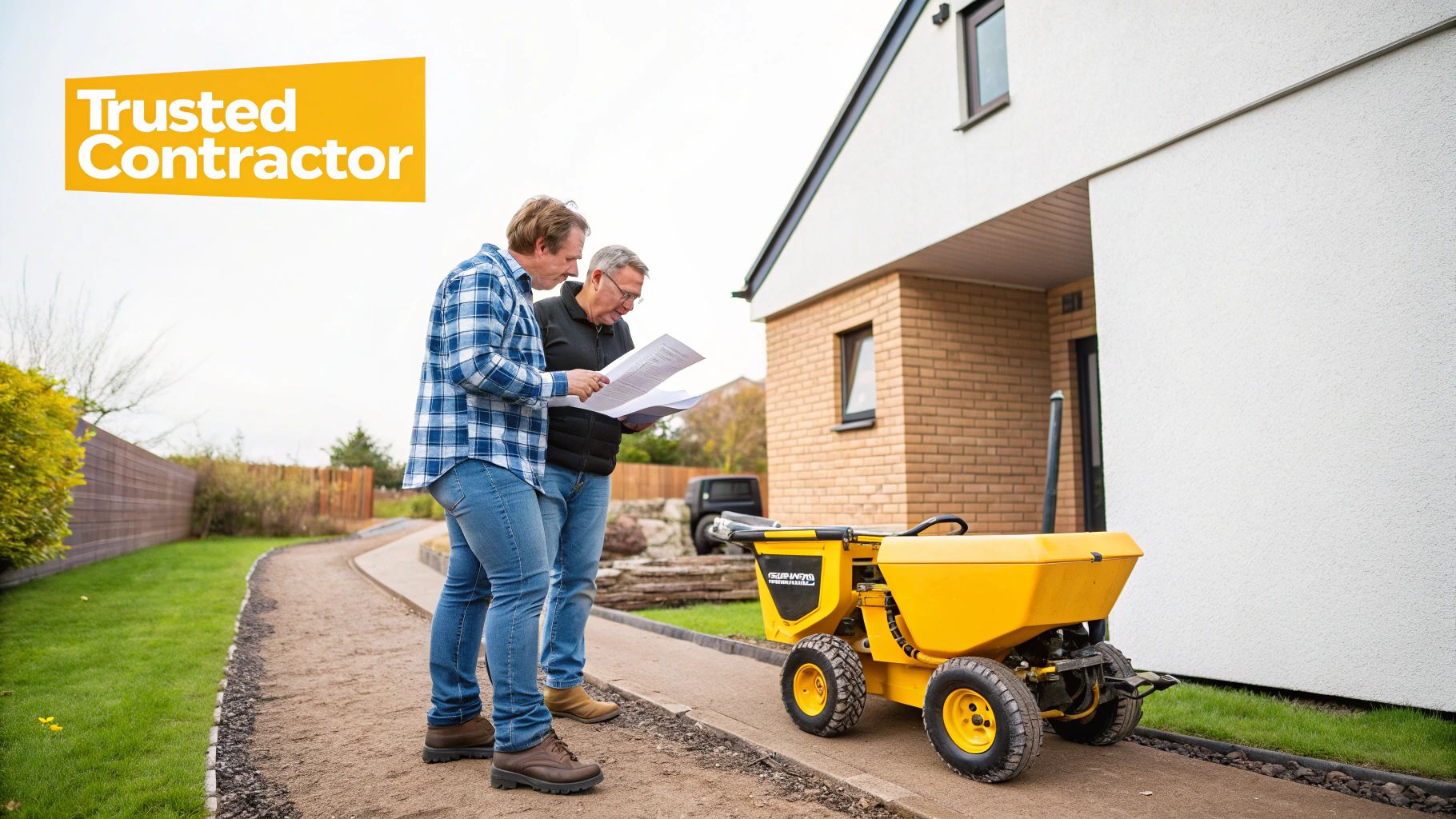
Picking the right crew for your tight access job is probably the single most important decision you’ll make for the entire project. Get it right, and you get expertise and peace of mind. Get it wrong, and you’re looking at costly delays and potential damage.
It all starts with asking the right questions before you sign anything.
First up, always confirm the contractor holds the correct licences and has comprehensive insurance. Public Liability cover is absolutely non-negotiable; it’s what protects you and your property if something unexpected happens. Any professional team will have no problem showing you their certificates of currency.
Verifying Experience and Safety Standards
Don’t just take their word for it—ask to see proof of their experience. A reliable contractor should be able to walk you through examples of similar tight access projects they’ve handled. This gives you confidence that they genuinely understand the unique challenges your site might throw at them, whether it’s the sandy soils near the coast or the rocky ground further inland.
Safety needs to be their number one priority, full stop. Insist on seeing a site-specific Safe Work Method Statement (SWMS) before any work kicks off. This document is your proof that they’ve properly thought through the risks and have a solid plan to manage them.
A contractor’s deep local knowledge is an invaluable asset. Someone who understands the Central Coast’s unique ground conditions and specific council processes can foresee potential issues and prevent them from becoming expensive problems.
Ultimately, you’re looking for a partner, not just a machine operator—someone committed to getting the job done right the first time. Taking the time to properly vet your contractor ensures your project starts on a solid foundation, both literally and figuratively. For a closer look at what’s involved in local projects, check out our guide to excavation on the Central Coast.
Your Tight Access Excavation Questions Answered
We get a lot of questions about how tight access excavation actually works on the ground. Here are some quick, clear answers to the most common queries we hear from clients across the Central Coast and Newcastle.
How Narrow Does Access Need to Be?
Generally, if the only way into your work area is less than about 1.8 metres wide, you’re almost certainly going to need a specialised tight access excavation service. Many of our mini-excavators have retractable tracks that can shrink down to under 1 metre, letting them slip through a standard side gate or even a doorway.
But it’s not just about width. We also have to consider overhead clearance and the entire path to the site. The only way to know for sure is to get a professional to come out for a proper site assessment.
Will Your Machines Damage My Lawn or Driveway?
Not at all. Our specialised tight access machines are specifically designed to have a minimal impact on your property. They’re lightweight and run on rubber tracks that spread their weight evenly, which dramatically reduces the risk of damage compared to heavier, steel-tracked equipment.
For particularly sensitive surfaces like pavers or manicured lawns, we always lay down heavy-duty ground protection mats. It’s an extra step that ensures your property stays in great condition from start to finish.
How Do You Remove All the Dirt from a Tight Site?
Getting the excavated material—what we call “spoil”—out of a constrained space is a critical part of the job. For this, we use specialised gear like motorised barrows or compact mini-dumpers that are small enough to fit through the same narrow gaps as the excavator.
These machines let us efficiently shuttle the soil from the dig site out to a skip bin or truck parked on the street. This system makes sure every last bit of spoil is removed safely and legally for proper disposal.
Is It Possible to Excavate Under My Existing House?
Yes, digging under an existing structure is a common and highly specialised job that our tight access equipment is perfect for. Using compact, zero-swing excavators, our skilled operators can carefully dig out areas for new foundations, cellars, or underpinning work.
This kind of work demands meticulous planning and execution to guarantee the building’s structural integrity is protected at all times.
Ready to get into the specifics of your project? The team at Booms Up Civil Group has more than 15 years of experience solving tight access challenges on the Central Coast. Get in touch for a no-obligation site assessment and quote.
https://boomsupcivil.com.au