
So, you’re considering a sandstone retaining wall and wondering what it’s going to cost. Let’s get right into it: think of sandstone as a premium investment for a truly premium result. While every project is different, the upfront cost is higher than other materials, but what you’re buying is unmatched durability and a natural beauty that manufactured options just can’t touch. We find that getting it right the first time saves you money and headaches in the long run.
Understanding Your Initial Investment
When you’re putting a budget together, it helps to start with a realistic figure. Across NSW, you can expect a professionally installed sandstone retaining wall to cost anywhere from $300 to over $600 per square metre.
Where your project lands on that scale depends on a few key things. The quality and type of stone you choose, how easy it is for machinery to access your site, and whether you need an engineer to sign off on the design all play a big part in the final number. For a bit more context, you can explore retaining wall construction costs on servicetasker.com.au to see how these different elements come together.
Sure, cheaper options like treated pine sleepers are out there, but they simply don’t have the same staying power. A properly built sandstone wall is a permanent fixture, designed to last for decades—a smart, long-term addition to your property’s value. You can see this in projects like the residential sandstone walls in Kariong, which are built to stand the test of time.
To give you a clearer picture, it helps to see how sandstone stacks up against other common materials.
Quick Cost Comparison of Retaining Wall Materials
This table gives you a snapshot of typical costs and lifespans for different retaining wall materials, showing you exactly where sandstone fits into the bigger picture.
| Material Type | Average Cost per m² (Installed) | Typical Lifespan |
|---|---|---|
| Treated Pine Sleepers | $250 – $450 | 15-20 years |
| Concrete Sleepers | $350 – $600 | 40-75 years |
| Sandstone Blocks | $300 – $600+ | 50+ years |
| Gabion Baskets | $300 – $550 | 50-100+ years |
As you can see, while sandstone is a premium choice, its incredible longevity makes it a worthwhile investment. It’s not just about building a wall; it’s about adding a lasting, beautiful, and structurally sound feature to your property that won’t need replacing in a couple of decades.
Breaking Down the Key Cost Factors
The final price tag on your sandstone retaining wall is a lot more than just the cost of the stone itself. To get a realistic budget together, you really need to understand the five key ingredients that shape the total quote for a project, whether you’re on the Central Coast, in Sydney, or up in the Hunter Valley.
Material Choice and Quality
First up is the sandstone itself. What’s the vision? Are you after those perfectly uniform, A-Grade dimensional blocks for a sleek, formal finish? Or is the rustic charm of more natural, random stone a better fit for your property’s character?
While A-Grade blocks often have a higher upfront purchase price, they typically require less shaping and fiddling on-site. On the other hand, random stone might seem cheaper to buy, but it demands a lot more skilled labour and time to piece together into a beautiful, solid wall. It’s a classic trade-off between material cost and labour time.
Labour and Installation Expertise
Don’t underestimate this one. Building a sandstone wall is a genuine craft that relies on experienced stonemasons and machine operators. In fact, labour is often the single biggest component of the cost.
This covers everything from the initial dig-out to the painstaking placement of each individual block. It’s especially true for tricky designs or challenging sites where precision and on-the-fly problem-solving are non-negotiable. While labour rates are a key factor in construction, you can get a broader perspective on the broader construction labour market in the UK to understand general industry trends.
Site Preparation and Machinery
Long before the first stone gets laid, the groundwork has to be perfect. This means excavation, levelling the site, and making absolutely sure you have a stable foundation to build on.
The machinery needed—from excavators to cranes for lifting the heavy blocks—all adds to the final bill. For example, a tight-access job in a packed Sydney suburb will need specialised mini-excavators, which impacts the budget differently than a wide-open, rural block in the Hunter. If you want to get into the nitty-gritty of this stage, check out our guide on the importance of professional site preparation and excavation.
This infographic gives you a good sense of where sandstone sits in the cost hierarchy compared to other common materials.
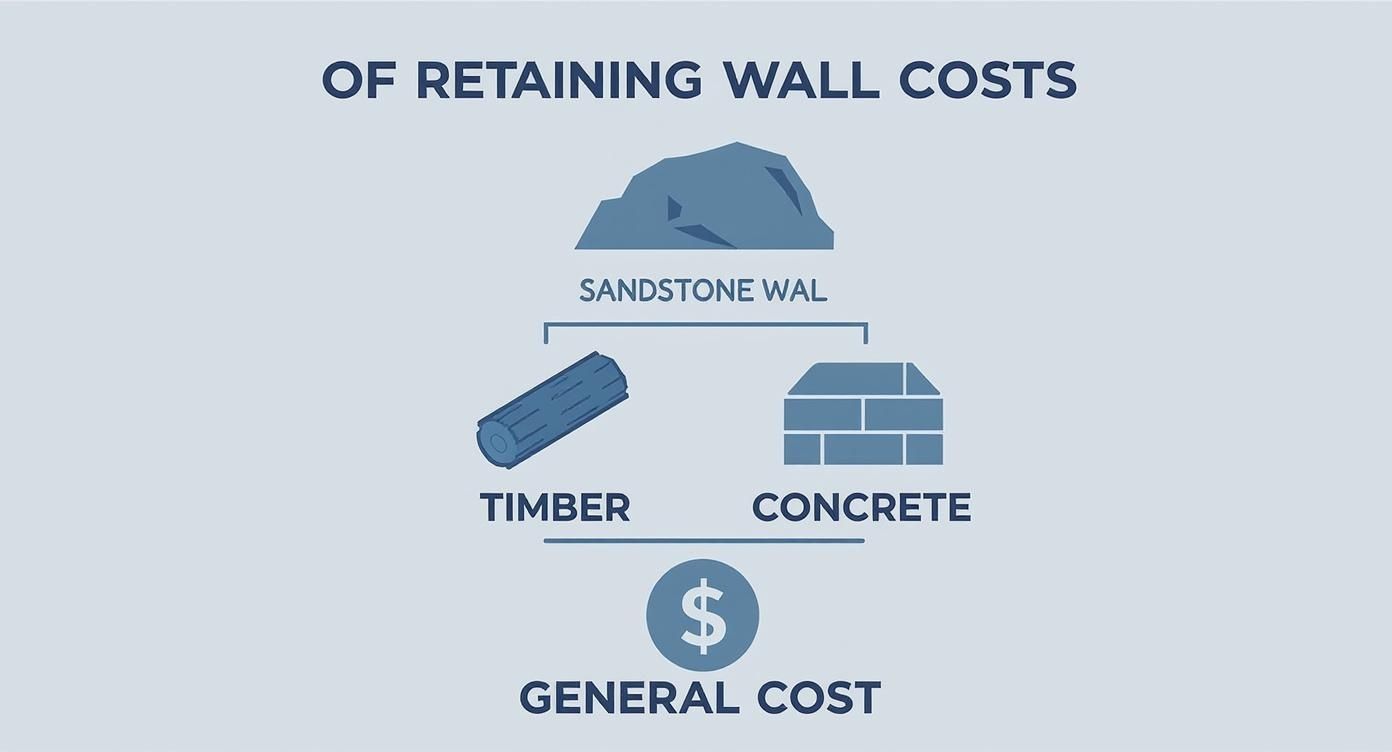
As you can see, sandstone is positioned as a premium material. This reflects not just its incredible durability and timeless appeal, but also the specialised labour required to get the job done right.
How Site Conditions Influence the Final Price
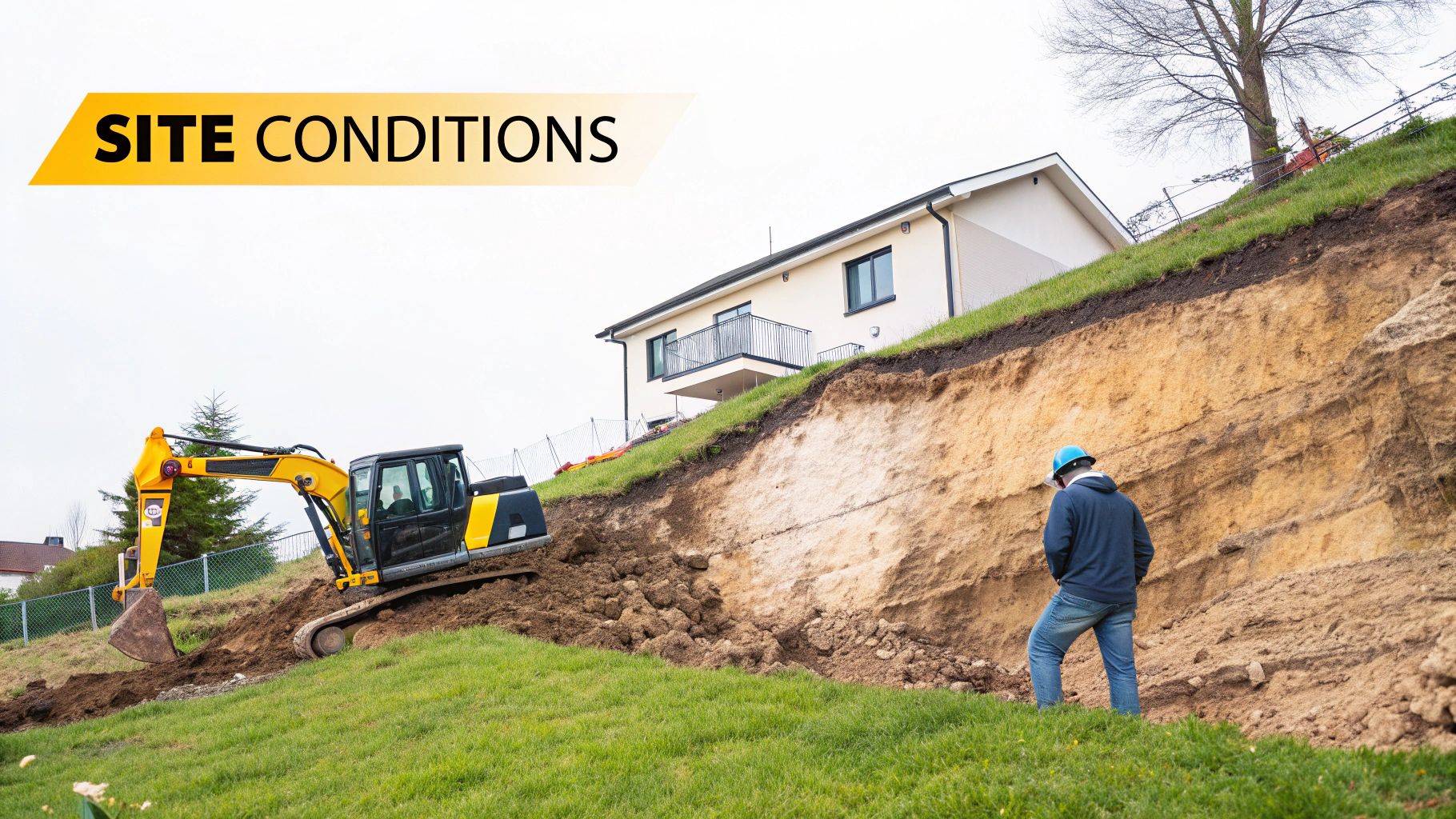
Your property’s unique layout plays a massive role in the final cost of a sandstone retaining wall. It’s simple, really: a project on a flat, easy-to-reach block in a new Central Coast estate will have a very different price tag than a job on a steep, tricky site in Newcastle with limited access.
Every block has its own personality and its own set of challenges, and these directly influence how much time we spend on site and what kind of machinery we need to bring in. The big price difference comes down to complexity. A flat site is predictable—we can get in, excavate, and deliver materials without much fuss. But a sloped or uneven site? That often means more significant earthworks, specialist engineering, and extra machinery to make sure the wall is built to last. These factors can easily add up to 30% or more to the total cost.
Understanding Terrain and Access
The slope of your land is one of the first things we look at. Imagine you’re building on a steep block in Terrigal; we can’t just drive a big excavator onto the site and start digging. Tight or difficult access often means we have to bring in smaller, more specialised gear like mini-excavators. In some cases, we might even need a crane to lift the sandstone blocks into place one by one.
This is where planning becomes everything. We specialise in finding smart solutions for these complex sites, something you can read more about in our guide to difficult access excavation. Just getting our machinery and materials to the work area safely and efficiently is a major part of the job that has a direct impact on your budget.
The Impact of Local Soil Types
What’s under your feet matters just as much as the slope. Soil conditions across Sydney, the Central Coast, and the Hunter Valley vary dramatically, and each type presents its own challenges. The sandy soils you find near coastal suburbs like Umina Beach behave very differently from the reactive clay that’s common in many inland areas.
Sandy soil, for example, needs specific shoring and compaction techniques to stop it from collapsing during the build. Clay, on the other hand, can swell and shrink with moisture changes, which means we often need to dig deeper footings and install more robust drainage to handle ground movement and water pressure. A thorough site assessment is the only way to get an accurate quote that accounts for these kinds of hidden variables.
Navigating Council Approvals and Engineering Costs
Building a sandstone retaining wall isn’t always as simple as just digging and stacking blocks. Depending on where you are in NSW, the height of your wall is the big one—it’s the trigger that can pull you into the world of formal council approvals, adding a necessary layer to your budget.
As a rule of thumb, any retaining wall creeping over 600mm to one metre high is going to need a Development Application (DA) and a sign-off from an engineer. This isn’t a hard-and-fast state-wide rule; what Central Coast Council asks for might be a bit different from Newcastle City Council’s process. These regulations aren’t just red tape, either. They’re there for a very good reason: to make sure your wall is structurally sound and won’t become a headache for you or your neighbours down the track.
Why You Need an Engineer
Think of a structural engineer as your expert partner in making sure everything is safe and compliant. Their job is to get boots on the ground at your site, suss out the soil conditions, calculate the load the wall needs to handle, and then design a structure that ticks all the boxes of the relevant Australian Standards (AS).
The engineer hands over a set of detailed plans and a report, which is the blueprint we builders follow to the letter. This is also the core documentation you’ll submit to your local council with your DA. It’s an upfront cost, separate from the build itself, but it’s a non-negotiable investment in getting the job done right. Trying to skip this step is a recipe for disaster, risking a non-compliant wall that could fail later on.
To get a better handle on the specifics, check out our in-depth guide on retaining wall regulations in NSW.
Important Note: Building a wall without the proper approvals can land you in hot water. We’re talking hefty fines from SafeWork NSW or your local council, and in the worst-case scenario, an order to tear it all down at your own expense. Always factor these professional fees into your budget from day one.
Why Sandstone Is a Smart Long-Term Investment
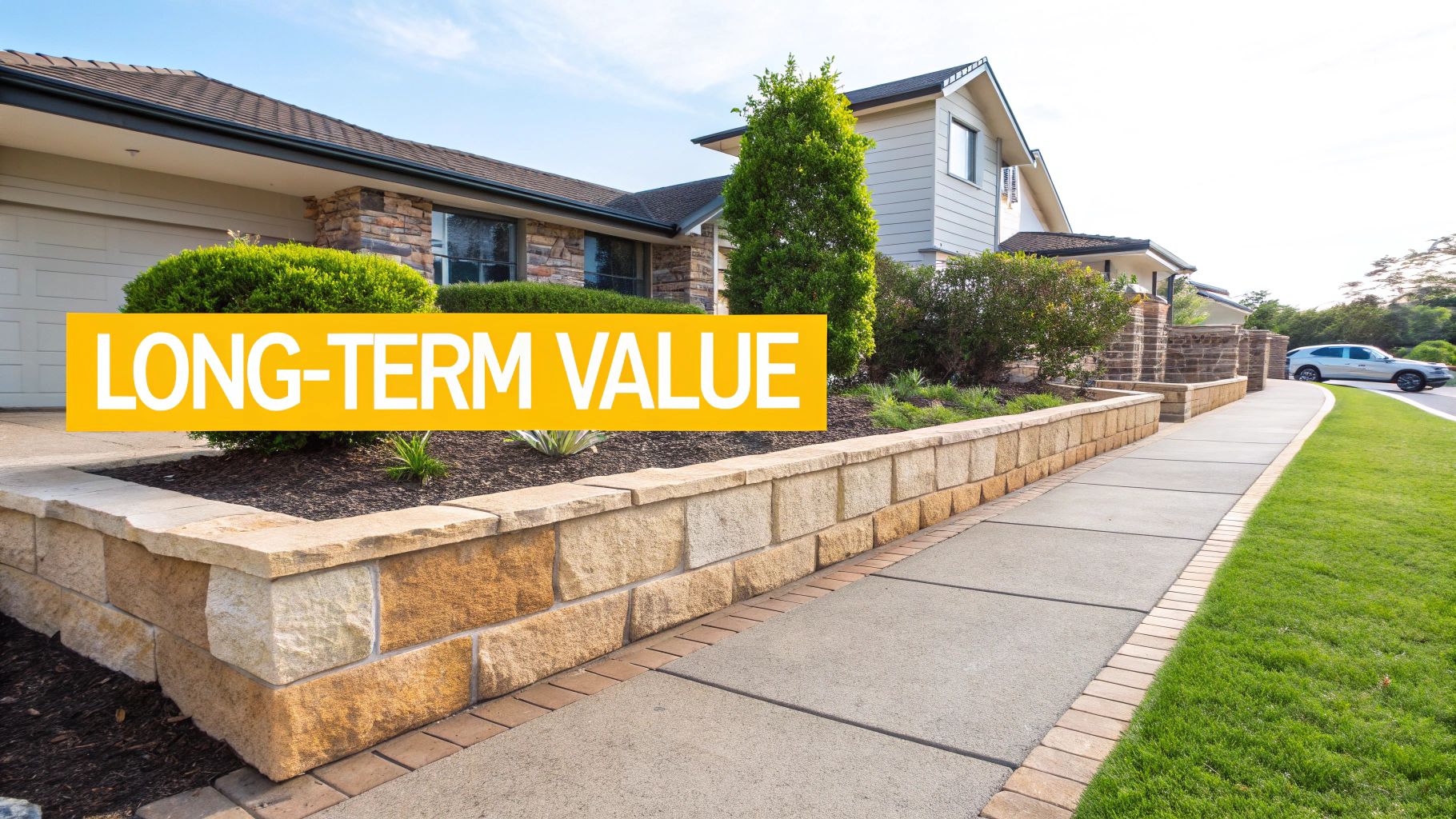
It’s easy to look at the upfront sandstone retaining wall cost and feel a bit of sticker shock. But it’s crucial to see it for what it truly is: a long-term investment in your property’s future value and structural integrity.
Sure, treated pine sleepers might seem cheaper now, but they often need replacing within 15-20 years. A professionally built sandstone wall, on the other hand, is built for the long haul. It’s a permanent feature designed to handle decades of harsh Australian conditions, from the baking summer sun in the Hunter Valley to the salty storms on the Central Coast.
Built to Last Generations
The incredible durability of sandstone is its defining feature. A well-built, hand-placed sandstone wall has an average lifespan that can easily exceed 50 years, making it a genuine “set and forget” solution for your property.
Market data from across NSW confirms that while the initial cost can range from $390 to over $700 per square metre, its sheer longevity makes the investment worthwhile. Think about it—you’re avoiding the recurring expense, disruption, and headache of repairs or a full replacement that often comes with cheaper materials. Paying more now almost always saves you significant money and stress down the track.
Enhancing Property Value and Appeal
Beyond its brute strength, a sandstone wall brings a level of aesthetic and financial value that other materials just can’t match. Its natural colours and textures create a timeless, premium look that elevates street appeal far beyond what manufactured blocks can ever hope to achieve. You can see more examples of this in our guide on sandstone retaining wall design.
This visual upgrade isn’t just nice to look at; it’s a tangible asset. Well-designed structural landscaping is one of the most proven strategies to increase property value. When you choose sandstone, you’re not just building a wall—you’re making a strategic investment in your property’s future worth.
How to Get an Accurate Project Quote
Getting a one-line quote for a retaining wall is a recipe for disaster. It’s the fastest way to see your budget blow out and your project spiral into frustration. To genuinely compare the cost of a sandstone retaining wall between different contractors, you need a detailed, itemised quote that leaves absolutely no room for guesswork.
Think of a proper quote not as a price tag, but as a project roadmap. It should give you a transparent, line-by-line view of exactly where your money is going. This breakdown is crucial for understanding the true scope of the job and making sure there are no nasty surprises waiting for you down the track. Without it, you’re just comparing apples and oranges.
What a Comprehensive Quote Must Include
When a quote lands in your inbox, scan it for these key components. If anything is missing, it’s a massive red flag and you should ask why.
A professional, thorough quote will always specify:
- Materials: The type, grade, and exact quantity of sandstone blocks. It should also list the costs for drainage aggregate, ag-pipe, and geotextile fabric.
- Labour: The estimated hours and the hourly rate for all the hands-on work, from the first scoop of dirt during excavation to laying the final block.
- Machinery Hire: Any costs for bringing in the heavy hitters like excavators, cranes, or any other specialised equipment your site might need.
- Waste Removal: The cost to get rid of all the excavated soil and any other rubbish generated on-site.
- Provisional Sums: Any estimated costs for third-party services, like council DA fees or reports from a structural engineer.
When you insist on getting this level of detail, you can confidently choose a professional who truly understands your project and is committed to delivering it on budget.
Your Questions Answered
We get a lot of questions about building sandstone retaining walls, and for good reason—it’s a significant investment. Here are a few of the most common ones we hear from property owners.
Do I Really Need Council Approval for a Sandstone Retaining Wall in NSW?
Probably, yes. While it’s not a blanket rule, the moment a retaining wall gets to a certain height—usually somewhere between 600mm and 1 metre—and is close to a property boundary, councils will almost certainly want to see engineering plans and a formal application.
Every council has its own specific triggers. The rules for Central Coast Council can be quite different from the Northern Beaches Council, for example. The best first step is always to check your local regulations, or better yet, have your contractor handle that part of the process for you. Don’t risk a stop-work order.
Can I Save Money by Supplying My Own Sandstone?
On paper, this can look like a smart way to cut costs, but in practice, it often ends up being a false economy. Professional wall builders have long-standing relationships with quarries. They know exactly where to source high-quality, graded stone that’s right for the job.
The risk with sourcing it yourself is ending up with a mixed bag of inconsistent block sizes or, worse, lower-grade stone that isn’t structurally sound. This just means more work and higher labour costs for the stonemason trying to piece it all together, and it can even create serious liability issues down the track. It’s a conversation worth having with your contractor, but they’ll likely advise against it.
How Much Will Proper Drainage Add to the Cost?
Think of drainage not as an ‘add-on’ but as a core, non-negotiable part of the wall itself. Poor drainage is the undisputed number one killer of retaining walls.
A professional job will always include the cost of agricultural pipes (ag-pipe), aggregate backfill, and geotextile fabric to manage water pressure. This might add another 10-15% to the total project cost, but skipping it is like building a house without a proper roof. Eventually, the hydrostatic pressure will cause your beautiful wall to bulge, crack, or completely fail, leading to repairs that are far more expensive than getting it right the first time.
Ready to get a clear, accurate quote for your project? At Booms Up Civil Group, we specialise in building sandstone retaining walls on the Central Coast, Sydney, and the Hunter Valley that are designed to last. Contact us today for a detailed assessment and quote.