

If you live in Newcastle, you know that retaining walls are far more than just a decorative garden edge. They’re often essential engineering solutions, especially with our unique local landscape. From the steep slopes rolling down through Merewether to the shifting soils near the Hunter River, a well-built retaining wall is the key to managing your property safely and effectively.
Why Retaining Walls Are a Must-Have in Newcastle
Newcastle’s distinct geography presents challenges that make retaining walls a genuine necessity, not just a nice-to-have. The mix of hilly terrain and heavy rainfall means soil stability, erosion, and water management are constant worries for property owners.
A professionally built retaining wall isn’t just holding back dirt; it’s a multi-tasking problem solver.
Imagine you’ve got a property in The Hill or Adamstown Heights with a steep, unusable slope. A retaining wall can turn that wasted incline into level, functional tiers—perfect for a new patio, a garden, or a safe spot for the kids to play. It creates usable space out of nothing.
Those heavy downpours we get can quickly wash away precious topsoil, destabilise foundations, and ruin your landscaping. A wall acts as a solid barrier, keeping your soil exactly where it belongs. It’s an investment in protecting your property.
Finally, a properly engineered retaining wall has drainage built right in. This system is designed to channel water away from your home’s foundations, preventing waterlogging and the immense hydrostatic pressure that can cause serious structural damage.
The groundwork is absolutely crucial for a wall that’s built to last. That’s why getting a handle on the full scope of site preparation and excavation is so important before a single block is laid.
With Newcastle’s average annual rainfall sitting around 1,134 mm, effective drainage isn’t just a component of a retaining wall—it’s one of the most critical. Nailing this detail secures your property and can dramatically improve its usability and value. That’s why we always say getting your retaining walls in Newcastle built correctly the first time isn’t just a good idea; it’s a vital long-term investment in your property’s safety and stability.
Choosing the Right Materials for Your Newcastle Wall
Picking the right material for your retaining wall is one of the biggest decisions you’ll make. It’s a choice that directly shapes the wall’s lifespan, its final look, and, of course, the total cost. Around Newcastle, we see all sorts of materials being used, and each one has its own strengths and weaknesses depending on the site and what you’re trying to achieve.
First, let’s get a clear picture of what a well-built retaining wall actually does for your property. It’s more than just a barrier; it’s a fundamental improvement to your land.
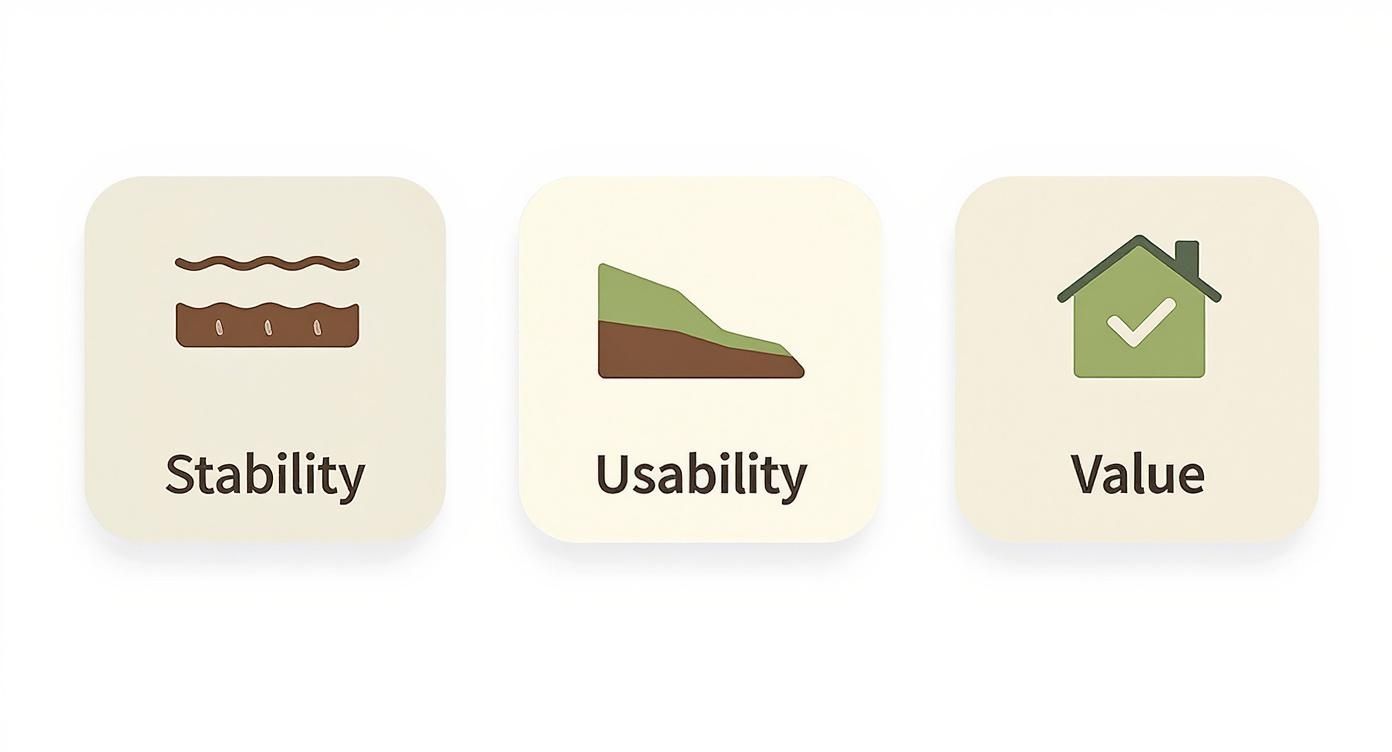
As you can see, a retaining wall is a hardworking asset. It’s all about making your land more stable, more usable, and ultimately, more valuable.
Timber Sleeper Walls
Treated pine sleeper walls are everywhere in Newcastle, and for good reason. They are one of the most budget-friendly options out there, making them a popular choice for residential jobs in suburbs like Waratah or Jesmond where keeping costs down is a priority.
But that lower upfront cost comes with a trade-off. Even when properly treated, timber will eventually give in to rot and termites, especially with our damp climate. You can generally expect a lifespan of 15-20 years from a well-built timber wall, but it’s going to need looking after and, sooner or later, replacing.
Concrete Block and Sleeper Walls
If you’re after a serious step up in durability, concrete systems are a fantastic choice. This covers everything from interlocking concrete blocks (like the Keystone or Tasman systems) to concrete sleepers that slot neatly into galvanised steel posts. These materials give a clean, modern finish and are engineered for perfect consistency.
Being manufactured products, they offer predictable strength and are completely immune to rot and pests. This gives them a much longer life than timber. You’ll see them used a lot in newer developments and on sites that demand a tough, engineered solution, handling everything from simple garden edges to complex, tiered walls.
Natural Stone Walls
When the top priorities are pure aesthetics and timeless strength, nothing beats natural stone. Sandstone, in particular, is a premium choice that fits beautifully with Newcastle’s coastal vibe and heritage homes. A properly constructed sandstone wall isn’t just a structure; it’s a piece of craftsmanship.
These walls are incredibly robust, with a lifespan that can easily push past 100 years if they’re built right. Let’s say you have a property in Bar Beach overlooking the ocean. A sandstone wall doesn’t just provide the essential support; it adds enormous character and real value to your home. If this premium route sounds appealing, you can explore the unique benefits of sandstone retaining walls in Newcastle to see if it’s the right fit for your project.
Gabion Basket Walls
Gabion walls offer a very distinct, rustic look and are brilliant for drainage. They’re essentially wire mesh baskets filled with rocks, creating a permeable wall that lets water pass right through. This makes them a top choice for managing water flow, especially near creeks or in areas with serious runoff problems.
Their flexible design also means they can handle a bit of ground movement without cracking, which is a huge plus in certain soil types. While filling the baskets is labour-intensive, they create a durable and very effective solution.
Key Takeaway: There’s no single “best” material. It’s all about finding what’s best for your specific site, your budget, and your long-term plans. A cheap material that fails in 10 years is no bargain compared to a slightly more expensive one that will last for 50.
To help you weigh up the options, here’s a direct comparison of the most common materials we see used around Newcastle.
Comparison of Retaining Wall Materials in Newcastle
This table breaks down the common materials, comparing their key features to help you decide on the best fit for your Newcastle property.
| Material Type | Typical Lifespan | Cost Guide (Per Sq Metre) | Best Suited For | Aesthetic Appeal |
|---|---|---|---|---|
| Treated Pine | 15-20 years | $250 – $400 | Budget-conscious residential projects, garden beds, and shorter walls. | Rustic, natural look that can blend into garden settings. |
| Concrete Block | 50-100 years | $450 – $700 | Engineered walls, modern designs, and areas requiring high strength. | Clean, uniform appearance with a variety of colours and face textures. |
| Concrete Sleeper | 50-100 years | $400 – $650 | Strong, durable walls for residential and civil projects; versatile. | Modern and industrial look. Can come in various colours and finishes. |
| Natural Stone | 100+ years | $700 – $1,200+ | High-end feature walls, heritage properties, and projects where aesthetics are key. | Premium, timeless, and unique. Each wall is a one-of-a-kind feature. |
| Gabion Baskets | 50-100 years | $400 – $800 | Drainage solutions, erosion control, and creating a rustic, industrial look. | Industrial and natural; the look can be changed with different rock fills. |
Ultimately, the right material balances your immediate needs with the long-term performance you expect from your investment. Considering these factors will help ensure you build a wall that is not only functional but also a lasting asset to your property.
Navigating Newcastle Council Rules and Approvals
Building a retaining wall in Newcastle isn’t as simple as picking some blocks and getting stuck in. Before you even think about turning the first sod, you need to get your head around the rules laid down by Newcastle City Council. Getting this step wrong can lead to some serious headaches—think hefty fines, disputes with the neighbours, or even being ordered to pull down your brand-new wall.
These regulations aren’t just red tape for the sake of it. They’re there to make sure every structure is safe, stable, and doesn’t cause problems for surrounding properties. The council has some very clear guidelines that determine whether your project needs formal approval or if it can sail through under what’s known as ‘exempt development’.
When Is Council Approval Needed?
The big one that usually tips a retaining wall into needing formal approval is height. Generally speaking, if your wall is going to be over one metre high at any point, you’re almost certainly going to need a Development Application (DA).
But height isn’t the only trigger. How close you build to your property boundary is another critical factor. A wall built right up against a neighbour’s land can mess with their property’s stability or water runoff, so strict setbacks are in place. The type of soil you’re dealing with and how steep your block is also play a huge part.
Crucial Point: A Development Application is a formal, detailed process. It demands proper plans, engineering specifications, and sometimes reports on environmental impact. That’s why it’s vital to factor this step into your project’s timeline and budget right from the get-go.
Understanding Exempt Development
For smaller, more straightforward walls, you might be able to get away without lodging a full DA. These projects can fall under the ‘exempt development’ rules, which let you build without the lengthy approval process, as long as you tick every box on a strict checklist.
These criteria usually boil down to a few key things:
- Height Limit: The wall absolutely must be under a specific height, which is typically one metre.
- Boundary Setback: It needs to be built a minimum distance from any property boundary line.
- No Impact on Drainage: Your wall can’t block or divert the natural flow of water onto a neighbouring property. That’s a fast track to a dispute.
Even if your project meets these conditions, it still has to be structurally sound and built to Australian Standards. If you’re even slightly unsure whether your plans qualify as exempt, the best thing you can do is check directly with the council or a professional contractor. A quick phone call early on can save you a world of pain later. For a deeper look at the state-wide rules that councils build on, check out our detailed guide on retaining wall regulations in NSW.
The Development Application Process Explained
So, what happens if your wall needs a DA? Let’s say you’re in Adamstown and want to build a 1.2-metre-high block wall to create a level backyard for the kids. That project clearly breaks the one-metre barrier, making a DA non-negotiable.
Newcastle City Council has specific rules for this kind of job. Walls over one metre high need formal development consent, which means lodging an application complete with site surveys, professional engineering drawings, and an assessment of any potential environmental impact. For instance, the wall must be at least one metre from each boundary and designed so it doesn’t send surface water gushing onto your neighbour’s lawn.
This is where bringing in an experienced contractor who knows the DA process for retaining walls in Newcastle becomes invaluable. We can help you pull together all the necessary paperwork and make sure your application is solid, giving it the best shot at a smooth approval. It’s the best way to prevent costly delays and get your project moving sooner.
Why Drainage and Engineering Are Not Optional
From the front, a retaining wall can look deceptively simple—just a solid, static structure holding back some dirt. But the real story, the part that determines whether that wall stands for decades or fails in a few years, is happening out of sight.
Without proper drainage and engineering, a retaining wall is a ticking time bomb. And the biggest threat is always water.
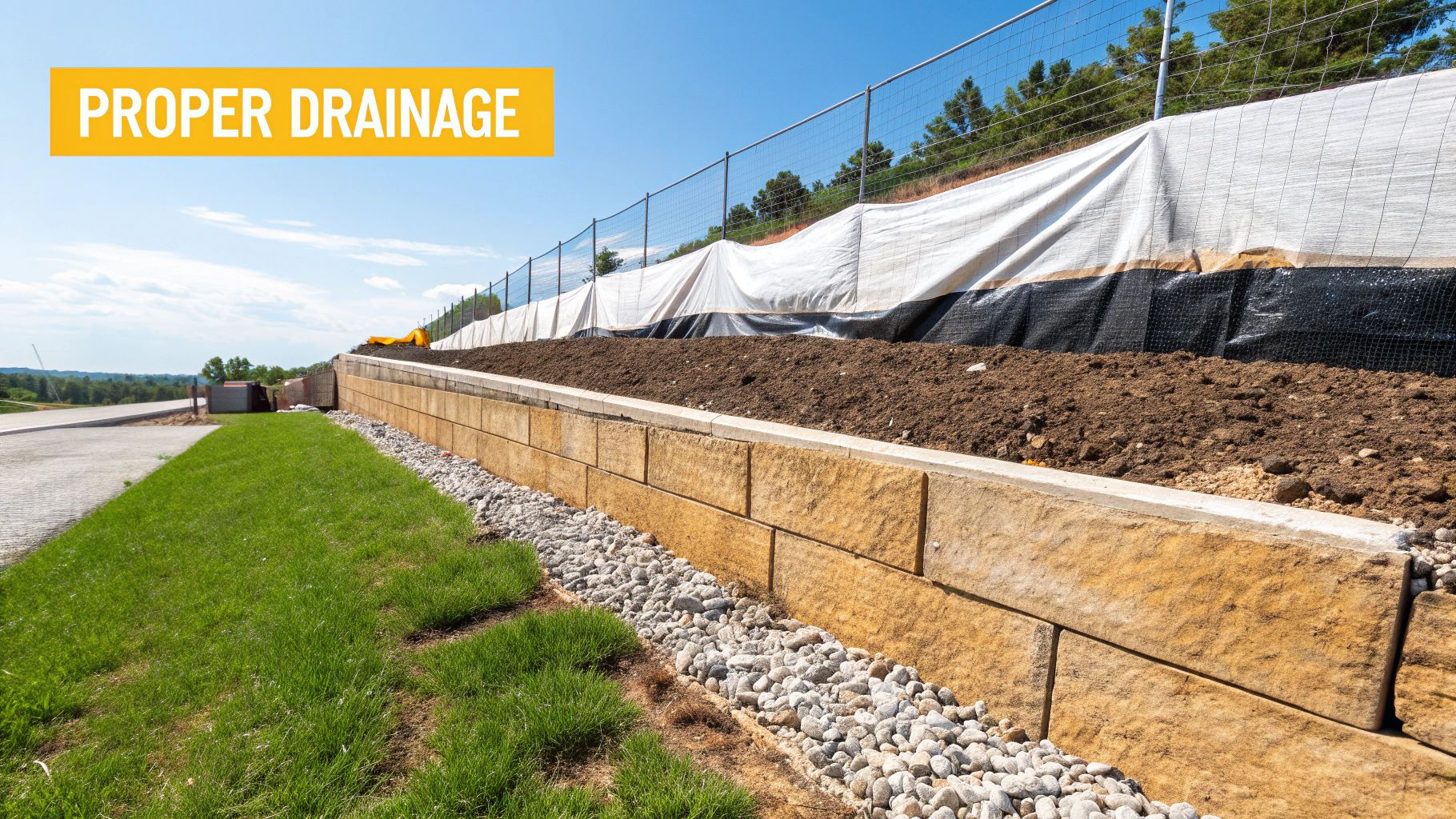
When soil gets soaked, it becomes incredibly heavy. This creates immense hydrostatic pressure, a relentless force pushing against the back of the wall. Think about the heavy downpours we get across the Hunter; that sheer weight is the number one killer of retaining walls. A wall that starts to bulge, crack, or completely collapse is almost always a victim of failed water management.
This is exactly why professional engineering isn’t a luxury—it’s absolutely essential for any structural wall. It’s the only way to guarantee the design can handle the specific loads and conditions of your site.
The Unseen Heroes Behind the Wall
To fight back against hydrostatic pressure, we build a purpose-designed drainage system right behind the wall. This isn’t just one component; it’s a team of materials working together. Their job is to give water an easy escape route, relieving the pressure before it can build to dangerous levels.
The three key players are:
- Aggregate Backfill: Instead of simply dumping soil back in, we use a thick layer of free-draining material like gravel or blue metal directly behind the wall. This creates a porous zone where water can easily travel down instead of pooling and pushing.
- Agricultural Pipe (Ag-pipe): At the base of this aggregate, we lay a perforated, flexible pipe. This “ag-pipe” is the collector, gathering all the water that filters down and channelling it safely away from the wall, usually to a stormwater outlet.
- Geotextile Fabric: This special fabric is like a bouncer at a club. We wrap it around the aggregate to separate it from the surrounding soil. It lets water pass through but stops soil particles from getting in and clogging up the system, ensuring the drainage works effectively for decades.
Without this complete system, your wall is left to fight a losing battle against the forces of nature.
Building to Australian Standards
True professionalism means following a strict set of rules designed for safety and longevity. Every retaining wall built in Newcastle must adhere to Australian Standards, specifically AS 4678-2002. This standard isn’t optional; it sets out the non-negotiable design principles for a wall’s structure, drainage, and materials to ensure it’s engineered to handle expected loads.
While Newcastle City Council has guidelines for smaller walls (under 600mm high and over one metre from a boundary) that may qualify as exempt development, the core structural principles of the standard still apply. It’s all about building it right the first time.
A well-engineered drainage system is the life-support of a retaining wall. It’s completely invisible once the job is done, but its performance is what guarantees the wall’s strength and stability for years to come.
For any wall, but especially those built with heavy materials like natural stone, a deep understanding of engineering is vital. Footing design, material selection, and drainage are all interconnected pieces of the same puzzle. To see how these principles come together in a high-end build, you can check out our guide on sandstone retaining wall design, where engineering and drainage are the absolute foundations of a successful project.
Ultimately, investing in expert design and drainage isn’t an extra cost; it’s the core investment in a structure that will safely serve its purpose for a lifetime.
Estimating Your Retaining Wall Costs In Newcastle
Trying to pin down a budget for a retaining wall in Newcastle can feel like solving a puzzle. The final cost rarely comes down to just the sleepers or the stone you pick; it reflects groundwork, design, engineering, and council sign-off.
A truly realistic budget shines a spotlight on all those moving pieces. When you break down each element, you see why a bargain quote might leave you chasing extra expenses once work starts.
Key Factors Driving The Cost
Quotes are more than material lists—they’re site-specific plans. A simple timber wall on a level block at Mayfield is a different beast to a multi-tiered stone feature on a steep block in The Hill.
Here are the core cost drivers:
- Materials: Treated pine, concrete systems and premium natural stone vary wildly in price per square metre.
- Labour and Scale: Taller or longer walls demand more labour, more hours and specialised equipment.
- Site Access and Excavation: Tight driveways or sloping ground can require smaller excavators and manual digging, adding to the bill.
- Engineering and Design: Any wall over one metre or on complex terrain needs an engineer’s sign-off for safety and compliance.
- Council and Certification Fees: A Development Application (DA) with Newcastle City Council brings fees—and sometimes certification costs—into play.
Realistic Cost Brackets For Materials
We can’t lock in a figure without inspecting your site, but here are ballpark brackets that include materials, labour and standard excavation for straightforward walls.
For a deeper dive into premium options, check our complete guide on sandstone retaining wall costs.
Important Consideration: The lowest-priced material isn’t always the cheapest long term. Timber may cost less up front but often needs replacing sooner than concrete or stone, pushing your total cost higher over the years.
Why A Professional Quote Is Essential
An itemised quote from an experienced contractor shows you where every dollar goes. It guards against surprise charges and makes sure essentials like drainage, footings and engineering aren’t overlooked.
Building retaining walls in Newcastle that last is about balancing cost with quality and safety. Understanding these factors arms you with the insight to craft a sensible budget and create a wall that adds genuine, lasting value to your property.
DIY vs Hiring a Professional Newcastle Contractor
The thought of building your own retaining wall is definitely tempting. We get it. Watching a few videos online can make it look straightforward, and the idea of saving on labour costs is always appealing. For a tiny, purely decorative project, going the DIY route can sometimes work out.
But when it comes to the safety of your family and the long-term stability of your property, you need to know exactly where to draw the line.

Here’s the hard truth: a poorly built retaining wall isn’t just a waste of time and money; it’s a serious safety hazard. The risk of collapse, property damage, and potential injury is very real. That’s why for most retaining walls in Newcastle, hiring an experienced professional isn’t just a recommendation—it’s an absolute necessity.
When a DIY Project Might Be Feasible
So, when is it okay to tackle it yourself? If your project is very small and has no structural role, you might be in the clear. Think simple garden edging or a small planter box that’s well under 600mm high and isn’t holding back any serious weight or propping up a structure.
Even for these minor jobs, a skilled DIYer still needs to get the fundamentals right. Proper drainage and solid footings are crucial to stop it from leaning or failing down the track.
Why You Need a Professional for Structural Walls
The moment a wall needs to be structural—meaning it’s holding back a significant amount of earth, is over a metre high, or is built on a slope—the game changes completely. This is no longer a weekend landscaping task; it’s a civil construction project that demands specialised knowledge and the right licences.
A professional contractor brings the expertise needed for the critical jobs that are simply beyond the scope of a DIY project.
- Engineering and Compliance: We make sure the wall is properly designed by a structural engineer to meet Australian Standards (AS 4678-2002) and handle the unique pressures of your site.
- Council Approvals: We handle the entire Development Application (DA) process with Newcastle Council, submitting the correct plans and paperwork to get your project approved without frustrating delays.
- Site Safety: A construction site is a high-risk zone. We manage all aspects of safety according to SafeWork NSW regulations, from excavation work to public liability, protecting you from legal and financial headaches.
- Correct Execution: From digging the footings to installing complex drainage systems, we have the right machinery and the know-how to build the wall exactly as engineered, ensuring it’s built to last.
A professional’s value isn’t just in the labour; it’s in the liability they take on. When we build a wall, we are legally responsible for its structural integrity and compliance, giving you complete peace of mind.
When you’re looking to hire a contractor, considering how they run their business can be telling. For example, understanding their approach to things like effective lead generation strategies for contractors can show a level of professionalism and stability you want for a project of this scale. Ultimately, investing in a professional for your retaining walls in Newcastle is the safest and most cost-effective decision you can make in the long run.
Common Questions About Retaining Walls in Newcastle
Of all the retaining wall questions we get from clients around Newcastle, a few pop up time and time again. Let’s tackle some of the most common ones to give you a clearer picture as you plan your project.
How Long Does It Take to Build a Retaining Wall?
This really depends on the scale of the job. A straightforward treated pine wall on a flat, easy-to-access block might only take a few days from start to finish. It’s a relatively simple process.
On the other hand, a large, engineered block wall that needs a Development Application (DA) from Newcastle Council and involves serious excavation is a different story. The council approval process alone can stretch out for weeks, and that’s before we even break ground. Once we start, the actual build is also at the mercy of the weather.
Do I Need to Tell My Neighbour About My New Wall?
Yes, absolutely. If your wall is anywhere near the property boundary, talking to your neighbour early on is non-negotiable. It’s the single best way to sidestep any potential disputes down the track.
In many situations, the Dividing Fences Act 1991 comes into play, especially if the wall is going to support the land on both sides of the boundary. If your neighbour’s land benefits from the new wall, they might even be required to chip in for the cost. A friendly chat over the fence is always the best place to start.
Can You Build a Retaining Wall on a Sloping Block?
Of course—that’s exactly what they’re for and it’s a huge part of what we do every day. Retaining walls are the ultimate tool for taming slopes, carving out strong, level terraces that transform unusable inclines into practical, functional spaces.
Building retaining walls on Newcastle’s many hilly blocks just requires a bit more planning, careful engineering, and precision excavation. We specialise in these tricky sites, making sure the finished wall isn’t just good-looking, but is engineered to be rock-solid and safe for decades.
Ready to finally tackle that sloping block or get rid of that old, failing wall? The team at Booms Up Civil Group has the local know-how and the right machinery to get your project done properly, the first time. Give us a call for a professional assessment and a clear, no-obligation quote.