
Trying to pin down the exact cost of a retaining wall can feel like chasing a moving target. The truth is, it comes down to a few key variables. Here in Australia, you can generally expect to budget anywhere from $250 to $700 per square metre, but that price is heavily influenced by the materials you choose and just how tricky the installation will be.
It’s best to think of the final price as a recipe. The ingredients are a mix of materials, labour, and the unique challenges your specific site throws at us.
Your Guide to Retaining Wall Costs in NSW
When you start planning a retaining wall project on the Central Coast, in Sydney, or up in the Hunter Valley, it’s crucial to understand what really goes into a professional quote. It’s never just about the blocks or sleepers you see on the finished surface; it’s about the entire construction process that guarantees your wall will stand strong for decades to come. With over 15 years in the dirt, we’ve learned that being upfront and transparent about costs is the only way to get the job done right, the first time.
The Core Cost Components
Every retaining wall quote is really built on three main pillars. Getting your head around these helps you see exactly where your money is going and why one quote might be poles apart from another.
- Materials: This is the most obvious cost and often the one with the biggest impact on your budget. The decision between treated pine sleepers, reinforced concrete, or a premium natural stone will create the largest price swing. We'll dig into these options a bit later, but if you want a detailed look at a popular high-end choice, check out our guide on the cost of sandstone retaining walls.
- Labour and Machinery: This covers the skill of our licensed operators and the heavy-duty equipment needed to do the job properly, like our excavators. It’s everything from the initial site cut and digging post holes to the careful installation of drainage systems and backfilling.
- Site-Specific Factors: Let's face it, no two properties are the same. A steep, sandy block in Terrigal throws up completely different challenges than a tight-access backyard in a packed Sydney suburb. Things like site access, soil type, drainage requirements, and the final height of the wall all play a major role in the final figure.
Recent industry data shows that while material prices have been fluctuating, labour consistently makes up 40-50% of the total project cost for most residential walls in NSW. This really drives home how vital skilled installation is. Getting it wrong with a cheap job often leads to a failing wall and much, much higher costs down the road to fix it.
How Your Choice of Material Shapes the Budget
More than any other factor, the material you choose will dictate the final cost of your retaining wall. This decision isn't just about the upfront price; it's a long-term investment in your property's looks, function, and structural integrity. The trick is to find the sweet spot between your budget, the aesthetic you're after, and the engineering muscle your site actually needs.
For instance, if you're building a sharp, modern home on a sloped block in Kariong, concrete sleepers are probably the perfect match. But for a charming, rustic garden bed in the Hunter Valley, the natural warmth of treated timber or sandstone makes a lot more sense. Each material brings its own set of pros, cons, and very real cost implications.
To budget effectively, you need to know where the money goes. This chart gives you a typical breakdown for a professionally built retaining wall.
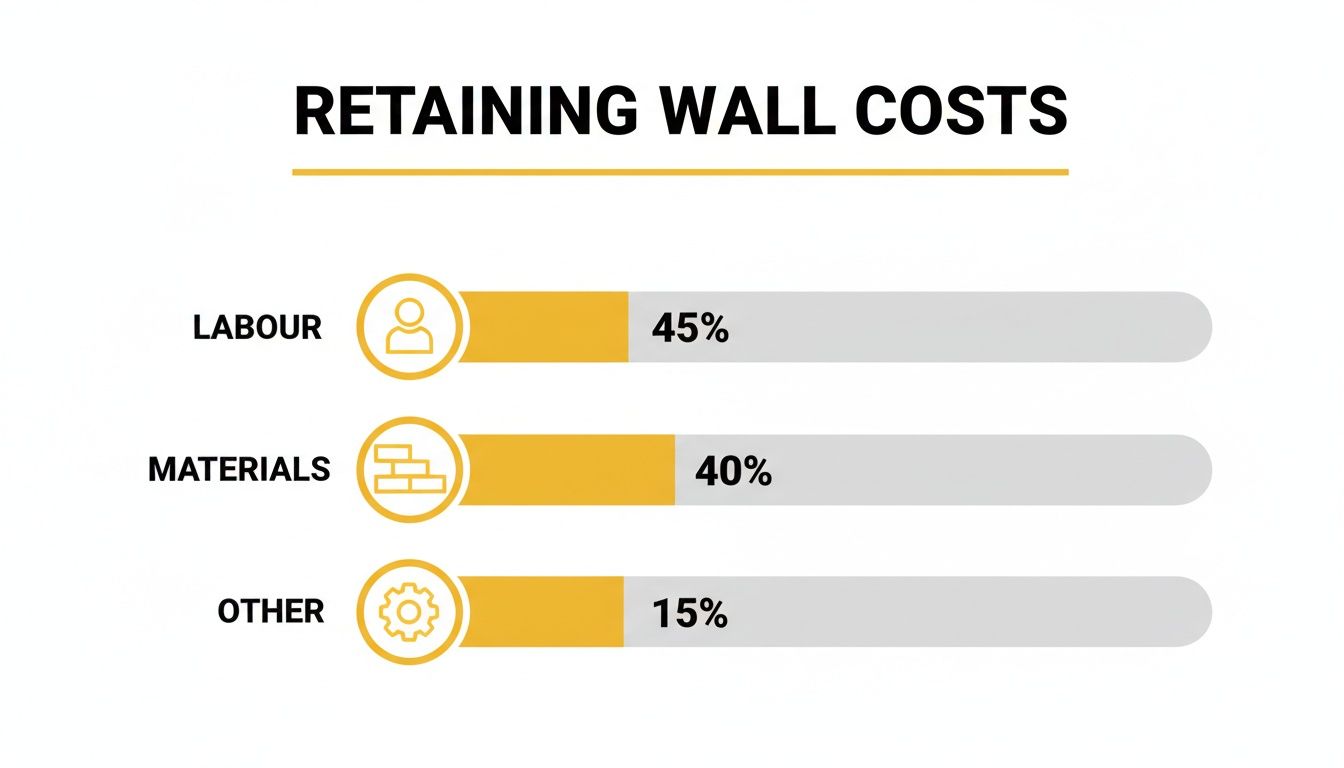
As you can see, labour and materials eat up the lion’s share of the cost. This really drives home why skimping on either quality materials or a skilled installation team is a recipe for trouble down the track.
Treated Timber Sleepers
Treated timber, usually pine or hardwood, is often the go-to for anyone on a tighter budget, especially for walls under one metre high. It provides a warm, organic look that blends beautifully into garden designs, particularly in leafy Central Coast suburbs like Woy Woy or Umina Beach.
The catch? That lower upfront cost comes with a trade-off. Timber simply doesn't last as long as concrete or stone, generally giving you about 15 to 20 years before it needs serious attention. It's a fantastic choice for smaller, decorative garden walls but isn't the right fit for critical, high-load situations.
Concrete Sleepers and Blocks
It's no surprise that concrete sleepers have exploded in popularity across NSW. They are incredibly strong, built to last, and offer a clean, modern aesthetic. Plus, they come in a huge range of colours and textures, from sleek smooth finishes to realistic wood-look patterns.
These are the ideal solution for building serious, long-lasting walls, especially on sites that need heavy-duty structural support. While the initial material cost is a step up from timber, their sheer longevity often makes them the smarter financial choice in the long run. Masonry or Besser blocks offer similar strength but with a different look that usually needs rendering to look complete.
Natural Sandstone Blocks
For a truly premium, timeless finish, nothing beats natural sandstone. It's a hallmark of high-end properties throughout Sydney and the Central Coast for a reason—sandstone delivers a classic, upmarket look that adds serious value and street appeal. Every block is unique, creating a wall with genuine character that feels connected to the local landscape.
It definitely sits at the top end of the price range, but its durability is second to none; a well-built sandstone wall will last a lifetime with barely any maintenance. Because the blocks are so heavy and require real skill to place, installation is strictly a job for experienced professionals with the right machinery.
Key Takeaway: Choosing your material is a balancing act between the initial outlay, how long you want it to last, and the look you want to achieve. A cheaper material saves money today but might mean replacement costs down the road, while a premium material is a genuine long-term investment in your property's value and stability.
Understanding the typical installed costs for these options is the first step in framing your budget. The material you pick has a massive impact on the final price tag for projects right across Australia.
- Treated timber is the most economical choice, typically costing between $250 to $450 per square metre installed.
- Concrete sleeper walls, a favourite in NSW, usually land in the $300 to $700 per square metre range.
- Natural stone, especially sandstone, represents the premium end, costing anywhere from $350 to $700 per square metre. A professionally installed sandstone wall in NSW will generally fall between $300 to over $600 per square metre.
You can find more detailed industry averages from leading trade networks. When weighing up your options, consulting with professional landscaping and lawn care services can also provide valuable insights into what will best complement your overall property design.
Understanding Labour and Machinery Costs
When you get a quote for a new retaining wall, it’s easy to fixate on the cost of the sleepers or blocks. But the truth is, the labour and machinery component is just as critical, and often just as significant. A retaining wall isn’t just a simple stack of materials; it's a properly engineered structure designed to hold back tonnes of earth. That’s where the pros and their specialised equipment really earn their keep.
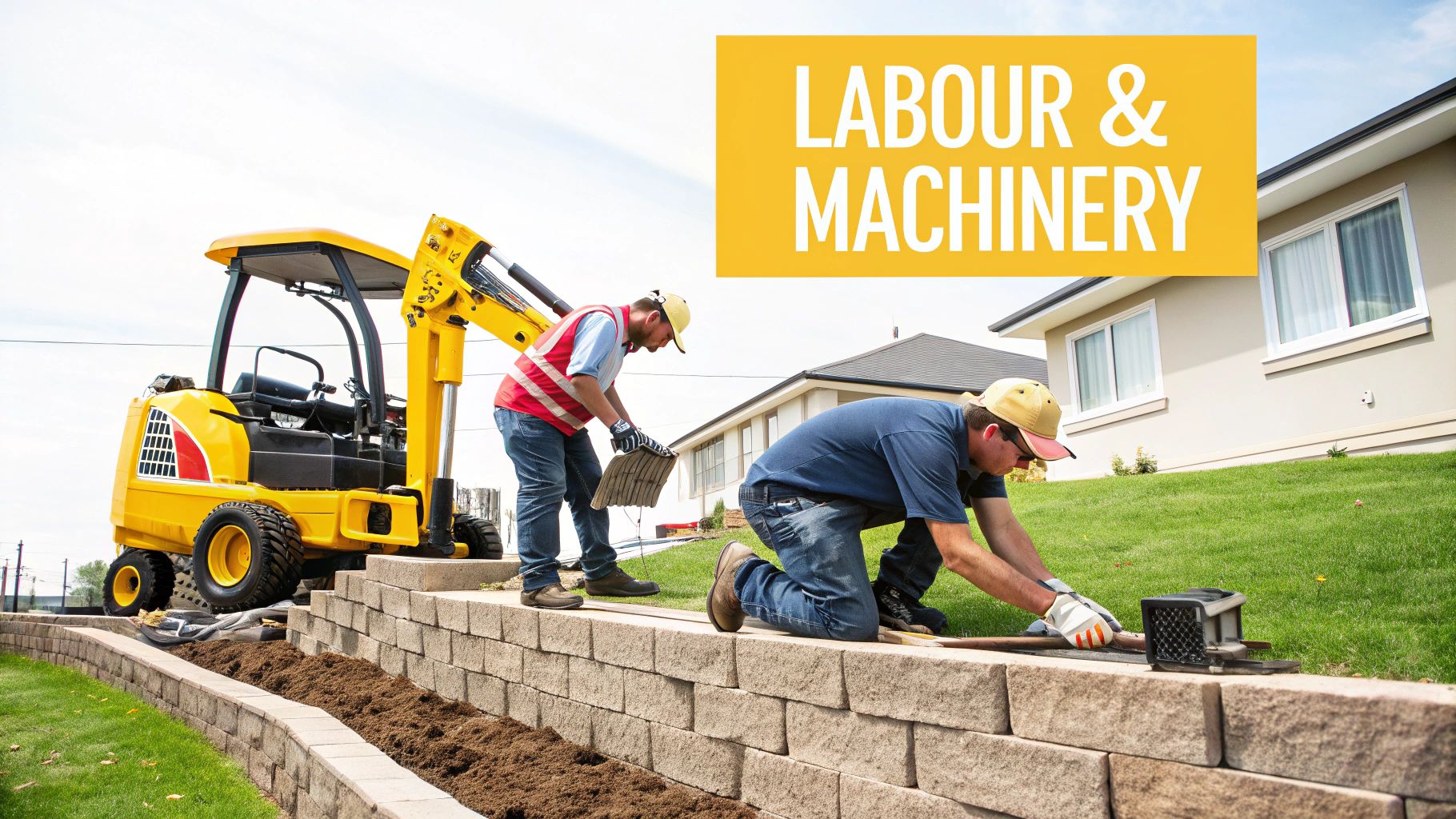
The "labour" line on your quote covers a whole lot more than just the physical grunt work. It’s the licensed operator’s expertise behind the controls of an excavator, making the initial site cut. It’s the painstaking precision needed to set posts perfectly level and plumb. And it’s the non-negotiable know-how required to install a drainage system that will actually work for decades to come.
You can think of this part of the cost as your insurance policy against the wall failing down the track. Investing in an experienced team like Booms Up Civil, with over 15 years of local Central Coast and NSW experience, means the job gets done right the first time. It’s about preventing far more expensive—and dangerous—problems later on.
The Role of Machinery in Your Project
The type of machinery we bring to your site directly impacts the project's cost and timeline. Our goal is always to use the most efficient equipment for the job, and that decision is dictated entirely by the conditions of your specific property.
For instance, a big, open block in the Hunter Valley might allow us to bring in a larger excavator to move a lot of earth quickly. But a tight-access backyard in a dense Sydney suburb? That’s a different story. It’ll call for a specialised mini excavator that can navigate narrow spaces without causing any damage.
This is exactly why a one-size-fits-all price is impossible. Every piece of machinery, from the augers we use for post holes to the compactors for the backfill, is factored into the final cost. And each one needs a skilled, licensed operator at the helm to ensure everything is done safely and precisely, meeting all SafeWork NSW guidelines.
What Is Included in Labour Costs
When you see that labour component on your quote, it’s a comprehensive figure. It covers every skilled action taken on your site, from the first survey peg to the final site clean-up. It's the human element that brings the engineering to life.
Here's a typical breakdown of what that cost covers:
- Initial Site Preparation: This is all about clearing the area, marking out the wall's footprint, and making the initial excavation to create a solid, stable base.
- Foundation and Post Installation: For most walls, this means drilling precise post holes with an auger, setting steel or timber posts in concrete, and triple-checking they are perfectly aligned.
- Drainage System Installation: This is arguably the most crucial step. It involves laying geofabric, installing agricultural drainage pipes, and filling the space with the correct aggregate to manage hydrostatic pressure—the number one killer of retaining walls.
- Wall Construction: This is the careful placement of sleepers, blocks, or stones, course by course, making sure everything is level and secure.
- Backfilling and Compaction: Once the wall is up, the area behind it is carefully backfilled and compacted in layers to ensure total stability. We don’t just dump the soil back in.
- Site Clean-up and Spoil Removal: Finally, the cost includes making your site tidy again and managing the removal of any excess soil or construction debris.
Why Expertise Matters: A less experienced operator might dig the footings incorrectly, compromise the drainage, or fail to compact the backfill properly. These small mistakes can lead to catastrophic wall failure years later. Professional labour ensures every step is executed to meet Australian Standards.
The complexity of each of these steps will naturally influence the final cost. For a more detailed look at what’s involved in just the initial earthmoving phase, you can learn more about the process of hiring an excavator on the Central Coast.
Ultimately, paying for professional labour and the right machinery isn't just an expense—it's an investment in a safe, compliant, and long-lasting structure that protects your property for years to come.
Hidden Site Factors That Impact Your Quote
Ever wondered why your quote for a retaining wall is different from your neighbour’s, even when the projects look almost identical? The answer is almost always hiding in the unique challenges of your specific site.
The visible parts of a wall are just the tip of the iceberg. It’s the unseen variables—the stuff underground and out of sight—that a professional quote must account for to ensure a successful, long-lasting build.
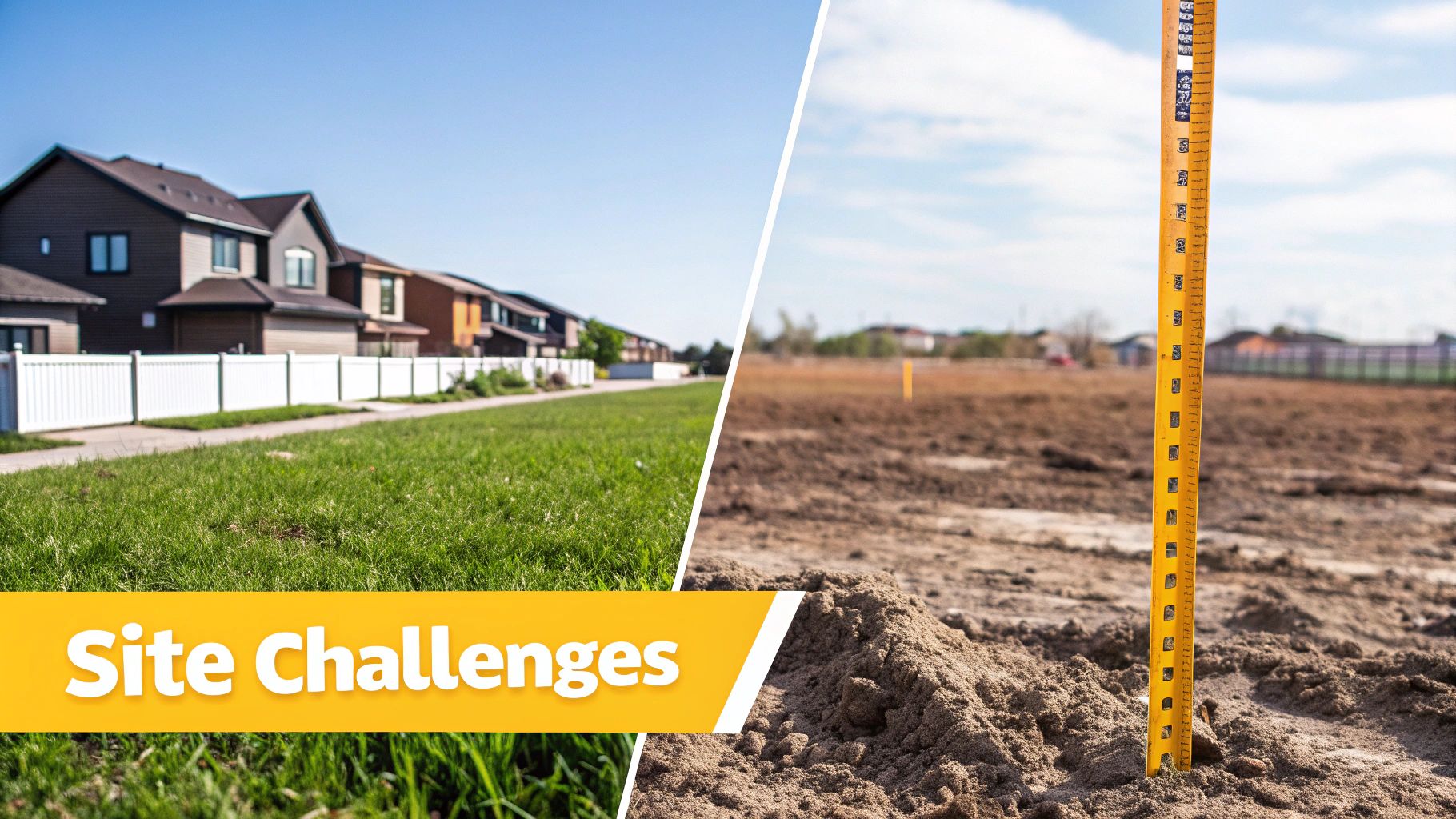
These "hidden" factors are precisely why an on-site assessment is a non-negotiable part of our process at Booms Up Civil. A quick chat over the phone is a great start, but we simply can't give you an accurate retaining wall cost until we’ve walked the ground ourselves. This lets us spot the subtle but critical details that separate a solid quote from a hopeful guess.
Site Access and Its Impact
One of the biggest cost drivers is site access. It dictates the type of machinery we can bring in, which in turn affects labour hours and the whole project's efficiency. A wide-open, level block in a new estate is a completely different ball game to a battle-axe block with a narrow driveway in a built-up Newcastle suburb.
Think of it this way: you're building on an acreage property in the Hunter Valley with plenty of room. We can roll in a larger excavator, shift soil efficiently, and get materials delivered right where we need them. This kind of straightforward access keeps labour costs right down.
Now, picture that same wall, but on a property with a steep, tight driveway in a coastal spot like Avoca Beach. Here, we might have to use a specialised mini excavator that can navigate tight spaces. Getting materials to the work area could involve far more manual handling, and getting rid of the excavated soil might mean smaller trucks making more trips. All these constraints add time and complexity, which will naturally be reflected in the quote.
If this sounds like your block, you can learn more about the challenges and solutions in our guide to tight access excavations.
Digging into Soil Conditions
The ground beneath your feet plays a huge role in how your wall needs to be designed and built. The soil type determines how deep your footings have to go, how much drainage is required, and even which materials are best for the job. NSW has incredibly diverse geology, and any professional knows you can't use a one-size-fits-all approach.
- Coastal Sandy Soils: In areas like Terrigal or the northern Central Coast suburbs (postcodes 2261-2263), we often hit sandy, free-draining soil. While it’s easier to dig, it lacks stability. This means post holes often need to be dug deeper and wider to create a solid foundation that won't shift.
- Reactive Clay: Head further inland towards Kariong or parts of Western Sydney, and you’ll find reactive clay. This soil swells when it gets wet and shrinks dramatically when it dries, putting immense pressure on any structure. Walls built on clay need much more robust drainage systems and stronger footings to stop them from failing down the track.
- Sandstone and Rock: Properties around Sydney's North Shore or parts of the Central Coast often sit on a bed of solid sandstone. While this provides an incredibly stable base, the excavation itself becomes a major task. It often requires specialised rock saws or hammers for the excavator, adding significant time and cost to the initial site prep.
The Significance of Wall Height
Finally, the proposed height of your wall is a critical cost factor, and not just because it requires more materials. As a wall gets taller, the forces it needs to hold back increase exponentially. This has major implications for both the engineering and the construction.
As a rule of thumb, any retaining wall over one metre high will require a structural engineer's design and certification. This is a mandatory step to comply with council regulations and Australian Standards (AS 4678). An engineered design will specify things like deeper footings, stronger posts, and potentially the inclusion of geogrid reinforcement—a special mesh that helps anchor the wall to the earth behind it.
Key Takeaway: A tall retaining wall isn't just a bigger version of a small one; it's a far more complex engineering project. The associated costs for the design, beefier materials, and more intensive labour mean the price per square metre climbs as the wall gets higher. A professional quote will always factor in these structural necessities.
Navigating Council Approvals and Engineering
Building a retaining wall is much more than a simple construction job. It’s a serious structural project, and that means it has to meet strict local rules. One of the most overlooked costs in any retaining wall budget is the paperwork, planning, and professional oversight needed to make it all legal and safe.
This is where councils and engineers come into the picture.
Many homeowners get a surprise when they learn their wall might need formal approval. Depending on its height, where it sits on your property, and a few other key factors, you could find yourself needing to lodge a Development Application (DA) with your local council, whether that's Central Coast Council, Newcastle City Council, or another authority in NSW.
Getting this wrong can be a painful lesson, leading to hefty fines or, in the worst-case scenario, an order to tear the whole thing down.
When Council Approval Is Necessary
The rules can feel a bit tangled, but they’re there for a good reason—everyone’s safety. In NSW, a few specific triggers usually mean you'll need to get the council involved. While the fine print can vary a little from one council to the next, there are some common thresholds to be aware of.
A small, decorative garden wall under 600mm that’s well away from your property line might fly under the radar. However, you’ll almost certainly need to go through the DA process if your wall is:
- Over a certain height, often 1 metre (though some councils set the limit lower).
- Built right up against or very close to a property boundary.
- Holding back a significant load, like a driveway, carpark, or swimming pool.
Knowing the specific rules for your local area is non-negotiable. To help you get started, we've put together a more detailed guide on retaining wall regulations in NSW that breaks down what you need to know.
The Critical Role of a Structural Engineer
Here's a simple rule of thumb: if your wall needs council approval, it will almost certainly need to be designed by a qualified structural engineer. This isn't just bureaucratic box-ticking. It’s a crucial step to ensure the wall is properly designed to handle the specific pressures it will face.
The engineer’s job is to assess things like your soil type, the angle of the slope, and the total load the wall has to bear. From that analysis, they create certified plans that detail everything—from the depth and diameter of the footings to the size of the steel posts and the exact drainage system required.
Why Engineering is an Investment: An engineer’s report and plans are your ultimate insurance policy against wall failure. It transforms the project from a simple build into a certified structural asset, guaranteeing it complies with Australian Standards (like AS 4678 for earth-retaining structures) and is built to last a lifetime.
Factoring Compliance into Your Budget
So, what does this mean for your bottom line? You’ll need to budget for these professional services as separate line items. They add an upfront cost, but they are an essential part of a professional job that protects your investment, your property, and your neighbours.
- Council Lodgement Fees: These are paid directly to the council when you submit your DA. The amount can vary.
- Structural Engineering Fees: The cost for an engineer's design and certification depends on how complex your wall is.
- Surveying Costs: For walls near boundaries or on tricky sites, you may also need a registered surveyor to mark the exact location.
At Booms Up Civil, we handle this entire process for our clients. We work with trusted local engineers and surveyors across the Central Coast and Newcastle, coordinating everything to ensure your project is fully compliant from day one. It’s all part of our promise to get the job done right, the first time.
Common Questions About Retaining Wall Costs
To wrap things up, let's run through some of the most common questions we get from property owners right across NSW. Getting a straight answer on these points can make all the difference, helping you plan with confidence and ensuring you’re making a smart investment.
Can I Save Money by Doing the Excavation Myself?
It’s a tempting thought. On paper, hiring an excavator and digging the trench yourself looks like a clear way to cut down the final bill. In reality, though, DIY excavation often creates far more expensive problems than it solves.
Professional excavation isn’t just about moving dirt. It's a precise process of creating a stable, perfectly graded foundation that can handle the immense pressure from the wall and the soil behind it. Get it wrong, and you can compromise the entire structure, leading to leaning, bulging, or even a total collapse down the track.
Then there's the safety side. Operating heavy machinery requires the right licenses and a huge amount of experience to do it safely and in line with SafeWork NSW rules.
For your peace of mind and a structure guaranteed to last, it’s nearly always better and more cost-effective to have one professional team handle the entire job, from the first cut to the final clean-up. This ensures every single step is done correctly and to Australian Standards.
Does My Quote Include Spoil and Rubbish Removal?
This is a brilliant question and one you should be asking every contractor you talk to. A professional, transparent quote will always break down exactly what’s included and what isn’t. Here at Booms Up Civil, our quotes always itemise the costs for removing the excavated soil (spoil) and a full site clean-up when we’re done.
Some quotes might leave this part out, hitting you with a surprise—and often hefty—bill at the very end. The last thing you want is a mountain of dirt left on your nature strip that you now have to pay someone else to truck away.
When you’re comparing quotes, always confirm that the removal of spoil, leftover materials, and other construction rubbish is covered. Proper spoil disposal is a regulated activity, and a professional contractor will handle all that compliance for you.
How Long Should My New Retaining Wall Last?
A wall's lifespan really boils down to two things: the quality of the materials and, just as crucially, the quality of the installation. There's simply no point in paying for premium materials if the build quality is poor.
A properly installed treated pine wall, for instance, should give you 15-20 years of solid service. If you step up to a well-built concrete sleeper or masonry block wall, you’re looking at anywhere from 40 to over 70 years of life. Natural sandstone is in another league entirely and can easily last a lifetime with very little upkeep.
But the one thing that underpins all of this is drainage. A retaining wall that can’t get rid of water will fail, no matter what it’s made of. This is exactly why investing in a quality installation from an experienced, reputable builder is the best way to protect your investment for the long haul.
Key Takeaway: The longevity of your wall is a direct result of the materials and the installation quality. Don't compromise on the installation to save a few dollars upfront; it's the expertise behind the build that ensures it will last for decades.
Why Is Drainage So Important for a Retaining Wall?
If there’s one single thing that is absolutely critical to a retaining wall’s survival, it’s drainage. Without a clear path for water to escape, it builds up in the soil behind the wall, creating an immense force called hydrostatic pressure.
This pressure is relentless. It pushes and pushes against the back of your wall, causing it to lean, crack, and, eventually, fail completely. It is the number one cause of retaining wall collapse, and it’s 100% preventable with good design.
A professional installation will always include a properly engineered drainage system. This isn't just one thing, but a combination of elements working together:
- Geotextile fabric to stop soil and silt from clogging the system.
- Free-draining aggregate (like blue metal gravel) packed directly behind the wall.
- Agricultural pipes ('ag-pipes') laid at the base to collect water and channel it away safely.
- Weep holes drilled through the face of the wall as an extra escape route for water.
This system is designed to relieve that hydrostatic pressure by giving water an easy way out. Skimping on drainage is the biggest mistake you can make. It might seem like a way to trim the initial cost, but it almost guarantees a very expensive failure in the future.
Ready to get a clear, transparent, and accurate quote for your project? The team at Booms Up Civil has over 15 years of experience building compliant, long-lasting retaining walls across the Central Coast, Sydney, and Newcastle. We handle everything from design and council approvals to excavation and installation.
Contact us today for an obligation-free site assessment and quote.