Forestry mulching is a massive leap forward in land clearing. In simple terms, it's a single-machine process that shreds trees, shrubs, and undergrowth right where they stand, instantly turning them into a natural, protective layer of mulch. It’s an incredibly efficient, one-step job that completely sidesteps the old-school hassles of burning, hauling, or dealing with massive piles of green waste. For property owners across the Central Coast, Sydney, and the Hunter Valley, it’s the smarter way to manage your land.
What Is Forestry Mulching and How Does It Work?
Let's get down to brass tacks. Picture a powerful excavator or a specialised track loader, fitted with a heavy-duty rotating drum, moving through your property. This attachment, the mulching head, is armed with incredibly tough steel teeth that simply grind up vegetation on the spot.
It’s a true one-step solution for land clearing. Forget the old way of doing things, which often involved multiple machines—one to bulldoze, another to pile it all up, and a third to haul the waste away. This modern approach is far more streamlined. We can bring this technology to bear on everything from thick lantana infestations on a rural block near Cessnock to overgrown scrub on a residential acreage in the Central Coast hinterland.
The process is also remarkably precise. Our skilled operators can selectively take out unwanted vegetation while carefully navigating around the significant trees you want to keep. This makes it the perfect choice for projects where preserving the natural character of the land is a top priority.
The Mulch Advantage
The real magic of forestry mulching is what’s left behind. Instead of bare, disturbed earth that’s vulnerable to erosion, you get a protective blanket of organic material spread evenly across the ground. This mulch layer brings several huge benefits.
For example, on a sloping block in Terrigal where the sandy coastal soils can wash away in a downpour, that mulch layer provides instant erosion control. It shields the topsoil from being stripped away by wind and rain. As the mulch breaks down, it also puts valuable nutrients back into the soil, improving its health and fertility without you having to lift a finger.
When it comes down to it, forestry mulching is a faster, more cost-effective, and environmentally smarter way to manage your property. You can get a more detailed comparison of how this stacks up against other methods in our guide to different property clearing services. It has quickly become the go-to choice for landowners who need efficient results without sacrificing the long-term health of their land.
The Forestry Mulching Process from Site Visit to Finish
So, you’re looking at getting some forestry mulching done, but what’s actually involved? Knowing how a project unfolds from start to finish helps set the right expectations. It’s definitely not just a matter of turning up with a machine; every successful job we do begins with a proper, hands-on assessment of your property.
Your Initial Site Assessment
It all starts with a chat and a site visit. We need to walk your land with you to get a crystal-clear picture of what you want to achieve. Are you clearing a block in Wyong for a new build, creating a vital fire break on your acreage near Cessnock, or are you just trying to take back a paddock that’s been lost to weeds?
We’ll identify the type and density of the vegetation—because tackling a wall of thick lantana is a completely different beast to clearing out some light scrub. We also size up the terrain. Steep slopes, hidden rocky patches, or boggy low spots all shape our strategy and which machine is right for the job. This first step is absolutely crucial for giving you an accurate quote and a realistic timeline.
Executing the Clearing Work
Once we’ve got a solid plan locked in, our experienced operators get to work. Safety is always number one. We establish clear work zones and stick to all SafeWork NSW guidelines, no exceptions.
We bring in specialised machinery, like our track loaders fitted with powerful mulching heads, which are specifically designed to cause minimal ground disturbance. This is a huge deal on the Central Coast, where the sandy soils can easily erode if they’re not handled with care. If you're getting a site ready for construction, you can learn more about why getting this stage right is so important in our guide to comprehensive site preparation and excavation.
We move methodically through the designated areas, turning unwanted trees, shrubs, and undergrowth into a neat layer of mulch spread directly on the ground. This diagram shows just how straightforward that transformation is.
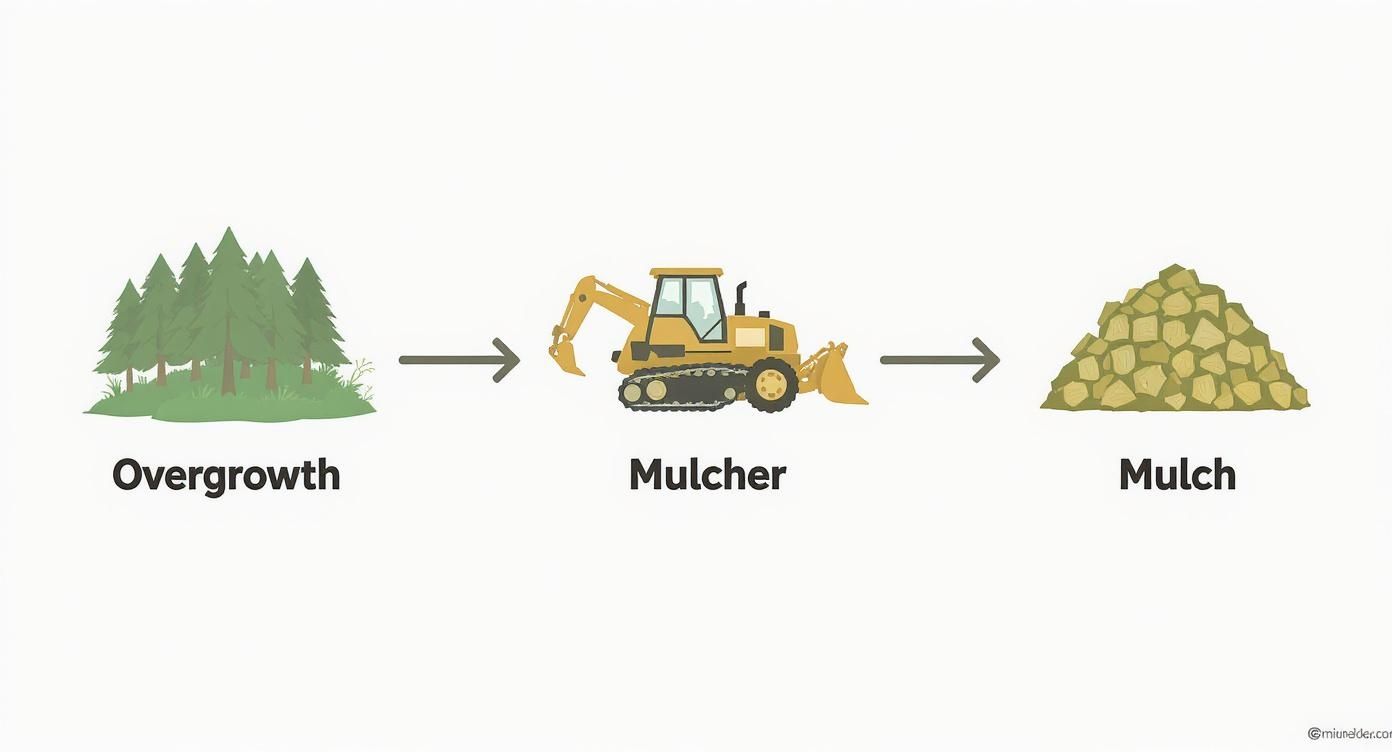
As you can see, it’s a single-pass process that efficiently turns a problem into a solution for your soil.
Final Walk-Through and Handover
When the mulching is done, we don't just pack up the gear and disappear. We always do a final walk-through with you to make sure you’re 100% happy with how everything looks.
The site will be clear, easy to access, and covered in a protective blanket of organic mulch. That mulch gets to work straight away, preventing erosion, locking moisture into the ground, and slowly breaking down to enrich the soil. We aim to leave your land in better shape than we found it.
Why Forestry Mulching Beats Traditional Land Clearing Methods
When you need to clear land, you’ve got options. For years, the standard approach was pretty blunt: bring in the bulldozers, knock everything over, and deal with massive burn piles. It’s a method that gets the job done, but often creates more problems than it solves.
Today, forestry mulching offers a far smarter, more efficient alternative. It's especially appealing for landowners across the Central Coast and Hunter Valley who value both their time and their property’s long-term health. The old way is a multi-step, labour-intensive slog.
Avoiding the Logistical Nightmares
Let’s talk about the red tape and hidden costs of traditional clearing. To start with, you often need a specific permit from your local council, like Central Coast Council or Newcastle Council, just to light a burn pile. These permits come with strict conditions and are often subject to seasonal fire bans, which can bring your entire project to a grinding halt for months.
Then there’s the waste. If burning isn't an option, you’re looking at significant costs just to transport and dispose of all that timber and green material. Forestry mulching completely sidesteps these issues. There are no burn piles, no permits needed for burning, and no hauling costs. Everything is processed on-site in a single pass, saving you time, money, and a whole lot of hassle.
The Environmental Advantage
This is where forestry mulching truly shines. Traditional methods leave the land scarred and vulnerable. Bulldozing scrapes away precious topsoil, leading to heavy soil compaction and severe erosion—a huge problem during the heavy downpours we often get along the coast.
In stark contrast, forestry mulching is a restorative process. The layer of mulch left behind acts as a natural, protective blanket over the soil. This mulch layer prevents soil erosion, recycles nutrients back into the earth, and helps the ground retain moisture, which is a massive benefit for any remaining trees.
For a quick side-by-side comparison, consider this scenario. A developer using traditional methods on a Central Coast block might leave the sandy soil exposed for weeks, risking significant runoff into local waterways. With forestry mulching, that same block is protected from day one, with the mulch improving soil health over time. Ultimately, you can explore a deeper comparison of different approaches in our overview of modern land clearing services. It’s about working with nature, not against it, to achieve your goals.
Best Uses for Forestry Mulching Services
Forestry mulching is far more than just a brute-force way to clear scrub; it’s an incredibly versatile tool for a massive range of land management challenges. Its real power lies in how it can be adapted to solve very specific problems for landowners right across New South Wales, from Hunter Valley vineyards to sprawling acreages on the Central Coast.
Think of it less as clearing and more as reshaping your land to suit your needs.
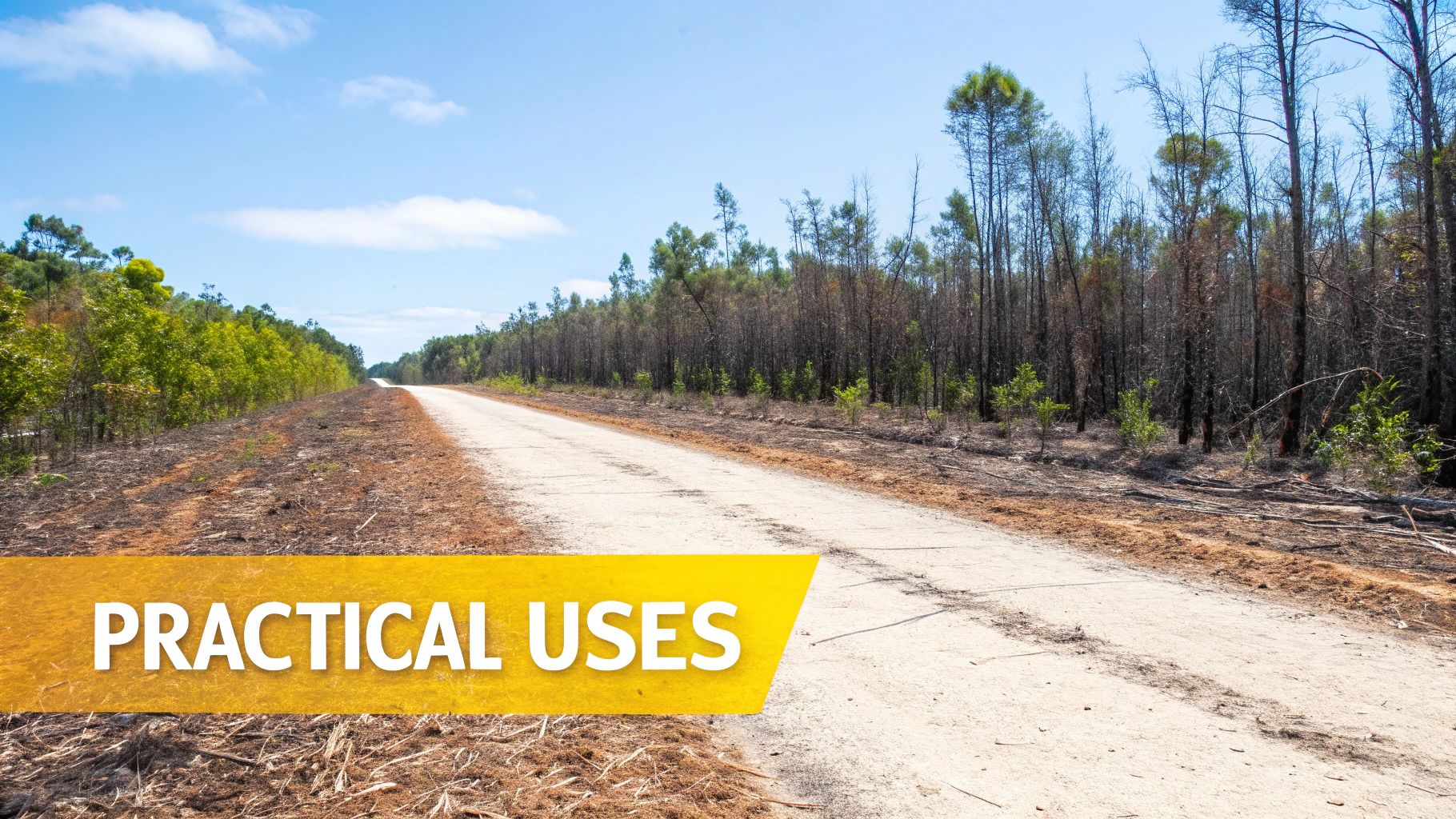
One of the most critical uses, especially in our part of the world, is for bushfire prevention. Let's say you own a property backing onto bushland near Cessnock. By creating strategic fire breaks, we can dramatically reduce the amount of flammable vegetation, giving you a vital defensive space that could be the difference-maker when summer hits hard.
Reclaiming and Improving Your Land
Another common job is simply reclaiming overgrown land. Imagine you’ve got a few acres that have been completely swallowed by lantana and other invasive weeds. Our forestry mulching services can turn that dense, unusable thicket back into productive pasture or open recreational space, all without tearing up your valuable topsoil.
We see this need pop up in all sorts of situations: acreage and lifestyle block maintenance, clearing undergrowth on commercial sites while preserving valuable trees, and cutting new access tracks with minimal environmental fuss. This kind of targeted approach was exactly what we did on a project involving extensive mulching and land clearing in Wyong, where we selectively cleared vegetation to get the site ready for its next phase of life.
Environmental Management and Compliance
Beyond just clearing, mulching is a powerful tool for environmental stewardship. We often use it for vegetation management under powerlines or along easements. It’s a smart way to keep regrowth under control without resorting to chemical sprays.
It’s also brilliant for managing biodiversity by selectively removing invasive species, giving native grasses the space and sunlight they need to thrive. The growing focus on sustainable land use has made forestry mulching services in Australia more important than ever. At the end of the day, this single service provides a solution that’s fine-tuned to your specific land management needs—getting the job done efficiently and responsibly.
Understanding Forestry Mulching Cost Factors
Let’s talk dollars and cents. When you’re planning any kind of property work, the first question is almost always about the cost. While every forestry mulching job is unique and needs its own detailed quote, we can give you a clear picture of what drives the price. It’s a careful calculation based on the time and resources needed to get the job done right.
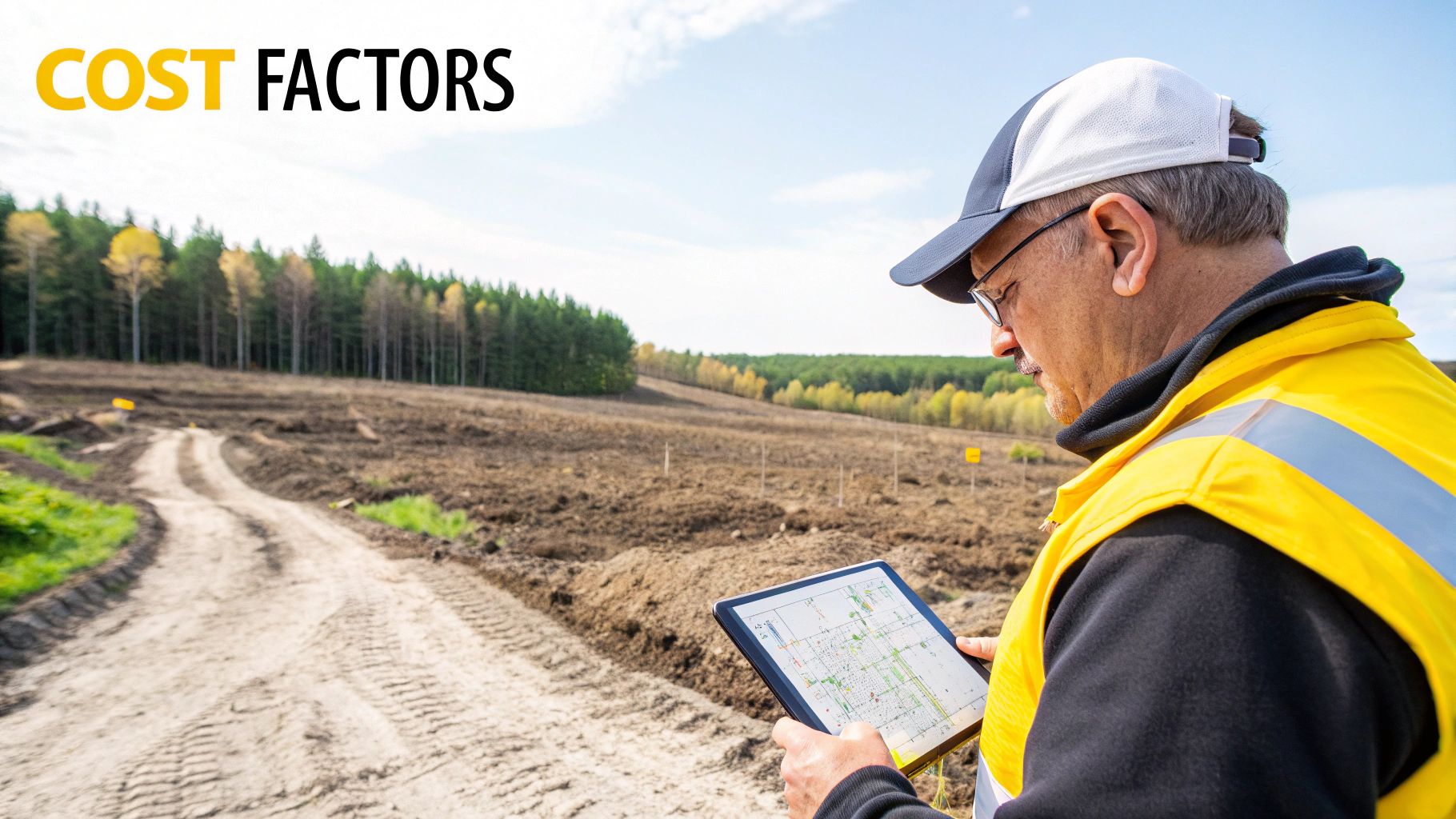
The main things that influence the final cost are the total land size, the density and type of vegetation, and just how tricky the terrain is to get around. As a ballpark, industry reports show most professionals in Australia charge based on an hourly or per-hectare rate. You can learn more about these industry figures by reviewing Australian forestry and logging market research.
Vegetation Density and Type
This is probably the biggest single factor. Clearing a paddock of light scrub and a few saplings is a much quicker job than tackling a dense, tangled wall of invasive lantana or thick tea tree, both of which are common around the Central Coast. The tougher and thicker the growth, the more machine time it’s going to take.
In the same way, the type of timber really matters. Chewing through softwoods is one thing, but grinding down tough Australian hardwoods like Ironbark or Spotted Gum requires more power, more fuel, and causes more wear and tear on the machine’s cutting teeth.
Terrain and Accessibility
The lay of the land plays a huge role in how we price a job. A flat, open block is pretty straightforward, but a steep, rocky site in the Hunter Valley foothills presents a whole different set of challenges. Our operators have to move more carefully and methodically, which naturally adds time to the project.
Site access is another key thing we look at. Can we get our machinery to the work area easily? Things like narrow gates or boggy ground after a week of heavy rain can all impact the time and complexity of the job. A simple job might be a half-day's work, whereas a complex one could involve several days of careful work on a large, steep property with dense hardwood growth.
Choosing the Right Forestry Mulching Provider
Hiring the right team for your forestry mulching is easily the most important decision you'll make in this whole process. A true professional doesn't just deliver a better result; they protect you and your property from unnecessary risks. Knowing what to look for is how you can tell the seasoned experts from the cowboys.
Verify Their Credentials and Safety Practices
Before you even start talking about the job specifics, ask to see proof of their public liability insurance. This is completely non-negotiable. It's your safety net in the unlikely event of an accident on your property. You should also confirm that they follow all SafeWork NSW guidelines. A professional crew always puts safety first.
Match the Machinery to Your Job
Not all mulching machines are created equal, and using the right tool for the job makes a world of difference. For instance, a compact skid steer with a mulching head is perfect for navigating tight residential blocks. But if you're tackling several hectares of thick bush on a rural property, you'll need something with more grunt, like a larger, dedicated track machine.
Asking a contractor what machinery they plan to use—and why—will tell you a lot about whether they've handled a project like yours before. To get a better sense of what this involves, take a look at our approach to professional land clearing projects.
Ask About Their Local Experience
Experience with local conditions is absolutely crucial. An operator who knows the tough hardwoods and invasive species common to the Central Coast will have the right techniques to deal with them effectively.
Don't be shy—ask them about similar jobs they've done in your area. This local know-how means they'll understand the unique challenges of your land, whether it's the sandy coastal soils or the heavy clay further inland. Picking a contractor who gets it right the first time saves you a massive amount of stress, time, and money in the long run.
Have Questions? Here Are a Few We Hear Often
We get asked a lot of great questions by landowners across NSW. To help you get a clearer picture, we've put together answers to some of the most common ones we hear on the job. We'll cover what happens to the mulch, building considerations, and how long a job might take – giving you the straightforward insights you need.
What Happens to All the Mulch?
The mulch we create doesn't get hauled away; it's a key part of the process. Our machines spread an even layer of organic material right back onto the ground. This mulch blanket immediately starts working for you. It protects your valuable topsoil from erosion, helps the ground retain precious moisture, and slowly breaks down over time, feeding your soil with nutrients.
Can I Build on a Mulched Area Straight Away?
Not directly on top of the fresh mulch, no. While it's fantastic for the soil, that organic layer isn't a stable base for a concrete slab or building footings. For any construction, you'll still need to do the standard site prep. This usually means grading the soil to create a firm, level foundation pad.
How Long Does a Forestry Mulching Job Take?
This really comes down to the specifics of your block. Clearing a small, half-hectare lot with light scrub might only take a few hours. On the other hand, tackling several hectares of dense, tough bush on a steep, rocky property could take a couple of days. We’ll give you a realistic timeframe during our initial site visit.
Is Forestry Mulching Noisy or Disruptive?
Our machinery is powerful, so it definitely makes some noise – about what you'd expect from any heavy equipment used in earthworks. We always operate within standard council work hours to keep disruption to a minimum for you and your neighbours. Our team prides itself on working safely and efficiently to get the job done right.
Ready to transform your property with modern, efficient land clearing? Get in touch with our team today for a no-obligation site assessment and a clear quote on our expert Booms Up Civil Group forestry mulching services. Visit us online at https://boomsupcivil.com.au to learn more.