
At its heart, excavation is the process of moving earth, rock, or other materials. Think of it as the broad-strokes work. Trenching, on the other hand, is a specific type of excavation that creates a narrow channel in the ground. It’s the detailed work.
Together, they're the foundational first step for almost any construction project, big or small. Getting this groundwork right is absolutely critical for ensuring the stability and longevity of whatever you’re building.
What is Excavation and Trenching
Imagine you’re putting in a new garden bed. First, you’d clear the area and dig out the entire space to the right depth, loosening the soil for your new plants. That broad, general digging? That's your excavation.
Now, let's say you need to run some irrigation lines through that new garden bed. You’d dig a few neat, narrow channels for the pipes. Those specific channels are the perfect analogy for trenching.
In construction, the principle is identical, just on a much bigger scale. We use excavation to carve out the space for building foundations, swimming pools, or underground carparks. Then we use trenching to create the pathways for essential services like plumbing pipes, electrical conduits, and stormwater drainage systems. It's the critical opening act that sets your entire project up for success.
Why It's More Than Just Digging Holes
While it might look like someone is just moving dirt around, professional excavation and trenching is a precise science. Our goal isn’t just to get material out of the way; it's to create a stable, correctly graded, and safe base for everything that follows. Skimp on this precision, and you’re setting yourself up for serious—and seriously expensive—problems down the track.
Poor excavation can lead directly to:
- Structural Failures: An improperly prepared or compacted base can cause building foundations to shift, settle unevenly, or crack over time.
- Drainage Disasters: If the ground isn't graded correctly, water can pool against your home's foundation, leading to damp, mould, and structural damage.
- Safety Hazards: Unstable ground or improperly supported trenches can collapse, posing a significant risk to workers on site and even the general public.
For example, a site cut for a new home in the sandy soils of the Central Coast requires a completely different technique to one on the reactive clay common around Sydney. One site needs careful shoring to prevent collapse, while the other must be engineered to account for the soil swelling and shrinking with changing moisture levels. To get a better handle on how this specialised groundwork differs from just moving bulk material, you can learn more about the distinction between excavation and earthmoving in our detailed guide.
Ultimately, professional excavation ensures your project starts on solid footing, fully compliant with local council and SafeWork NSW regulations. It’s all about creating a safe, stable, and perfectly prepared canvas for your build—getting it right the first time to avoid costly rework later on.
Our Proven Process for Site Preparation
Ever wondered what happens between your first phone call and the moment our excavator gets to work? A professional excavation and trenching project is far more than just moving dirt; it’s a meticulously planned operation. We’ve refined our process over 15+ years on the Central Coast to get things right the first time, setting your entire project up for success from the ground up.
It always starts with a comprehensive site assessment. We don't just glance at the plans—we walk the ground ourselves to spot potential hurdles common across NSW. This could be anything from a hidden rock ledge on a Gosford property to a high water table on a coastal block in Wamberal, both of which demand a specific approach and the right gear.
Planning and Compliance First
Before a single bucket of soil is turned, we sort out the critical due diligence. This means lodging a Dial Before You Dig enquiry to pinpoint every underground utility, from water and gas pipes to telecommunications cables. Striking one of these isn’t just dangerous; it can lead to eye-watering fines and project-halting delays.
At the same time, we're developing a site-specific safety plan. A critical part of our site preparation process is rolling out solid strategies, much like those in a professional guide to construction site security, to keep our people and your property safe. This plan covers everything, from Safe Work Method Statements (SWMS) to the sediment control measures demanded by local councils.
We handle all the compliance paperwork, from Central Coast Council permits to SafeWork NSW notifications, so you can have complete peace of mind that everything is done by the book. This foundational step is non-negotiable for us.
The site preparation services sector is a massive part of the Australian construction industry, projected to involve 20,878 businesses and generate $42.2 billion in revenue in 2025. This scale highlights just how vital it is for you to choose a professional, compliant operator who knows what they're doing.
Mobilisation and Execution
Once all approvals are locked in and the site is green-lit for safety, we mobilise the right machinery. Matching the equipment to the job is key to efficiency and keeping costs in check. A tight-access job in a dense Sydney suburb calls for a very different machine than a bulk earthworks project in the wide-open spaces of the Hunter Valley.
The actual digging then gets underway, following the engineered plans to the letter. Our operators are precise, working meticulously to hit the correct levels and grades, whether we're digging a narrow trench for services or cutting a detailed pad for a concrete slab.
This simple graphic breaks down the main stages of our on-site workflow, from the initial clearing right through to the detailed work of excavation and trenching.
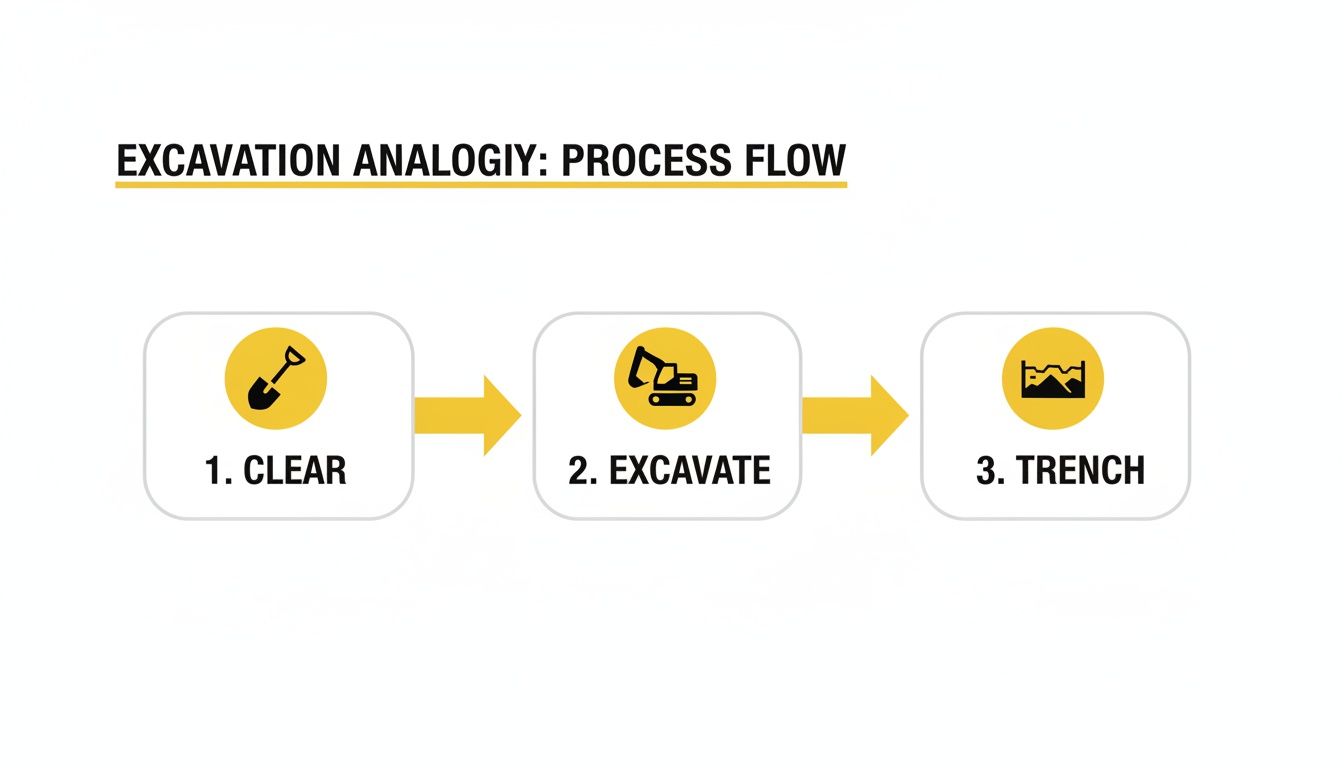
You can see how each step builds on the last, ensuring a methodical and efficient site transformation.
Throughout this entire phase, we keep the lines of communication wide open. You’ll always know what’s happening on-site and what’s coming up next. This transparent approach is a cornerstone of how we deliver our professional site preparation services.
Spoil Removal and Site Handover
The final stages involve managing all the excavated material, or 'spoil' as it's known in the trade. Some of it might get reused on-site for backfilling, but any excess soil and rock has to go. We manage the whole haulage and disposal process, trucking the spoil to a licensed facility and leaving your site clean and tidy.
But the job isn't done until we've done a final walkthrough with you. We make sure the work not only meets your expectations but also nails the engineer's specifications before we officially hand the prepared site over for the next phase of construction. This final check guarantees your project is built on the strongest possible foundation.
Common Projects Where Excavation Is a Must
Excavation and trenching are the unsung heroes of countless construction projects. Think about it – from the driveway you park on every day to the very foundations holding up your home, professional earthworks are the critical first step that makes everything else possible. This is where a plan on paper starts to become a physical reality, getting the ground ready for whatever comes next.
Let's dig into some of the most common jobs where our excavation and trenching expertise is absolutely essential. You might even spot your own project on this list, which just goes to show how fundamental this work is for builds all across the Central Coast, Sydney, and the Hunter Valley.
Driveways and Concrete Slabs
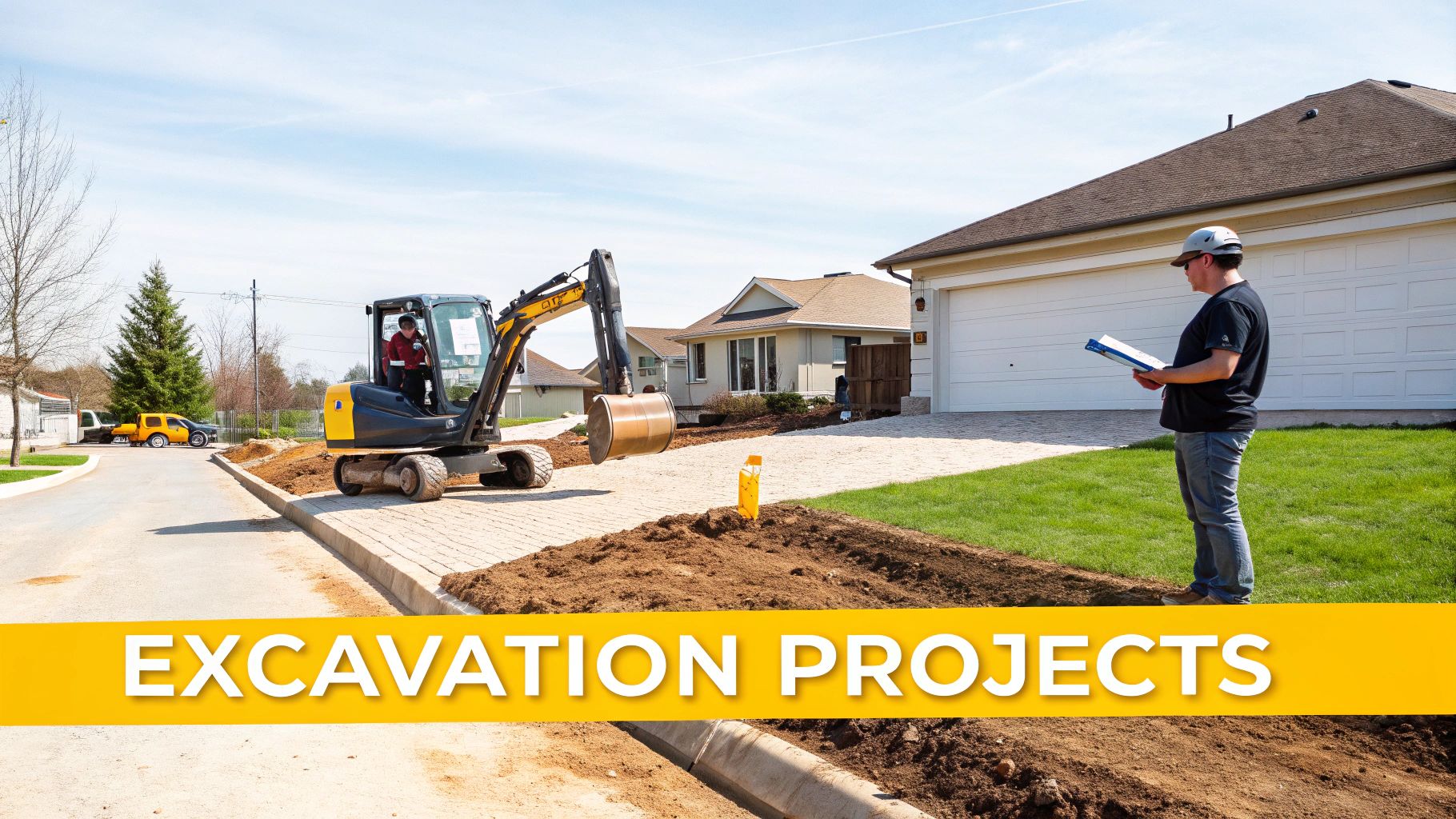
A solid, crack-free driveway or shed slab is no accident; it’s the result of a perfectly prepared base. We start by excavating the area to a very specific depth, a process often called a 'box out'. This removes all the topsoil, grass, and any other unsuitable material that could cause problems down the track.
The real craft, however, is in getting the grade, or slope, just right. For a driveway, this is what makes rainwater flow away from your garage and out to the street’s stormwater drain, preventing annoying puddles and potential water damage. For a house or shed slab, the ground needs to be perfectly level and compacted to create a stable platform, stopping cracks and serious structural issues from ever developing.
Foundations for Homes and Extensions
When you're building a new home or adding an extension, the excavation for the foundations is without a doubt the most critical phase of the entire build. There is zero room for error here. Whether it's for a slab-on-ground foundation or concrete footings for a raised floor, the depths and dimensions have to match the architectural and engineering plans to the millimetre.
Imagine you're building an extension on a sloping block in a suburb like Kariong or Terrigal. The excavation has to be meticulously cut into the hillside to forge a level building pad. It’s a complex job that requires serious planning to ensure the stability of not just the new structure, but the surrounding land as well.
Trenching and excavation remain some of the most hazardous operations in construction. That's why every project, regardless of size, must be overseen by a competent person who can identify risks and ensure protective systems are correctly used, as mandated by SafeWork NSW.
Trenching for Essential Services
Every modern home is connected to a hidden network of underground services. Getting these utilities hooked up requires precise, compliant trenching. We dig trenches for all kinds of essential connections, including:
- Plumbing and Drainage: Trenches for sewer lines, stormwater pipes, and water mains have to be dug to specific depths and grades to guarantee everything flows correctly.
- Electrical and Communications: We create the channels needed for electrical conduits, NBN connections, and other data cables, burying them safely to protect them from future damage.
- Gas Lines: Digging for gas services demands extreme caution and strict adherence to safety protocols to prevent the risk of dangerous leaks.
Each one of these services has its own rulebook for trench depth, the type of sand or bedding material needed, and how the trench is backfilled and compacted. Getting this wrong can lead to failed services or create major safety hazards, which is exactly why you need a professional to handle it.
Structural Landscaping and Retaining Walls
Turning a difficult, sloped block into a beautiful and functional space almost always begins with significant earthworks. This is the world of structural landscaping, and excavation is its beating heart.
Let's say you've got a steep backyard in a coastal spot like Copacabana. To create level tiers for a garden, a patch of lawn, or an entertaining area, you need to 'cut and fill'. This involves excavating into the high side of the slope and using that soil to build up the lower areas, with everything held securely in place by engineered retaining walls.
Excavating for heavy-duty sandstone retaining walls involves digging deep footings to anchor the whole structure firmly into the ground. The long-term stability of the wall hinges entirely on this foundation being dug correctly into solid earth, preventing it from ever leaning or collapsing under pressure. It’s a perfect example of how our excavation work provides both function and beauty.
Choosing the Right Machinery for the Job
In excavation and trenching, having the right skills is only half the battle; using the right tool for the job is just as critical. Picking the correct machinery isn't just about getting the work done faster. It’s a crucial decision that impacts safety, the precision of the final product, and, ultimately, your project's budget. The right machine ensures the job is done correctly the first time, saving you from the headache and expense of rework.
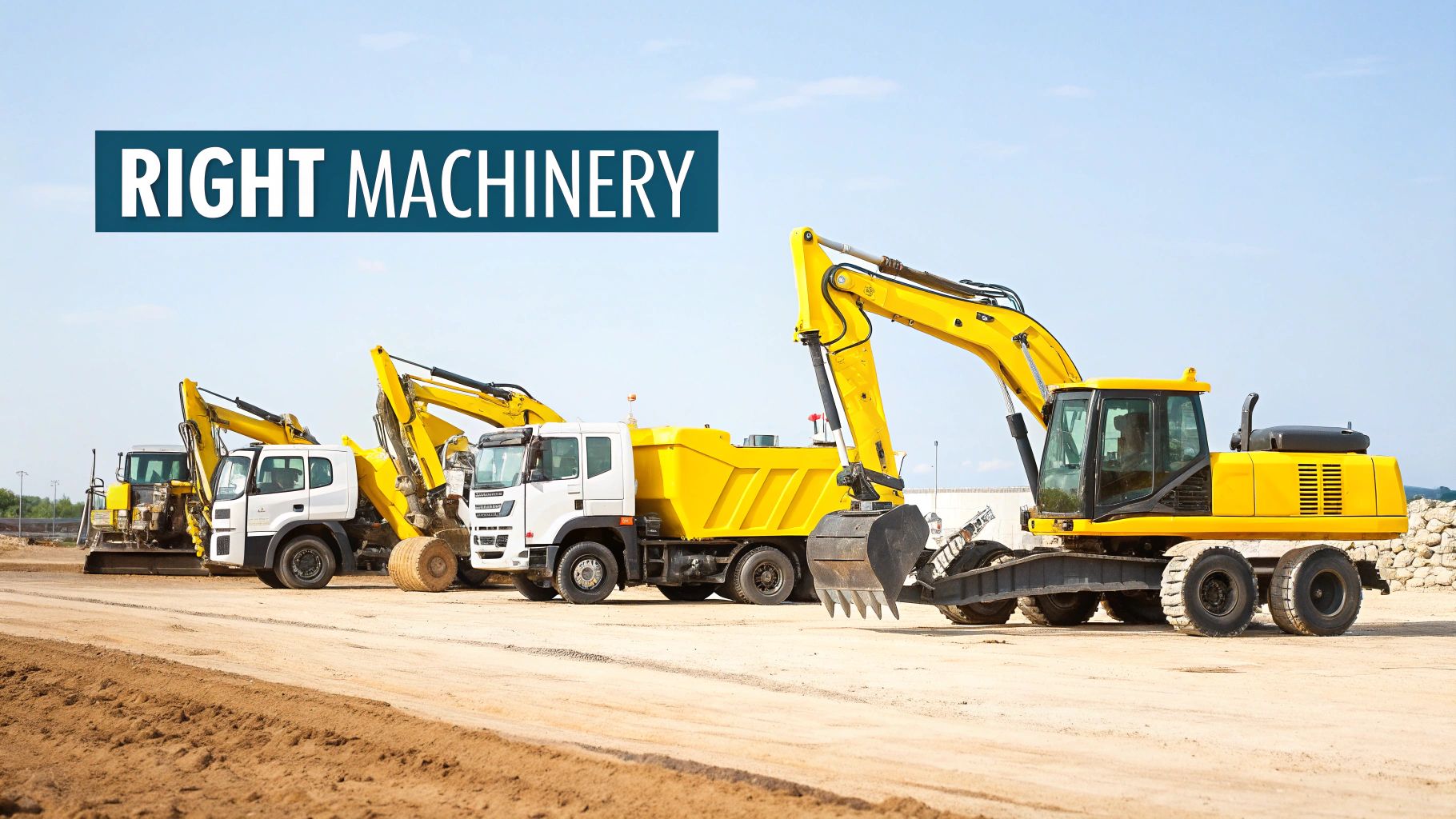
This is a big part of what we do at Booms Up Civil. We've built up a specialised fleet of machinery because we know that the diverse challenges across NSW—from tight suburban blocks to sprawling rural properties—demand more than a one-size-fits-all approach. If you're looking for the right type of excavator for hire on the Central Coast, we've got the equipment and the expertise to match.
Matching the Machine to the Mission
Every site has its own unique set of demands. A small backyard job in a dense Sydney suburb with narrow laneway access requires a completely different machine than a large-scale commercial site cut in the Hunter Valley. This is where having a versatile fleet really makes all the difference.
Let's put it into perspective. Say you're building a new home on a standard block in Kariong. A nimble 5-tonne excavator gives you the perfect blend of power for digging detailed footings and service trenches without chewing up the whole site. But if you’re clearing a large acreage for a new development? You’ll need the raw power of a 20-tonne excavator to handle the bulk earthworks and shift massive volumes of soil efficiently.
Our Specialised Fleet Explained
Getting to know the machinery helps you understand the entire process. Each piece of equipment in our fleet is hand-picked to play a specific, vital role in making your excavation project a success.
-
Mini Excavators (1.7 – 5 Tonne): These are our tight-access specialists. They’re perfect for backyard landscaping, pool digs, or plumbing trenches where every centimetre counts. Their compact size lets them navigate narrow side paths and work right up against existing structures without causing damage.
-
Posi-Tracks: Think of these as our all-terrain workhorses. Unlike wheeled machines that can get bogged down, their tracks distribute weight evenly. This makes them ideal for working on soft ground, the sandy coastal soils we often see, or steep slopes without getting stuck or tearing up the landscape.
-
Tipper Trucks: Digging the dirt is only half the job; you also have to get rid of it. Our reliable tipper trucks are the unsung heroes, crucial for hauling away excess soil and rock to keep your site clear, safe, and moving forward. We manage the whole disposal process, making sure it’s handled responsibly.
Ultimately, the performance of any excavator hinges on its core components. A well-maintained hydraulic power unit, for instance, is what provides the immense force needed to bite through tough ground. By carefully selecting the right size and type of machine for the specific soil conditions and scope of your project, we can guarantee a safer, faster, and more cost-effective result every single time.
Navigating Safety and NSW Regulations
When you're moving earth, nothing matters more than safety. Excavation and trenching isn't a game; this work carries serious risks if it’s not managed by experienced professionals who respect the rules. These regulations aren't just red tape—they're proven systems built to protect workers, your property, and the public from getting hurt.
At Booms Up Civil, our commitment to safety is non-negotiable. We live and breathe the guidelines set out by SafeWork NSW, which means we manage all the compliance so you don't have to.
Every single job we take on is guided by their official Excavation Work Code of Practice. This isn't just some document we keep in the office; it's the rulebook our team follows on every site, every day, whether we’re digging for a small residential slab or a major commercial basement.
Preventing Trench Collapses
One of the biggest dangers in our line of work is a trench collapsing. It's a scary thought, but a single cubic metre of soil can weigh as much as a small car, making an unstable trench an incredibly lethal environment.
SafeWork NSW is crystal clear on this: any trench deeper than 1.5 metres requires a protective system. This is where professional techniques become absolutely critical.
We primarily use two methods to ensure trench stability:
- Shoring: This involves installing support systems—like heavy-duty timber or steel bracing—inside the trench to physically stop the walls from caving in.
- Battering: This technique shapes the trench walls, sloping them back at a safe angle so the soil can support itself naturally without collapsing.
The right method always depends on the soil type, the trench depth, and what's happening on the site around it. To get a better handle on these protective measures, you can learn more about our approach in our guide to trenching and shoring techniques.
Dial Before You Dig: A Legal Requirement
Before we even think about firing up an excavator, our first move is always a Dial Before You Dig search. This isn't just a good idea; it's a legal requirement right across Australia. This service gives us the plans showing where all the underground utilities are hiding—water pipes, gas lines, electrical conduits, and telco cables.
Hitting one of these services isn't just dangerous; it can cause costly outages and lead to massive fines. It’s a non-negotiable first step that protects everyone and makes sure your project can move forward without any nasty, expensive surprises buried just beneath the surface.
Adhering to Local Council Rules
On top of state-level safety laws, we also work hand-in-glove with local councils from the Central Coast to Newcastle and Sydney. Every council has its own set of specific requirements that need to be followed. These rules often cover the nuts and bolts of managing a site properly.
For instance, Central Coast Council has strict guidelines on sediment control to stop soil and debris from washing into stormwater drains and polluting our local waterways. We make sure silt fences and other controls are in place to stay fully compliant. Councils also have a say on work hours, access for heavy vehicles, and noise levels to minimise disruption to your neighbours.
Our Promise: We handle all these regulatory details as part of our service. From lodging the right paperwork with the council to ensuring every SafeWork NSW protocol is followed on-site, we take care of the compliance so you can have complete peace of mind.
The Site Preparation Services industry in Australia is a huge economic driver, with revenues projected to hit $42.2 billion in 2025. More importantly, SafeWork NSW data shows that stricter regulations have led to a 25% decrease in trenching incidents since 2015, proving just how valuable it is to hire compliant, experienced teams like ours.
Understanding Excavation and Trenching Costs
Working out a budget is always one of the first, most critical steps for any project. When it comes to earthworks, getting your head around the real cost of excavation and trenching is key. While it’s true that no two jobs are ever exactly the same, the factors that shape the final price tag are surprisingly consistent. Once you understand these variables, any quote you receive will make a lot more sense.
It’s never just about how much dirt needs to be moved; it’s about how we move it and what kind of ground we're dealing with. The final cost is a direct reflection of the labour, machinery, and time it takes to get the job done properly and, most importantly, safely.

Key Factors That Shape Your Quote
One of the biggest variables we see is site accessibility. A wide-open, level block is pretty straightforward. But a tight-access job on a narrow block in suburban Newcastle, or a steep, tricky site tucked away in the Central Coast hinterland? That's a different story. It will demand smaller, more specialised machinery and more time, which naturally pushes up the cost.
The type of material we're digging into is another huge factor. Shifting soft, sandy soil is one thing, but breaking through the hard sandstone bedrock found all over Sydney is a completely different challenge. Rock excavation requires specialised attachments like hydraulic hammers, which adds a whole new layer of time and complexity to the project.
The sheer volume of material (what we call 'spoil') that needs to be moved and the disposal fees that go with it are also significant. We make sure our quotes are always transparent about spoil removal, so there are no nasty surprises waiting for you at the end of the job.
Bulk Digs vs Detailed Trims
Finally, the level of precision required plays a massive role in the final cost. A bulk excavation to clear a large area is far less time-intensive than a detailed final trim. This is the last stage, where the ground is carefully shaped to precise levels, ready for a concrete slab or driveway. It’s a highly skilled task that really depends on the operator's experience and a steady hand.
For a deeper look at what influences the price, you might find our guide on the cost of excavation per cubic metre useful.
The demand for professional earthworks is definitely on the rise, partly fuelled by major public works. With Australia's infrastructure pipeline set at $242 billion over the next five years, the need for skilled operators on all kinds of projects is growing—from massive civil works right down to residential site preps. Understanding these cost factors helps you see the real value in a project that's been properly planned and professionally executed from the start.
Frequently Asked Questions
Here are the answers to some of the most common questions we get about excavation and trenching on the Central Coast and surrounding regions. We believe in providing clear, straightforward information to help you feel confident as you plan your project.
Do I Need Council Approval for My Excavation Project?
This really depends on the scale of your project. For minor jobs like digging a small garden bed or some simple landscaping, you typically won't need to involve the council. However, for most significant earthworks, council approval is an absolute must.
This includes projects like preparing a site for a new home build or a major extension, excavating for a swimming pool, or building any kind of structural retaining wall. These jobs almost always require a Development Application (DA) to be lodged with your local council, whether it's Central Coast Council, Newcastle City Council, or one in the Sydney area. We have years of experience navigating these requirements and can guide you on what’s needed for your specific job.
How Long Does an Excavation Job Usually Take?
The timeline for excavation work can vary dramatically. A simple trench for new plumbing services might be wrapped up in a single day. On the other hand, a full site cut and preparation for a new house on a tricky sloping block could take a week or even longer.
Several things can influence the schedule. Hitting unexpected rock is a classic one that can slow things down, and of course, persistent rain can bring work to a temporary halt for safety reasons. We always provide a realistic schedule in our quotes and make it a priority to keep you in the loop with clear communication as the project moves forward.
The most important thing is to get the job done right, not just fast. Rushing the groundwork is a recipe for disaster, so we focus on precision and safety every step of the way to ensure a quality result.
What Happens to the Soil and Rock That Is Dug Up?
That leftover material is known in the industry as ‘spoil’, and managing it properly is a key part of our service. In some cases, a portion of the spoil can be reused right there on-site for tasks like backfilling around retaining walls or levelling out garden areas.
More often than not, though, excess material needs to be removed from the site completely. We manage the entire haulage and disposal process, loading the spoil into our tipper trucks and transporting it to a licensed facility. The cost for this is always clearly itemised in your quote, so you won't be hit with any nasty surprises.
Can You Work on a Site with Tight Access?
Yes, absolutely. This is one of the areas we specialise in. Many established residential properties, especially in older suburbs across the Central Coast and Sydney, have very limited space down the side of the house.
It's precisely why we've invested in a fleet of specialised equipment designed for these exact scenarios. Our mini-excavators and compact posi-tracks can navigate narrow pathways and work efficiently in confined spaces, ensuring we can deliver top-quality excavation work without compromising on safety or the end result.
Ready to start your project on the right foundation? The team at Booms Up Civil Group has the local knowledge and professional equipment to handle your excavation and trenching needs across the Central Coast, Newcastle, and Sydney. Contact us today for a no-obligation chat and a free quote.