Choosing the right material for your driveway on the Central Coast isn't just about looks; it's a practical decision that needs to account for our unique coastal environment. When you get down to it, a well-built concrete driveway offers durability and longevity that’s tough to beat, handling everything from searing summer heatwaves to torrential rain. It's simply the smartest long-term investment for your property.
Why Concrete Is the Smart Choice for Central Coast Driveways
A driveway here isn’t just a spot to park the car; it’s a core part of your home’s structure that’s constantly fighting local conditions. The ground itself is a major challenge, from the sandy, shifting soils you find near the beaches of Wamberal and Terrigal to the more reactive clays common inland around Wyoming and Lisarow. We find concrete gives you the rigid, stable surface you need to stop your driveway from sinking, cracking, and eroding over time.
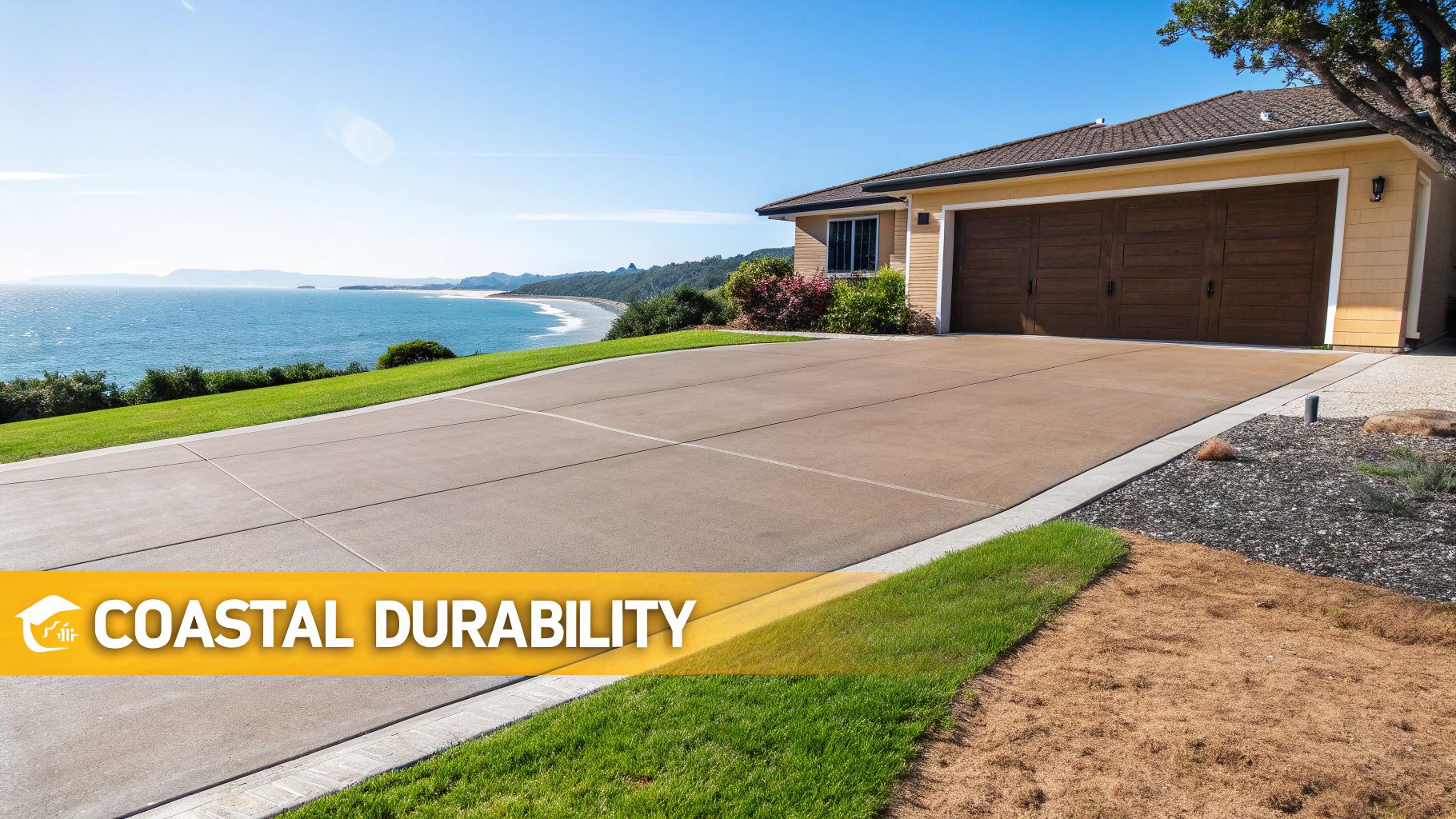
Let's consider the alternatives. Asphalt can soften and warp under our intense summer sun. Pavers inevitably shift, creating a perfect home for weeds to poke through. A professionally installed concrete driveway, on the other hand, is a solid, low-maintenance solution that stands up to our climate, resisting damage from both the scorching sun and heavy downpours without turning into a muddy mess.
Built to Last and Meet Local Standards
Getting a concrete driveway done right from the start will save you thousands in potential repairs down the track. This isn’t just about mixing cement and water; it’s a proper structural project that has to comply with local council regulations, which dictate everything from drainage requirements to the specific surface finish.
On the Central Coast, installing a concrete driveway is a serious infrastructure choice, guided by climate resilience and these strict local rules. Industry estimates put the average cost for a standard concrete driveway in New South Wales (NSW) between $90 and $150 per square metre. If you want to get into the nitty-gritty of the official standards, the Central Coast Council’s Civil Works Specification is the place to look.
More Than Just a Grey Slab
Modern concreting on the Central Coast has moved way beyond the basic grey slab of the past. Today, you’ve got a whole range of options to perfectly match your home’s style.
For example, Exposed Aggregate is a hugely popular choice for coastal homes. It offers a natural, textured look and, importantly, fantastic slip resistance. With Coloured Concrete, we can add integral colour right into the mix, creating a driveway that perfectly complements your home’s exterior colour scheme. Stamped or Stencilled Finishes allow us to apply patterns that mimic the look of pavers or stone, but without the maintenance headaches.
When you're weighing up the long-term value against the initial investment, getting a handle on project costs is crucial. Using online resources like project estimation tools can offer some valuable initial insights. At the end of the day, though, the best first step you can take is thoughtful planning that’s specifically tailored to our local Central Coast environment.
Navigating Council Rules and Site Realities
A quality concrete driveway on the Central Coast isn't just about mixing and pouring. The real groundwork happens long before a single shovel hits the dirt, and getting this planning stage right is the secret to avoiding expensive headaches down the track. It all boils down to two critical things: understanding what the Central Coast Council expects, and respecting what the unique conditions of your property demand.
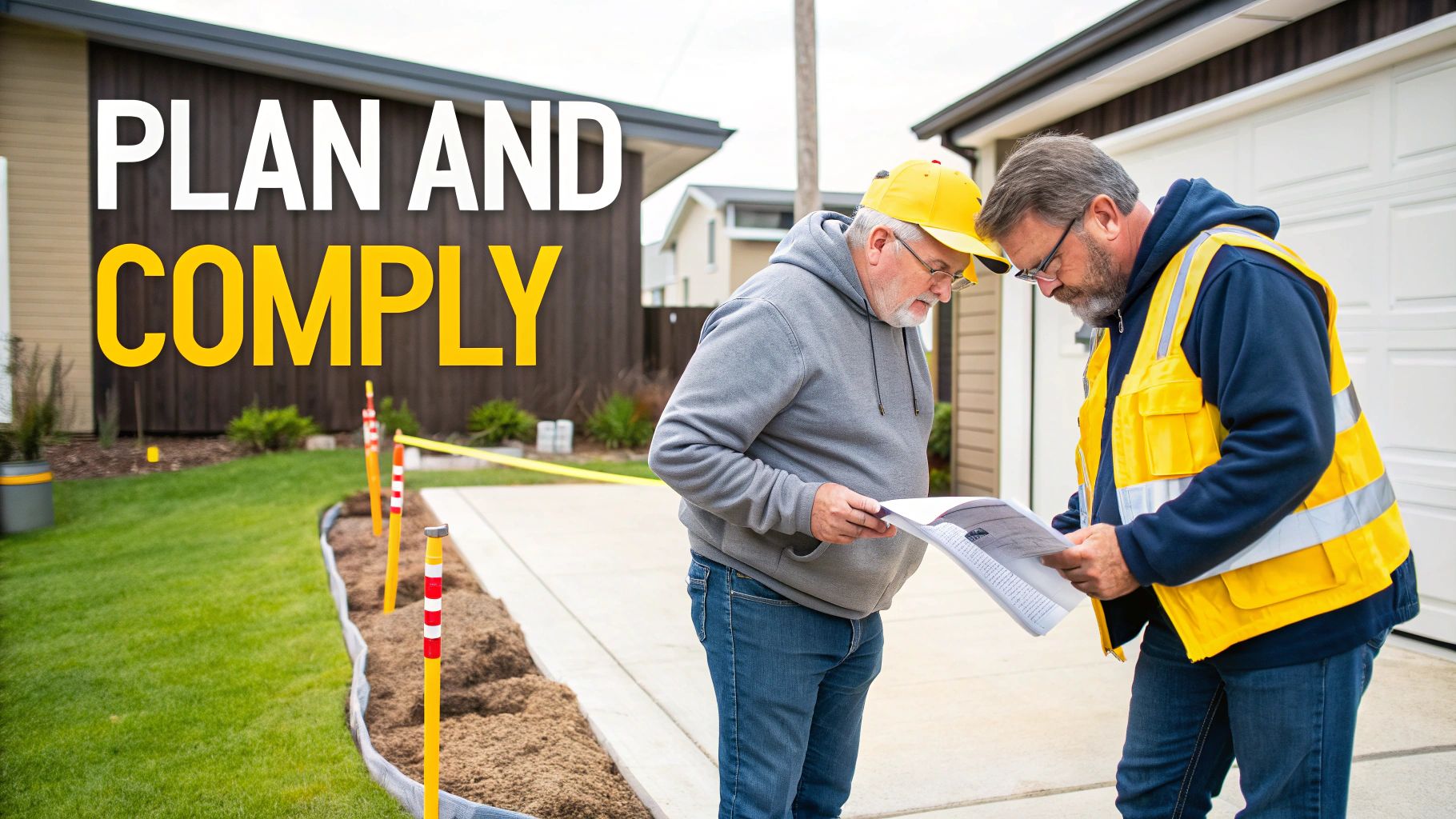
First things first, you have to talk to the Central Coast Council. Any new driveway or even a modification to an old one that connects to a public road needs a formal application. This isn't just pointless paperwork; it’s about making sure your driveway is safe, drains properly, and lines up correctly with public infrastructure like footpaths and kerbs.
Understanding Council Requirements
The council is most concerned with the "crossover"—that's the bit of your driveway that goes over the nature strip to meet the road. They have very specific rules about its width, slope, and how it’s built to make sure it won’t create a trip hazard or cause water to pool on the footpath.
To get approval, you’ll usually need a basic site plan. This just needs to show where the driveway will go, its dimensions, and how you’ll handle stormwater runoff. Skipping this is a classic mistake that can lead to stop-work orders and some nasty fines. It's a process we handle for every client to ensure a project is fully compliant right from the get-go.
Assessing Your Property's Unique Challenges
Every block of land on the Central Coast has its own story, and your driveway design has to listen to it. The reality of your site—the slope, the soil, what's underneath—will have a massive say in the job's scope, complexity, and final cost.
Imagine you're building on a steep Terrigal block. Excavation there isn't just about scraping the ground level. It's about engineering a stable base that won’t move. This often means cutting into the hillside and sometimes building a small retaining wall to hold back the earth, which naturally adds to the project’s timeline and budget.
A critical part of our initial site assessment is identifying all underground services. Hitting a water main, sewer line, or electrical cable during excavation is a dangerous and expensive mistake. We always arrange a "Dial Before You Dig" report to map out exactly what's beneath the surface.
From Bare Ground to Solid Foundations
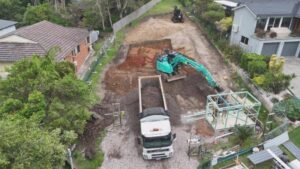
Once we have a crystal-clear picture of the site, the real work can kick off. If your property has old trees, dense shrubs, or a cracked-up old driveway, that has to go first. Proper land clearing services are essential to create a clean slate and make sure no stray roots can push up and ruin your new concrete in a few years.
Next comes the excavation and sub-base preparation. You could argue this is the single most important step for the driveway's long-term health. We dig down to the necessary depth, then lay and compact a solid sub-base of road base gravel. This sturdy, stable layer is what stops the concrete from sinking or cracking under the weight of your cars by spreading the load evenly.
The strength of the concrete itself, measured in megapascals (MPa), also depends on what you'll be using it for. For a typical family driveway that only sees cars, a 25 MPa mix is generally spot-on. But if you’ve got a heavy boat, a caravan, or a work truck, we'd recommend stepping it up to a stronger 32 MPa mix reinforced with steel mesh. This gives it far superior load-bearing capacity. Getting this detail right ensures your driveway is built not just for looks, but for life.
Choosing a Concrete Finish for Your Coastal Home
The finish you choose for your concrete driveway does more than just look good—it sets the entire tone for your property's kerb appeal. More importantly, it defines the surface's texture, its long-term durability, and how safe it is to walk on, especially in our wet coastal climate.
It's time to move beyond plain grey. Your choice of finish is a delicate balance between aesthetics, functionality, and budget, and it’s all about matching the surface to your home's architectural style and your family's practical needs.
Exposed Aggregate: A Coastal Classic
Exposed aggregate is arguably the most popular choice for concrete driveways on the Central Coast, and for very good reason. This finish isn't just poured; it's crafted by washing away the top layer of cement paste to reveal the small stones and pebbles (the aggregate) hidden within the mix.
The result is a naturally textured, multi-toned surface that looks fantastic with modern coastal homes, like those you might see in Avoca Beach or Macmasters Beach. Its biggest advantage? Excellent slip resistance. That textured surface provides fantastic grip underfoot, even during a heavy downpour, making it a safe and reliable option for steep driveways or garden paths.
Coloured Concrete: Seamless Style
If you're after a more uniform, contemporary look, coloured concrete is a brilliant choice. The magic here is that colour pigments are added directly to the concrete mix before it's poured, ensuring the colour runs all the way through the slab.
This means that even if the surface gets chipped or scratched down the line, the colour remains perfectly consistent. Imagine a sleek, charcoal-coloured driveway for a modern home in Wyoming, or a warmer, earthy tone to complement a brick house in Lisarow. Because it has a smoother surface than exposed aggregate, it's a breeze to sweep clean, but it's vital to discuss non-slip additives or a simple broom finish with your contractor to ensure it's safe when wet.
Why Maintenance Matters for Finishes
No matter which finish you select, regular sealing is non-negotiable for longevity. A high-quality sealer protects the surface from oil stains, tyre marks, and the growth of mould and mildew that can thrive in our humid coastal air. We typically recommend resealing every 2-3 years to keep your driveway looking its best.
Stamped and Stencilled Concrete: Versatility and Value
Stamped or stencilled concrete offers the best of both worlds: the rock-solid integrity of a concrete slab with the decorative appearance of individual pavers, tiles, or even natural stone. After the concrete is poured and levelled, a pattern is either stamped into the surface or applied with a stencil and then coloured.
This is a fantastic way to achieve a high-end look without the cost and maintenance headaches of individual pavers, which can shift over time and let weeds grow through the gaps. For instance, a classic "cobblestone" stamp could add a touch of timeless charm to a heritage-style home in Gosford.
Making the Right Choice for Your Property
Choosing the right finish often comes down to weighing up these key factors. A great example of balancing aesthetics with heavy public use can be seen in the concrete driveways and pathways we constructed at Gosford Showground. For that project, durability and a safe, consistent surface were absolutely paramount.
To help you decide what might work best for your place, here’s a quick comparison of the most popular options.
Comparing Popular Concrete Driveway Finishes
This table gives you a quick snapshot of the most common concrete finishes to help you choose the best option for your Central Coast home, based on aesthetics, durability, and cost.
| Finish Type | Best For | Maintenance Level | Typical Cost Factor |
|---|---|---|---|
| Exposed Aggregate | Modern coastal homes, steep driveways, high-traffic areas. | Low | $$ |
| Coloured Concrete | Sleek, contemporary aesthetics and seamless integration. | Low | $-$$ |
| Stamped Concrete | Mimicking high-end materials like pavers, cobblestone or stone. | Medium (resealing is key) | $$$ |
| Broom Finish | A practical, no-fuss and highly cost-effective option. | Very Low | $ |
Ultimately, the best finish is one that you'll be happy to look at every single day and that serves the practical needs of your household. Having a chat about these options with an experienced local contractor will ensure you get a result that is both beautiful and built to last.
The Driveway Construction Process Explained
Once the plans are signed off and the design is locked in, the real magic begins. This is where your vision starts to physically take shape on your property. Understanding how concrete driveways on the Central Coast are built helps you know what's happening at each stage, why it's crucial, and what to look out for. It's a methodical process, and getting every single step right is non-negotiable if you want a driveway that’ll last for decades.
Setting The Stage With Site Preparation
Every great driveway starts with meticulous site preparation and excavation. This is way more than just scraping the top layer of grass off; we're engineering a stable foundation for the heavy concrete slab that's about to be poured. The team will carefully excavate to the perfect depth, making sure there's enough room for both the driveway's thickness and the critical sub-base layer underneath.
That sub-base, usually made of compacted road base, is what stops your driveway from sinking or cracking under the weight of a car. It spreads the load evenly, which is incredibly important given the diverse soil types we see across the Central Coast—from the sandy loams near the beaches to the heavy clays further inland. If you're interested in the nitty-gritty, our guide on the importance of professional site preparation and excavation goes much deeper into this foundational step.
Formwork and Steel Reinforcement
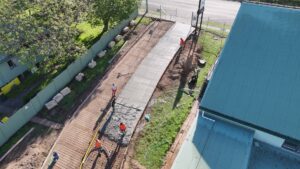
With the ground perfectly prepped, it's time to build the formwork. Think of this as a temporary timber frame that acts as a mould, defining the exact shape, edges, and final height of your driveway. Getting the formwork perfectly straight and level is a true art form—any wobbles or imperfections here will be permanently cast in concrete for everyone to see.
Inside this frame, we lay a grid of steel reinforcement mesh, often just called "reo". This steel grid doesn't just lie on the ground; it’s propped up on small plastic "chairs" to make sure it sits right in the middle of the concrete slab's thickness.
Why Steel Reinforcement Matters
Concrete is fantastic under compression (when you push down on it), but it's surprisingly weak under tension (when it gets stretched or pulled). The steel reo provides all the tensile strength, effectively holding the slab together and drastically reducing the risk of cracks from ground movement or heavy vehicles. It’s not just a good idea; it's a requirement under Australian Standards (AS 2870) for structural slabs like driveways.
The Concrete Pour and Finishing Touches
The day of the pour is the main event. A concrete truck arrives on-site, and we get to work pouring the concrete mix, which has been specified for strength—typically 25-32 MPa is what you want for a residential driveway. Our team works methodically, spreading the concrete to fill every corner of the formwork and ensuring it completely surrounds the steel mesh.
Once it's poured, the concrete is screeded (levelled off) and then bull-floated. This smooths the surface and pushes the heavy stones down, bringing the fine cement paste to the top. This is the moment where the final finish is applied.
The infographic below shows just how different the process is for creating some of the most popular finishes.
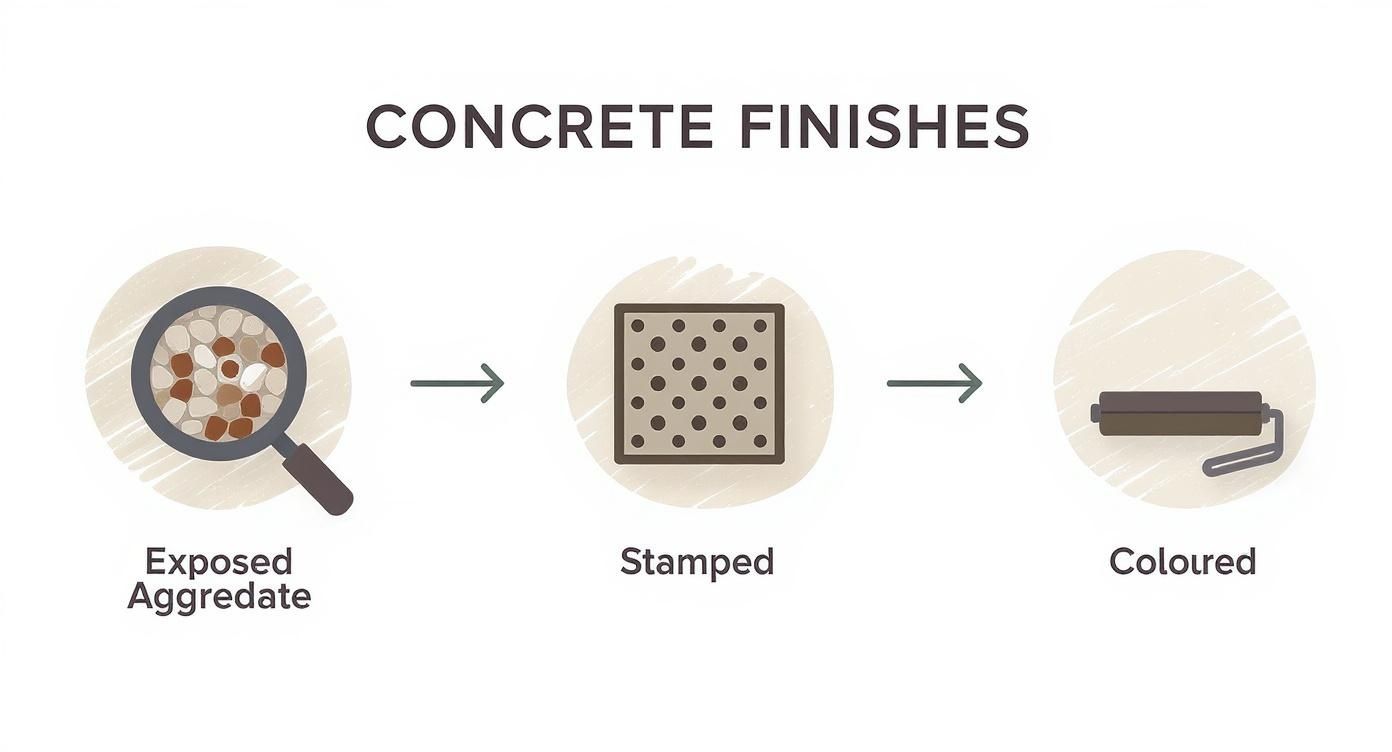
As you can see, each finish requires a unique technique applied at exactly the right time—from washing the surface away for exposed aggregate to pressing patterns in for a stamped look.
Curing: The Most Overlooked Step
After all the hard labour of finishing is done, the most overlooked yet vital stage begins: curing. Fresh concrete doesn't just "dry out." It actually goes through a chemical reaction called hydration, where water and cement particles bond to form strong crystals. For this to happen properly, the slab needs to stay consistently moist.
We often spray a curing compound over the surface, which creates a thin membrane to trap the moisture in. Alternatively, the slab might be covered with plastic sheeting or even hosed down periodically for a few days. Proper curing is what gives concrete its ultimate strength and durability. It prevents surface shrinkage cracks and makes sure the slab actually reaches its designed MPa rating.
You’ll need to be patient. It's best to wait at least 7 days before parking a car on it, giving the concrete the time it needs to work its magic.
Protecting Your Investment with Proper Maintenance
Your brand new driveway is down, the formwork is gone, and it looks fantastic. So, the job's finished, right? Not quite.
A little bit of proactive care is the secret to keeping your concrete driveway on the Central Coast looking pristine and performing perfectly for decades to come. Think of it as protecting your investment against everything our local climate can throw at it.
The Power of a Good Sealer
Here’s the single most effective thing you can do for your driveway: seal it properly. A high-quality penetrating sealer creates an invisible barrier that soaks into the concrete, protecting it from the inside out. This is absolutely essential in our humid, coastal environment where mould and mildew can take hold surprisingly fast.
A good sealer does several critical jobs. It repels water, stopping moisture from seeping in and causing long-term damage. It protects against ugly stains from things like oil, grease, and those tannins that drop from gum trees. It also makes the surface much easier to clean, as dirt and grime can't get a stubborn foothold. For coloured or exposed aggregate finishes, it really enhances the colour and gives it a much richer, deeper look.
Resealing and Regular Cleaning
We generally recommend resealing your driveway every 2-3 years. The exact timing really depends on the finish you've chosen and how much traffic it sees. An exposed aggregate driveway, with its textured surface, will probably benefit from more frequent sealing than a simple broom-finish slab.
Cleaning is straightforward. For the most part, a regular sweep to get rid of leaves and debris, followed by a wash-down with a garden hose and a stiff broom, is all it needs. You can bring out the high-pressure cleaner for tougher stains, but be careful not to use a super aggressive nozzle—it can actually damage the surface if you’re not careful.
A Pro Tip on Cleaning: Whatever you do, avoid using harsh, acid-based cleaners on your concrete. They can permanently etch the surface and strip away the sealer, leaving your driveway vulnerable to all sorts of damage and staining. Mild, pH-neutral concrete cleaners are always the safest bet.
Dealing with Minor Issues Before They Grow
Over its long life, your driveway will be subjected to the elements and natural ground movement. It's completely normal for tiny hairline cracks to appear over time, especially near the control joints. The key is to jump on these minor issues before they become major problems.
If you spot a fine crack, just keeping it clean and sealed will prevent water from getting in and making it wider. For larger cracks or specific damage like potholes, addressing them promptly is vital. When you're looking at repair options, specialised products like Aquaphalt for Driveway Repair can provide a durable, long-term fix for isolated damage.
It’s the same principle we apply to other structures; just like addressing drainage is fundamental to preventing bigger issues with retaining walls, which is a topic we dive into in our guide to sandstone retaining wall design. By staying on top of this simple maintenance, you ensure your driveway remains a valuable and functional asset for your home for years to come.
Got Questions About Your Central Coast Driveway? We've Got Answers.
Over the years, we've heard just about every question there is when it comes to concrete driveways on the Central Coast. It’s a big investment in your home, so it makes sense to get all the details sorted before you commit. We've put together some straightforward answers to the questions we hear most often, helping you move forward with confidence.
Do I Need Council Approval for My Driveway?
Yes, in nearly every case, you absolutely do. Any work on your property that creates a new or changes an existing connection to a public road needs a formal application to the Central Coast Council. This isn't just about red tape; it's a critical step to make sure drainage is handled correctly, the public is safe, and proper construction standards are met.
The process specifically covers the "crossover" section of your driveway—that’s the part that runs over the nature strip and connects to the kerb and gutter. Getting this bit wrong can lead to stop-work orders or, even worse, being told to rip it all up and start again. It’s always best to check directly with the council before a single shovelful of dirt is moved.
How Thick Should My Concrete Driveway Be?
The ideal thickness really comes down to one thing: what you plan to park on it. For a standard residential driveway that will only ever see cars and other light vehicles, a thickness of 100mm is more than enough to give you decades of solid, reliable service.
However, if you know you’ll have heavier vehicles using the driveway—think caravans, big work utes, small trucks, or a boat trailer—we strongly recommend bumping that up to 125mm. At this thickness, it's also essential to include steel reinforcement mesh to provide the extra strength needed to prevent cracking and handle that additional weight.
How Long Until I Can Park on My New Driveway?
Patience is probably the most important tool for a long-lasting driveway. While the concrete might feel hard to the touch pretty quickly, it’s still going through a crucial chemical process called curing, where it gains its real, long-term strength.
You can usually walk on new concrete after 24-48 hours, but you absolutely must wait at least 7 full days before parking a normal car on it. For anything heavier, like a 4WD or a work van, it’s much safer to give it 14-28 days to let the concrete cure properly.
The steady growth across the Central Coast means a consistent demand for quality concrete driveway services. More homes mean more driveways. This activity highlights just how popular concrete is and why it's so important to get the installation right from the very start. You can discover more insights about the local concrete industry on cccgrinding.com.au.
How Much Does a Concrete Driveway Cost?
This is the big question, and the honest answer is: it varies—a lot. The final price depends on a few key things: the size of the area, how complex the site is (is it steep or dead flat?), how much excavation is needed, and the type of finish you want. A simple broom finish will always be more budget-friendly than a decorative option like stamped or exposed aggregate. As a general guide, you should budget for a professional job that covers all the labour, materials, and council compliance.
At Booms Up Civil Group, we're firm believers in getting the job done right the first time. If you have more questions about planning a concrete driveway on the Central Coast, or you're ready to get a detailed, obligation-free quote, our experienced team is here to help.
Get a free consultation for your Central Coast driveway project