
Staring at a sloping block or an eroding backyard can feel like a losing battle. But a professionally built retaining wall is far more than just a barrier—it’s a powerful structural solution that protects your property, unlocks new functional spaces, and adds serious long-term value. Honestly, it’s one of the smartest investments you can make in your landscape.
Why Retaining Walls Matter
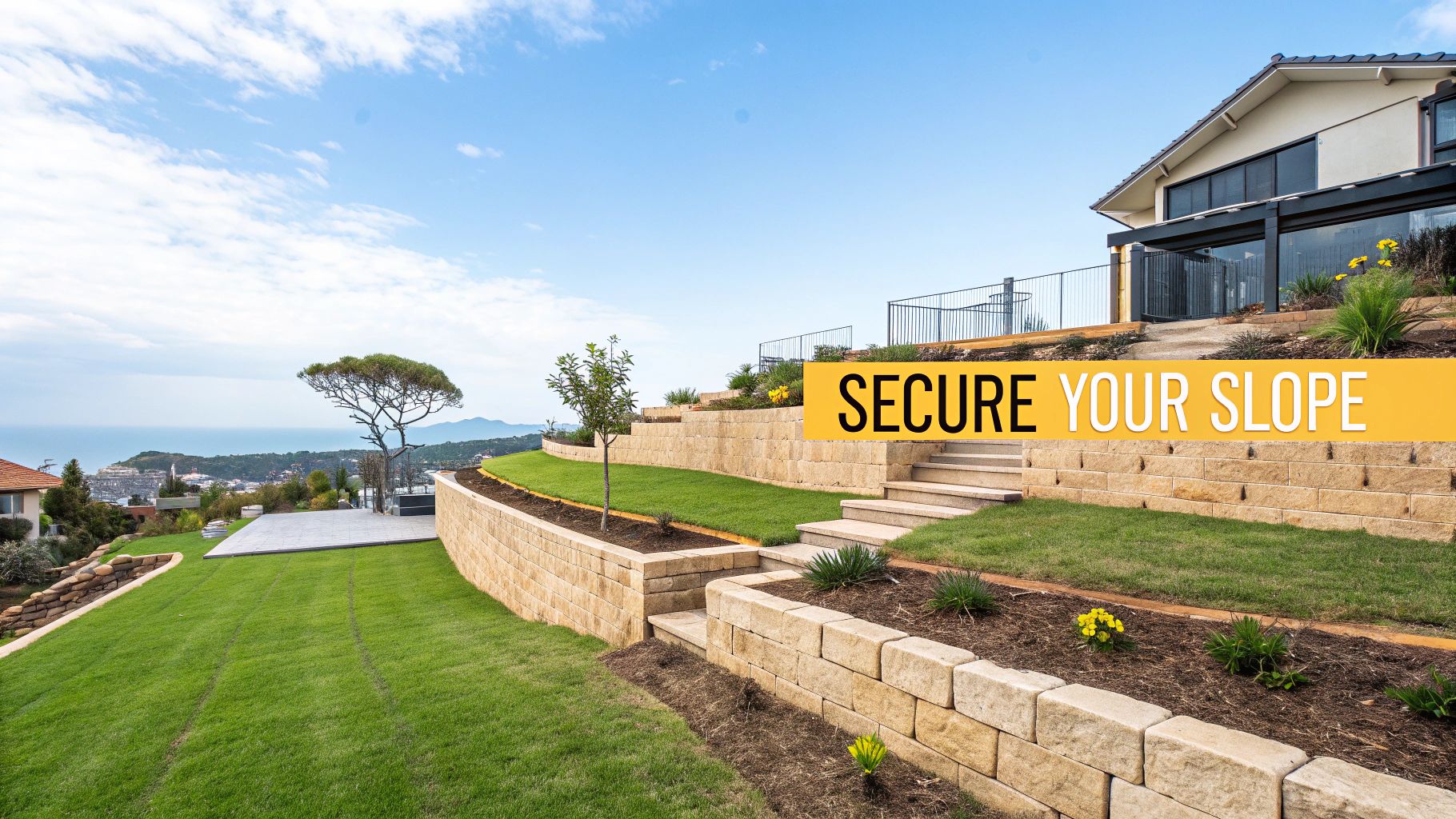
When you bring in professional retaining wall builders, you’re not just paying for labour. You're investing in decades of engineering know-how, safety, and genuine peace of mind. A well-built wall does so much more than hold back soil; it's a hard-working asset that actively solves common and often costly problems.
One of the biggest headaches we see across NSW, from the sandy soils of the Central Coast to the reactive clays further inland, is soil erosion. Heavy rain can literally wash your land away, undermining foundations and creating unstable, dangerous ground. A properly engineered retaining wall stops this dead in its tracks, securing your property for good.
Transforming Unusable Land
Imagine you're building on a steep Terrigal block, or you have an awkward backyard in the Hunter Valley. It’s a pain to mow, a hazard for the kids, and pretty much useless for anything else. A professionally constructed retaining wall turns that liability into one of your home’s best features.
By creating strong, level tiers, you suddenly open up a world of possibilities: a flat, functional lawn perfect for kicking a ball around, a secure area for a garden or outdoor entertaining space, or a stable foundation for a new carpark or shed. This transformation—turning wasted space into valuable real estate—directly boosts your property's usability and, without a doubt, its market value.
The True Cost of Cutting Corners
We’ve seen it happen. Trying to tackle a large retaining wall as a DIY project or hiring a cheap, unqualified operator can end in absolute disaster. Wall failure is almost always down to two things: poor drainage and inadequate footings. These are the fundamentals an experienced builder gets right every single time.
A failing wall isn't just an eyesore; it's a serious safety hazard that can cost tens of thousands to demolish and rebuild correctly. Getting it right the first time with a licensed, experienced team ensures your wall is built to Australian Standards (AS 4678), meets all council regulations, and will stand strong for decades. The excavated soil can often be reused on-site, a practice you can read more about in our guide to sustainable rock and dirt recycling.
Understanding Different Retaining Wall Types
So, you're looking at getting a retaining wall built and you've probably Googled "retaining wall builders near me." You'll quickly find it’s not as simple as picking a style you like the look of. The right wall for your property is a serious piece of engineering, and it all comes down to the wall's height, the pressure of the soil it’s holding back, and the unique quirks of your block.
Getting your head around the basic designs means you can have a much more productive chat with your builder. While nothing beats a professional site assessment, knowing the common types helps you understand the 'why' behind their recommendations. Let's break down the main players.
Gravity Walls: The Heavy Lifters
Think of a gravity wall as the strongman of the retaining world. Its power comes from one thing: sheer mass. These are thick, heavy structures that use their own bulk to fight against the immense pressure of the earth. It’s the oldest and most straightforward principle in retaining wall engineering.
Here on the Central Coast, you’ll often see this with large, quarried sandstone blocks. Their incredible weight makes them super stable for walls on the lower side. You might also see them built from massive concrete blocks or even gabions—those wire cages packed with rocks. The core idea is simple: the wall is heavy enough on its own that it’s not going anywhere.
Cantilever Walls: Smart Engineering at Work
A cantilever wall works smarter, not just harder. From the front, it might look like a simple vertical wall, but the real magic is happening underground. These walls are almost always built from steel-reinforced concrete and have a footing shaped like an "L" or an inverted "T".
Here’s the clever bit: the long part of the footing, known as the 'heel', stretches back underneath the soil you're retaining. The weight of that very soil then pushes down on the heel, effectively anchoring the wall in place. It uses the earth's own weight to resist its own pressure. This brilliant use of leverage allows cantilever walls to be much thinner than a gravity wall of the same height.
Anchored Systems: For the Toughest Jobs
So what happens when you’re dealing with a really high wall, or the ground itself is particularly unstable? That's when you call in the reinforcements and build an anchored wall. This isn't so much a standalone type as it is an extra layer of security added to another design, like a cantilever wall.
Cables or rods, known as 'anchors' or 'tiebacks', are driven right through the wall and deep into the stable, solid earth behind it. Let's say you're excavating on a steep block in Kariong, and the geotechnical report shows the soil is less than ideal. An anchored system provides that critical extra reinforcement, physically tying the wall to the solid ground far behind it, making absolutely sure it won’t budge. This is a highly specialised solution that demands precise engineering and an experienced team.
Choosing the Best Materials for Your Project
Once you've figured out the type of wall your property needs, the next big decision is what to build it with. This choice impacts your wall's lifespan, the final budget, and how well it sits within the natural Aussie landscape. As experienced local builders, we know the material really defines the character of the finished project.
A good chat with your builder should cover the pros and cons of each option for your specific site, whether it's a coastal block in Copacabana or a sprawling property out in the Hunter Valley. Let's dig into the most popular choices.
Sandstone: The Premium Natural Choice
For many properties across Sydney and the Central Coast, sandstone is the undisputed champion. It’s not just a retaining wall; it’s a timeless landscape feature. The beautiful, earthy colours and unique textures of quarried sandstone blocks blend perfectly into the local environment, looking as though they’ve always been part of the land.
Beyond its stunning looks, sandstone is incredibly tough. These are large, heavy blocks, making them perfect for gravity walls where sheer mass does all the hard work. While it does represent a higher initial investment, a sandstone wall is a long-term asset that adds serious prestige and value to your property. Its natural resilience to our harsh climate means it will stand strong for a lifetime with very little upkeep. To get a better sense of its appeal, you can explore our detailed guide on why a sandstone retaining wall in Sydney is such a popular and enduring choice.
Timber Sleepers: A Cost-Effective Solution
When the budget is a major factor, treated pine or hardwood sleepers are an incredibly popular and practical option. They’re lightweight, easy to work with, and a lot more affordable than stone or concrete, which makes them a go-to for smaller-scale residential jobs.
It's important to be realistic about their limitations, though. Treated pine has a shorter lifespan, typically around 15-25 years, before it starts showing signs of rot or termite damage, even when properly treated. For this reason, we generally recommend them for smaller, less critical walls under one metre high.
Concrete Blocks: Versatility and Strength
Concrete blocks, also known as Besser blocks or segmental blocks, offer a fantastic middle ground between cost, strength, and looks. These manufactured blocks are engineered for consistency and raw strength, making them suitable for a huge range of wall heights, including taller, engineered cantilever designs.
The versatility of concrete blocks is one of their biggest selling points. They come in a massive variety of colours, textures, and sizes – from a sleek, modern finish to a split-faced texture that mimics natural stone. When installed correctly with proper footings and drainage, a concrete block wall can last for 50 years or more, offering excellent long-term value.
Brick Walls: A Classic and Traditional Look
For homes with classic brickwork, a matching brick retaining wall can create a beautifully seamless and elegant look. Brick is very durable and has a timeless aesthetic that just never goes out of style. It's particularly effective for creating raised garden beds and decorative walls that complement an existing property.
That said, building a structural brick retaining wall is labour-intensive and requires a skilled bricklayer. It’s often a more expensive option than concrete blocks because of the detailed work involved. Proper waterproofing on the soil-facing side is also absolutely critical to stop moisture from getting in and degrading the mortar over time.
This decision tree gives you a quick visual guide for weighing up your material options based on the key factors of budget, aesthetic, and durability.
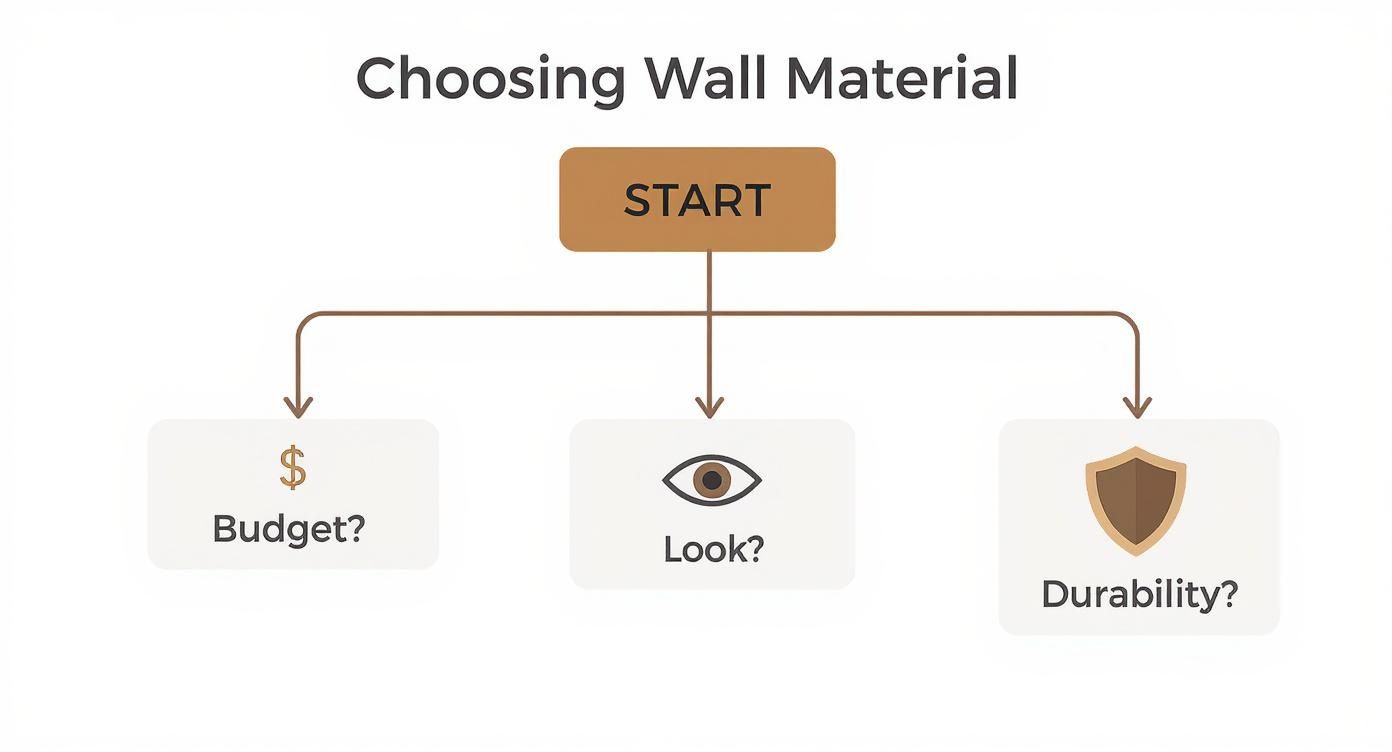
As the infographic shows, your priorities will guide you towards the most suitable material, whether it's the premium longevity of sandstone or the budget-friendliness of timber.
Essential Questions to Ask Local Builders
Choosing the right team is the single most important decision you'll make for your retaining wall project. It's the difference between a safe, compliant structure that lasts for decades and a dangerous, expensive mess.
Before you even think about signing a contract, you need to ask the right questions. This isn't about trying to trip anyone up; it's about separating the true professionals from the cowboys. A confident, experienced builder will welcome your questions and have clear, direct answers ready to go.
Licensing, Insurance and Local Experience
First things first, you need to check their credentials. This is non-negotiable for any serious construction work on your property.
Here's what you need to ask:
- Are you a fully licensed and insured builder in NSW? Ask to see their current builder's licence and their certificate of currency for public liability insurance. This is your safety net if anything goes wrong.
- Can you show me similar projects you’ve completed in my area? A builder with experience across the Central Coast knows the difference between the sandy coastal soils and the clay up in the hills.
- Who will be on-site managing the project? Clear, consistent communication is vital, so knowing who your point of contact is from day one is important.
Drainage Solutions and Technical Approach
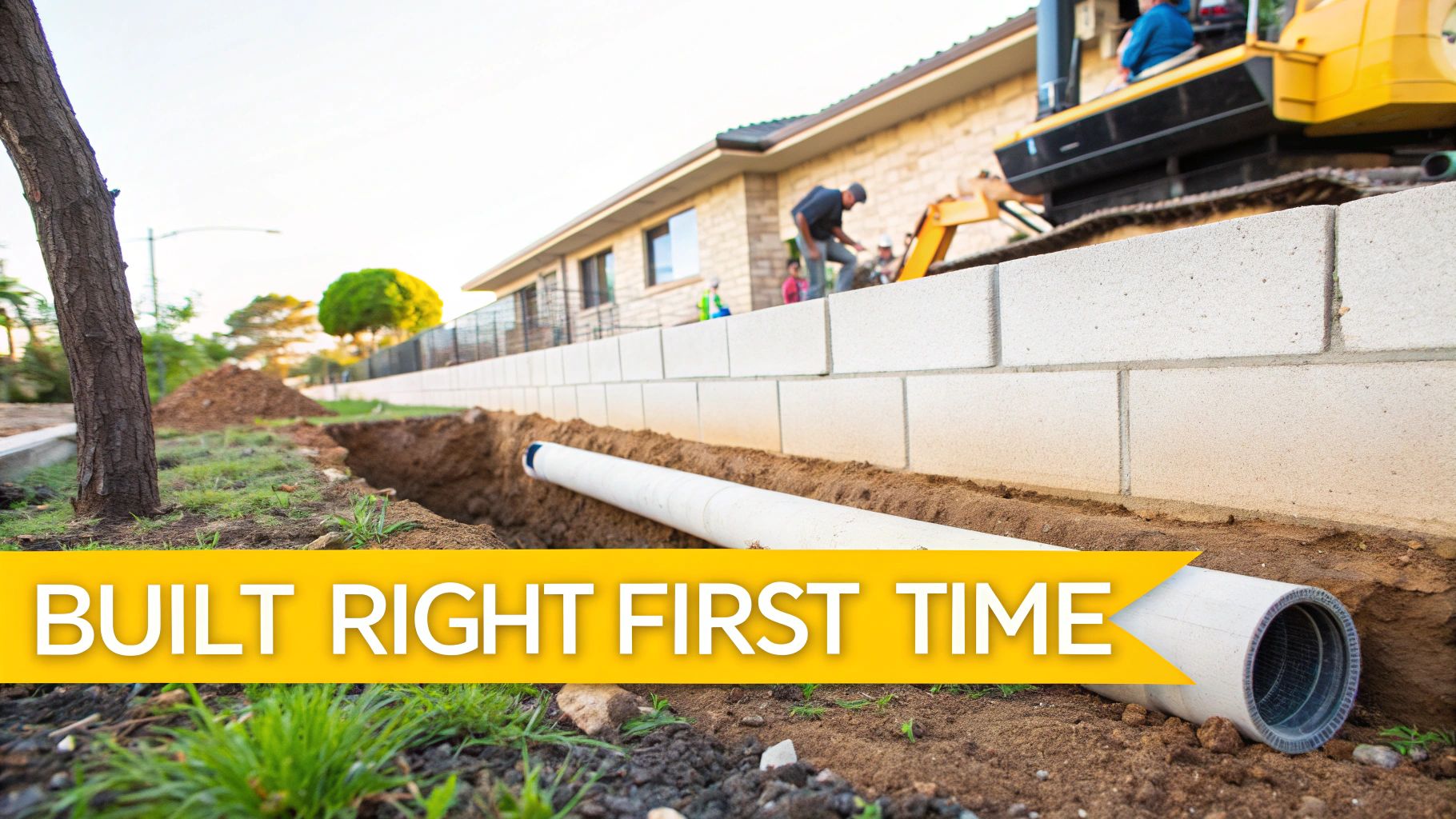
The real secret to a wall's longevity isn't what you can see, but what you can't. How a builder plans to manage water is probably the most critical technical question you can ask. Hydrostatic pressure—the immense force of waterlogged soil—is the number one killer of retaining walls.
You need to ask, "How exactly will you manage drainage behind the wall?" A good answer will describe a multi-layered system: a perforated ag-pipe at the base, a generous layer of free-draining aggregate like blue metal, and a geo-fabric filter to stop the whole system from getting clogged with soil. If they dismiss drainage as unimportant, that's a massive red flag.
Quotes, Warranties, and Council Compliance
A detailed, transparent quote tells you a lot about a builder's professionalism. Vague, one-line quotes often hide costs that pop up later. You need to know exactly what you're paying for.
Ask them directly: "What warranties do you provide on your workmanship and the materials used?" A reputable builder stands by their work and will offer a proper structural warranty. This protects your investment for years to come. Understanding all the rules can feel like a lot, which is why you can learn more about specific retaining wall regulations in NSW in our article.
Red Flags to Avoid When Hiring
Spotting potential problems early can save you a world of pain. When you're getting quotes and meeting builders, keep an eye out for these warning signs. A trustworthy professional will be transparent and thorough, while a cowboy might cut corners.
One of the biggest red flags is a quote that is dramatically cheaper than all the others. While it might seem tempting, it usually means they are using subpar materials, skipping critical steps like proper drainage, or aren't properly insured. Another warning sign is vagueness around council approvals. Any builder who suggests bypassing council to "save money" is putting you at serious legal and financial risk.
Be wary of anyone who can't provide a portfolio of past work or references from local clients. A builder proud of their work will be eager to show it off. Finally, trust your gut. If communication is poor from the start or they seem evasive when you ask technical questions, it’s best to walk away.
Navigating Council Approvals and Standards
Doing things by the book isn’t just good practice—it’s a legal and safety requirement. Finding a team that understands local council rules, like those from Central Coast Council or Newcastle Council, is just as crucial as their ability to build a straight wall. Compliance is simply non-negotiable.
As a rule of thumb, any retaining wall over one metre high will legally require an engineer’s design and council approval. This isn't just bureaucratic red tape; it's a critical safety measure. A professionally engineered design is your wall’s blueprint for success, ensuring it adheres to Australian Standard AS 4678 – Earth-retaining structures.
Safety on Site and Your Obligations
Beyond the structural standards, every construction site in NSW must operate under strict SafeWork NSW guidelines. This is about ensuring the safety of our team, your family, and the public. It covers everything from safe excavation practices to managing overhead power lines. For a deeper dive, you can explore the latest in excavation service trends to see how the market is moving.
When you hire Booms Up Civil, you’re choosing a team that takes these safety obligations seriously. From the initial plan for best practices for footings excavation to the final site clean-up, our licensed and insured operators manage every stage of the project with a safety-first mindset.
It's a field that's always improving, too. Across Australia, innovative new systems are making construction safer and faster without compromising on strength. If you're interested in the technical side, you can discover more about these advancements in retaining wall construction on insideconstruction.com.au.
Your Retaining Wall Questions Answered
We get a lot of questions from clients across the Central Coast and Sydney, and that's a good thing. Asking the right questions is the best way to plan your project with confidence and make sure there are no surprises down the track.
Here are some quick, clear answers to the most common queries we hear from homeowners looking for retaining wall builders.
How Long Does It Take to Build a Retaining Wall?
The timeline can vary quite a bit, depending on the scale and complexity of the job. A simple, low-set treated timber wall on a flat, easily accessible block might only take our team a few days from start to finish.
On the other hand, a large, engineered concrete block wall on a tricky, sloping site could take several weeks. We also have to account for factors like extended wet weather, council approval timeframes, and the availability of specific materials. Once we've done our initial site assessment, we’ll give you a realistic timeline in your detailed quote.
Does My Retaining Wall Really Need Drainage?
Yes, 100% yes. We can't stress this enough: proper drainage is the single most important factor for the lifespan and safety of your retaining wall.
Without it, hydrostatic pressure—the sheer force of waterlogged soil—will build up behind the wall. Over time, that pressure will cause the wall to bulge, crack, or completely fail. A professional builder will always install a complete drainage system, which typically includes perforated ag-pipes to channel water away, a thick layer of free-draining aggregate like blue metal, and a protective geo-fabric membrane.
How Much Does a Retaining Wall Cost?
The final cost comes down to a few key factors: the wall's height and length, the materials you choose, how easy it is for us to get machinery onto your site, and whether an engineer's design is required. Generally, a simple timber sleeper wall is the most budget-friendly option.
In contrast, an engineered sandstone or a feature concrete block wall represents a larger investment. Given that many retaining wall projects intersect with landscaping, understanding the local SEO strategies that landscapers use can provide additional insights into discovering qualified professionals online. The only way to get a firm price is with an on-site consultation.
What's the Difference Between a Landscaper and a Builder?
While a talented landscaper might be great at building a small, decorative garden edge, a licensed builder has the specific qualifications, insurance, and structural knowledge needed to construct a compliant retaining wall designed to hold back serious earth pressure.
For any wall over one metre high, or any wall that’s supporting a load like a driveway or building, using a licensed and experienced builder is non-negotiable. It’s essential for safety, compliance, and your own peace of mind.
Ready to turn your landscaping challenges into valuable, functional spaces? The team at Booms Up Civil has the local knowledge and expertise to get your retaining wall project right the first time.
Get in touch today for a free on-site assessment and a detailed, no-obligation quote.