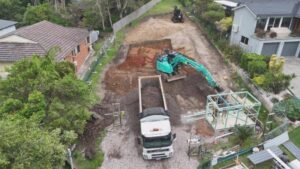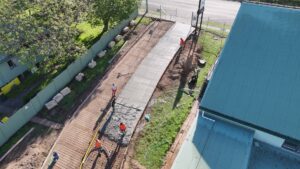

When you start searching for "excavation services near me," you're doing a lot more than just hiring a machine. You're trying to find a critical partner who will quite literally lay the groundwork for your entire project.
Whether it's a new build in a growing Newcastle suburb or site prep on a tricky Central Coast block, getting the right crew on board is everything. The line between a project that runs smoothly and a costly, drawn-out nightmare often comes down to their local knowledge, proper licencing, and a genuine commitment to safety.
How to Choose the Right Local Excavation Team
Choosing the right local excavation team goes way beyond just picking the cheapest quote off the pile. Think about it: the initial groundwork sets the stage for everything that follows, from the concrete slab right through to the final landscaping. A poor choice here can snowball into structural issues, painful council fines, and major delays. It’s the kind of stress and expense nobody needs.
Look Beyond the Quote
It’s tempting to let the bottom line make the decision, but a cheap quote can hide some really big problems down the track.
A truly experienced contractor won't just give you a best-case-scenario price. They’ll provide a detailed quote that actually accounts for potential challenges. This includes things like the local soil type—is it the sandy, collapsible soil you find near Central Coast beaches, or the reactive clay further inland? It should also have clear allowances for rock removal or material disposal.
A professional team will always insist on a thorough site visit before they lock in any price. If they don’t, that’s a red flag.
Verify Licences and Insurance
This one is completely non-negotiable.
Any legitimate excavation contractor in NSW must hold the correct licences for the machinery they operate and the type of work they’re doing. Don't be shy about asking to see their public liability insurance—this is what protects you if an accident causes damage to your property or your neighbour's.
On top of that, make sure they have workers' compensation insurance. If a contractor is hesitant to show you these documents, walk away. It’s just not worth the risk.
Local Experience Matters Most
You can't put a price on deep local experience. A team that has spent years working in the Hunter Valley will instinctively understand the region's specific soil profiles and know the local council requirements like the back of their hand.
They’ll know exactly how to manage a sloping block in Terrigal or navigate the notoriously tight access of an inner-Sydney worksite. This kind of localised insight means they spot problems before they even happen.
To ensure you hire the appropriate expertise for your project, it's beneficial to understand the key differences between a substructure contractor vs. general contractor. This will help clarify roles and responsibilities from the start.
Key Takeaway: A contractor's familiarity with local council regulations, such as those from Central Coast Council or Lake Macquarie Council regarding sediment control and site access, can save you thousands in potential fines and rework.
Finding a reliable crew is a lot like sourcing any other quality trade. For more detailed advice on vetting local professionals, our guide on what to look for when hiring earthmoving contractors near me has some extra tips. Taking the time to find the right partner ensures your project starts on a solid, compliant, and expertly prepared foundation.
Understanding Different Types of Excavation Services
When you start looking for an excavation contractor, it’s worth knowing that not all digging is created equal. The term "excavation" covers a whole range of specialised jobs, and each one needs different gear, specific skills, and a unique game plan. Getting your head around these differences is the first step to clearly explaining what you need and finding the right crew for your project.
Foundation Excavation
This is the absolute bedrock of any new build, extension, or even a decent-sized shed. It involves digging with precision to the exact depths laid out in your structural engineer’s plans. The entire goal here is to create a rock-solid, perfectly level base for your concrete slab or footings to sit on.
Let's say you're building a new home in the Hunter Valley. The foundation dig has to account for the region's notoriously reactive clay soils, which can swell and shrink with moisture changes. Getting this wrong can lead to serious structural cracks down the line, so there’s zero room for error.
Trenching and Underground Services
Trenching is all about the careful digging of narrow channels for things like pipes and electrical conduits. This could be for stormwater drainage, plumbing, power cables, or NBN connections. It’s a job that demands extreme care, because striking an existing underground utility is not only dangerous but can get incredibly expensive, fast.
Before a single bucket of dirt is moved, any professional contractor worth their salt will run a "Dial Before You Dig" search. This is non-negotiable. It maps out exactly where existing services are buried so our operators can work around them safely, protecting both your property and public assets.
Site Excavation and Clearing
This is often the very first thing that happens on a new site. It involves clearing vegetation, removing topsoil, and levelling the ground to prepare for the main construction. Consider this scenario: preparing a block in a new Newcastle estate requires clearing, grading, and ensuring the site has the right fall for proper drainage from day one.
Pool and Spa Excavation
Digging for a pool is a highly specialised task. It requires absolute precision to match the pool shell’s exact shape and depth, while also considering access for machinery and how we’ll get all the excavated soil out of your backyard. The sandy soils on the Central Coast, for example, need a different approach to prevent the walls from collapsing during the dig compared to stable clay.
Demolition and Material Removal
Sometimes you need to remove old structures before you can build new ones. This can involve breaking up old concrete driveways, removing old footings, or demolishing a small shed. A key part of this service is not just the demolition itself, but the responsible loading and removal of all the waste material from the site.
Bulk Earthworks
Bulk earthworks, or what many call site cuts, involve shifting large volumes of soil, rock, and other materials to completely reshape a site. It’s a highly strategic process, often using cut-and-fill techniques to get the site to the desired levels without wasting material. Knowing the difference between excavation and earthmoving is key here.

As this graphic shows, it really boils down to three pillars: proper licencing, full insurance coverage, and proven local experience. Nailing these three things is crucial for a successful project and your own peace of mind. Beyond the obvious jobs, excavation is also critical for more specialised projects, like installing drainage tile installation services to solve tricky groundwater issues.
Key Factors That Influence Excavation Costs
When you're mapping out a project, the big question is always, "How much is this going to set me back?" With excavation, there’s no simple price list. Every single site is its own unique puzzle. Getting your head around the key variables that shape a quote is the best way to budget properly and avoid any nasty surprises down the track.
At the end of the day, the major cost drivers always boil down to the time and machinery needed to get the job done right, safely, and to spec.
Site Access and Location
The first thing any good excavator looks at is how we'll get our machines onto your property. A wide, open, and flat block in a new estate on the Central Coast? That’s about as straightforward as it gets.
But a tight-access job on a narrow block in inner Sydney, tangled with overhead powerlines and cursed with limited street parking, requires a completely different plan of attack.
Tricky access might mean we have to bring in smaller, specialised machinery, call in extra labour, or even organise traffic control. All these things add time and complexity, which naturally gets reflected in the final cost.
Ground Conditions and Soil Type
What’s lurking under the ground has the single biggest impact on the price. Soft, sandy soil is quick and easy to move. But digging into the heavy, sticky clay common around the Hunter Valley or hitting unexpected sandstone in Sydney is a completely different ball game.
If we encounter hard rock, we'll need to bring in the big guns—specialised attachments like a hydraulic hammer. These tools have a higher hourly rate than a standard bucket, and for good reason. This is one of the most common reasons for cost blowouts, and it's precisely why a thorough initial site assessment is so critical.
Why It Matters: Proper site preparation is a massive part of the Australian construction industry. Valued at approximately AUD 42.2 billion, the sector handles everything from residential subdivision prep to complex work for high-density developments. You can find more insights about the site preparation services industry on ibisworld.com.
The Scope and Complexity of the Work
The sheer volume of material we need to shift and the level of precision required also play a big part in shaping the cost. A bulk excavation to clear and level a large site is worlds away from the detailed, delicate digging needed for footings or trenches for underground services.
Associated costs come into play, too. Is the excavated soil going to be kept on-site for reuse in landscaping, or does it need to be hauled away and legally disposed of at a licenced facility? Tipping fees for spoil removal can be a significant chunk of the budget, so it’s essential this is clearly itemised in your quote.
Navigating Council Regulations and Safety Compliance
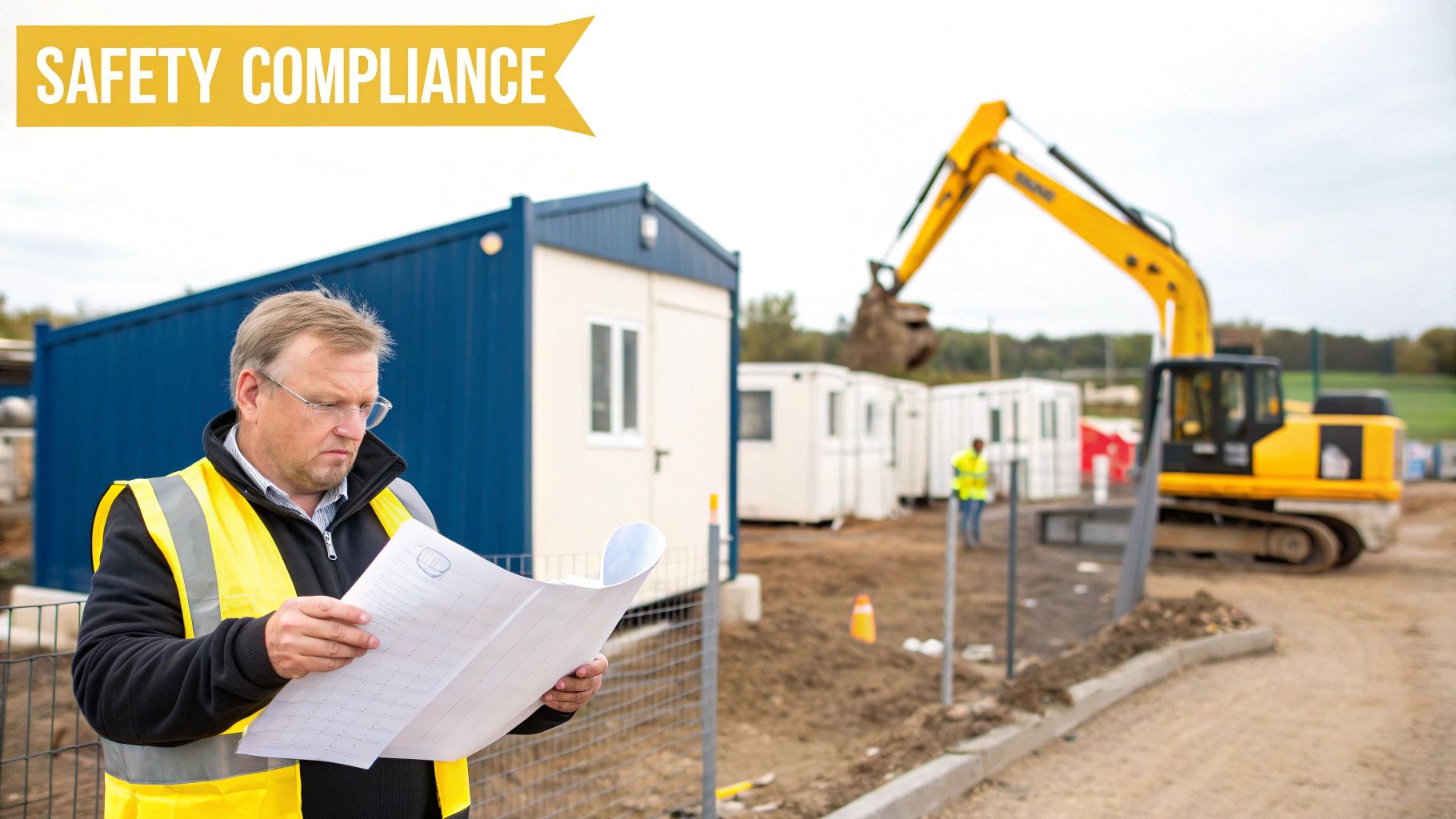
When it comes to excavation, doing things by the book isn’t just good practice—it's an absolute must. Cutting corners on safety or council approvals is the fastest way to attract hefty fines from SafeWork NSW or get hit with a stop-work order that can bring your entire project to a grinding halt. This stuff protects your project, your neighbours, and your back pocket.
Before a single bucket of dirt is moved, the first and most critical step is lodging a Dial Before You Dig enquiry. It’s a free national service that maps out all the underground utilities. Trust me, hitting a water main, gas line, or communications cable is a nightmare you don't want—it’s incredibly dangerous and comes with massive repair bills.
Any professional contractor will insist on this. If they wave it off as unnecessary, that’s a massive red flag.
Understanding Council Requirements
Every local council has its own playbook, and a good excavation crew knows the local rules inside and out. It’s not a one-size-fits-all situation.
For instance, the Central Coast Council is laser-focused on managing sediment runoff, especially on sloping blocks or properties near waterways. This means we’re legally required to install things like silt fences and sediment traps before we even think about starting the main dig.
Head up the M1, and Newcastle Council has its own set of priorities. They have very specific requirements for site access and traffic management if our work touches a public footpath or road. They’re also strict on tree protection and vegetation removal. Ignoring these local laws will lead to some painful penalties, which is why working with a team that knows the area is so vital.
Key Takeaway: A professional's deep understanding of local council regulations is non-negotiable. It ensures your project is compliant from day one, helping you avoid the kind of costly fines and delays that can stop a job in its tracks.
The Role of Australian Standards
Beyond council rules, all our work is underpinned by the relevant Australian Standards (AS). These are the industry bibles that outline the best practices for everything from trench safety to achieving proper soil compaction.
Let's say we're digging a deep trench for new plumbing. We can't just dig a hole. We have to follow specific guidelines for shoring or battering the trench walls to prevent a collapse, which is one of the biggest safety risks on any worksite.
For a deeper dive into how we handle the crucial first steps of a project, you can learn about the fundamentals of site preparation for excavation in our detailed guide.
Sticking to these standards isn’t just about ticking boxes; it’s about guaranteeing the long-term stability and safety of your entire project. When you’re vetting excavation services, make it a point to ask about their knowledge of and commitment to these standards. It’s one of the clearest signs you’re dealing with a true professional.
What to Expect During the Excavation Process
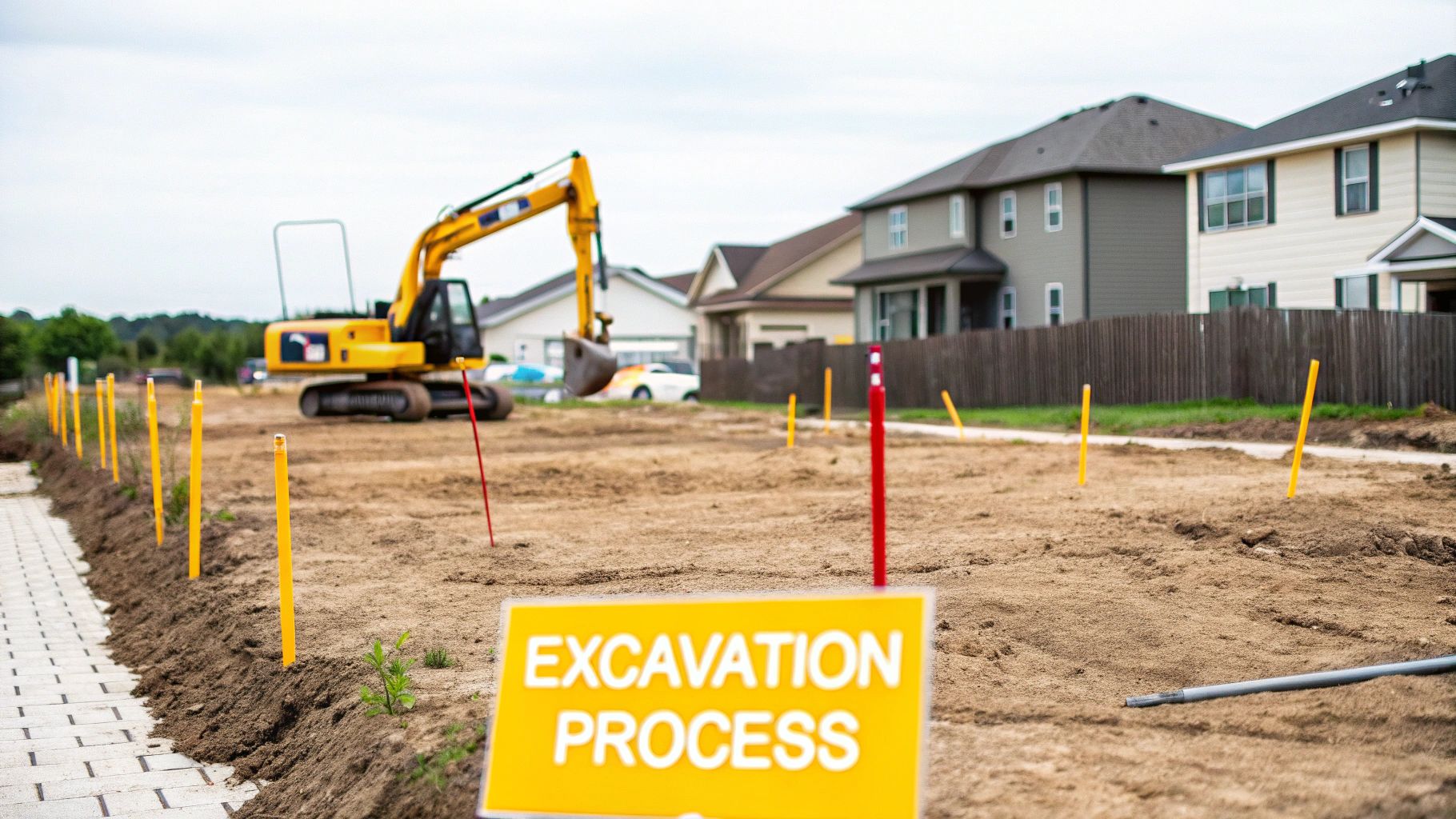
Once you’ve hired a team, you’re probably keen to see the dirt start moving. Knowing how a professional excavation project unfolds helps set clear expectations and ensures everyone is on the same page from the get-go. A quality job is methodical, safe, and efficient, right from the first day on site.
The whole process kicks off with thorough site establishment. This is much more than just parking a machine; it's about creating a safe and controlled work environment. We'll mark out the exact boundaries of the dig, establish clear access routes for machinery, and set up mandatory safety measures like sediment control fences to keep the local council happy.
The Excavation Phase
With the site properly prepped, the real work begins. A skilled operator isn’t just digging a hole. They work methodically, following the surveyor’s pegs and engineer’s plans with absolute precision. Soil is carefully removed, layer by layer, to achieve the exact depths and levels required for your foundations, pool, or driveway base.
The machinery we use plays a massive role here. Different attachments are brought in for different tasks—a digging bucket for bulk removal, a batter bucket for shaping slopes, or a rock breaker for that stubborn Sydney sandstone. If you're interested in the nitty-gritty, our guide covers the complete guide to excavator attachments in more detail. This specialised gear is a core part of the Australian construction machinery market, which was valued at around USD 3.45 billion and is forecast to hit USD 4.34 billion by 2030. You can explore key insights into the Australian construction machinery market to learn more about this growth.
Material Management and Site Handover
A huge part of any excavation is figuring out what to do with all the soil, clay, or rock we dig up. In the industry, we call this "spoil." Depending on your project's needs and the quality of the material, we generally have a couple of options.
Often, we can stockpile the spoil on-site for later use in backfilling retaining walls or for landscaping. If the material isn't suitable or there’s simply too much of it, we’ll arrange for it to be safely loaded into trucks and transported to a licenced disposal facility. We always handle this responsibly, making sure we're in full compliance with all environmental regulations.
What to Expect at Handover: A professionally finished site should be left clean, safe, and exactly to the specifications of your plan. The excavated area will be precisely graded, all excess material will be gone (unless stockpiling was agreed upon), and all safety fencing will be taken down. It should be perfectly ready for the next trade to walk on and start their work without any delays.
Why a Professional Service Beats DIY Excavation
I get it. It’s tempting to look at the hire fees for an excavator, do a bit of quick maths, and think you can save a few thousand dollars by tackling the job yourself. But when it comes to excavation, going it alone is one of the riskiest shortcuts you can possibly take on a project.
Those initial savings on labour can vanish in a heartbeat with one simple mistake, turning your project into a costly and dangerous nightmare.
The True Cost of Going It Alone
The hire fee for the machine is just the tip of the iceberg. You’ve got to factor in fuel (and these machines drink a lot of it), insurance, and the cost of getting the machine floated to and from your site.
Then there’s the time you’ll spend just figuring out the controls – and you’re paying for that learning curve by the hour. This doesn’t even touch on the biggest financial landmine: accidentally hitting underground services. Nicking a water main or slicing through a communications cable can land you with thousands of dollars in emergency repair bills before you’ve even broken a sweat.
Safety and Skill Make all the Difference
A professional operator brings a lot more to the job than just the machine. They bring years of experience and an almost instinctual understanding of site safety.
For example, digging a trench on a sloping block in a Central Coast suburb isn’t just about moving dirt around. A pro knows exactly how to batter the sides to prevent a collapse – a critical safety detail a novice might not even think about until it’s too late. This kind of expertise is non-negotiable for keeping everyone on site safe.
The growth in professional-grade equipment tells its own story. The Australian construction equipment market is set to expand from 24,400 units to around 27,100 units by 2030, a surge driven by major infrastructure projects. You can see more details about Australia's construction equipment market trends at arizton.com. This investment isn’t going into weekend hire machines; it’s flowing into professional-grade equipment operated by highly trained experts.
Hiring an experienced team isn't just another expense. It’s an investment in efficiency, safety, and the peace of mind that comes from knowing the job will be done right the first time. That’s something a DIY approach can never guarantee.
Your Excavation Questions Answered
We get a lot of questions from clients across the Central Coast, Sydney, and Newcastle as they start planning their projects. Getting your head around these common queries can make the whole process feel a lot less daunting and help you prepare for a smooth, successful job.
How Long Does Excavation Take?
Honestly, it really depends on the scale and complexity of the job. A simple pool dig on a nice, flat block with clear access? We could be in and out in a day or two.
But if we're talking about a detailed foundation for a new build on a sloped, rocky site somewhere in Sydney, that could easily take a week or more. Things like surprise weather, tricky soil conditions, or tight access for trucks to haul away material all play a huge part. We’ll always give you a realistic timeline once we’ve had a proper look at the site.
Do I Need to Be Home During the Work?
Not necessarily. As long as we have clear instructions and safe access to the site, you don’t need to hang around all day.
That said, we strongly recommend you’re there for the initial site meeting. It’s the best way to walk through all the details and physically mark out the work area so everyone is on the same page. Once we kick off, our experienced team will get stuck in, and we’ll keep you in the loop with regular updates so you always know what’s happening on your property.
What Happens If You Find Rock?
Hitting rock is a classic scenario, especially around Sydney and its famous sandstone bedrock. It happens all the time. If we do encounter rock, the first thing we do is stop work, take a proper look at what we're dealing with, and then call you to discuss the best way forward.
Usually, it means bringing in some specialised gear, like a hydraulic hammer attachment for the excavator. The crucial thing to know is that any extra work is always quoted and needs your green light before we proceed. No one likes surprise costs on their final invoice, and we make sure that doesn't happen.
How Do You Manage All the Excavated Soil?
Looking after your property and dealing with all the excavated soil—or "spoil," as we call it in the industry—is a massive priority for us. Depending on the soil quality and what you need for your project, we can either stockpile it neatly on-site for you to use later in backfilling or landscaping.
If the dirt needs to go, we manage the whole process: loading it up and trucking it to a licenced facility. We break down all the options in our detailed guide on how to dispose of soil after excavation, making sure every last bit is handled correctly and compliantly.
Ready to start your project on the right footing? For reliable and professional excavation services across the Central Coast, Sydney, or the Hunter Valley, contact Booms Up Civil. Get in touch with our expert team today for a free, no-obligation site assessment and quote by visiting https://boomsupcivil.com.au.