
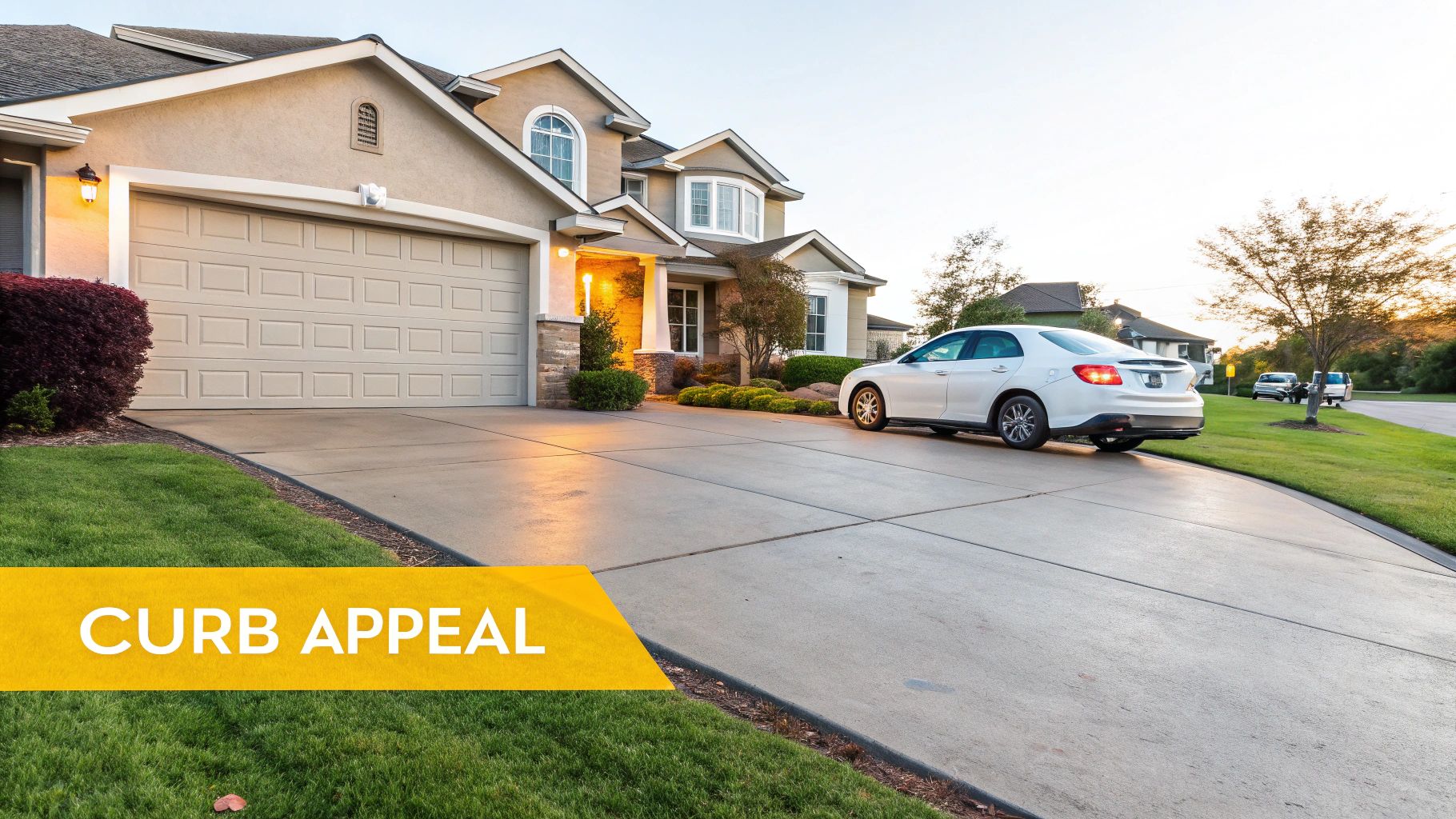
Welcome to your complete guide on concrete driveways, crafted for homeowners right across the Central Coast, Sydney, Newcastle, and the Hunter Valley. Let’s be honest, a professionally built concrete driveway is one of the smartest investments you can make in your property. It’s far more than just a place to park the car; it’s the handshake that greets your guests, a vital part of your home's kerb appeal, and a hard-working surface that needs to stand up to daily use for decades.
Why Your Driveway Is More Than Just a Path
In this guide, we’ll walk you through the entire process, from kicking around design ideas to understanding the final finishing touches. Our goal is to demystify the different types of concrete finishes, break down the key factors that influence cost and longevity, and help you navigate local council rules.
Whether you're building a new home in Kariong or giving an older property in Newcastle a facelift, we want to arm you with the practical, local knowledge you need to get it right the first time. Understanding the journey from bare earth to a flawless finished driveway empowers you to make sharp decisions that add real, lasting value and function to your home.
The Foundation of a Great Driveway
A beautiful finish is only half the story. The real secret to a driveway that lasts for 30 years or more lies completely hidden beneath the surface. Proper groundwork is absolutely non-negotiable, and it involves a lot more than just pouring concrete onto dirt.
This foundational work is the unsung hero of every great driveway. For example, the sandy soils near the coast in suburbs like Wamberal require a different sub-base preparation to the reactive clay you might find further inland. It's about creating a stable, unmoving platform for the concrete to sit on.
This preparation includes creating the perfect depth and slope to ensure water drains away effectively, preventing pooling and long-term damage. Steel mesh is then installed, which gives the concrete the tensile strength it needs to handle the immense weight of vehicles day in and day out without cracking under pressure.
These are the steps homeowners often don't see, but they are essential for preventing cracks, sinking, and premature failure down the line. You can learn more about why getting the groundwork spot-on is so crucial in our guide to professional site preparation services. Getting this stage right ensures your investment stands the test of time, handling everything from daily commutes to the Central Coast's unpredictable coastal weather.
Choosing the Right Concrete Finish for Your Home
The finish you pick for your concrete driveway does more than just sit there—it completely defines the look, feel, and daily performance of your home's entrance. This is where practicality shakes hands with personality, setting the tone for your entire kerb appeal. Let's walk through the most popular options we see across NSW to figure out the perfect fit for your home's style and budget.
Each finish brings its own unique blend of aesthetics, durability, and upkeep to the table. From the honest, straightforward appeal of plain concrete to the intricate patterns of a stamped design, your choice will greet you at the door for decades to come.
Comparing Concrete Driveway Finishes
To get a clear picture of your options, it helps to see them side-by-side. The right choice often comes down to balancing the look you want with your budget and how much maintenance you're prepared to do down the track. This table breaks down the most common finishes we work with.
| Finish Type | Typical Aesthetic | Relative Cost | Key Benefits | Best For |
|---|---|---|---|---|
| Plain Concrete | Clean, bright, minimalist, and functional | $ | Most affordable, timeless look, highly durable | Any home style; homeowners prioritising function and budget |
| Coloured Concrete | Integrated, warm, earthy, customised | $$ | Blends with landscaping and home exterior, colour is permanent | Homes needing a specific colour palette to match their exterior |
| Exposed Aggregate | Textured, natural, multi-tonal, premium | $$$ | Excellent grip (non-slip), visually interesting, extremely hard-wearing | Steep driveways, coastal areas, or those wanting a high-end, textured look |
| Stamped & Stencilled | Decorative, patterned (looks like pavers or stone) | $$$$ | High-end look of other materials without the weeds or high cost | Homeowners who love the look of pavers but want the durability of concrete |
Ultimately, the best finish is the one that ticks the most boxes for your specific situation. Think about your home's architecture, your local environment, and your long-term plans.
Plain Concrete: The Timeless Standard
There’s a good reason plain concrete is the classic, no-fuss choice. It delivers a clean, bright, and incredibly functional surface that works with just about any style of home, whether it’s a modern build in a Sydney suburb or a classic brick house in Newcastle.
Its smooth, uniform look creates a neutral canvas that lets your landscaping and architecture be the stars of the show. And while it’s the most budget-friendly option upfront, its sheer durability makes it a smart, long-term investment.
Coloured Concrete: Adding Personality and Style
If you want to step away from the standard grey, coloured concrete is a fantastic way to add a personal touch. By mixing a colour pigment directly into the concrete, we can achieve a massive range of earthy tones that blend seamlessly with your home’s exterior paint, roof tiles, or garden design.
Just imagine a warm terracotta hue for a Hunter Valley estate or a sharp charcoal grey for a contemporary home on the Central Coast. This approach gives a far more integrated and intentional feel than a simple plain finish ever could.
A common worry is that the colour is just a top coat. With integral colouring, the pigment runs right through the entire slab. That means any future scratches or chips won't expose a different colour underneath, keeping it looking consistent for years.
Exposed Aggregate: Texture and Grip
Exposed aggregate is a brilliant choice if you’re after a premium, non-slip surface with a really unique visual texture. We create this finish by washing away the very top layer of cement paste to reveal the natural stones—the aggregate—tucked inside the concrete mix.
The result is a tough, textured surface that offers fantastic grip, which is perfect for steep driveways or coastal homes around Terrigal and Avoca Beach where wet, salty conditions are a daily reality. The decorative stones also create a beautiful, multi-tonal effect that adds a serious amount of visual interest.
Stamped and Stencilled Concrete: Decorative Impressions
Do you love the look of pavers, cobblestones, or natural slate, but not the high price tag and constant weeding? Stamped or stencilled concrete is the answer. For stamped concrete, we press patterns into the freshly poured concrete to mimic those more expensive materials. Stencilling uses a disposable pattern to apply colour and texture.
Both methods create stunningly realistic effects that can elevate your home’s aesthetic, all without the weeds and shifting stones that plague individual pavers. While weighing up your options, you might also find inspiration by looking into modern paver designs for driveways to see what's possible. Knowing what you want is the first step, and understanding your options for concreting services near you is a great place to start.
The Driveway Construction Process From Start to Finish
A top-quality, long-lasting driveway is built on a foundation of careful planning and expert execution. Getting a handle on the whole process helps you see where the real value is—it’s not just about that final beautiful surface, but all the critical work that happens before a single drop of concrete is poured. This structured approach is what guarantees your driveway will stand up to decades of use.
Everything kicks off with meticulous site preparation. This is without a doubt the most crucial phase, involving the excavation of whatever is currently there, be it old cracking pavement, grass, or just soil. We then grade the area to ensure it has the perfect slope, or 'fall', for proper drainage. This simple step is vital for preventing water from pooling against your house, which is a major culprit behind future foundation headaches.
Laying the Groundwork for Success
Once the site is excavated and graded, we lay down a rock-solid sub-base. This is typically made of compacted road base material, creating a strong, stable platform for the concrete slab to sit on. Think of this as the driveway's skeleton—if it’s not strong and correctly compacted, nothing we do on top will matter in the long run.
This step is especially critical in areas with reactive soils, like the heavy clay ground you find in parts of the Hunter Valley. A properly prepared sub-base stops the ground from shifting underneath and causing ugly cracks in your brand-new driveway. Without it, you're risking uneven settlement and a dramatically shortened lifespan for your investment.
Why It Matters: Skipping or rushing the sub-base is a classic shortcut taken by less reputable contractors. A weak foundation is the number one cause of premature cracking and sinking, turning what should be a long-term asset into a costly repair job within just a few short years.
Setting the Stage for the Pour
Next up is installing the formwork. This is a temporary timber or steel frame that acts as a mould, defining the precise shape and edges of your driveway. Getting the formwork perfect is the key to achieving those clean, straight lines and the exact dimensions you’re after. We cover this process in detail in our guide to understanding concrete slab shuttering, which is a must-read for any structural concrete job.
Inside this formwork, we lay down steel reinforcement mesh. This steel grid provides essential tensile strength, helping the concrete resist the pulling forces from heavy vehicles and natural ground movement. It’s what holds the whole slab together and transforms it from a simple surface into a truly structural element.
This infographic shows a simplified flow of planning, selecting, and installing your new concrete finish.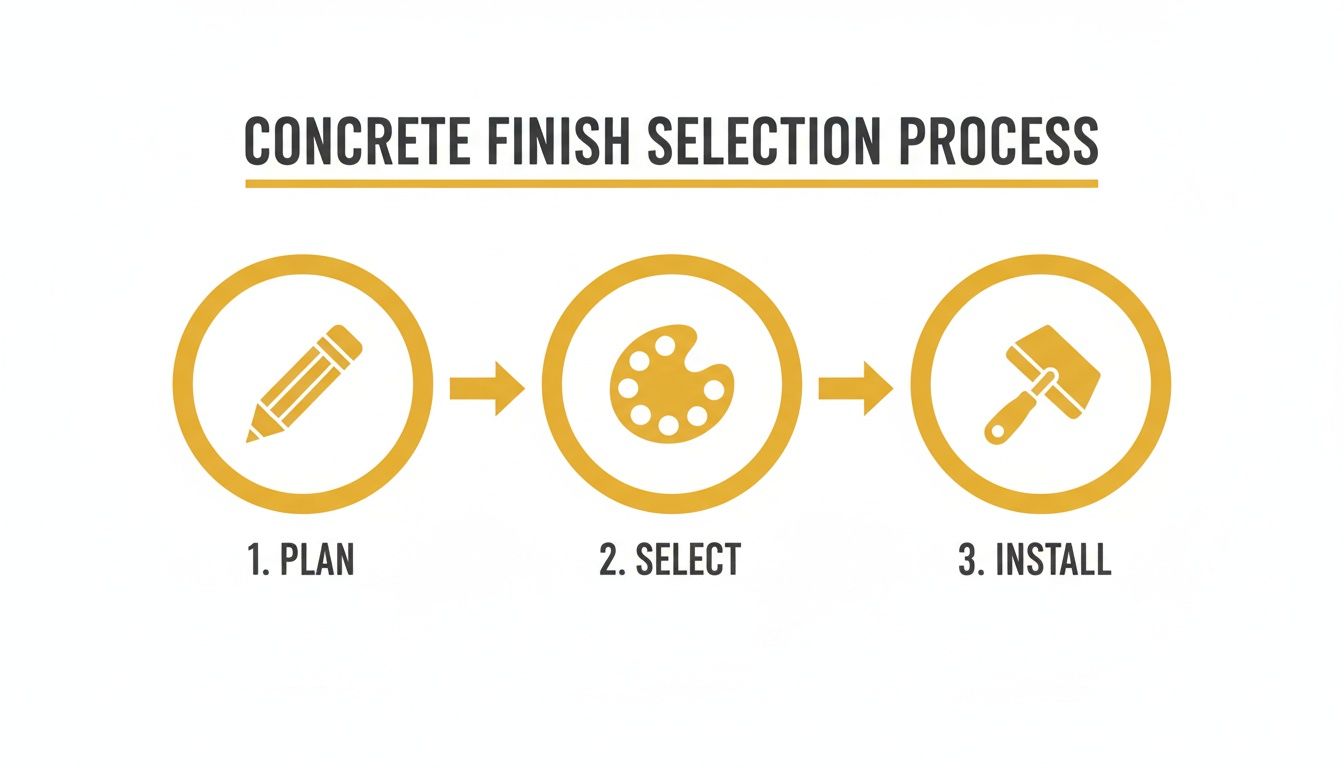
The visual highlights that a successful installation really hinges on solid planning and careful selection right from the very beginning.
The Pour and Finishing Touches
Then comes the main event—the concrete pour itself. For residential driveways, we always use the correct concrete strength, which is typically 25 MPa (megapascals) as specified in Australian Standard AS 3600. The concrete is poured and spread evenly throughout the formwork, then screeded to create a perfectly level surface.
The finishing process begins almost immediately. Depending on the finish you've chosen—whether it's a sleek trowel finish, a textured broom finish for better grip, or prepping for exposed aggregate—our team gets to work meticulously crafting the desired look. This stage is a blend of science and artistry, and it has to be done before the concrete starts to harden.
The final steps are just as critical. First, the concrete needs to cure properly over several days to reach its maximum strength. We strongly recommend waiting at least seven days before you even think about driving a standard car on it. Finally, we cut control joints into the slab. These are planned lines that encourage the concrete to crack in a neat, predictable way as it naturally shrinks, preventing random, spiderweb-like cracks from popping up all over your beautiful new surface.
Navigating Council Approvals and NSW Regulations
Before a single bag of cement gets mixed, you absolutely have to get your head around your local council's requirements. In NSW, building a new concrete driveway or making significant changes to an old one isn't a free-for-all. It's a process governed by some very specific rules designed to keep everyone safe and manage public infrastructure properly.
Most driveway work needs some form of approval. This could be a full-blown Development Application (DA), which is a more formal process, or it might fall under what’s known as Exempt or Complying Development. The path you need to take usually comes down to the scale of your project and its potential impact on the neighbourhood.
When Do You Need Council Approval?
The short answer is: almost always. Any work that touches the crossover—that little section of driveway on the council verge between your property line and the road—will definitely need a tick of approval. Councils are particularly protective of this area because it impacts public assets like footpaths and kerbing.
Picture this: you're planning a new driveway for your place in Gosford. The Central Coast Council has specific engineering standards you must follow. If you ignore them, you could be hit with a stop-work order, fines, or even be forced to rip up your brand-new concrete and start all over again. It happens more than you'd think.
What Councils Look For
Councils aren't just trying to make your life difficult; their rules are there for very practical reasons. When they review your application, they're looking at a few key things to ensure safety and public amenity.
Here’s what’s on their checklist:
- Safety and Sight Lines: Your driveway can't create a blind spot. It's crucial that drivers leaving your property have a clear, unobstructed view of pedestrians on the footpath and traffic on the road.
- Driveway Gradient: The slope of your driveway is a massive safety factor. If it’s too steep, it can be treacherous in the rain and might cause cars to "bottom out" as they come and go.
- Stormwater Management: When you lay down a large, non-porous surface like concrete, you completely change how rainwater behaves on your property. Most councils, including Newcastle Council, will require a plan to manage this water runoff on your own land, stopping it from flooding the street or your neighbours.
- Crossover Construction: As we mentioned, the crossover is critical. Councils have detailed specs for its width, thickness, and how it must be built to protect underground pipes and stand up to public traffic.
Why It Matters: Getting these details right from the start is non-negotiable. A compliant driveway is a safe driveway. Working with a contractor who is intimately familiar with the Development Control Plan (DCP) for your specific council area will save you a world of time, stress, and money.
Figuring out the rules for vehicle access crossings can feel like a maze, but a professional team handles this kind of paperwork every day. That expertise means your project runs smoothly from the first phone call to the final inspection, with no costly surprises from the council.
How to Budget for Your New Concrete Driveway
One of the very first questions we get from homeowners is, "So, what's this actually going to cost me?" It's a fair question, and while every single project is unique, we can definitely break down the key ingredients that go into the final quote for a new concrete driveway. Knowing these elements helps you see where your money is going and pull together a realistic budget.
The final price is much more than a simple calculation per square metre. Think of it as a total figure that accounts for the specific challenges and requirements of your property. Looking at the project as a whole will give you a far more accurate picture.
Key Factors That Influence Your Quote
A few major variables will shape the cost of your project. The most obvious ones are the overall size of the driveway and the thickness of the concrete slab—a bigger, thicker driveway is naturally going to need more materials and more labour. Simple as that.
Your choice of finish also plays a big part. As you'd expect, a decorative finish like exposed aggregate will cost more than a standard plain concrete finish. This comes down to the extra materials and the specialised skills needed to get that premium look just right.
Site Conditions and Preparation Costs
Honestly, the state of your site is one of the biggest cost drivers we see. A perfectly flat, clear block is a dream scenario, but most properties on the Central Coast or in Sydney have their own quirks that need careful planning.
Here are some common site factors that can influence your budget:
- Access: Can a concrete truck and excavator get to the site easily? Tight or difficult access, which is pretty common in built-up areas of Newcastle, might mean we need smaller machinery or a concrete pump. Both of these will add to the final cost.
- Slope: Building on a steep block in a suburb like Terrigal requires a lot more excavation and formwork. It's all about managing the gradient safely and making sure the final product is built to last.
- Existing Surfaces: Do we need to demolish and haul away an old, cracked concrete or asphalt driveway first? This demolition and disposal work will be factored right into the initial quote.
The amount of groundwork required is a major part of the job. You can find out more about what goes into this crucial stage by reading our guide on the cost of excavation per cubic metre.
The Impact of Soil Type
The type of soil on your property has a huge impact on the sub-base preparation we need to do. For example, the sandy, well-draining soils you often find along the Central Coast are generally easier to work with than the reactive clay soils you might run into further inland in the Hunter Valley.
Clay soils are notorious for expanding when they get wet and shrinking when they dry out. This constant movement can absolutely destroy a poorly prepared driveway. To counter this, we often need to dig deeper and bring in more road base to create a stable, non-reactive foundation for the concrete slab.
This extra labour and material isn't just an add-on; it's an essential investment to make sure your driveway doesn't crack and fail down the track.
Understanding Price Ranges in NSW
To give you a practical idea, pricing for concrete driveways can vary significantly based on the finish you choose. In Sydney, where operating costs are generally higher, you'll see different price points for different styles. For instance, plain concrete driveways are the most budget-friendly option. At the other end of the scale, decorative finishes like stamped or exposed aggregate sit at the premium end because of the specialised techniques and labour they demand.
Maintaining Your Driveway for Decades of Use
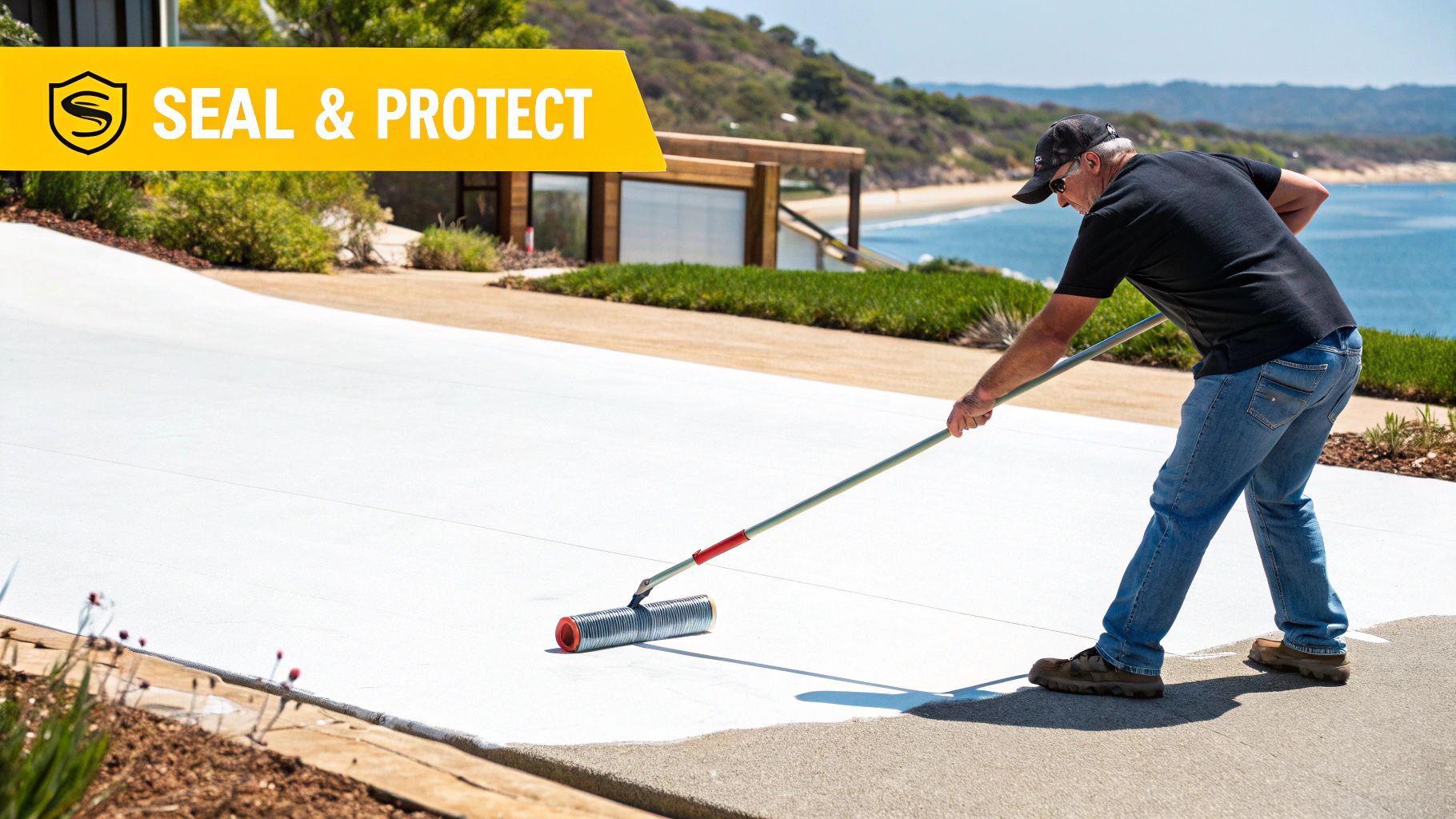
A professionally installed concrete driveway is a fantastic long-term investment for your property, but a little straightforward maintenance is the key to making sure it looks great and performs perfectly for decades. Think of it less as a chore and more as protecting your asset.
The single most effective thing you can do for your driveway is to keep it sealed. A high-quality sealer acts like sunscreen for your concrete, creating a protective barrier against the elements. It’s a job you only need to think about every two to five years, but the payoff is huge.
The Power of a Good Seal
Applying a proper sealer does more than just make the surface look fresh. It actively works to prevent the common issues that can degrade concrete driveways over time, especially in our varied NSW climate.
A good seal will:
- Block Moisture: It stops rain from soaking into the porous surface, which is crucial for preventing cracks caused by expansion and contraction.
- Resist Stains: The barrier makes it much harder for oil, grease, or fallen leaves to leave permanent marks. Spills will sit on the surface, giving you time to clean them up easily.
- Prevent Fading: It protects coloured and exposed aggregate finishes from losing their vibrancy under the harsh Australian sun.
Regular Cleaning and Spot Checks
Beyond sealing, simple, regular cleaning goes a long way. Keeping the surface free of dirt, leaves, and debris prevents organic matter from breaking down and staining the concrete or encouraging moss and mould growth. This is especially important in shaded or damp spots, a common feature of properties along the Central Coast.
A quick sweep every few weeks and a wash with a hose and stiff broom a couple of times a year is usually all it takes. This also gives you a chance to spot any small issues before they become bigger problems.
Don't Ignore Small Cracks: Hairline cracks are often just a cosmetic issue, but it's wise to seal them with a flexible concrete crack filler. This simple step stops water from getting underneath the slab, where it can erode the sub-base and lead to much more serious structural problems.
Understanding Different Types of Cracks
It's important to know the difference between a minor surface crack and a more serious structural one. Small, thin cracks are often a normal part of the concrete curing and settling process.
However, if you see cracks that are wider than a credit card, have one side higher than the other (known as heaving), or are spreading rapidly, it could be a sign of a problem with the sub-base. This is when it's time to call in a professional for an assessment. Addressing underlying issues early is the best way to avoid costly repairs and ensure your driveway provides decades of reliable service.
Got Questions About Concrete Driveways? We’ve Got Answers.
Here are the answers to some of the most common questions we get from homeowners across the Central Coast, Sydney, and Newcastle when they're planning a new concrete driveway.
How Long Until I Can Drive on My New Driveway?
This is probably the number one question we hear, and for a good reason! As a general rule, you’ll need to wait at least seven days before parking a standard car on new concrete.
For anything heavier – think trucks, caravans, or the boat – it’s best to give it the full 28 days. That’s the point where concrete typically hits its full engineered strength. You can usually walk on it after 24-48 hours, depending on the weather, but patience in that first month is the secret to a driveway that lasts a lifetime.
Do I Really Need Steel Reinforcement?
Yes, absolutely. We consider steel reinforcement mesh non-negotiable for a driveway that’s built to last. Concrete is brilliant at handling compressive strength (being pushed down on), but it’s not great with tensile strength (resisting pulling or bending forces).
That steel mesh is what provides the muscle. It holds the slab together under the immense weight of vehicles and is your best defence against major structural cracking from ground movement or heavy loads.
Think of reinforcement as the insurance policy for your driveway's longevity. Skipping it is a false economy that almost always leads to premature failure and costly repairs down the track.
What Is the Best Thickness for a Driveway?
For a standard residential driveway that will only see regular cars and light SUVs, 100mm (or 4 inches) is the industry standard. It strikes the perfect balance between strength and cost for most homes.
However, if you've got heavier toys like a large boat, a caravan, or a work truck, we strongly recommend beefing it up. In these cases, upgrading the slab to 125mm or even 150mm gives you the extra structural grunt needed to prevent cracks and protect your investment for decades.
With so many new homes going up, the demand for properly constructed driveways and slabs is surging. Recent data shows a strong rise in new private sector house commencements, which directly fuels the need for quality residential concreting. You can dig into Australia's building activity trends over on the ABS website.
When you're ready to move forward, one of your first steps will be finding a reliable local contractor. It can be helpful to understand how experts approach finding local construction services as you start looking for qualified pros in your area.
At Booms Up Civil Group, we build driveways that are made to stand the test of time. With over 15 years of experience on the Central Coast, we specialise in getting the job right the first time. If you have more questions or need an expert eye on your project in the Central Coast, Sydney, or Newcastle, get in touch with our friendly team. We're here to give you clear advice and a no-obligation quote to get your project started on solid ground.