Planning a retaining wall in Sydney is more than just a landscaping choice; it's often a structural necessity for managing the city's varied and challenging terrain. A professionally built wall is your first line of defence against soil erosion, but it also does so much more—it creates level, usable space and protects your property's foundation, ensuring your project is a success for decades to come.
Why Sydney Properties Need Expertly Built Retaining Walls
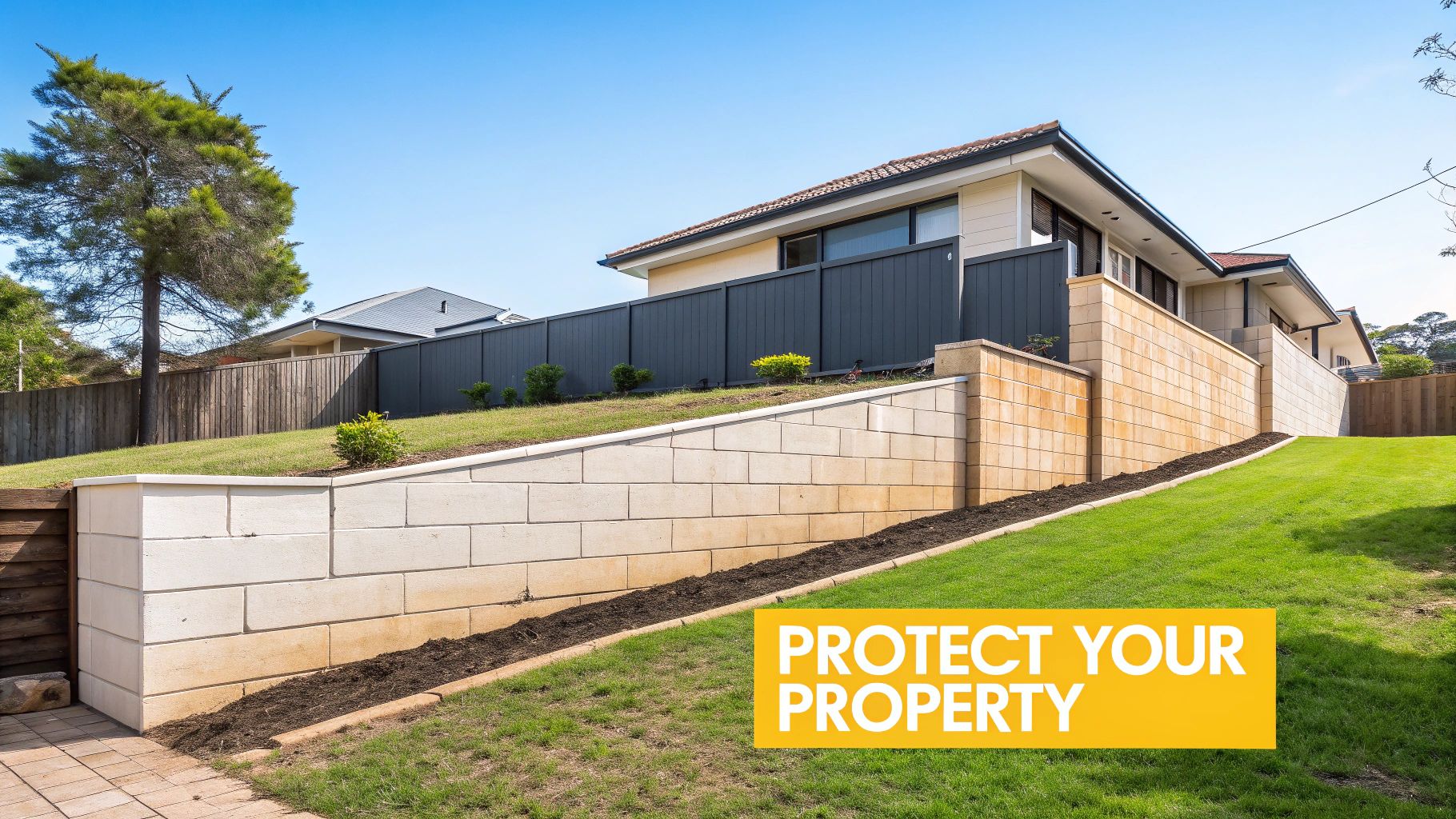
Here in Sydney, retaining wall construction is fundamental to making the most of your land. The city’s geography throws some unique challenges our way, from the steep, sandstone-based blocks on the Northern Beaches to the reactive clay soils found right across Western Sydney. Without proper support, these sloped sites are just waiting for the next big downpour to cause erosion and instability.
But a well-built retaining wall does far more than just hold back soil. It’s an investment that transforms an unusable incline into a valuable, functional area. This opens up a world of possibilities for new gardens, a level lawn for the kids to play on, or even the extra space you need for a carpark or outdoor entertaining area. It’s the very foundation of smart structural landscaping.
Creating Stability and Adding Value
At its core, the primary job of any retaining wall is to provide structural support. Let's say you’re building on a challenging block in suburbs like Castlecrag or Mosman, where the land drops away steeply. In that scenario, an engineered wall isn't just a good idea; it's absolutely critical to secure the ground, protect your home's foundation, and prevent a landslide onto your neighbour's property during heavy rain.
Beyond the crucial safety and stability aspects, a professionally installed wall significantly boosts a property's usability and aesthetic appeal, which can directly increase its market value. A thoughtfully designed wall can become a stunning landscape feature in its own right, not just a functional necessity.
A common mistake we see is underestimating the forces at play. Sydney's soil and sudden downpours can exert immense pressure. Getting the engineering, drainage, and foundations right from day one is non-negotiable—it's the only way to guarantee a wall that lasts for decades.
Choosing the right materials is also a huge part of a successful project. Your selection doesn't just affect the look; it determines the longevity and budget of your retaining wall.
Quick Guide to Common Retaining Wall Materials in Sydney
To help you get started, here's a quick summary of the most popular retaining wall materials we see used across Sydney, highlighting what they're best for, their general style, and what to expect cost-wise.
| Material Type | Best For | Aesthetics | Relative Cost |
|---|---|---|---|
| Concrete Sleepers | Modern homes, high-strength applications, and projects needing fast installation. | Clean, contemporary, and versatile. Can come in various finishes and colours. | $$ |
| Sandstone Blocks | Creating a high-end, natural look that blends with Sydney's geology. | Premium, classic, and timeless. Each block is unique. | $$$$ |
| Timber Sleepers | Garden beds, smaller non-structural walls, and budget-conscious projects. | Rustic, natural, and warm. Great for organic garden designs. | $ |
| Besser/Concrete Blocks | Versatile structural walls that can be rendered, cladded, or painted. | Utilitarian but can be finished to match any style, from modern to classic. | $$$ |
Each material brings something different to the table. Concrete sleepers offer a fantastic blend of strength and modern style, while nothing beats the classic, premium look of Sydney sandstone. The key is matching the material not only to your budget and aesthetic but also to the specific engineering demands of your site.
Navigating Sydney Council Approvals and NSW Standards
Before a single shovel hits the dirt on your Sydney property, getting your head around local regulations is the single most important step you can take. Every retaining wall project falls under specific council rules and state-wide standards, and getting this part wrong can lead to some seriously expensive fines, frustrating delays, or even a council order to tear it all down.
It might seem like a maze of red tape, but it all becomes a lot clearer once you understand a few key numbers.
One of the first questions we always get is, "Do I actually need council approval for my retaining wall?" The answer almost always comes down to two things: its height and its location.
Generally speaking, across Sydney councils—whether you're in The Hills Shire or on the North Shore—a retaining wall under 600mm in height might be considered 'exempt development'. This is great news, as it means you probably won't need to lodge a formal Development Application (DA), as long as it meets other basic criteria like not messing with your neighbour's drainage. But the moment you plan to go over that 600mm mark, the rulebook changes.
When a Development Application (DA) Is Unavoidable
If your wall is designed to be higher than 600mm, you'll almost certainly need to submit a DA to your local council. This is a formal review process where you provide detailed plans, site surveys, and often, engineering specifications. It’s all designed to make sure the structure is safe, properly built, and won't cause any problems for your neighbours or the surrounding environment.
Before you get too far into planning, it’s a smart move to check the specific rules for your area. A quick visit to your local council's website or a phone call to their planning department can save you a world of trouble. Getting this right is the critical first step to ensuring your retaining wall construction in Sydney starts on the right foot.
The Role of a Structural Engineer
For taller walls, bringing in a professional engineer isn't just a good idea—it's non-negotiable. As a rule of thumb here in NSW, any retaining wall standing over 900mm to 1.2 metres high must be designed and certified by a qualified structural engineer. This isn't just bureaucratic box-ticking; it's a vital safety measure.
An engineer's job is to do the heavy lifting on the calculations, figuring out the immense forces your wall needs to handle. They'll analyse:
- Soil Pressure: The relentless push of the earth against the wall.
- Hydrostatic Pressure: The incredible force of water building up in the soil, especially after a classic Sydney downpour.
- Surcharges: Any extra weight sitting on top of the soil, like a driveway, a shed, or even just a steeply sloped backyard.
An engineer designs a wall with a built-in 'factor of safety', making sure it can handle forces far beyond what it would face on an average day. This is how we build walls that can stand strong through Sydney's wildest storms and last for decades.
This expert oversight is what ensures your wall complies with Australian Standards, particularly AS 4678 for earth-retaining structures. For a deeper dive into the local requirements, check out our in-depth article on retaining wall regulations in NSW.
Retaining walls are a staple of Sydney’s landscape, where strict rules are in place to manage the city's challenging, hilly terrain. Local guides, like these detailed geoguides from Sydney Coastal Councils, often recommend a factor of safety between 1.5 and 2.0 and stress how crucial it is to avoid extra loads on the high side of walls to prevent collapse, especially in areas with reactive clay soils. Getting these details right from the very beginning is the key to preventing major headaches and ensuring you end up with a safe, compliant, and long-lasting wall.
Choosing the Right Materials for Your Sydney Property
Picking the right material for your retaining wall is a decision that sets the tone for everything else – the final look, how long it will stand up to Sydney’s weather, and of course, the total cost. Getting this right means matching the material not just to your property's style, but also to the real-world demands of your block.
Let’s walk through the most popular options we see across the city, from the leafy North Shore to the growing Western suburbs.
Before we dive into materials, it's crucial to understand how the height of your wall impacts the approval process. This simple flowchart breaks down when a council or an engineer needs to get involved.
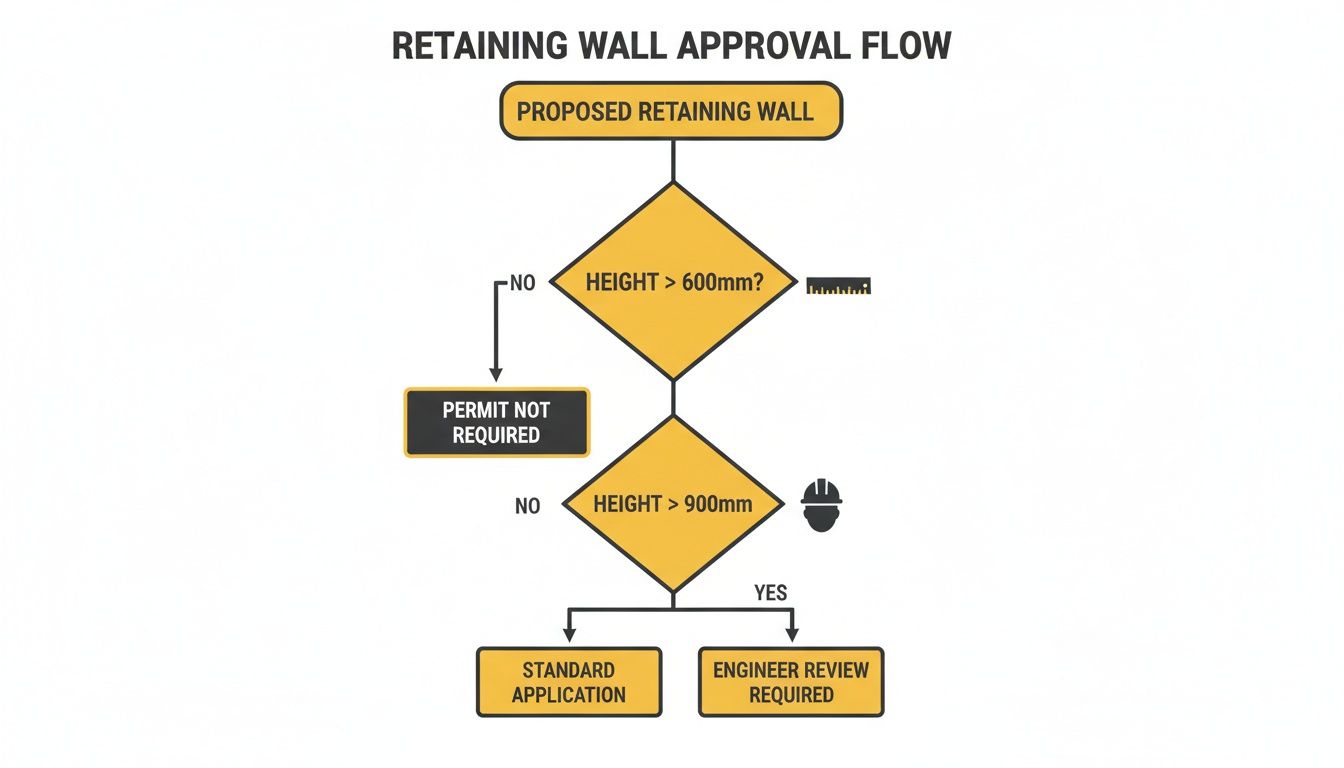
As you can see, those key thresholds of 600mm and 900mm are the magic numbers in NSW that usually mean it’s time for formal approvals and a professional engineering design.
Concrete Sleepers and Besser Blocks
When you need pure strength and efficiency, concrete is hard to beat. It’s why concrete sleepers slotted into galvanised steel posts are such a common sight in newer subdivisions from Kellyville to the Sutherland Shire. They deliver clean, modern lines and are built to last.
Besser blocks (concrete masonry units) are another powerhouse option, offering incredible structural integrity. They might look a bit plain to start with, but think of them as a blank canvas. You can render, clad, or paint them to perfectly match your home's finish, making them one of the most versatile choices out there.
Sydney Sandstone Blocks
There's a good reason why sandstone feels so quintessentially Sydney. On a property in the Northern Beaches or Lower North Shore, a sandstone retaining wall doesn't just sit on the land—it feels like it grew out of it. It’s a premium, timeless finish that connects directly to the city’s unique geology.
While sandstone commands a higher price, the character and natural elegance it delivers is second to none. Every block has its own story, creating a wall with a texture and warmth that manufactured products just can't imitate. If you're drawn to this classic Sydney look, we've got a whole guide exploring what makes a great sandstone retaining wall in Sydney.
Think of it this way: For a waterfront home in Mosman, the natural, high-end feel of a sandstone wall is the perfect complement to a high-value property. But for a new build in Oran Park needing a long boundary wall, the cost-effectiveness and functional strength of concrete sleepers makes far more sense.
Timber Sleepers
Treated pine sleepers are a favourite for DIY garden beds and small, decorative walls. They’re the most budget-friendly choice and bring a certain rustic charm to a garden, which is why they’re so popular.
But you have to be realistic about their lifespan, particularly with Sydney's humidity. Timber is vulnerable to rot and termites over the years and will eventually need maintenance or complete replacement. For any wall that’s doing serious work—holding back a significant slope or supporting a structure—we would almost always steer clients toward a more durable material like concrete or stone.
Ultimately, the best material comes down to a balance of three things: what you can afford, the look you want, and the job the wall needs to do. Getting clear on these options is the first step to building a wall that’s not only strong and compliant but a genuine asset to your property.
Why Drainage Is the Unseen Hero of Wall Stability
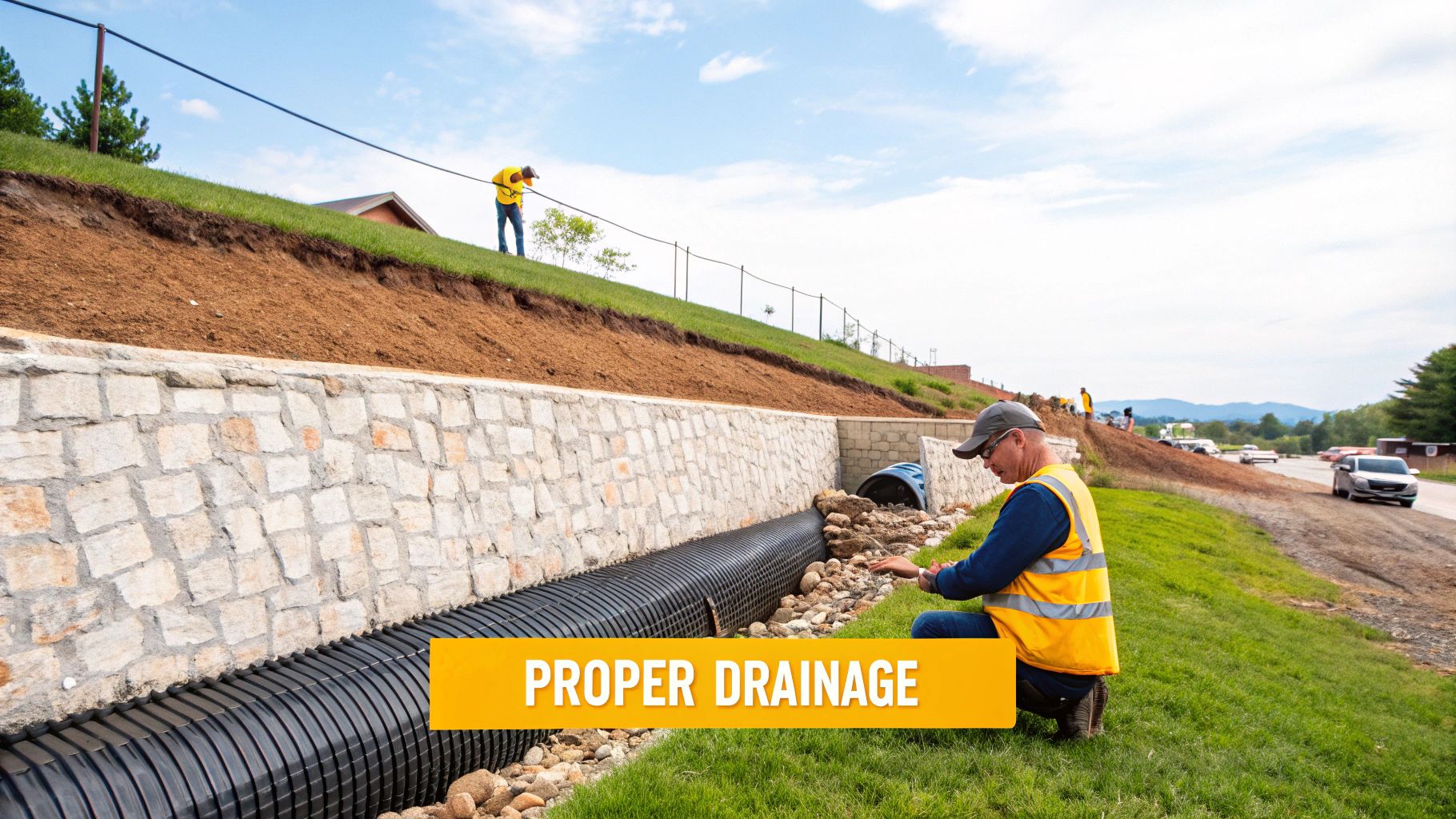
You can choose the best materials and get the engineering spot-on, but if your retaining wall doesn't have proper drainage, it's living on borrowed time. It is the single biggest reason we see walls fail. This is especially critical for retaining wall construction in Sydney, where we can get hit with sudden, intense downpours that saturate the ground in minutes.
Without a path to escape, rainwater gets trapped behind the wall. This build-up creates what’s known as hydrostatic pressure—an immense and relentless force pushing outwards. It can turn a solid, stable wall into one that bulges, cracks, or even collapses completely.
The Anatomy of a Rock-Solid Drainage System
A professional drainage system isn't just one component; it’s a carefully designed combination of materials working together to protect your investment. Think of it as giving water an easy, controlled exit so it never gets a chance to build up and cause damage.
The three core elements we always install behind a retaining wall are:
- Aggregate Backfill: Instead of backfilling with native soil, we use a free-draining aggregate like 20mm blue metal gravel. This creates a porous zone behind the wall where water can easily travel downwards instead of getting trapped in dense clay or soil.
- Agricultural Pipe (Ag-Pipe): At the base of the aggregate layer, we lay a slotted or perforated pipe, known as an ag-pipe. This pipe acts as a collector, gathering all the water that filters through the gravel and channelling it away safely to a stormwater outlet.
- Geotextile Fabric: This is the clever bit. We wrap the entire aggregate backfill zone in a specialised geotextile fabric. This fabric acts like a filter, letting water pass through freely while preventing fine soil and silt from washing into the gravel and clogging up the ag-pipe over time.
Consider this scenario: a brand-new wall is built on a heavy clay block in Parramatta. A summer storm hits, and without drainage, the trapped water turns the clay backfill into a heavy, fluid mass. The weight pushing against the wall is enormous, and eventually, the structure gives way. A properly designed drainage system prevents this from ever happening.
Why Cutting Corners on Drainage Never Pays Off
Skipping or skimping on drainage might seem like a way to save a few dollars upfront, but it's one of the costliest mistakes you can make. A failed wall isn't just an eyesore; it's a significant safety hazard and a massive expense to rectify.
The cost to excavate, remove a failed wall, and rebuild it correctly will always be far greater than the initial cost of installing proper drainage from day one.
For a more detailed look at the different setups, you can learn more about the specifics of retaining wall drainage systems and how they are adapted for various site conditions. This unseen system is truly the hero of your wall's stability, ensuring it stands strong for decades.
Understanding Retaining Wall Costs in Sydney
So, what’s this going to cost? It’s always the first question, and when it comes to retaining walls in Sydney, there's no simple, off-the-shelf price. The final number is a blend of several key factors, and getting your head around them is the best way to see exactly where your money is going.
The cost isn't just about the materials you can see. It’s shaped by the wall's height and length, how tough it is to get machinery onto your site, and the level of engineering needed to make it safe and compliant. A simple, low garden wall will always be more affordable than a towering structural wall on a steep, tricky block.
Breaking Down the Main Cost Drivers
The price is usually worked out per square metre, but what actually goes into that rate? A few key things will make a big difference to the final quote you receive.
First up is your choice of materials. As we've covered, premium options like natural Sydney sandstone are going to have a higher upfront cost than functional choices like concrete sleepers or Besser blocks. The aesthetic you're chasing has a direct impact on the budget.
Wall height is another big one. The taller the wall, the deeper the footings need to be, and the more reinforcement, labour, and materials are required. It all adds up. Site access is just as crucial. If we can’t get an excavator into your backyard easily, the job will demand more manual labour, which stretches out the timeline and the expense.
The 'Hidden' Costs You Must Budget For
A good quote should be transparent, but it’s vital you know about the other costs that aren't just for the wall itself. Think of them as the non-negotiable expenses required to get the job done properly and legally.
The biggest mistake you can make is focusing only on the per-metre rate for the wall. A professional project includes engineering, council fees, excavation, and drainage—budgeting for these from the start ensures there are no expensive surprises down the track.
These "hidden" costs often include:
- Structural Engineer's Fees: For any wall requiring engineering, this can run into thousands of dollars, especially for complex designs.
- Council Application Fees: If a Development Application is needed, councils charge fees just to lodge and process it.
- Excavation and Earthmoving: This covers digging out the site and, importantly, the cost of hauling away all the excess soil.
- Drainage System: The cost of aggregate, ag-pipe, and geotextile fabric is a critical part of the build that has to be factored in.
In Sydney's fast-moving construction market, retaining wall costs can vary wildly. Recent figures show prices ranging from $300 to over $1,500 per square metre, a spread heavily influenced by the materials and complexity of the job. For example, a wall under 1.2 metres might not need engineering, keeping it at the lower end of the scale. However, walls from 1.2 to 2.4 metres will need a structural design, potentially adding $2,000 to $8,000 in engineering fees alone.
Knowing all these elements helps you read quotes with confidence and budget for the entire project, not just the structure you see at the end. For a deeper look into budgeting, check out our guide on understanding retaining wall installation costs.
What to Look for in a Sydney Retaining Wall Contractor
Choosing the right contractor for your retaining wall construction in Sydney is easily the most important decision you'll make in the entire process. A great team isn’t just stacking blocks or setting sleepers; they're your project manager, council navigator, and problem-solver all rolled into one, right through to the final site cleanup. Getting this choice right from the outset is the difference between a smooth project and a stressful one.
When you hire a qualified, experienced contractor, you're buying peace of mind. They get that a retaining wall is a serious piece of structural engineering on your property, and they treat it with the respect it deserves.
Licences, Insurance, and Local Know-How
First things first, let's talk about the non-negotiables. Never, ever hire a contractor without personally sighting their public liability insurance and a valid NSW contractor licence. This is your fundamental safety net. If something goes wrong, it protects you from serious liability. Any true professional will have these documents on hand and be happy to show you.
Beyond the paperwork, you need to see proof they’ve worked in your neck of the woods. Look for a team with a strong portfolio of local projects similar to yours. Ask to see their work in suburbs with conditions like yours—whether that’s dealing with the sandy, coastal soils of Cronulla or the reactive clays common across Sydney’s western suburbs. This is the only way to know they have real, hands-on experience with the exact challenges your site will throw at them.
Transparent Quoting and In-House Capabilities
A quote should be much more than a single number scribbled at the bottom of a page. A professional, trustworthy quote will be detailed and completely transparent, itemising every single cost. It should clearly break down all inclusions—like engineering fees, excavation, drainage materials, and waste removal—and spell out any specific exclusions. This level of clarity is vital for preventing misunderstandings and surprise costs down the track.
A classic red flag is a vague, one-line quote. A contractor who takes the time to break down the costs is one who truly understands the project's full scope and is committed to being upfront. This detailed approach is a clear sign of a professional you can trust.
It's also worth looking for a contractor with in-house capabilities. A team that handles its own excavation and earthmoving services can deliver a far more streamlined and cost-effective project. It simply means fewer subcontractors to coordinate, which leads to a smoother workflow and much better communication from start to finish. If you're curious about how the best contractors get noticed, it can be interesting to learn about effective SEO for contractors and how they improve their visibility in local searches.
For more practical tips on what to ask a potential contractor, check out our guide on finding the right retaining wall builders near you; it has a handy checklist to get you started.
Your Retaining Wall Construction Questions Answered
We get a lot of questions about the specifics of retaining wall projects across Sydney. To help you plan your build with confidence, we’ve put together some straight, practical answers to the most common queries we hear from homeowners and developers.
How Long Does a Retaining Wall Take to Build in Sydney?
Honestly, it varies wildly. A simple little garden wall in a backyard with great access might only take a few days. But if we’re talking about a large, engineered wall needing major excavation, council approvals, and complex drainage, you could be looking at several weeks from the first shovel in the ground to the final site clean-up.
What really throws a spanner in the works are things like Sydney's unpredictable rain, how easily we can get machinery onto your site, and lead times for specific materials. Waiting on custom-ordered concrete sleepers or a particular batch of sandstone blocks can definitely stretch out the schedule.
Can I Build a Retaining Wall Right on My Property Boundary?
You can, but you have to tread very carefully. The rules are strict, and for good reason. It’s absolutely critical that no part of your wall—and that includes the underground footings you can't see—creeps onto your neighbour's property. If you're building directly on the boundary line, you'll almost certainly need a formal written agreement with your neighbour, and likely specific council approval too.
Before you even think about starting, we strongly recommend getting a professional site survey done. It’s the only way to know exactly where your property lines are, and it can save you from incredibly stressful and expensive disputes down the track.
What Is the Toughest Retaining Wall Material for Sydney Conditions?
For sheer durability and a long, trouble-free life in Sydney’s diverse climate, you can’t go past concrete and high-quality natural stone. Materials like concrete sleepers and Besser blocks are exceptionally tough. They won’t fall victim to moisture, termites, or rot, which are the long-term enemies of many timber walls.
Likewise, dense, properly installed Sydney sandstone is incredibly resilient. It stands up beautifully to everything from coastal salt spray to the heavy downpours we see across the region, making it an outstanding long-term investment.
Do I Really Need a Soil Test Before Building My Wall?
For any significant retaining wall, and especially one that needs an engineer's sign-off, a geotechnical report (or soil test) is non-negotiable. It tells us what’s happening in the ground, something that’s impossible to know just by looking at the surface.
This report will identify the soil type—is it reactive clay, loose sand, or solid sandstone bedrock?—and analyse its stability and how it handles water. An engineer then uses this critical data to design the wall with the right footing depth, the right amount of steel reinforcement, and the right drainage system. It's what guarantees the wall will be safe and stable for decades to come.
Think of it this way: retaining walls aren't just garden features; they are serious civil structures. Take a look at the huge infrastructure projects around Sydney, like the Gore Hill Freeway tunnels. The project involved building over 60 walls, some soaring up to 19 metres high in tight urban spots. Extensive monitoring during that project proved how vital detailed engineering is for Sydney's tricky rock conditions. As you can see in the project's technical findings, understanding the ground beneath your feet is absolutely fundamental.
Ready to talk about your project? The team at Booms Up Civil has the local know-how to manage your retaining wall construction from start to finish. Contact us today for a free consultation and quote.