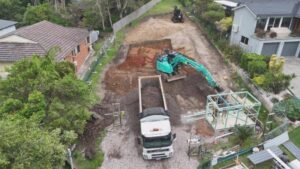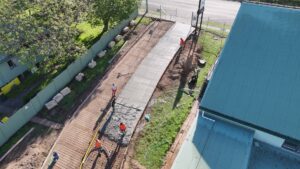

Before a single bucket of dirt is turned, every successful project starts with smart planning. And when it comes to excavation in Newcastle NSW, that planning is absolutely critical. We're not just talking about hiring an excavator; it’s about genuinely understanding your site's unique character, from the sandy coastal soils in Merewether to the reactive clays further inland.
Nailing this initial assessment is the only way to set a realistic timeline and budget you can actually stick to.
Planning Your Newcastle Excavation Project

The ultimate success of your excavation really does come down to the quality of your prep work. This isn't just about marking out a patch of land with some spray paint. It’s a proper investigation into what’s happening beneath and around your property. This is where we spot potential problems and solve them on paper, long before they become expensive headaches on site.
One of the very first things you must do is lodge a Dial Before You Dig enquiry. It’s a free national service that gives you plans of all the underground pipes and cables. Trust us, you do not want to hit a gas main, water line, or telecommunications cable. It’s a surefire way to bring your project to a sudden, dangerous, and very expensive stop.
Initial Site Assessment
Every block of land in Newcastle has its own story. For example, a new build on a steep, sloping site in Merewether will have completely different drainage and stability issues compared to a flat commercial block on clay soil out toward the Hunter Valley.
A proper site assessment digs into the details:
- Topography: How steep is the land? The slope and elevation dictate how complex the cut and fill will be.
- Access: This is a big one. Can trucks and machinery actually get to the site easily? Tight access in older suburbs like Cooks Hill often means we need to bring in smaller, more specialised gear.
- Soil Type: Sandy soils, clay, and rock all behave differently. This affects everything from the foundation design to the type of machinery that’s best for the job.
- Surrounding Environment: We always look at what's next door. Are there neighbouring properties close by, protected trees, or potential water runoff paths we need to manage?
It's also worth looking into how drone technology in construction is changing the game. Drones can give us incredibly accurate topographical surveys and help monitor progress, providing a crystal-clear picture of the site before we even start.
Understanding Local Requirements
We’ll get into the nitty-gritty of council approvals later on, but the initial planning phase is the right time to get a feel for what Newcastle City Council is likely to ask for. Any significant excavation work will almost certainly require a Development Application (DA). This means submitting detailed plans showing your project ticks all the boxes with local planning controls and building codes.
This is where talking to a reputable local contractor early on can save you a world of pain. With over 15 years of experience across the Central Coast, Sydney, and Newcastle, we’ve pretty much seen it all. Our team can help you understand the specific challenges of your site and guide you on the best way forward.
Getting this collaboration right from the start means the scope of work is clearly defined, which is the best defence against scope creep and budget blowouts. To get a better idea of how we tackle projects in the area, you can learn more about our specific excavation services in Newcastle.
Navigating Newcastle Council Approvals and Compliance
Let's be honest, dealing with council paperwork can feel like a major headache. But when it comes to excavation in Newcastle, it's a non-negotiable step to keep your project legal, on track, and free from hefty fines. Understanding the rules from Newcastle City Council—or neighbouring councils like Lake Macquarie—is absolutely critical from day one.
The first big question is always the same: does my project need a full Development Application (DA), or can it fly under the radar as exempt development?
It’s not always as clear-cut as you might think. What looks like a simple backyard dig could easily trigger the need for a DA if you're in a heritage conservation zone in The Hill or your work is a bit too close to a protected fig tree. These rules aren't there to make life difficult; they exist to protect community assets and make sure all work is done safely.
When Do You Need a Development Application?
A lot of people assume small jobs are automatically exempt, but the regulations in NSW are often stricter than you might expect. As a general rule, if your project involves significant earthworks that change land levels, interfere with drainage, or fall within sensitive areas, you'll almost certainly need to lodge a formal DA.
Consider this scenario: if you're planning a new home build in Adamstown, digging out a basement, or putting in a substantial retaining wall, you're firmly in DA territory. The council will want to see detailed plans showing how you'll manage soil, water, and any potential impacts on your neighbours. We've actually put together a detailed guide on excavation near neighbouring properties in NSW that dives deep into these common issues.
Getting it Right the First Time: From what we see on the ground, a poorly prepared DA is the number one cause of project delays. Making sure every single piece of required documentation is correct and complete before you submit it is the quickest way to get things moving.
Key Compliance Documents
When you lodge a DA, the council will ask for several key documents to back up your application. For any project involving excavation, the most common requirement is a Soil and Water Management Plan (SWMP). This isn't just a tick-box exercise; it's a detailed report that outlines exactly how you'll control erosion and stop sediment from washing off your site and polluting local waterways.
The infographic below gives you a real-world snapshot of how often these compliance steps are needed for projects right here in the Newcastle region.
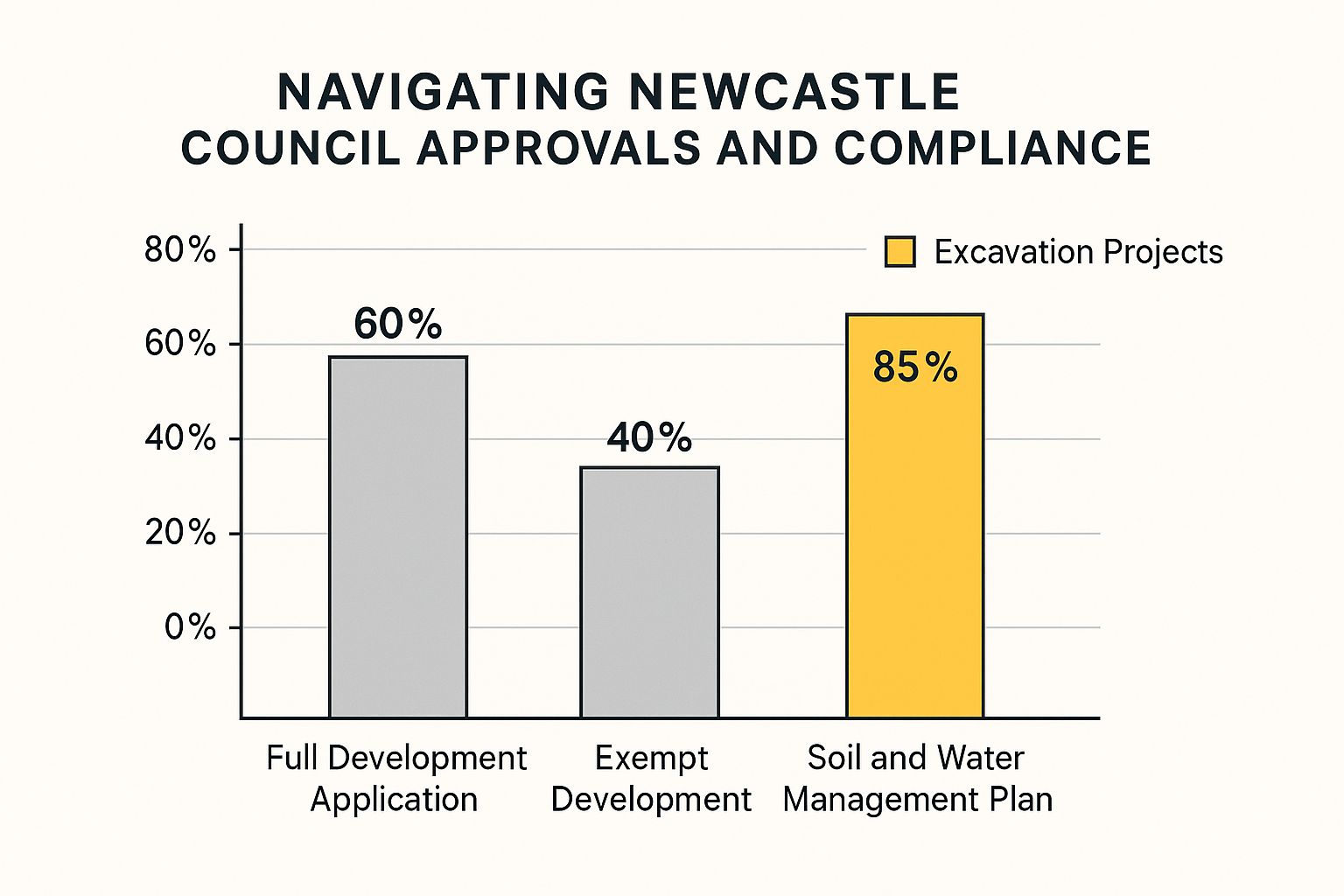
The numbers speak for themselves. The majority of excavation jobs need formal council oversight, and almost all of them demand careful environmental planning.
Before you even turn a sod of dirt, it's vital to have a clear understanding of the key regulatory checks. Here’s a quick rundown of the essentials.
| Key Compliance Checks for Newcastle Excavation |
| :— | :— | :— |
| Compliance Check | Purpose | Key Authority |
| Development Application (DA) | To gain formal council approval for significant earthworks that alter landform or drainage. | Newcastle City Council |
| Soil & Water Management Plan (SWMP) | To detail erosion and sediment control measures, preventing site runoff and pollution. | Newcastle City Council |
| SafeWork NSW Compliance | To ensure all excavation work meets strict workplace health and safety standards. | SafeWork NSW |
| Dial Before You Dig | To identify and locate underground utilities (power, gas, water, telco) before digging. | DBYD |
This table covers the big-ticket items, but remember that specific site conditions can trigger other requirements.
Beyond the council's rules, it's crucial to remember that every single worksite in NSW must adhere to SafeWork NSW regulations. This is about more than just paperwork—it's about the fundamental safety of every person on and around your site. Any experienced, professional contractor will have robust safety systems embedded in their daily practice as a matter of course.
Understanding Newcastle's Unique Ground Conditions
The ground beneath any Newcastle site has a story to tell. Listening to it is one of the most important parts of a successful excavation project.
You simply can't treat a block in coastal Merewether the same as a property out towards Cessnock. The geology here is incredibly diverse, and getting it wrong can lead to serious headaches with foundations, drainage, and long-term stability.
Essentially, what's under the topsoil dictates our entire approach. It influences the type of machinery we bring in, the techniques we use for shoring and battering, and the engineering required for footings and slabs. A successful excavation in Newcastle NSW always starts with a deep respect for these local ground conditions.
From Coastal Sands to Reactive Clays
The soil profile changes dramatically as you move across the Newcastle and Hunter region. Along the coast, in suburbs like Bar Beach or Stockton, you're often dealing with sandy, shifting soils. They’re easy enough to dig but can be highly unstable, demanding specific safety measures like trench shoring to prevent collapses, especially after rain.
Move further inland towards areas like Wallsend or Cameron Park, and the soil composition shifts towards reactive clays. These soils swell when they absorb moisture and shrink as they dry out, placing immense pressure on foundations and retaining walls if not managed correctly.
Knowing how to handle these different materials is key. For instance, tackling a challenging site with variable soil types often involves techniques similar to those used in steep slope excavation, where stability is always the number one priority.
The Archaeological Significance of Newcastle Sites
Beyond geology, Newcastle has an incredibly rich human history. This means some sites, particularly around the city centre and along the Hunter River, may hold archaeological significance.
The area has a profound archaeological record revealing continuous human occupation for over 6,500 years, with excavations uncovering important Aboriginal artefacts like stone tools and shell middens. This is more than just history; it has real-world implications for any project breaking ground today.
Any professional excavation contractor must have an 'unexpected finds' protocol in place. This is a non-negotiable plan for what to do if historical artefacts—whether Indigenous or colonial—are uncovered. It involves stopping work immediately, securing the area, and notifying the relevant authorities like Heritage NSW.
This isn't just a box-ticking exercise; it’s a legal and ethical responsibility. Past digs in the area have found everything from Aboriginal tools to convict-era relics. Being prepared for this possibility is the sign of a truly professional and respectful operation, ensuring your project doesn't inadvertently damage a piece of our local history.
How to Choose the Right Newcastle Excavation Contractor
Your project’s ultimate success often comes down to the quality of the crew you bring on board. Choosing the right partner for your excavation in Newcastle NSW is about so much more than just ticking boxes for a licence and insurance—frankly, those are the absolute bare minimum.
The real difference-maker is finding a team that thinks like a problem-solver, not just an operator with a machine. You need a contractor who can size up a tricky, sloping block in Charlestown with tight access and see a clear path forward, instead of just rattling off a list of problems.
Look Beyond the Quote
It’s always tempting to just grab the cheapest quote and run with it, but in our experience, that’s often the fastest way to see your budget blow out and your timeline get derailed. A suspiciously low price can hide a lot of things: inexperience, shortcuts on safety, or a complete misunderstanding of what your project actually involves.
A professional quote should be detailed and totally transparent. It will break down the costs for labour, machinery hire, spoil removal, and any specific tasks like rock breaking or bringing in clean fill. If all you get is a vague, one-line estimate, consider it a major red flag. It probably means they haven't properly assessed your site and its unique challenges.
Local Experience and Fleet Capability
In a place like Newcastle, local knowledge is gold. A contractor who genuinely understands the region’s diverse ground conditions—from the sandy coastal soils to the reactive inland clays—is far better equipped to see potential issues coming and head them off at the pass. Don't be shy; ask them about similar projects they’ve tackled in your specific area.
Just as important is the machinery they have on hand. Do they own and maintain their own fleet? A well-kept lineup of excavators, tipper trucks, and specialised attachments shows a real commitment to reliability. It also means they have the flexibility to match the right machine to your job, whether it's a compact mini excavator for a tight backyard in Hamilton or a bigger beast for bulk earthworks. The scale of your job definitely influences their approach, so it helps to understand the differences between residential and commercial excavation to better evaluate a contractor's fit.
Communication and Safety Culture
Finally, get a feel for their communication style and how seriously they take safety. A good contractor will have no problem walking you through their safety procedures and explaining how they meet all SafeWork NSW regulations. They should be easy to get in touch with and proactive about keeping you in the loop.
When you hire an excavation contractor, you're not just buying a service; you're entering a partnership. The right team will communicate clearly, respect your property, and have the experience to get the job done right the first time, ensuring your project starts on the strongest possible foundation.
What to Expect During the Excavation Process
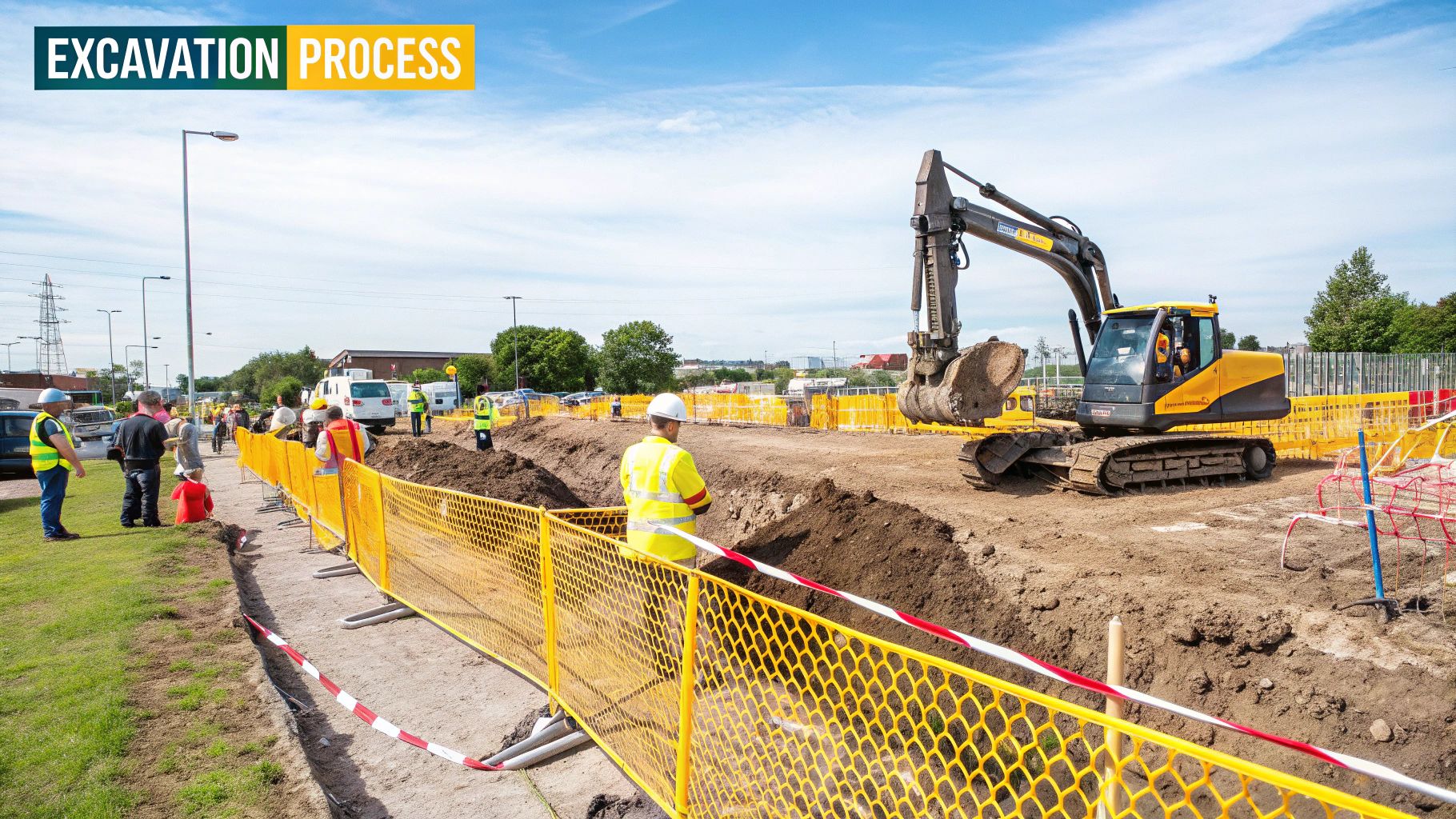
Once all the planning is locked in and the council approvals have come through, the real action can finally begin on your site. The excavation itself is a carefully choreographed operation—it’s much more than just digging a hole. It all kicks off with proper site establishment, which is non-negotiable for ensuring the project runs safely and efficiently from the get-go.
This first step involves setting up temporary safety fencing to secure the entire perimeter. At the same time, we'll install all the sediment and erosion controls that were mapped out in the planning phase. Think of it as creating a professional, safe, and fully compliant workspace before a single piece of heavy machinery even arrives.
From Bulk Earthworks to Detailed Digging
The first major stage on site is almost always the bulk excavation. This is where our operators get to work removing large volumes of soil, clay, or rock to get the site down to its general shape and level. If we’re digging out a basement for a new build in Adamstown Heights, for instance, this is the phase where we clear out the main volume of earth to establish that initial depth.
After the bulk-out is complete, we transition into the detailed excavation phase. This is where precision becomes absolutely critical. Using a range of specialised attachments, we meticulously dig the trenches for services like plumbing and electrical conduits, as well as the footings for the building's foundations.
It’s during this detailed stage that an operator's skill truly shines. Every cut has to be exact, following the surveyor's pegs and the engineer's plans right down to the millimetre. This is also where clear, constant communication between our crew, your builder, and any other trades on site becomes essential to keep the whole project moving forward seamlessly. To get a better idea of how versatile these machines are, you can check out our guide on excavator attachments and see what each one is designed for.
Precision is Non-Negotiable: Being out by just a few centimetres during a detailed excavation can create massive headaches for the concreters and plumbers who follow. That's why we obsessively double-check every level and dimension, making sure the site is perfectly prepped for the next stage of construction.
Site Management and Historical Considerations
Throughout any excavation in Newcastle NSW, we’re always conscious of the rich history buried just beneath our feet. Even on what looks like a straightforward residential block, you can never be sure what you might find.
Historical sites, like the Convict Lumberyard that was excavated back in the early 1990s, uncovered a treasure trove of artefacts from the earliest days of European settlement and even deeper Aboriginal materials. While your project might not have that level of historical significance, it’s a powerful reminder of why we need to be prepared for the unexpected. You can discover more about Newcastle's convict history to get a sense of the layers hidden beneath our city.
The final step in our process is a comprehensive site clean-up and handover. We make sure all the excess spoil is removed, the site is left tidy, and the excavated area is safe and ready for your builders to come in and start their work.
Common Questions We Hear About Excavation in Newcastle
Even with the best-laid plans, it’s completely normal to have a few nagging questions before the big machines roll onto your property. We get it. Having managed countless projects across Newcastle and the Hunter region, we've pretty much heard them all.
Here are a few of the most common queries that come up, with the kind of straightforward answers we’d give you over the phone.
What Happens If You Find Something Unexpected During the Dig?
This is a big one, and for good reason, especially in a place with as much history buried under its feet as Newcastle. If we uncover anything out of the ordinary, our process is clear: work stops immediately.
"Unexpected" could mean anything from old building footings and forgotten pipes to buried asbestos or even items of potential heritage significance. For instance, an excavation on Watt Street in 2014 unearthed sandstone footings from a colonial-era structure dating all the way back to the 1830s.
If we hit anything like that, we secure the area on the spot and get in touch with you. From there, we notify the right authorities—be it Heritage NSW or the local council—to figure out the proper way forward. You can actually read about the discoveries from the Watt Street excavation to see how these situations are handled.
How Much Mess and Disruption Should I Realistically Expect?
Let’s be honest: excavation isn't a quiet or tidy job. There’s going to be noise from heavy machinery and trucks coming and going to haul away soil. But a professional crew knows how to keep the chaos contained.
A good contractor will always work to minimise the impact on you and your neighbours. This includes setting up clear entry and exit points for all site vehicles, actively managing dust by watering down haul roads, and putting strict erosion and sediment controls in place to keep your site’s mess on your site.
Our philosophy is simple: be a good neighbour. We aim to leave the site as clean and organised as possible at the end of every single day. We’ll also keep you in the loop about what’s happening and when, so there are no surprises.
So, How Long Will the Excavation Actually Take?
The timeline for any excavation in Newcastle NSW really boils down to three things: the scale of the job, the ground conditions we're dealing with, and the good old Aussie weather.
A straightforward site cut for a new house on a nice, flat block might only take a couple of days. But if we're digging a complex basement on a rocky, sloping site, that could easily stretch into a week or more. And, of course, a sudden downpour can bring everything to a halt—working on saturated, muddy ground is just plain unsafe and inefficient. We always build a realistic timeline upfront and include a buffer for weather, keeping you updated if anything shifts.
Our Promise to You: The timeline we give you isn't just a number plucked from thin air. It’s a professional estimate backed by years of hands-on experience with Newcastle's unique ground conditions. It's based on what our machinery can do and a deep understanding of what your project truly involves. We stake our reputation on clear communication and getting the job done right, and on schedule.
At Booms Up Civil Group, we're here to answer every question you have and walk you through your project from start to finish. If you’re planning an excavation in Newcastle, the Hunter Valley, or on the Central Coast, reach out for some expert advice and a transparent quote.