
Your Complete Guide to Safe, Legal, and Respectful Earthworks
When excavating near neighbouring properties in NSW, three critical elements determine project success: legal compliance under Section 177 of the Conveyancing Act, mandatory notification requirements, and professional risk management through dilapidation reports and expert consultation. Proper planning prevents costly disputes and ensures project safety.
If you’re planning excavation work anywhere across NSW – from the harbour suburbs of Sydney to the rolling hills of the Hunter Valley – understanding your responsibilities toward neighbouring properties isn’t just good practice, it’s legally mandated and financially crucial. Whether you’re a homeowner planning a renovation in Newcastle, a developer working in Sydney’s tight suburban blocks, or a contractor managing projects across the Central Coast, the stakes are simply too high to leave neighbour relations to chance.
The challenge is real: NSW’s diverse geological conditions, from Sydney’s sandstone to the clay soils of the Hunter Valley, create complex engineering requirements. Add stringent council regulations, statutory duties under NSW law, and the simple reality that most properties are closer to their neighbours than ever before, and you have a situation where professional expertise isn’t optional – it’s essential.
NSW Legal Framework: Understanding Your Obligations
Section 177 of the Conveyancing Act: The Foundation of Neighbour Protection
Since 2000, NSW has operated under some of Australia’s strongest neighbour protection laws when it comes to excavation and support. Section 177 of the Conveyancing Act creates a statutory duty of care not to remove support from neighbouring land – and this applies to both natural support and buildings.
What This Means in Practice: The law doesn’t just say “be careful” – it creates a legal obligation to avoid actions that could destabilise neighbouring properties. This duty is non-delegable, meaning property owners remain liable even when using qualified contractors. As established in Llavero v Shearer [2014], if excavation removes neighbouring support, the landowner faces liability regardless of their reliance on professional advice.
Multiple Party Liability: Excavation disputes commonly involve several defendants – the property owner, excavation contractor, subcontractors, engineers, and consultants can all face proportionate liability. However, courts have consistently held that property owners rarely escape responsibility, emphasising the non-delegable nature of the support duty.
Council Requirements and Development Approval Conditions
Most NSW councils now require specific measures for excavation near property boundaries. Council can raise more specific conditions as they see fit when granting development approval. One such condition is sometimes the preparation of dilapidation reports, ensuring any movement or damage to at-risk buildings can be monitored.
Development Consent Conditions: Clause 98E of the Environmental Planning and Assessment Regulation 2000 requires development consent for excavation below the level of the base of footings of a structure on adjoining land to protect and support the building from possible damage.
Standard conditions often include:
- Structural engineer assessment of neighbouring building stability
- Monitoring systems for excavation-induced movement
- Professional supervision requirements during critical excavation phases
- Specific shoring and underpinning requirements
Neighbour Notification Requirements: Getting Communication Right
Legal Notification Requirements
NSW planning laws mandate specific neighbour notification for various development types. In metropolitan areas, a certifier or council is required to inform neighbours within a 20-metre radius that you have applied for a complying development certificate 14 days before it can be approved.
Pre-Construction Notification: Once your complying development certificate has been issued, you must give your neighbours at least seven days’ notice in metropolitan areas before construction begins. This notification must include:
- Planned excavation extent and methodology
- Expected duration and working hours
- Contact details for site supervision
- Process for raising concerns or reporting issues
Best Practice Communication Strategies
Early Engagement: Professional excavation teams recommend neighbour engagement well before formal notification periods. This allows for discussion of access requirements, coordination of complementary works, and resolution of concerns before work commences. As experienced Central Coast excavation specialists understand, building goodwill prevents minor issues from escalating into major disputes.
Clear Documentation: All neighbour communication should be documented, including copies of written notifications with delivery confirmation, records of verbal discussions, and photographic evidence of existing conditions.
Risk Assessment and Professional Consultation
When Professional Assessment Becomes Mandatory
Excavation below the level of the footing of a structure, including retaining walls, that could affect the stability of the structure should be assessed by a competent person and secured by a ground support system which has been designed by a competent person.
Several scenarios trigger mandatory professional assessment:
Geotechnical Engineering Required:
- Excavation below neighbouring foundation levels
- Unstable soil conditions (clay, sand, fill material)
- Groundwater presence or seasonal water table changes
- Significant level changes between properties
Structural Engineering Assessment:
- Neighbouring buildings showing existing settlement or movement signs
- Heritage or older buildings with uncertain foundation systems
- Multi-storey buildings with significant loads
- Boundary retaining walls or shared structural elements
The Central Coast Context: Local Geological Challenges
The Central Coast’s unique geological profile creates specific challenges for excavation near neighbours. Much of the region sits on Hawkesbury sandstone, which appears stable but can fracture along natural joint systems. Professional assessment identifies these potential failure planes before excavation begins.
Clay layers common throughout areas like Kariong and Mount White appear stable when dry but become unstable when wet. Understanding seasonal moisture patterns helps predict behaviour during excavation and potential impacts on neighbouring properties.
Dilapidation Reports: Protecting All Parties
What Dilapidation Reports Actually Document
Dilapidation reports document any existing issues to your property or damage to ensure that should any damage occur to your property or neighbouring properties then you are covered. Professional reports document:
Structural Elements:
- Wall cracks, their width, length, and direction (measured to 0.01mm precision)
- Foundation settlement indicators
- Window and door frame alignment
- External wall condition and any movement
Property Features:
- Fencing condition and alignment
- Driveway and pathway integrity
- Retaining wall stability
- Landscaping and established vegetation
The Legal and Financial Protection
Dilapidation reports protect both the developer and the neighbour from false claims or counterclaims as to the extent of any alleged damage if it occurs. These reports can be tendered to the Courts in civil proceedings if necessary.
Insurance and Liability Coverage: Many professional liability and public liability insurance policies require dilapidation reports for excavation work near neighbours. These reports demonstrate due diligence and can significantly impact claim outcomes.
Excavation Methods and Neighbour Impact Minimisation
Appropriate Equipment Selection for Neighbour Proximity
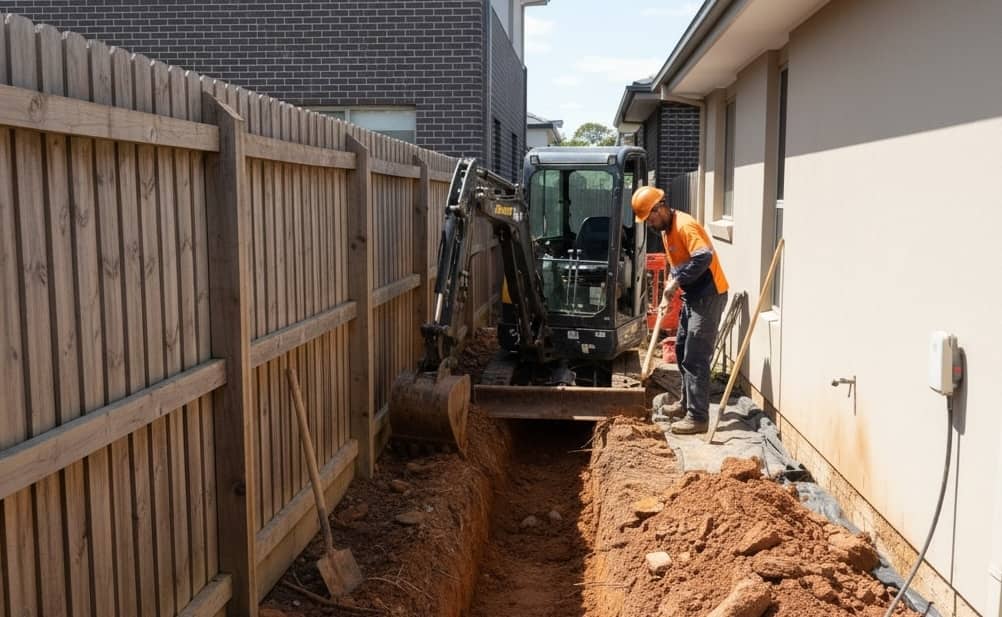
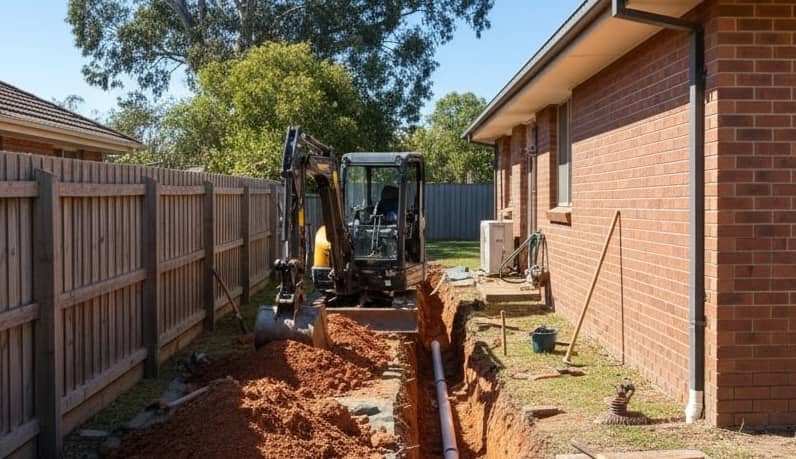
Compact and mini excavators have revolutionised slope work in residential areas. These smaller machines can navigate narrow driveways and tight access points while being light enough to work safely near property boundaries. Click here for more information about tight access excavation.
Specialised Techniques for Sensitive Areas:
Sequential Excavation and Immediate Support: Rather than creating one massive cut that requires extensive retaining, stepped excavation creates multiple smaller level areas that work with natural contours. Professional teams often use progressive excavation with immediate shoring installation to maintain stability throughout the process.
Vibration and Noise Management
It’s important other buildings in and around the excavation site are not adversely affected by vibration or concussion during the excavation work. Special precautions may need to be taken in the vicinity of hospitals and other buildings containing equipment sensitive to shock and vibration.
Professional excavation projects often include:
- Baseline vibration measurements before work begins
- Continuous monitoring during excavation phases
- Alert systems if vibration levels approach concerning thresholds
- Documentation for transparency with neighbours and authorities
Common Challenges and Solutions Across NSW Regions
Sydney Metropolitan Areas: Dense Development Challenges
Sydney’s older suburbs often feature narrow driveways and limited equipment access. Solutions include track-mounted mini excavators that can navigate standard doorways, conveyor systems for material removal where truck access is impossible, and specialised techniques for heritage conservation areas.
Central Coast: Geological Complexity and Coastal Challenges
The Central Coast’s complex geology requires detailed geotechnical assessment before excavation planning, flexible approaches that adapt to changing ground conditions, and enhanced shoring systems designed for mixed soil types. Projects from Terrigal to The Entrance must also account for seasonal weather patterns and coastal conditions.
Newcastle and Hunter Valley: Industrial and Residential Interface
Newcastle’s blend of industrial heritage and residential development creates unique challenges, including potential contaminated soil discovery, enhanced safety protocols, and coordination with multiple utility providers in established areas.
Professional Excavation Services for Neighbour-Sensitive Projects
Key Qualifications and Experience Indicators
When selecting excavation contractors for projects near neighbours, prioritise teams with demonstrated experience in NSW council approval processes, understanding of local geological conditions, and track record of successful neighbour consultation and relationship management.
Professional Certifications and Insurance:
- Appropriate public liability and professional indemnity insurance coverage
- Current licensing for excavation and earthmoving operations
- Membership in relevant industry associations
- Qualified operators with appropriate equipment certifications
The Booms Up Civil Advantage
Local Expertise Across NSW: Based on the Central Coast with extensive experience across Sydney, Newcastle, and the Hunter Valley, Booms Up Civil Group’s excavation services bring deep understanding of local geological conditions from Hawkesbury sandstone to Hunter Valley clays. Our team has established relationships with local councils and a proven track record of successful excavation projects in neighbour-sensitive environments.
Integrated Project Management: Rather than managing multiple contractors for excavation, engineering, and consultation, our excavation services provide single point of contact for all excavation-related requirements, coordination with consulting engineers and building professionals, and comprehensive project planning that addresses neighbour impacts from day one.
Risk Management Focus: Every project includes thorough pre-construction assessment of neighbour impact potential, professional consultation with structural and geotechnical engineers when required, and comprehensive documentation and communication protocols.
Cost Considerations and Budget Planning
Understanding the Full Cost of Neighbour-Conscious Excavation
Direct Professional Services:
- Geotechnical assessment: $2,000-$8,000 depending on scope and site complexity
- Dilapidation reports: $350-$800 per neighbouring property
- Structural engineering consultation: $1,500-$5,000 for assessment and monitoring design
- Professional excavation services: Premium of 15-25% over standard excavation for enhanced neighbour protection measures
Risk Mitigation Investment: While professional neighbour protection measures involve upfront costs, they prevent legal dispute costs potentially exceeding $50,000-$200,000, project delays while resolving neighbour complaints, and remedial work costs if neighbouring property damage occurs.
Return on Investment in Professional Services
Professional excavation management typically delivers projects 20-30% faster than DIY or cut-price approaches, with minimal delays from neighbour disputes or council interventions. Well-managed excavation projects maintain positive neighbourhood relationships crucial for future property values and avoid damage claims that can appear on property title searches.
Essential Safety and Compliance Requirements
SafeWork NSW Requirements
Under the NSW Work Health and Safety Act, excavation work must comply with specific safety requirements when working near neighbours. The SafeWork NSW Code of Practice for Excavation Work mandates that:
- All excavation work near adjacent buildings requires assessment by a competent person
- Proper shoring and support systems must be designed for site-specific conditions
- Underground services must be located before excavation begins through Dial Before You Dig
- Workers and neighbouring properties must be protected from excavation collapse risks
High Risk Construction Work: Excavation in or near a shaft or trench with an excavated depth greater than 1.5 metres is classified as high risk construction work, requiring a Safe Work Method Statement (SWMS) before work begins.
Environmental Protection Requirements
NSW environmental protection laws require consideration of:
- Stormwater management to prevent runoff affecting neighbouring properties
- Dust control measures during dry conditions
- Noise management within council-approved working hours
- Protection of existing vegetation and habitat where possible
Communication Templates and Documentation
Pre-Construction Neighbour Notification Template
For projects requiring formal neighbour notification, the NSW Planning Portal provides templates for both pre-approval and pre-construction notifications.
Essential Information to Include:
- Property address and development approval reference
- Planned excavation scope and methodology
- Expected start date and duration
- Working hours and expected noise levels
- Site supervisor contact details
- Process for raising concerns or questions
Ongoing Communication Best Practices
Professional excavation teams maintain regular communication through:
- Weekly progress updates during extended projects
- Immediate notification of any unexpected conditions or delays
- Daily site supervision contact availability
- Post-completion follow-up to address any concerns
Technology and Innovation in Neighbour-Sensitive Excavation
Modern Monitoring Systems
Advanced excavation projects now employ real-time monitoring technology including:
- Digital vibration sensors with automatic alerts
- GPS-guided excavation for precision work near boundaries
- Structural movement monitoring systems
- Weather station integration for excavation scheduling
Improved Equipment and Techniques
Vacuum Excavation Technology: Particularly valuable for utility work near neighbours, vacuum excavation provides minimal ground disturbance, precise excavation around existing services, and reduced vibration impact on neighbouring properties.
Remote-Operated Equipment: For extremely sensitive areas, remote-operated mini excavators allow precision work while keeping operators at safe distances from potential hazards.
Regulatory Trends and Future Considerations
Increasing Council Requirements
NSW councils continue to strengthen requirements for neighbour protection through:
- Enhanced notification requirements in metropolitan areas
- Increased use of mandated dilapidation reports
- Stricter penalties for excavation-related neighbour damage
- Greater emphasis on professional oversight for complex projects
Community Expectations
Modern neighbourhoods expect proactive communication about construction impacts, professional management of noise and disruption, transparent processes for addressing concerns, and enhanced community outcomes from development projects.
When Things Go Wrong: Dispute Resolution
Early Intervention Strategies
If neighbour concerns arise during excavation:
- Stop work immediately if safety issues are identified
- Document the concern and proposed resolution approach
- Engage qualified professionals for independent assessment
- Maintain open communication throughout resolution process
Legal and Insurance Considerations
Under Section 177 of the Conveyancing Act, property owners may be liable for neighbour damage even when using professional contractors. However, proper documentation, professional assessment, and comprehensive insurance coverage significantly reduce potential liability and provide clear pathways for fair resolution.
When to Seek Legal Advice:
- Immediate structural damage to neighbouring properties
- Disputes over excavation methodology or safety measures
- Insurance claim complications
- Council intervention or stop-work orders
Conclusion: Excellence in Neighbour-Conscious Excavation
Excavating near neighbouring properties in NSW demands more than technical expertise – it requires understanding of complex legal frameworks, professional risk management, and genuine commitment to community harmony. From the dense suburban blocks of Sydney to the challenging terrain of the Central Coast and the diverse landscapes of Newcastle and the Hunter Valley, success comes through comprehensive planning, transparent communication, and expert execution.
The legal obligations under Section 177 of the Conveyancing Act create clear responsibilities, but the practical reality of managing excavation near neighbours requires professional expertise that extends far beyond legal compliance. Whether you’re planning a basement extension, commercial development, or residential renovation anywhere across NSW, the investment in professional excavation services designed for neighbour-sensitive environments delivers superior outcomes while protecting all parties involved.
Key Success Factors:
- Legal Compliance: Understanding and meeting statutory duties under NSW law
- Professional Assessment: Engaging qualified engineers and consultants before work begins
- Community Communication: Building relationships through transparent, respectful engagement
- Risk Management: Protecting all parties through proper documentation and insurance
- Expert Execution: Using experienced contractors with local knowledge and appropriate equipment
The combination of NSW’s strengthening regulatory environment, increasing community expectations, and complex geological conditions makes professional excavation services essential for any project near neighbouring properties. The cost of proper planning, professional consultation, and expert execution represents sound investment in project success, community relationships, and long-term property value.
Ready to Get Started? If you’re planning excavation work near neighbouring properties anywhere across NSW, professional consultation transforms potential challenges into successful outcomes. From initial planning and neighbour engagement through to final completion and relationship maintenance, our excavation services ensure your project enhances your property while maintaining neighbourhood harmony and value.
Bottom Line: When excavating near neighbours in NSW, three elements determine success: legal compliance under Section 177, professional risk management through proper assessment and documentation, and proactive community communication. Professional excavation contractors navigate these complexities seamlessly, delivering better outcomes at lower total project cost when you account for risk mitigation and timeline protection.
For more information about managing challenging excavation projects, explore our guide to difficult access excavation or learn about the differences between excavation and earthmoving services to ensure you’re planning the right approach for your specific project needs.
Important Disclaimer
This article is for general information purposes only and does not constitute legal advice. The information provided should not be relied upon as a substitute for independent legal advice on your specific circumstances.