For any property owner in Sydney, a sandstone retaining wall isn’t just a purchase; it’s a timeless investment that delivers both rock-solid structural support and classic, enduring beauty. These walls are far more than a simple fix for a sloping block. They are a signature feature of Sydney’s landscape, adding serious character and value to homes from the Northern Beaches all the way to the Sutherland Shire.
Why Sydney Landscapes Rely on Sandstone Walls
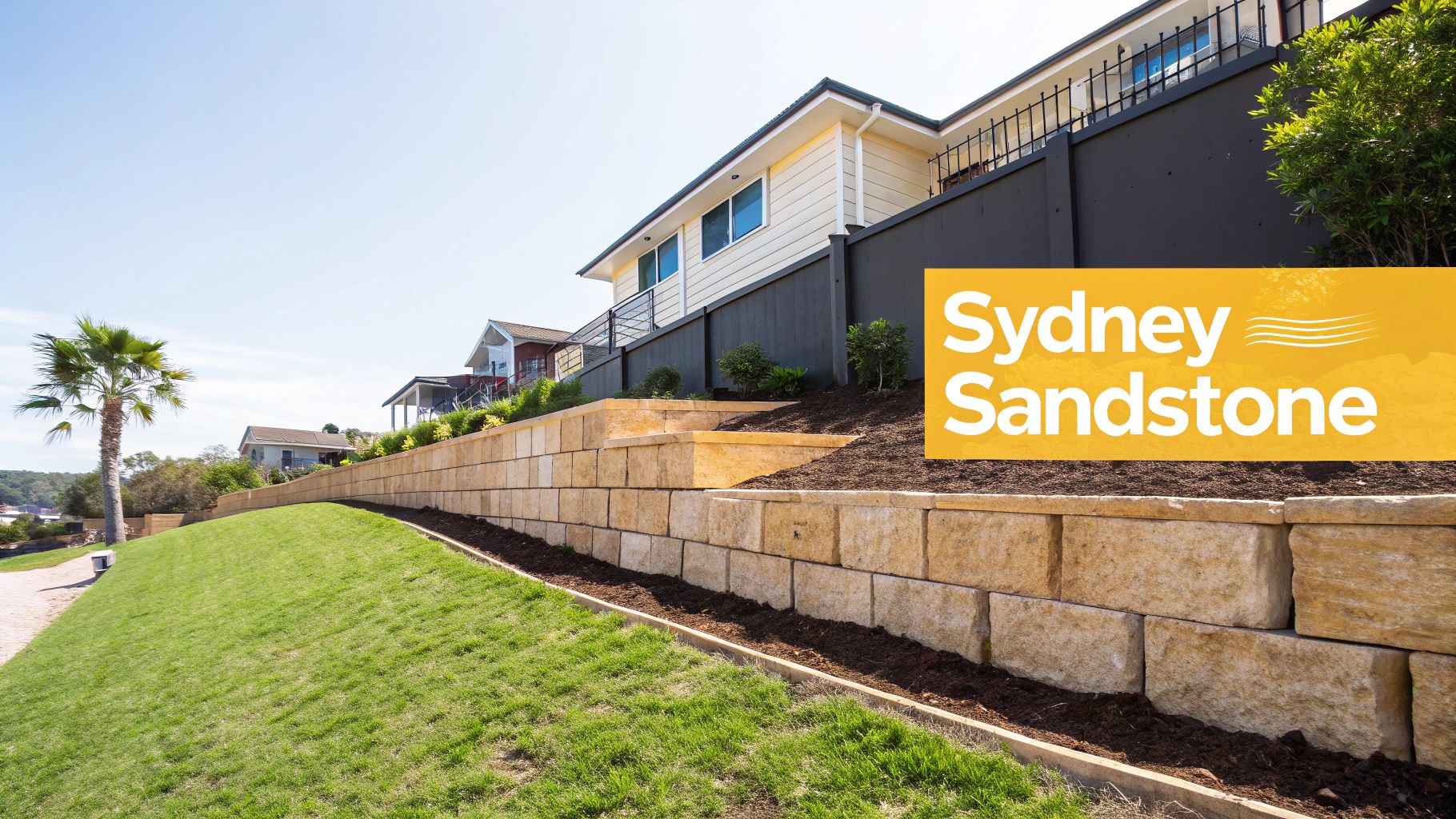
Think of a sandstone retaining wall in Sydney, and you’re thinking of a piece of the city’s identity. From the heritage-listed homes of Ku-ring-gai to modern coastal properties in Manly, sandstone has been the go-to building material for generations. This isn’t just about looks—it’s about sheer practicality.
Sydney’s unique and often challenging topography, with its steep slopes and reactive clay soils, demands seriously robust solutions. Sandstone brings the necessary weight and durability to hold back immense soil pressure, stopping erosion in its tracks and carving out usable, terraced spaces on otherwise difficult land.
A Legacy Carved in Stone
The connection between Sydney and its sandstone runs deep. For instance, the city’s famous Pyrmont sandstone was quarried extensively from the 1870s to fuel the city’s expansion. By 1928, over half a million cubic yards of this iconic stone had been produced, literally shaping the ground we live on today. You can find more details about how Sydney sandstone has influenced local development on our main sandstone retaining walls page.
This long history means the material is perfectly adapted to our local climate. It weathers beautifully over time, developing a natural patina that blends seamlessly into the classic Australian bushland aesthetic.
More Than Just a Wall
When you choose a sandstone retaining wall, you’re not just solving an engineering problem; you’re adding a premium asset to your property. For Sydney homeowners, it’s one of the smartest choices you can make. We’ve seen firsthand how a well-designed wall transforms a garden.
For example, a project on a sloped block in Castlecrag can go from an unusable patch of grass to a stunning terraced garden. The sandstone not only holds back the soil but also becomes a beautiful backdrop for raised garden beds and level entertaining areas. It’s this blend of function and style that makes sandstone so popular across Sydney.
Key Benefits of Sandstone Walls for Sydney Homes
- Lasting Durability: Properly built sandstone walls can last for over a century, easily standing up to Sydney’s coastal weather and humid conditions. This is a “build it once, build it right” solution.
- Natural Aesthetics: The warm, earthy tones of sandstone complement any garden style, from native Australian landscapes in the Hills District to formal English gardens on the North Shore.
- Increased Property Value: A professionally constructed sandstone wall is a high-end feature that significantly boosts your home’s kerb appeal and market value.
- Functional Design: It transforms unusable slopes into functional spaces like garden beds, patios, or level lawns for the kids to play on.
At Booms Up Civil, we specialise in engineering and building sandstone retaining walls that are not only structurally sound but also genuinely enhance the beauty of your property. We understand the specific challenges of Sydney’s varied ground conditions and deliver solutions that are built to last a lifetime.
Choosing the Right Stone for Your Project
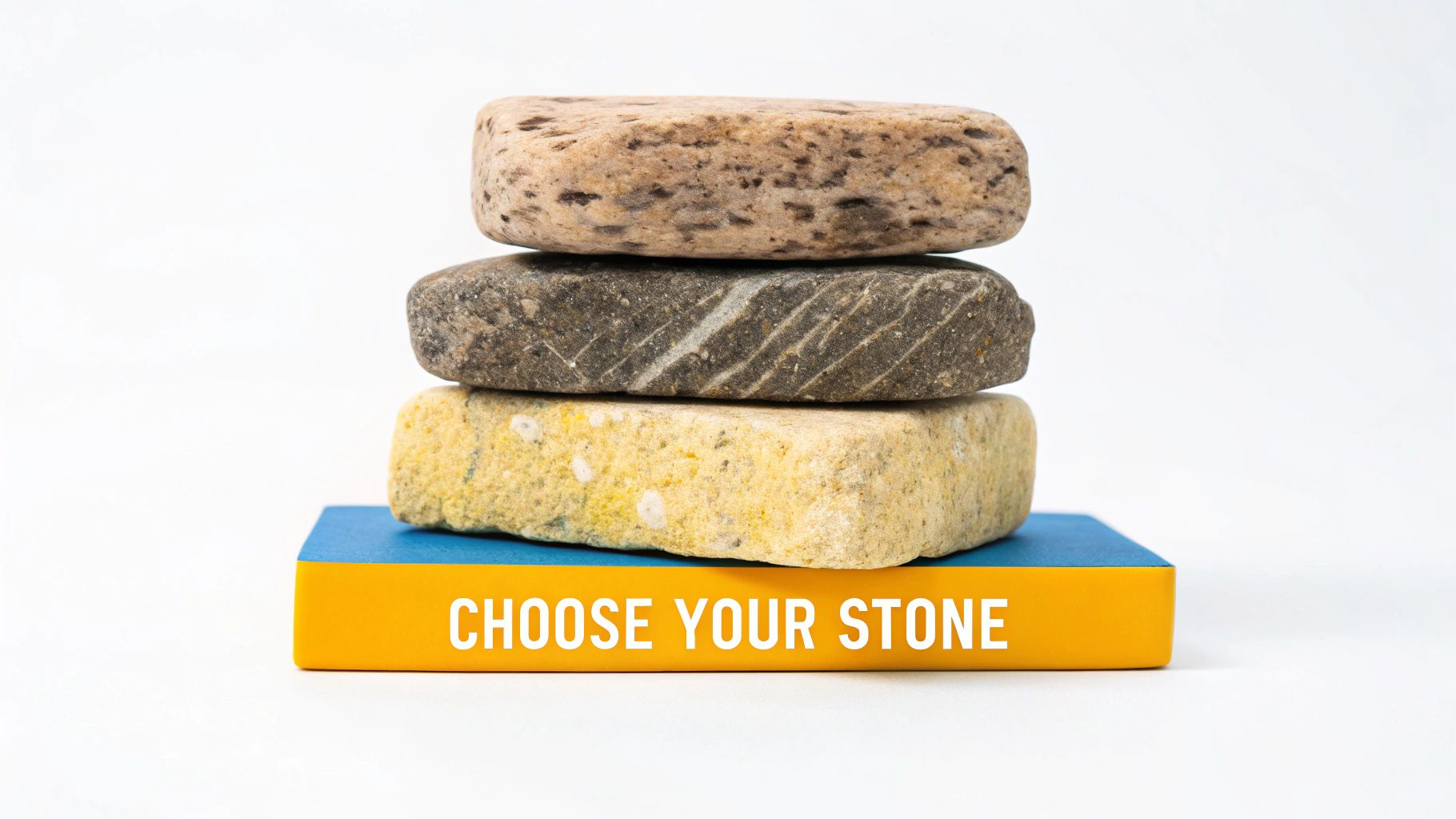
When you decide to build a sandstone retaining wall in Sydney, you’ll quickly find out that not all stone is created equal. The type of sandstone you pick has a massive impact on the final look, feel, and—most importantly—the structural integrity of your wall. Getting it right is a balancing act between your property’s style and the practical engineering demands of the job.
For most people, the first thing that comes to mind is the iconic Hawkesbury Sandstone. Quarried right here in our own backyard, it’s legendary for its durability and those classic warm, honey-yellow tones. This is the stone that gives so many of Sydney’s heritage buildings, like the Barrenjoey Lighthouse, their signature character. It’s an unbeatable choice for adding a bit of timeless charm to any property.
Quarried Blocks vs Sandstone Cladding
One of the first and most critical decisions you’ll make is whether you need solid, quarried blocks or the much thinner sandstone cladding. This choice completely changes how your wall is built and what it can actually do.
- Quarried Sandstone Blocks: These are the real deal—large, heavy blocks cut straight from the earth. Their sheer mass provides immense structural strength, making them absolutely essential for any load-bearing retaining wall that has to hold back serious soil pressure. They are the backbone of a true retaining structure.
- Sandstone Cladding or Veneer: This is a different beast altogether. It’s made of thin slices of real sandstone, usually just 20-40mm thick, that get applied to a structural wall (like concrete blockwork) for looks alone. It’s a fantastic way to get the beautiful sandstone aesthetic without the cost of a full block wall, but it offers zero structural support.
Think of it this way: quarried blocks are the skeleton and muscle of your wall. Cladding is just the skin. For a genuine sandstone retaining wall Sydney homes rely on for stability, solid, quarried blocks are non-negotiable.
Finishes That Define Your Style
Beyond the stone itself, the finish is what gives your wall its final texture and personality. Each one creates a completely different look and feel, letting you perfectly tailor the wall to your home’s architecture.
Natural Face (or Rock Face): This is a beautifully rustic and organic finish. The stone is split along its natural grain, leaving a rugged, textured surface. It’s perfect if you want a wall that looks like it’s been part of the landscape for decades, blending effortlessly into native gardens.
Diamond Sawn: If you’re chasing a sharp, modern aesthetic, diamond-sawn blocks are the way to go. They’re cut with precision machinery, resulting in smooth, clean faces and perfectly straight lines. This finish is ideal for contemporary homes in suburbs like Castle Hill or Kellyville, where a crisp, architectural look is key.
Matching Stone to Your Sydney Property
The right colour and finish can dramatically elevate your property’s character, making the wall feel like a natural extension of your home and its surroundings.
Picture this: for a classic Federation home in Mosman with its deep red brickwork, a sandstone with warmer, pinkish hues would create a stunning, harmonious palette. The rustic texture of a natural-faced stone would perfectly complement that heritage feel.
Now, let’s flip the script. Imagine a sleek, modern home in Palm Beach. Here, a clean, buff-coloured sandstone with a smooth, diamond-sawn finish would provide a sophisticated, understated backdrop for a minimalist garden design. We’ve seen incredible results combining modern builds with beautiful sandstone features in our residential projects, proving just how versatile this material really is. The right choice ensures your wall isn’t just a structure, but a standout design feature.
Landscaping and Garden Ideas with Sandstone
This historic university building shows just how grand and enduring sandstone can be, creating structures that become iconic landmarks. A well-designed retaining wall can bring that very same sense of permanence and natural character to your own backyard, elevating it from a simple structure into the heart of your landscape.
A sandstone retaining wall in Sydney is far more than just a functional barrier. It’s a powerful design element that has the potential to completely reshape your outdoor living space. The right design moves beyond a simple straight line, transforming challenging terrain into a beautiful, multi-functional garden that adds genuine value to your home.
Creating Terraces on Sloping Blocks
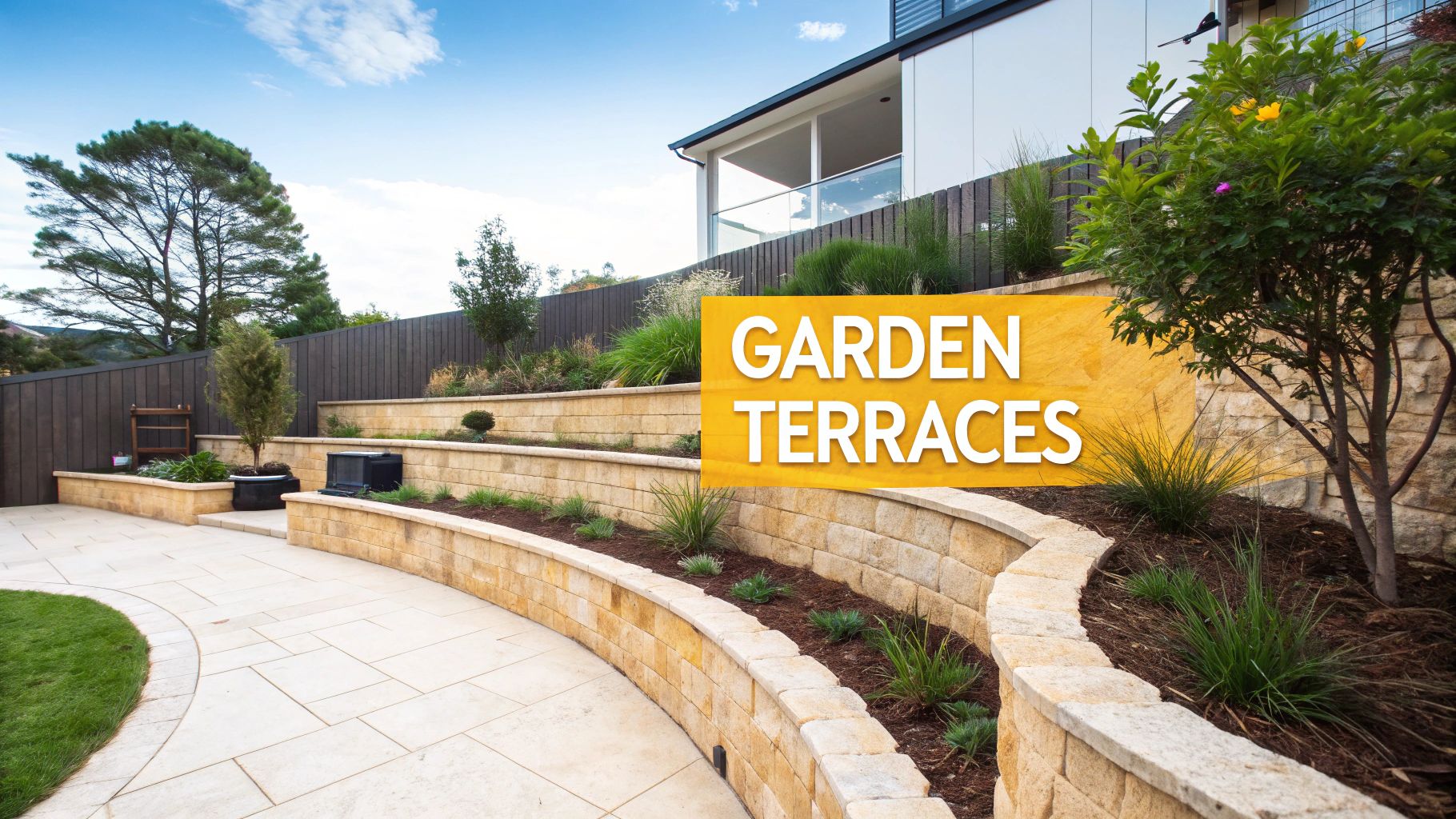
Many Sydney properties, especially across the North Shore or up on the Northern Beaches, are built on challenging slopes. A sandstone retaining wall is the perfect solution here, letting you carve out stunning multi-levelled terraces that turn a difficult block into a major asset.
Imagine turning a steep, unusable backyard in Collaroy into a series of wide, level platforms. Each tier can serve a different purpose, creating distinct “rooms” within your garden. You could have a level lawn for the kids on one terrace, a native garden bed on the next, and a paved entertaining area with a fire pit on the top level. This approach doesn’t just solve erosion issues; it genuinely maximises your usable land.
Elegant Curves and Integrated Features
Straight walls are certainly effective, but curved sandstone walls introduce a soft, organic flow that beautifully complements natural landscapes. A sweeping curve can guide the eye through the garden, creating a sense of movement and making a small space feel larger and more dynamic. This approach works exceptionally well in properties backing onto bushland, like you’d find in the Hills District.
To make your wall even more functional, we can integrate features directly into its design:
- Built-in Seating: Incorporate a wide, flat-topped section of the wall to create robust, permanent bench seating. This is perfect for areas around a fire pit or a quiet corner of the garden.
- Raised Garden Beds: The wall itself can form the border for elevated garden beds. This makes planting and maintenance much easier while adding lush greenery at different heights.
- Integrated Steps: Seamlessly build sandstone steps right into the retaining wall. This provides elegant access between different terrace levels and ensures a completely cohesive look.
A Unified Landscape Design
The real beauty of sandstone is that you can use it throughout your property to create a unified, high-end look. A sandstone retaining wall in Sydney shouldn’t exist in isolation. You can tie your entire landscape together by using the same or complementary stone for other key features.
Think about creating sandstone pathways that meander through your garden, connecting different zones. Around the pool, sandstone pavers and coping are an excellent choice, as their naturally textured surface provides good slip resistance. This cohesive approach ensures every element of your garden feels intentionally designed and harmoniously connected.
For more thoughts on integrating your retaining wall with the overall outdoor aesthetic, explore these inspiring landscaping ideas. While the examples are from across the ditch, the design principles for creating beautiful, functional outdoor spaces are universal. By thoughtfully planning how your wall interacts with the rest of your garden, you can create a truly spectacular result.
Navigating Sydney Council Regulations
Building a sandstone retaining wall in Sydney is about more than just picking the right stone; you absolutely have to get the council side of things right. Getting this wrong can lead to eye-watering fines, council orders to tear down your beautiful new wall, or major dramas with your neighbours. This is one area where you just can’t afford to “wing it.”
Every local council has its own rulebook, but the general principles across Sydney are pretty similar. Your project will usually fall into one of two buckets: exempt development or a project needing a Development Application (DA). Figuring out which bucket your wall belongs in is the first, most critical step.
When is Council Approval Needed?
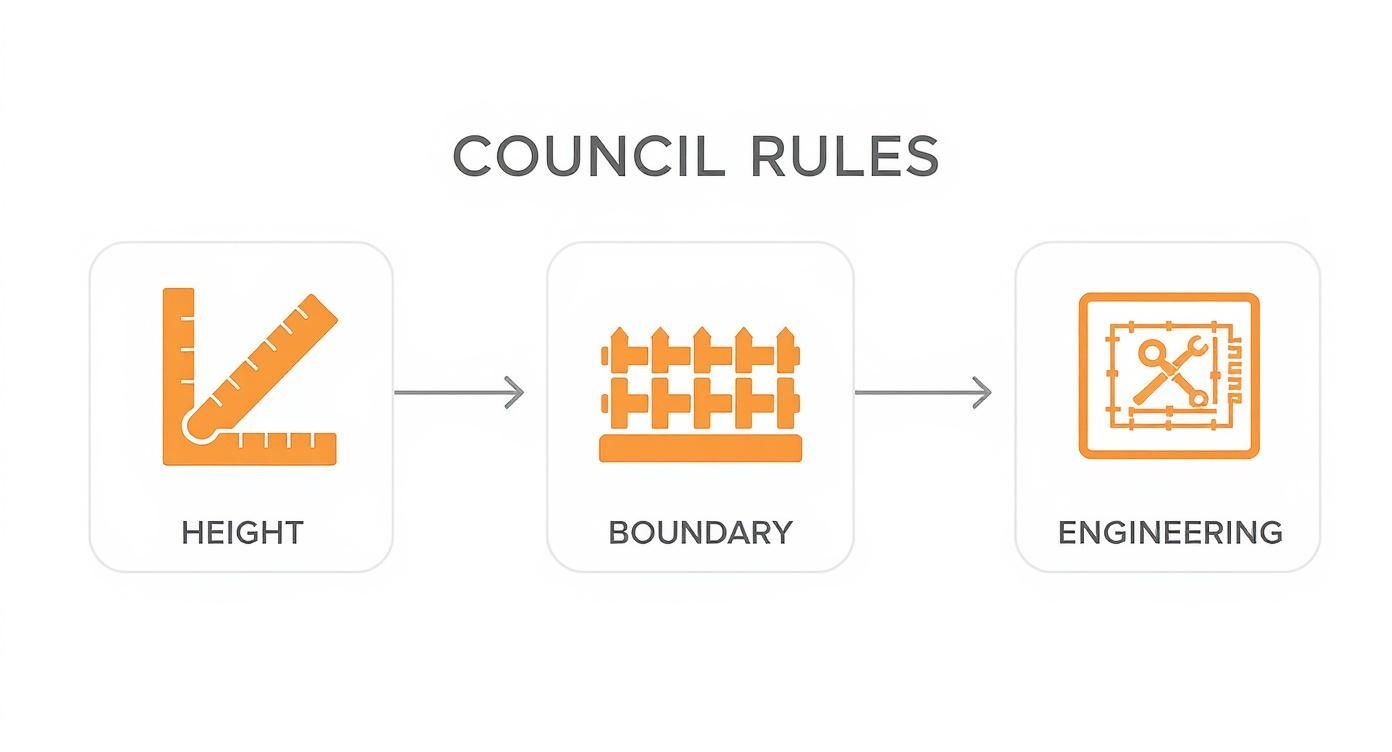
Exempt development is the dream scenario – you can build without formal council approval, but only if you meet a very strict checklist of criteria. While it sounds easy, the rules are tight. If your project steps outside even one of these rules, you’re lodging a DA. The main things that push a retaining wall project into DA territory are almost always related to its height, where it’s located, and the potential impact it could have on the surrounding area.
A few key factors that will almost certainly require a DA include:
- Wall Height: This is the big one. Most councils in Sydney set the exempt height limit at either 600mm or 1 metre, measured from the natural ground level. Go even a centimetre over, and you’ll need approval.
- Proximity to Boundaries: Building your wall too close to a property boundary line will likely trigger the need for a DA. This is all about making sure it doesn’t mess with your neighbours’ land.
- Affecting Drainage: A retaining wall can completely change how rainwater flows across your property and, more importantly, your neighbours’. If your wall might redirect stormwater onto an adjoining property, council approval and proper engineering are non-negotiable.
- Supporting a Structure: If the wall’s job is to hold up another structure—like a building, driveway, or swimming pool—it automatically needs engineering certification and a full DA. No exceptions.
Real-World Sydney Scenarios
Let’s look at a couple of real-life examples. Say you want to build a small, 500mm high garden bed wall right in the middle of your backyard in the Sutherland Shire. It’s well away from any boundaries and not holding anything up. This is a classic case of exempt development.
Now, let’s change the scene. Imagine you’re on a sloping block in Ku-ring-gai and want to build a 1.2-metre-high wall right along your side boundary to create a level lawn. This project would absolutely require a DA. The Ku-ring-gai Council would need to see fully engineered plans to ensure the wall is stable and that you have a bulletproof drainage system to protect your neighbour’s property. A similar project on the Northern Beaches, with its sandy, erosion-prone soils, would face even more intense scrutiny over drainage and structural integrity.
The golden rule is simple: if you’re in any doubt, always check with your local council first. A quick phone call or a browse on their website can save you thousands of dollars and a world of stress down the track.
Getting your head around the full scope of local rules is vital, which is why we’ve put together a more detailed guide on retaining wall regulations in NSW to help you get started. Getting this right from day one ensures your stunning sandstone retaining wall becomes a lasting asset, not a future liability.
Understanding The Wall Construction Process
Putting up a sandstone retaining wall is a job of precision engineering, not just a game of stacking heavy blocks. Getting a feel for the key stages helps you appreciate the skill involved and means you can have a proper, informed chat with your contractor about getting it right the first time. The whole exercise boils down to one thing: creating a rock-solid, well-drained structure that can handle immense pressure for decades to come.
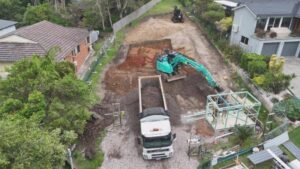
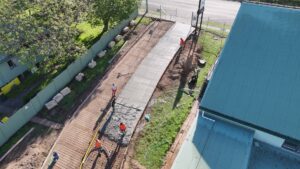
It all starts well before the first block even arrives on site. A thorough site assessment is crucial to flag any potential headaches – think buried pipes, tricky excavator access, or dodgy soil types. After that comes the excavation, which is a lot more involved than just digging a trench. You can get the full rundown on what this stage involves in our detailed guide to site preparation and excavation.
Foundations and Footings
The foundation, or footing, is the unsung hero of your retaining wall. It’s this solid base that takes the immense weight of the sandstone blocks and all the soil behind them, transferring it safely into the ground. Typically, this means digging a deep, wide trench that’s then filled with compacted road base or reinforced concrete.
For a big, engineered sandstone wall anywhere in Sydney, that footing has to be perfect. The ground underneath needs to be compacted to just the right density to stop any future settling, which is what causes walls to lean or, worse, fail. This step is absolutely non-negotiable if you want a wall with long-term stability and structural integrity.
The Critical Role of Drainage
If there’s one single element that determines whether a retaining wall will last for five years or fifty, it’s drainage. Without a proper system to let water escape, even the beefiest wall is living on borrowed time. This pressure, known as hydrostatic pressure, builds up behind the wall after heavy rain and can exert enough force to literally push it over.
To fight this, we install a multi-layered drainage system:
- Geotextile Fabric: This special fabric lines the back of the dig, stopping soil from clogging up the drainage gravel but letting water pass straight through.
- Drainage Aggregate: A thick layer of coarse gravel or crushed rock goes in directly behind the wall. This creates a free-draining void where water can easily travel downwards instead of pushing against the blocks.
- Agricultural Pipe (Agi Pipe): A slotted pipe is laid right at the base of the wall, nestled in the aggregate. It collects all that water and channels it away to a stormwater outlet, well away from the wall’s foundation.
Block Laying Methods
Finally, the sandstone blocks are carefully put in place. There are two main ways to do this: dry-stacking or using mortar. A dry-stacked wall relies purely on the sheer weight and friction of the interlocking blocks to hold it together, often with a slight backward lean (called a ‘batter’) for extra stability. Mortared walls, on the other hand, use cement to bond the blocks, creating one single, rigid structure.
The choice really comes down to the job at hand. A small, decorative garden wall might be dry-stacked. But a huge, engineered wall holding up a driveway or a house on a sloping Castlecrag block will almost certainly be a mortared, steel-reinforced structure built to strict Australian Standards (AS). Getting this right is what we specialise in.
Maintaining Your Sandstone Wall for Longevity
A well-built sandstone retaining wall is a serious, long-term asset for your Sydney property, designed to stand for generations with the right care. Thankfully, sandstone is incredibly low-maintenance. A little bit of attention now and then is all it takes to keep it looking its best and ensure it stands strong for decades to come.
The biggest factor to watch in our local climate is moisture. Sydney’s humid, coastal air can encourage mould, algae, or lichen to take hold on the porous stone surface. While this natural weathering process can add a certain character, you might prefer a cleaner look. If that’s the case, gentle cleaning methods are crucial.
Gentle Cleaning and Care
Whatever you do, don’t be tempted to blast your wall with a high-pressure washer. It might seem like a quick fix, but it can easily strip away the stone’s natural protective layer. This opens up its pores and makes it far more susceptible to future staining and accelerated weathering. It’s an aggressive approach that can cause irreversible damage.
Instead, a simple solution of warm water and a mild, pH-neutral detergent applied with a soft-bristled brush is usually all you need to shift surface grime. For more stubborn organic growth, you can find specialised stone cleaning products. For a good overview of general stone care and upkeep, it’s worth reviewing a general stone cleaning guide.
Checking Your Drainage System
Beyond keeping the surface clean, the single most important maintenance task is to regularly check your drainage outlets. Weep holes and the ends of your agricultural pipes must be kept clear of soil, leaves, and any garden debris. A blocked drainage system is a wall’s worst enemy. It allows hydrostatic pressure to build up, putting immense and unnecessary strain on the entire structure.
A quick inspection every six months, especially after heavy rain, is a great habit to get into. Just make sure water can flow freely from all the outlets. This simple check is the best thing you can do to guarantee the longevity of your sandstone retaining wall in Sydney.
To Seal or Not to Seal
Sealing a sandstone wall is an optional step, but it can offer some extra protection in certain situations. A quality penetrating sealer soaks right into the stone’s pores, creating an invisible barrier that repels water and prevents stains from things like oil or grease.
This is particularly useful in high-traffic or high-use areas. For example, sealing the sandstone around a poolside entertaining area can protect it from saltwater splashes and sunscreen stains. Likewise, sealing a wall near your barbecue will make it much easier to clean up any food or grease splatters.
Historically, the preservation of these beautiful structures has always required ongoing attention. Sydney sandstone generally lasts around 100 years when exposed to the elements, with water getting into the stone being a primary cause of degradation. Proper maintenance is what preserves these assets for the future. You can discover more insights about sandstone preservation efforts at the University of Sydney.
Common Sandstone Wall Questions Answered
We get asked a lot about building sandstone retaining walls in Sydney. To help you get your head around the planning, we’ve put together some of the most common queries we hear from homeowners, along with some clear, straightforward answers.
Do I Need an Engineer for My Sandstone Wall?
This is a big one, and the short answer is almost always yes for any wall that’s doing serious structural work. If your wall is creeping over one metre high, sitting close to a boundary, or holding back a heavy load like a driveway or swimming pool, you absolutely need a structural engineer to design it.
An engineer’s involvement isn’t just a ‘nice-to-have’—it’s non-negotiable for getting council approval. They’re the ones who provide the certified plans that prove your wall is designed to handle the specific soil pressures and loads on your property, making sure it’s both safe and compliant with SafeWork NSW guidelines.
How Long Does It Take to Build?
The timeline for a sandstone retaining wall in Sydney can really vary. A small, simple garden wall might only take a week or so, from the first dig to the last block being laid. Easy.
But a large, complex project that needs a Development Application (DA), engineering plans, and major earthworks could stretch out over several months. Honestly, the approval process with local councils can often be the longest part of the job, sometimes taking weeks before an excavator even hits the ground. Site access also plays a huge role; trying to get machinery into tight spots in suburbs like Paddington or Balmain can slow things down considerably.
What Are the Main Cost Factors?
The cost of a sandstone wall isn’t just about the stone itself. A few key things will shape the final price:
- Size and Height: It’s simple maths. Taller, longer walls need more materials, more labour, and a lot more excavation.
- Type of Stone: Premium, diamond-sawn A-grade blocks will cost you more than rustic, irregularly shaped stone picked up from a quarry.
- Site Access: A tricky site that forces us to use smaller machinery or move materials by hand will naturally add to the labour costs.
- Engineering and Council Fees: These are essential, fixed costs for any wall that needs a formal green light from the council.
Every single project is unique, so the only real way to get an accurate figure is with a detailed, on-site assessment.
Ready to talk about your project? The team at Booms Up Civil has years of hands-on experience building stunning, structurally sound sandstone retaining walls all over Sydney. We can handle everything, from the initial quote right through to the final handover.