
Typing “retaining wall contractors near me” into Google is the easy bit. The real work—and the part that saves you a world of headaches later—starts right in your own backyard.
You see, a simple garden bed wall in Erina is a completely different beast to a serious structural wall holding up a sloped driveway in Terrigal. Nailing down what you actually need before you start searching is the single most important step you’ll take. We’re here to walk you through it, so you can hire with confidence.
First, Define Your Project (Before You Even Think About Searching)
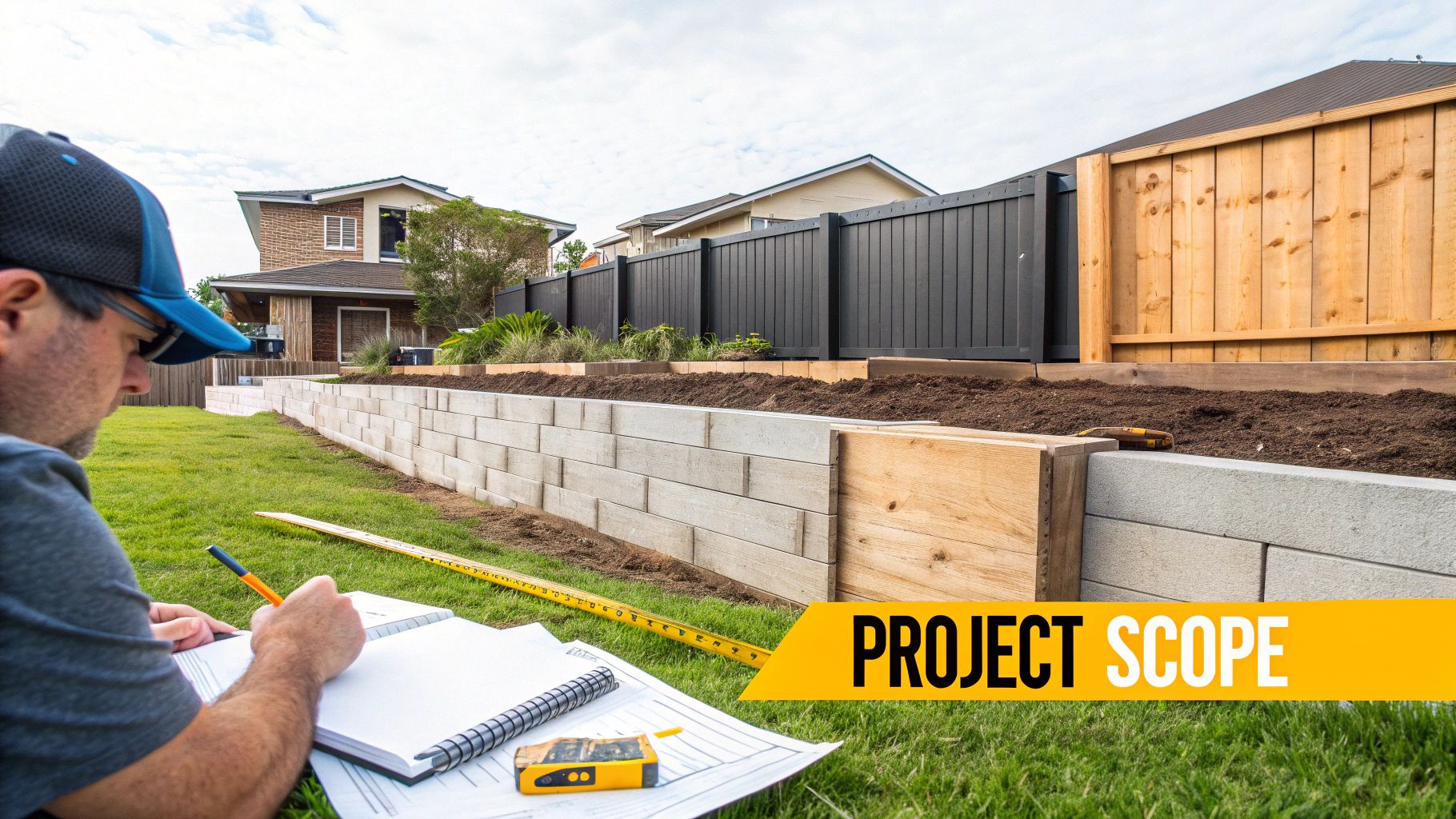
Before you pick up the phone or fire off an email, take a walk around your property. Get a really clear picture of the job at hand. Knowing the answers to a few key questions will make your conversations with contractors infinitely more productive and ensure the quotes you get are actually in the right ballpark.
What’s the Wall’s Main Job?
First up, what is this wall for? Is it purely for looks, like creating a neat tiered garden, or is it doing some serious heavy lifting? A structural wall has a critical job: holding back a massive amount of soil, supporting the weight of a driveway, or stopping a hill from sliding into your house.
This isn’t just a minor detail; it changes everything. For example, a retaining wall for a new carpark has very different requirements than one for a garden bed.
- Engineering Needs: A small, decorative garden wall probably won’t need an engineer’s sign-off. But a wall holding back a heavy load or anything over a metre high? You’ll almost certainly need a structural engineer’s design to meet Australian Standards.
- Material Choice: You’ve got a lot of creative freedom with decorative walls. The classic, natural look of Central Coast sandstone retaining walls is perfect for landscaping features. Structural walls, on the other hand, often need the brute strength of materials like reinforced concrete sleepers.
- Who You Hire: Not every landscaper is licensed or experienced enough to build a big, engineered retaining wall. For that, you’ll be looking for a specialised civil contractor with the right qualifications and a different set of skills.
Get Real About Your Site Conditions
Next, think about the practical side of things. How easy is it to get machinery, like an excavator, onto your property? A tight-access block in a packed Sydney suburb presents a whole different set of challenges than a wide-open property in the Hunter Valley.
Make a note of any potential obstacles. Things like overhead power lines, underground pipes, or big, established trees that need to be protected will all impact the job.
And then there’s the big one: drainage. Poor water management is the number one killer of retaining walls, full stop. Figure out where water naturally flows on your property so you can have an intelligent conversation with a contractor about a proper drainage plan. Get this part right, and your wall will be standing strong for decades to come.
Verifying Licences and Insurance

Alright, you’ve got a shortlist of potential contractors. Now comes the single most important step: making sure they’re legit. This is more than just ticking boxes; it’s about protecting your property, your money, and yourself from a world of financial pain.
Anyone can buy a ute and a few shovels, but building a structural retaining wall on the Central Coast that’s safe and legal requires proper credentials.
In NSW, the type of licence a contractor needs hinges on the job’s complexity. For almost any significant retaining wall, they’ll need either a Structural Landscaping licence or a full Builder’s Licence. This isn’t just red tape—it’s your proof that they have the required skills and knowledge to build something that meets Australian Standards and won’t fall over in the first big storm.
Checking a Contractor’s Licence
Thankfully, verifying a licence is dead simple. You can—and absolutely should—run a quick check on the Fair Trading NSW website. All it takes is the contractor’s name or their licence number.
This simple, two-minute check is your best defence against unqualified operators. A valid licence confirms they are recognised by the state, have met the required qualifications, and are accountable for their work. An unlicenced operator offers you zero protection if things go wrong.
The Non-Negotiables: Insurance Coverage
A licence is only one half of the puzzle. Insurance is the critical safety net that shields you from worst-case scenarios. Just imagine an excavator accidentally hitting a water main, or damaging your neighbour’s fence in Gosford. Without the right insurance, the liability—and the bill—could land squarely on your shoulders.
When you’re talking to Central Coast retaining wall contractors, always ask to see their Certificate of Currency. This is a live document that proves their insurance is active. There are two key types you must see:
- Public Liability Insurance: This covers damage to property or injury to people. A reputable contractor should carry at least $10 million in coverage, but $20 million is the industry standard for any serious civil works.
- Workers Compensation Insurance: This is mandatory for any business with employees. It covers them if they get injured on your site, protecting you from potential legal action.
Verifying these details gives you peace of mind and is a massive green flag that you’re dealing with a professional, responsible business. A legitimate contractor will always be happy to provide this documentation. For more tips on vetting trades, our guide on finding reputable excavation companies near me has some extra pointers that can help.
How to Read a Retaining Wall Quote (and Spot the Red Flags)
Getting a few quotes is a smart first step, but the real skill is learning how to read between the lines. Let’s be frank: the cheapest quote is rarely the best one. More often than not, it’s a giant warning sign that critical corners are about to be cut.
A professional quote from a reputable retaining wall contractor on the Central Coast is far more than just a price; it’s a detailed plan of action.
When those quotes land in your inbox, your eyes will naturally drift to the bottom line. Force them back up. Look for a detailed scope of works. This section should clearly outline every single step, from the initial excavation depth and soil removal to the type and amount of backfill being used.
Vague descriptions like “supply and install retaining wall” are a massive red flag. That’s not a plan; it’s a guess.
What a Good Quote Looks Like
A quality quote will break down the costs so you can see exactly what you’re paying for. It’s about transparency.
It should specify the exact materials being used—not just “concrete sleepers,” but their strength rating (e.g., 40MPa) and the type of steel posts (e.g., hot-dip galvanised). It will also clearly list allowances for soil removal, drainage materials like ag-pipe and geofabric, and labour costs.
A transparent, itemised quote is the hallmark of a professional contractor. It shows they’ve thought the project through properly and are confident in their pricing, rather than hiding costs in a single, confusing figure. This level of detail protects you and ensures there are no nasty surprises down the track.
Common Red Flags to Watch For
The cheapest quote often becomes the most expensive one when the wall fails a few years later. It’s a painful lesson many homeowners learn the hard way.
Here are the warning signs we always tell people to look out for:
- Pressure to Sign Immediately: A contractor who pressures you into a quick decision is usually best avoided. Good builders have a steady stream of work; they don’t need to use high-pressure sales tactics.
- Massive Upfront Deposits: Be wary of anyone demanding more than a 10% deposit before work begins. In NSW, this is the legal limit for most residential projects, and for good reason.
- No Mention of Drainage: If drainage isn’t explicitly listed with materials like gravel, ag-pipe, and fabric, run a mile. It’s the single most important factor in a wall’s longevity, and skipping it is unforgivable.
- Vague Material Specs: “Treated pine” isn’t enough info. The quote should specify the treatment level (e.g., H4 for in-ground use). Similarly, understanding the factors that influence the price of different materials, as outlined in guides to sandstone retaining wall cost, can help you spot when a quote is too good to be true.
To make it even clearer, here’s a quick way to compare the quotes you receive.
Comparing Retaining Wall Quotes: A Quick Checklist
When you lay quotes side-by-side, it can be tough to see what really matters. This checklist helps you separate the comprehensive, professional quotes from the risky, bare-bones ones that could spell trouble.
| Checklist Item | What a Good Quote Includes | Red Flag to Watch For |
|---|---|---|
| Scope of Works | A detailed, step-by-step description of the entire process from excavation to clean-up. | A single line item like “Build retaining wall.” |
| Materials List | Specifics are provided: e.g., “40MPa concrete sleepers, H4 treated pine, galvanised steel posts.” | Vague terms like “concrete sleepers” or “timber posts” with no specs. |
| Drainage System | Clearly itemises drainage components: e.g., “ag-pipe, geofabric, 20mm drainage gravel.” | No mention of drainage, or a vague “drainage included” note. |
| Labour Costs | Labour is listed as a separate line item or included in a clear, all-inclusive price. | Labour costs are hidden or bundled ambiguously with materials. |
| Inclusions/Exclusions | Clearly states what is covered (e.g., soil removal) and what isn’t (e.g., council fees). | No mention of what happens with excavated soil or other potential extra costs. |
| Payment Schedule | A clear schedule with a deposit (max 10% in NSW) and progress payments tied to milestones. | A demand for a large upfront deposit before any work starts. |
| Licence & Insurance | Contractor’s licence number and insurance details are printed on the quote. | No licence number or any mention of insurance coverage. |
A quote that ticks all the boxes in the “Good Quote” column is from a contractor who respects their craft and their clients. A quote full of red flags is a sign to steer clear, no matter how tempting the price.
Ultimately, learning how to choose a service provider wisely to avoid wasting your investment is a skill that applies here, too. Choosing a contractor based on true value, detailed planning, and long-term quality will always, always pay off.
Navigating Engineering and Council Approvals
One of the biggest surprises for homeowners is discovering that their retaining wall might need an engineer’s design and a tick of approval from the local council. This isn’t just bureaucratic red tape. It’s a critical process that ensures your wall is safe, legal, and built to last.
A quality contractor won’t just build your wall—they’ll guide you through this minefield from start to finish.
In NSW, certain triggers almost always mean you’ll need to involve an engineer. The most common one is height. Any retaining wall over one metre high generally requires a structural engineer’s design to comply with Australian Standards, like AS 4678 for earth-retaining structures.
But it’s not just about height. If the wall is supporting a heavy load (what we call a surcharge), like a swimming pool, a driveway, or even just a steep embankment, engineering is non-negotiable. The same goes for walls built close to a property boundary, as your project could seriously impact your neighbour’s land.
The Professionals Involved and Why They Matter
Navigating this process involves a few key experts, each with a specific role. A good contractor coordinates these professionals, so you don’t have to juggle them yourself.
- Geotechnical Engineer: They’re the ones who investigate your site’s soil conditions. A “geotech” report is vital on tricky blocks, like those with the reactive clays found inland from the Central Coast or areas with poor stability. This report tells the structural engineer exactly what they’re working with.
- Structural Engineer: This is the professional who actually designs the wall. Using the geotech report and site plans, they create detailed construction drawings specifying the footing depth, steel reinforcement, drainage design, and material strength required to handle the specific loads on your property.
This upfront investment in proper engineering is what separates a wall that stands for 30 years from one that starts leaning after the first big downpour. We’ve seen firsthand how skipping this step leads to catastrophic, costly failures. For a deeper dive into the rules, our guide on retaining wall regulations in NSW covers the specifics.
Working with Your Local Council
Once the engineering designs are complete, the next hurdle is often a Development Application (DA) or a Complying Development Certificate (CDC) application with your local council, whether it’s Central Coast Council, Newcastle Council, or another body.
This process ensures your project complies with local planning rules and building codes. An experienced contractor handles this submission for you, providing all the necessary documents and plans. This saves you an enormous amount of time and stress and makes sure everything is lodged correctly the first time.
The infographic below offers a simple way to determine if a quote you’ve received is a good sign or a red flag.
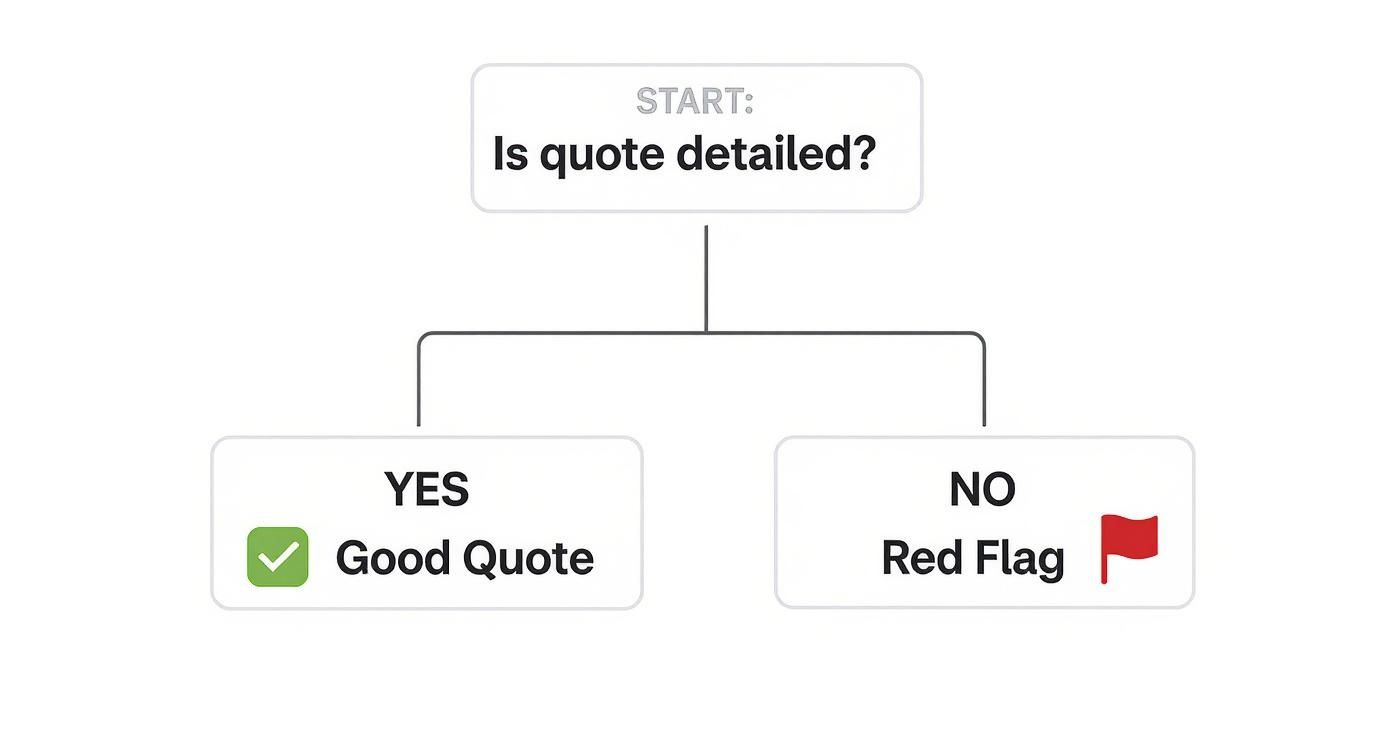
As this decision tree highlights, a detailed quote that includes allowances for engineering and approvals is a key indicator of a professional contractor. Anyone who glosses over this is waving a massive red flag.
This focus on compliance is part of a broader trend across Australia, where retaining walls are crucial for urban development and transport infrastructure. Major works, like the Ovingham Level Crossing Removal Project in Adelaide, showcase how essential engineered retaining systems are in large-scale civil projects. Learn more about the role of retaining walls in major Australian infrastructure projects.
Essential Questions to Ask a Potential Contractor

You’ve checked their licence and looked over the quotes. Now comes the most important part: the conversation. This isn’t just a box-ticking exercise; it’s your opportunity to see how a contractor really thinks. The right questions will tell you far more than any document ever could.
A good contractor will answer your questions with confidence and detail. Their responses should make you feel secure in their abilities, not leave you with a fresh set of worries.
Experience With Local Conditions
First, get specific about where you live. A retaining wall built to handle the sandy, coastal soils of Wamberal is a completely different beast to one needed for the reactive clay you find as you head inland towards Wyong.
Ask them straight up: “What’s your experience building on the specific soil type we have here?”
A truly experienced builder won’t just say “yep, done heaps of them.” They’ll talk about the challenges they anticipate, like needing deeper footings for sandy soil or the critical drainage strategies required for clay. This shows they’re not just following a generic plan but are thinking about your specific site. It’s especially true for projects like sandstone retaining walls, where understanding local geology is key to a long-lasting structure.
Problem-Solving and Contingencies
Let’s be realistic: no project goes perfectly to plan. Unexpected issues pop up. The mark of a true professional is how they prepare for these curveballs.
Throw a hypothetical scenario at them: “What’s your process if you start digging and hit a huge chunk of sandstone rock or find an old pipe that wasn’t on any plans?”
A vague response here is a major red flag. A pro will have a clear, step-by-step process. They’ll explain that they would stop work immediately, assess the situation, contact you directly to explain the problem, and then provide a clear, costed variation for your approval before doing any extra work. This shows they are transparent and won’t just hit you with a surprise bill at the end.
Safety, Communication, and Past Work
Finally, you need to feel confident you’re hiring a partner, not just a builder. How they manage the worksite and keep you in the loop is every bit as important as the quality of the wall itself.
Asking sharp, specific questions helps you move beyond the quote and understand the character and competence of the contractor you’re about to trust with your property. It’s about choosing a problem-solver who prioritises getting the job done right, the first time.
Wrap up the conversation with these crucial questions:
- How do you ensure site safety, especially with my family/pets around? You’re looking for clear answers about secure fencing, proper signage, and a commitment to daily site clean-ups.
- How often will I receive updates on the project’s progress? A good contractor will set a clear communication schedule, whether it’s a quick chat each day or a more detailed summary at the end of the week.
- Can you provide references for a similar project completed locally in the last year? This is the ultimate proof. It shows they have a solid reputation right here in your community.
Your Retaining Wall Questions, Answered
Over the years, we’ve had countless conversations with homeowners across the Central Coast and Hunter Valley about their retaining wall projects. It’s a big investment, and naturally, a lot of the same questions pop up. Here are the straight-up answers to the ones we hear most often.
What Is the Best Material for a Retaining Wall on the Central Coast?
Honestly, it all comes down to a balance between your budget, what the wall actually needs to do, and the final look you’re going for.
Concrete sleepers are the workhorse of the industry. They’re incredibly strong, built to last, and cost-effective, which makes them our top recommendation for serious structural walls that are holding back a lot of earth. If aesthetics are a higher priority and you want a more natural, premium finish for your landscaping, you can’t go past sandstone blocks. They’re a classic for a reason and blend beautifully into the local environment.
And what about timber? Treated pine can be a solid, budget-friendly choice for smaller, decorative garden walls, say under a metre high. A good contractor will never give you a one-size-fits-all answer; they’ll properly assess your site, look at the soil type, and calculate the load the wall has to bear before even thinking about recommending a material.
How Important Is Drainage Behind a Retaining Wall?
Let me be blunt: it is absolutely critical. We can’t overstate this. Improper drainage is the undisputed, number one reason retaining walls fail.
When water gets trapped behind a wall with nowhere to go, the hydrostatic pressure that builds up is immense. It’s a relentless force that will eventually make your wall lean, crack, or completely collapse. No ifs, no buts.
Any professional installation must include a full drainage system. This isn’t an optional extra. It means laying a slotted agricultural pipe (ag-pipe) at the base, wrapping it in geofabric so it doesn’t get clogged with silt, and backfilling with a free-draining material like blue metal gravel. This system gives water an easy escape route, protecting your wall for decades to come.
How Long Does a Typical Wall Project Take?
The on-site build time is usually quicker than people think. For a standard residential wall—let’s say we’re building one around 20 metres long and under 1.2 metres high—the crew will likely be on-site for anywhere between three and seven days.
But that’s just the construction part. You’ve got to factor in the whole journey. The pre-construction phase, which covers site assessments, quoting, any engineering design, and potentially waiting on council approvals, can easily take several weeks. It’s really important to account for this planning time when you’re mapping out your project timeline.
Who Is Responsible for Removing the Excavated Soil?
This needs to be spelled out, black and white, in your written quote. Any professional, reputable contractor will include the cost of removing and legally disposing of all the excess soil from your property as a standard part of their service. It’s just part of the job.
If you don’t see this listed as a specific line item, you absolutely must ask about it. Leaving the homeowner with a giant pile of dirt to figure out themselves is a classic corner-cutting trick. It’s a way for less scrupulous operators to make their initial quote seem artificially low. Don’t get caught out.
Ready to talk about your retaining wall project with a team that does things right the first time? At Booms Up Civil Group, we have over 15 years of experience building compliant, long-lasting retaining walls across the Central Coast, Sydney, and Newcastle.
Get in touch today for a free, no-obligation site assessment and quote.