
Tired of scrolling through endless search results for “concrete driveway contractors near me”? It can feel like a bit of a lottery, especially when you’re looking for a team across the Central Coast, Sydney, or Newcastle. The goal isn’t just to get concrete poured; it’s to find a local expert who will deliver a high-quality finish that looks fantastic and is genuinely built to last.
A true professional brings much more than just labour to the job. We’re your source of crucial advice on design, materials, and making sure everything is above board with council regulations. This guide will walk you through what to look for, the design options available, and how the whole process works from the ground up.
What to Expect from a Quality Driveway Contractor
When you start your search, remember you’re not just hiring someone to pour and finish concrete. A top-tier contractor becomes your project partner, walking you through every single stage to make sure the final result not only meets your vision but also ticks all the local compliance boxes.
With over 15 years of hands-on experience right here on the Central Coast, we’ve learned one thing for sure: a successful project is built on a foundation of clear communication and expert planning long before the first excavator even shows up on site.
Beyond the Concrete Pour
A genuinely professional service covers the entire scope of the project, from the ground up—not just the bit you see on top. This comprehensive approach is what separates a quick fix from a long-term investment that adds real value to your home.
When you’re vetting the best local driveway contractors, it’s a good idea to check their specific local concrete service offerings and areas to make sure they can handle your project from start to finish.
This means your chosen contractor should be all over:
- Initial Site Assessment: Getting out to your property to properly evaluate its unique conditions. This means checking everything from soil type (like our sandy coastal soils versus inland clay), the slope of the land, and where water is going to run.
- Council Compliance: Making sure the proposed driveway crossover and any stormwater management solutions are fully compliant with Central Coast Council or Newcastle Council guidelines. This is a big one, and getting it wrong can be a costly headache.
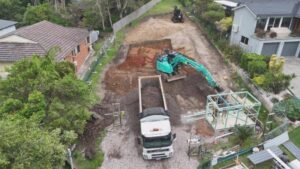
- Full Site Preparation: Managing the entire prep phase, which includes excavation, laying and compacting the sub-base, setting up the formwork, and placing the steel reinforcement.
- Material Selection: Giving you solid advice on the right concrete strength (measured in MPa) and the best finish for your home and budget, whether that’s a stylish exposed aggregate or a classic coloured concrete.
A great contractor doesn’t just throw a price at you; they give you a clear, logical plan. We take the time to explain why certain steps are non-negotiable, like achieving proper sub-base compaction on the reactive clays you find in parts of the Hunter Valley, which is essential to prevent cracking and subsidence down the track.
Ultimately, finding the right team for your Central Coast concreting services comes down to choosing a partner who is absolutely committed to getting the job right the first time. This is the only way to ensure your new driveway not only boosts your home’s kerb appeal but also provides a safe, durable surface for decades to come.
Exploring Modern Concrete Driveway Finishes
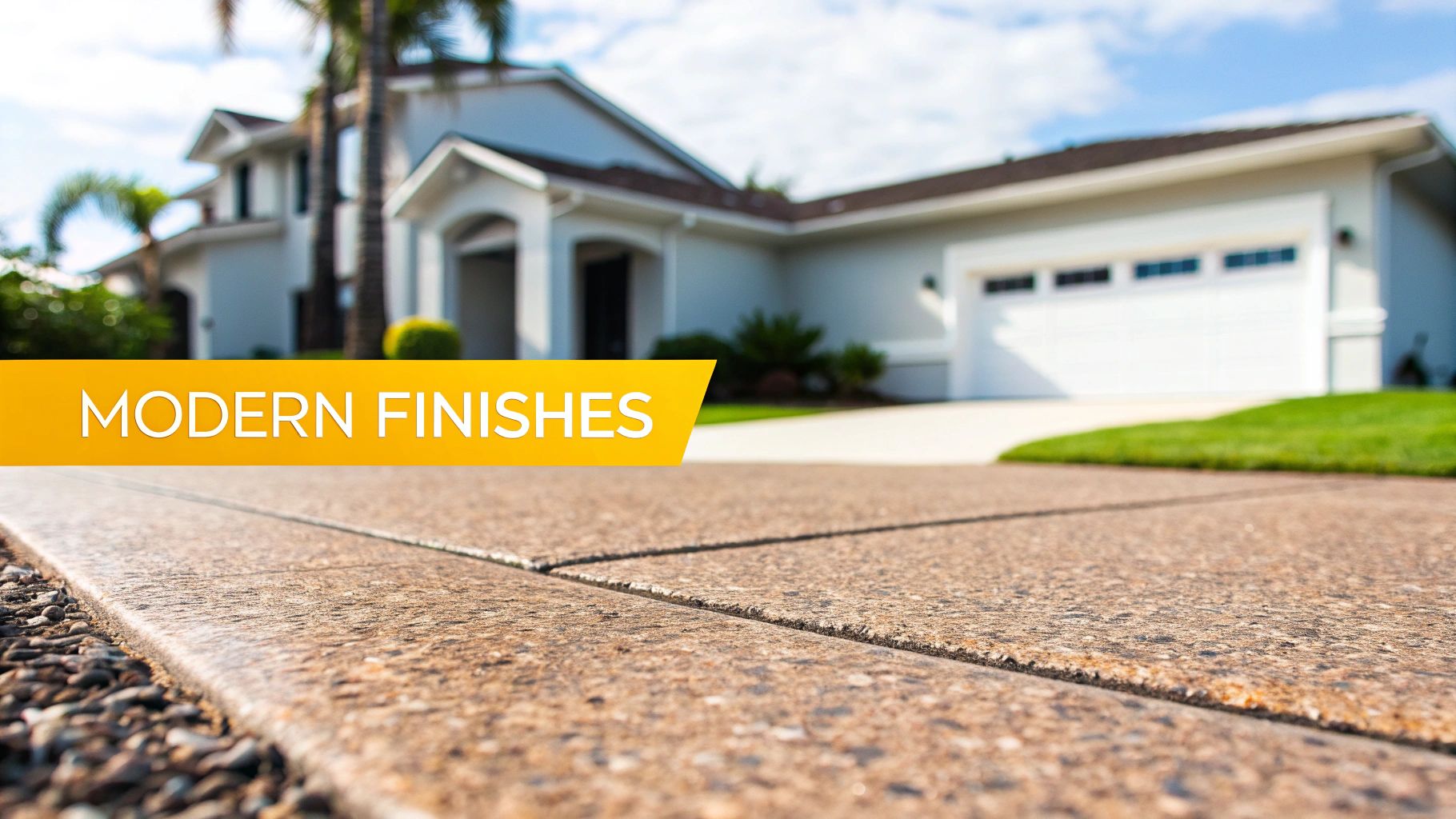
Your driveway is more than just a place to park the car; it’s a massive part of your home’s first impression. And while a standard grey slab is perfectly functional, modern concrete offers a huge range of design possibilities that can dramatically lift your kerb appeal.
Choosing the right finish isn’t just about looks, either. It’s also about performance, safety, and longevity—especially in our unique coastal climate. These days, concrete is a seriously versatile design material. You can customise its colour, texture, and even pattern to perfectly match your home’s architectural style and landscaping. Let’s dig into the most popular decorative options we see across the Central Coast and Hunter Valley.
Exposed Aggregate: A Coastal Favourite
Exposed aggregate is hands down one of the most popular finishes for driveways from Terrigal to Newcastle, and for good reason. The process involves washing away the top layer of cement paste to reveal the natural stones, pebbles, and sand mixed within the concrete. This creates a beautifully textured, multi-tonal surface that just works.
Its biggest benefit is its excellent slip resistance. The textured surface provides fantastic grip for both tyres and feet, which is a huge safety advantage on sloping driveways or in areas that get a lot of rain. Its rugged, natural look also complements coastal homes and native landscaping perfectly. For example, imagine a steep block in Avoca Beach; an exposed aggregate driveway provides serious peace of mind on those wet, slippery mornings.
Coloured Concrete: For A Cohesive Look
If you’re after a more uniform and modern appearance, coloured concrete is a brilliant choice. This isn’t a paint or a stain applied later on. Instead, colour pigments are mixed right through the entire concrete batch before it’s even poured. This technique, known as integral colouring, makes the colour permanent. It won’t flake, peel, or wear away over time.
This method allows you to perfectly match your driveway to your home’s roof, gutters, or overall colour scheme. Consider this scenario: a sleek charcoal driveway complementing a modern home in Kincumber, or a warm terracotta tone that enhances a classic brick house in the Hunter Valley. Because the colour is part of the concrete itself, minor scratches or chips are far less noticeable.
The key to a great coloured concrete job is consistency. A skilled contractor ensures the pigment is mixed evenly and that every batch for a large pour is identical. This avoids any blotchy or mismatched sections and is absolutely crucial for a flawless finish.
Stamped Concrete: The Best Of Both Worlds
Stamped concrete offers incredible design flexibility, letting you replicate the look of more expensive materials like slate, pavers, or cobblestone for a fraction of the cost. After the concrete is poured and levelled, large rubber mats with patterns are pressed into the surface while it’s still pliable. This gives you the durability and low maintenance of a solid concrete slab with the high-end look of individual stones.
Let’s say you love the look of a classic cobblestone entrance but are worried about the cost and upkeep. Stamped concrete is the perfect practical solution that delivers a similar visual punch. You get to avoid the common headaches of pavers, like weeds growing through the gaps or individual units sinking and becoming uneven over time. For a deeper look at how these finishes perform in our local conditions, you can explore more about concrete driveways on the Central Coast in our detailed guide.
What to Look for in a Concrete Driveway Contractor
Choosing the right contractor is hands down the most critical decision you’ll make for your new driveway. The quality of the finish, its long-term durability, and whether it meets council standards all come down to the skill and professionalism of the team you hire. It’s about looking past the dollar figure on a quote to find a true partner who has the right credentials, proven local experience, and a genuine commitment to quality.
When you search for “concrete driveway contractors near me,” you’re not just looking for a crew that can pour concrete. You need someone who gets our local conditions, not a team just passing through town. This section is your practical checklist for sorting the pros from the pretenders so you can hire with total confidence.
Verifying Licences and Insurance
This is the first hurdle, and it’s non-negotiable. In New South Wales, any contractor doing residential building work valued at more than $5,000 (including labour and materials) must hold a valid NSW Fair Trading licence. Think of this as your first line of defence against unqualified operators and shoddy work.
You can—and absolutely should—check a contractor’s licence online using the Service NSW website. It’s a quick, simple check that confirms they are registered, qualified, and legitimate. Just as important is their insurance. Any reputable contractor must carry current public liability insurance. This protects you and your property if an accident or damage occurs on-site. Don’t be shy about asking to see their Certificate of Currency; it’s a standard request, and a true professional will have it on hand without any fuss.
Why Local Experience Is Crucial
A contractor who has spent years pouring concrete on the Central Coast brings a wealth of knowledge that you just can’t buy. They know firsthand that the sandy, well-draining soils in a suburb like Wamberal are a world away from the reactive clay you find further inland towards Somersby or in parts of the Hunter Valley.
This local expertise means they can spot potential issues long before they become expensive problems. For instance, they’ll know exactly what kind of sub-base preparation is needed for clay soils to stop your driveway from heaving and cracking over time. They’ll also know the best drainage solutions for a sloping block in Terrigal. This is the kind of insight that ensures your driveway is built to last in our specific environment.
Assessing Their Portfolio and Communication
Don’t just take their word for it—ask to see a portfolio of their completed jobs. You’re looking for crisp, high-quality photos of projects that are similar to what you have in mind. If you’re after an exposed aggregate finish, make sure they can show you several stellar examples they’ve personally completed.
When you look at their photos, pay close attention to the small stuff. Are the edges clean and straight? Is the colour consistent across the slab? Do the control joints look neat and thoughtfully planned? Finally, get a feel for their communication style from the very first phone call. Do they get back to you promptly and give you clear answers? A contractor who communicates well from the get-go is far more likely to manage the project smoothly.
A contractor’s portfolio is their resume. You’re looking for proof of consistent, high-quality workmanship, not just one or two good photos. It’s about seeing the pride they take in their craft across multiple projects.
It also helps to understand the bigger picture. The Australian concrete market is a massive sector, which fuels both innovation and a high demand for skilled professionals. You can dive deeper into Australian concrete market trends on imarcgroup.com. And remember, the real work for a new driveway often starts below the surface. If your site needs significant earthworks, make sure you understand the scope of local excavation services near me and confirm whether your chosen contractor can manage that process as well.
How to Get and Compare Quotes the Right Way
Getting a quote for your new driveway should feel like you’re being handed a clear, professional project plan, not just a single number scribbled on the back of a business card. A detailed quote is your single best tool for understanding exactly what you’re paying for. It’s the only way to spot potential hidden costs and make a smart decision when you’re weighing up local concrete driveway contractors.
A professional, written quote breaks down every single component of the job. This kind of transparency is the hallmark of a contractor who is confident in their process and has nothing to hide. Vague, one-line prices? They’re a massive red flag and often the first step towards a budget blowout down the track.
What to Demand in a Driveway Quote
When you ask for a quote, be specific. Tell them you want an itemised breakdown that covers every stage of the project, from the moment they arrive to the final clean-up. This is how you compare apples with apples, making sure each contractor is actually pricing the exact same scope of work.
A proper, comprehensive quote must always include:
- Site Preparation: This isn’t just “digging”. It should detail all excavation, the complete removal of any old surfaces (like old pavers or cracked concrete), and confirm spoil disposal is included.
- Sub-base Work: It needs to specify the supply, placement, and compaction of the road base material. This is a non-negotiable step for the driveway’s longevity.
- Formwork and Reinforcement: Look for details on setting up the formwork and, crucially, the type and placement of the steel reinforcement mesh (e.g., SL72 mesh).
- Concrete Supply: The quote absolutely has to state the concrete strength (in MPa) and the total volume in cubic metres. For a standard Aussie driveway, you should be seeing at least 25 MPa strength concrete.
- Labour and Finishing: This covers the cost for the whole concrete pour, the team needed to place and finish it, and the specific finish you’ve asked for.
- Site Clean-up: A professional job always ends with a tidy site. The quote should explicitly state that all construction rubbish and formwork will be removed.
Why the Cheapest Quote Is Rarely the Best Value
It’s human nature to gravitate towards the lowest price, but in concreting, this is almost always a recipe for disaster. A suspiciously cheap quote usually means corners are being cut somewhere. Maybe they’re skimping on the sub-base, ordering lower-strength concrete, or not installing the steel reinforcement correctly. These shortcuts might save a few dollars now, but they lead to premature cracking, sinking, and a driveway that fails years before it should.
Imagine this: you get a quote for a job in Gosford that’s $2,000 cheaper than the others. Great! But when you look closer, it doesn’t mention soil removal or specify the concrete’s MPa strength. That $2,000 “saving” evaporates the second you’re hit with unexpected costs for a tipper, or worse, when your driveway starts cracking in a couple of years.
A quality driveway is an investment in your property. Paying a bit more for a contractor who uses the right materials and follows the correct procedures is far better value than paying twice to fix a failed job later.
The cost of a driveway can vary a lot based on these factors. Here in Australia, costs also depend on your location and the finish you choose. For plain concrete in New South Wales, you can expect to pay anywhere from $90 to $140 per square metre. If you’re after something more decorative like exposed aggregate, that price can climb to over $200 per square metre. To get a feel for how prices vary nationally, you can find more detail on sites like servicetasker.com.au.
Essential Checklist For Comparing Concrete Driveway Quotes
To make comparing quotes less of a headache, it helps to put everything side-by-side. A simple checklist or spreadsheet lets you see exactly where the differences are and prompts you to ask the right questions. Here’s a quick guide to what separates a professional quote from a risky one.
| Checklist Item | What A Good Quote Includes | Red Flags In A Vague Quote |
|---|---|---|
| Excavation | Specifies depth and includes spoil removal. | “Site prep” with no detail on soil disposal. |
| Sub-base | Details material type and compaction method. | No mention of a sub-base layer at all. |
| Reinforcement | Confirms steel mesh type (e.g., SL72). | “Reinforcement included” with no specifics. |
| Concrete Spec | States concrete strength (e.g., 25 MPa). | No mention of MPa or concrete grade. |
| Finishing | Clearly describes the agreed finish (e.g., exposed aggregate). | Vague terms like “concrete finish.” |
| Clean-up | Includes removal of all rubbish and formwork. | No mention of site clean-up. |
| Total Cost | Includes GST and is clearly itemised. | A single lump-sum figure with no breakdown. |
By taking this structured approach, you stop comparing just the final number. Instead, you start comparing the actual value, the standard of workmanship, and the long-term quality being offered by each contractor. This is how you find a reliable partner for your project and guarantee your new driveway is built to last.
The Driveway Installation Process from Start to Finish
Knowing what’s actually involved in getting a new driveway helps you keep tabs on the project and means there are no nasty surprises. Any experienced concrete contractor worth their salt will follow a clear, logical process from start to finish. It’s the only way to guarantee a quality job that will last for decades. Let’s walk through the entire job, stage by stage, so you know exactly what’s happening on your property and why every step is so important.
This visual guide breaks down the simple process of finding the right crew for your project.
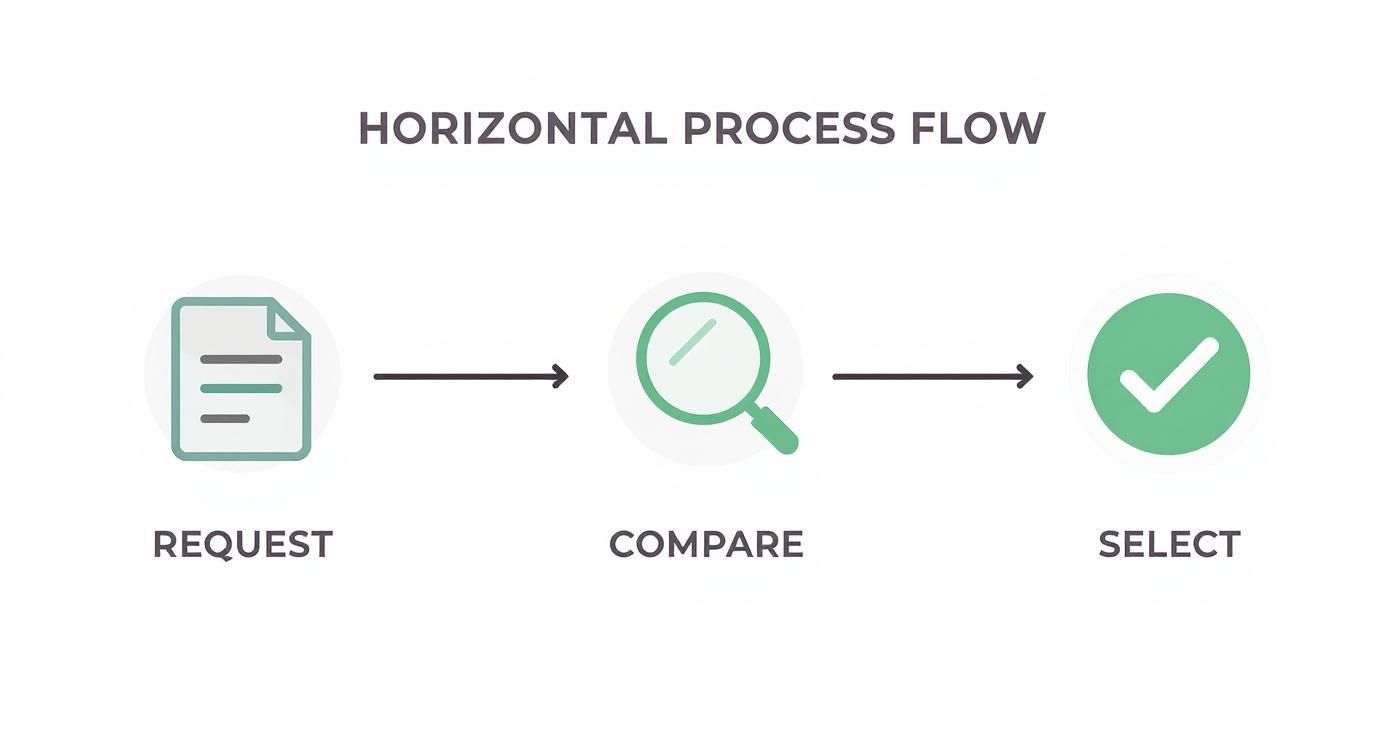
The main takeaway here is pretty simple: a structured approach always wins. Taking the time to get detailed quotes, comparing them properly, and choosing a qualified professional is the secret to a great result.
Stage 1: Site Preparation and Sub-Base
This is, without a doubt, the most critical part of the entire job, and it all happens before a single drop of concrete arrives. Get the foundation right, and everything else falls into place. The process kicks off with a proper excavation to the required depth, getting rid of any old surfaces, grass, and unstable topsoil.
For instance, if we’re working on a Central Coast property with that notorious reactive clay soil, we’ll likely need to dig deeper. Then we’ll bring in a specific type of road base to build a stable, non-reactive foundation. This is what stops the ground from swelling and shrinking with moisture, which is the number one cause of those huge, ugly cracks you see on cheap driveways. You can get a much deeper understanding of this crucial groundwork in our guide on professional site preparation and excavation.
Drainage is the other massive piece of the puzzle at this stage. Poor water management will destroy even the most perfectly poured slab. That’s why we make sure to install essential driveway drainage solutions, including polymer concrete channels, to handle stormwater runoff and protect the slab from being undermined.
Stage 2: Formwork and Reinforcement
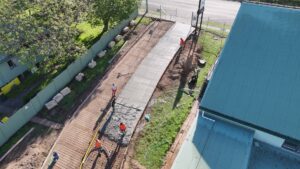
Once the sub-base is perfectly compacted and graded, it’s time to set up the formwork. Think of this as the temporary timber or steel frame that acts as a mould, defining the final shape and level of your driveway. We take extreme care here to make sure the forms are dead straight, completely secure, and set to the exact height to create the right fall for water drainage.
Next up, we lay the steel reinforcement mesh. For any slab in Australia that’s going to have a vehicle on it, this is non-negotiable. The steel mesh is propped up on plastic “chairs” to hold it right in the middle of the concrete’s thickness, which is where it delivers the most tensile strength. This reinforcement is what helps the concrete fight off cracks under the heavy loads of cars, caravans, or the boat.
We always use steel mesh that complies with Australian Standards (AS/NZS 4671). Cutting corners on reo is a classic false economy that will absolutely lead to structural failure down the line. It’s a risk we’re never willing to take.
Stage 3: The Concrete Pour and Finish
This is the big day when it all comes together. The concrete, mixed to a specific strength (usually a minimum of 25 MPa for driveways), is delivered by truck. We then pour it into the formwork, carefully spreading it out to get even coverage and making sure it flows all around the steel mesh.
The concrete’s workability, known in the trade as its “slump,” is key here. It has to be fluid enough to work with, but not so wet that it compromises the final strength. Our crew then uses screeds to level the surface, followed by bull floats to smooth it out and bring the finer particles to the top for a pristine finish. Depending on what you’ve chosen, this is when we apply the final touch—whether that’s a non-slip broom finish, exposed aggregate, or stamped pattern.
Stage 4: Curing and Control Joints
The job’s not over just because the concrete is smooth. The last, and absolutely vital, step is curing. Proper curing is what allows the concrete to reach its maximum design strength and durability. It involves keeping the surface moist for several days, which we usually do by applying a special curing compound that seals the water in.
If you rush this part, you end up with a weaker slab that has a dusty, brittle surface. Finally, within 24 hours of the pour, we cut control joints into the slab at strategic points. These planned grooves encourage the concrete to crack in a neat, straight line as it naturally shrinks over time. It’s a simple step that prevents those random, ugly cracks from zigzagging across your beautiful new driveway.
Understanding Council Rules and Australian Standards
Pouring a new concrete driveway is a lot more than just getting the mix right. It’s a permanent, structural change to your property, and it has to tick a lot of boxes with both local councils and national building codes. When you’re looking for “concrete driveway contractors near me,” you absolutely need a team that sees compliance not just as a task, but as a non-negotiable part of the job.
Getting this wrong can spiral into some serious headaches—we’re talking everything from hefty council fines to watching your brand-new driveway crack and fail years before it should. A contractor with genuine local experience will know the specific quirks and requirements of councils like Central Coast Council or Newcastle Council inside and out. These rules aren’t just red tape; they’re there to ensure public safety and protect council assets like the kerb and guttering.
Navigating Local Council Requirements
Your local council has a very specific playbook for how a driveway needs to be built, and your contractor must follow it to the letter. For instance, they set the maximum gradient (or slope) to make sure your car can get in and out safely. They also have precise rules for the location and construction of the driveway crossover. If a contractor builds a non-compliant crossover, the council can—and will—reject it.
Stormwater is another huge piece of the puzzle. Your new driveway can’t create a waterfall into your neighbour’s yard or cause flooding issues on the street. A skilled contractor knows exactly how to design and build a driveway that manages water runoff effectively. This often ties into other landscaping work, so it pays to understand things like the retaining wall regulations in NSW if your project has any level changes.
Adhering to Australian Standards and Safety
On top of the local council rules, all concrete work in Australia has to meet national standards. AS 3600: Concrete Structures is one of the big ones, setting the benchmark for the quality of materials and the methods used to build with them. These standards are what guarantee your driveway is structurally sound and durable. They cover everything from the minimum required concrete strength to the correct placement of the steel reinforcement.
And of course, safety is paramount. SafeWork NSW has incredibly strict guidelines for any construction site to protect both the workers and the public. Your contractor is legally on the hook for keeping that worksite safe from start to finish. You can find more insights on the Australian concreting industry on ibisworld.com. Don’t be afraid to ask a potential contractor how they manage compliance and safety. It’s not just a smart question—it’s your single best defence against problems down the track.
Still Have a Few Questions? Let’s Clear Them Up
We get it. Committing to a new driveway is a big decision, and you probably have a few things you’re still wondering about. To help you feel confident, we’ve put together answers to some of the most common questions we hear from homeowners right here on the Central Coast.
How Long Does a New Driveway Take to Install?
For a typical residential driveway, you’re usually looking at a 2 to 5-day process from start to finish. Of course, this can change depending on how big the area is, how complex your design is, and the amount of prep work needed to get the site ready. Day one is generally all about the groundwork—excavation and getting the formwork perfectly set up. The concrete pour itself often happens on day two.
From there, it’s all about letting the concrete cure properly. You can usually walk on it after 24-48 hours, but we always tell our clients to wait at least a full 7 days before driving or parking any cars on the new slab.
What Is the Best Finish for a Sloping Driveway?
When you’ve got a sloping driveway, especially in hilly areas like Terrigal or parts of Gosford, your number one priority has to be safety and grip. For that, exposed aggregate is a fantastic choice. The textured, pebbly surface gives tyres and shoes excellent traction, even when it’s pouring with rain.
A classic broom finish is another great, cost-effective option. It creates a simple, non-slip texture that does the job perfectly, ensuring you and your family can get up and down the driveway safely, whatever the weather.
Does My New Driveway Need Steel Reinforcement?
Yes, one hundred percent. For any driveway built to last in Australia, steel reinforcement mesh is non-negotiable. It’s what gives the concrete its hidden strength, helping to control cracking over time and spread the immense weight of vehicles evenly across the whole slab.
A driveway poured without the right steel reinforcement that meets Australian Standards is a driveway destined to fail early. Any decent contractor you find when searching for “concrete driveway contractors near me” will automatically include compliant steel mesh in their quote. It’s not an optional extra; it’s a critical part of the job.
Ready to get your project started with a team that gets it right the first time? For a no-obligation chat and a transparent quote, get in touch with Booms Up Civil.